

 Activities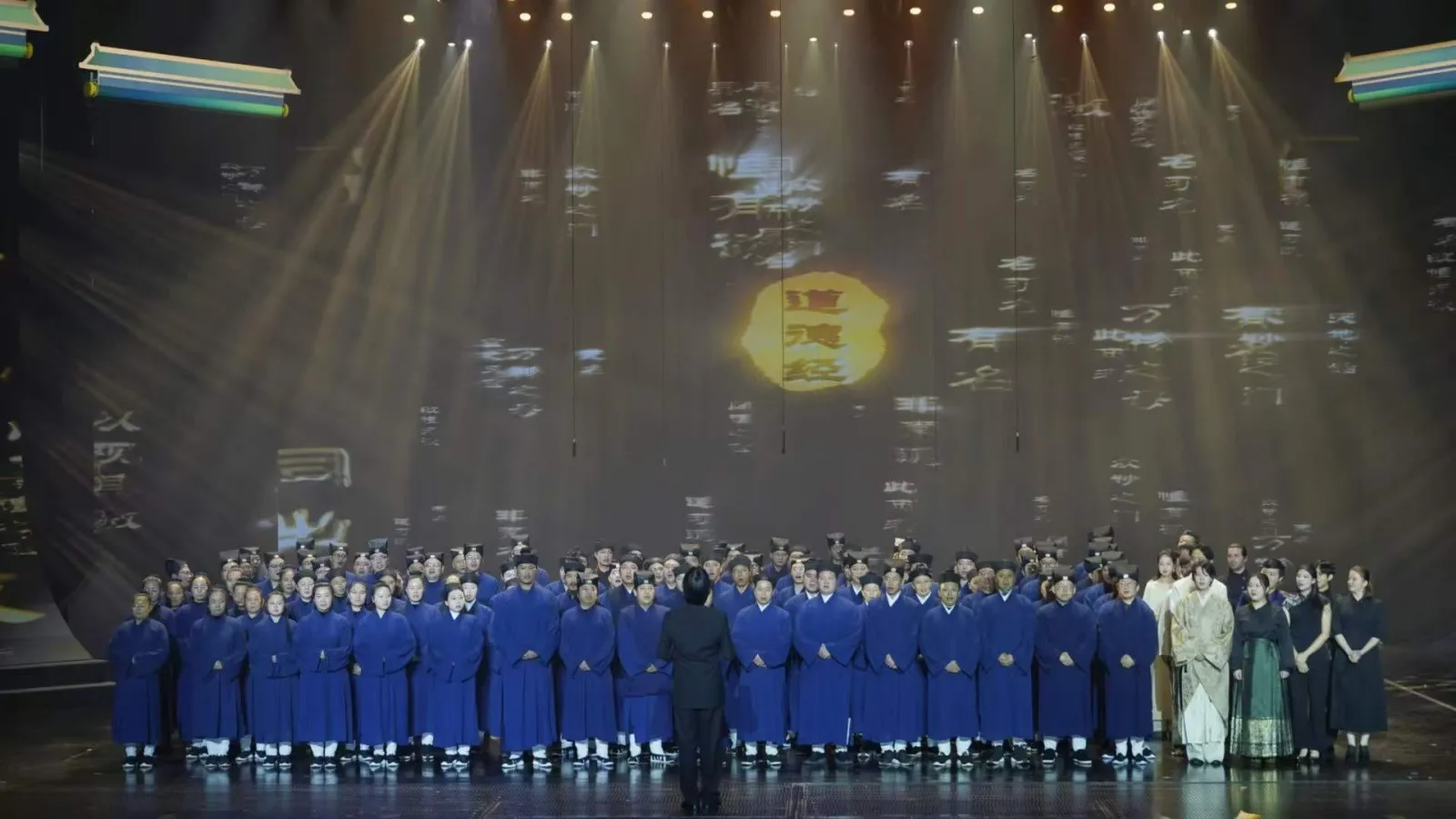
Daoist music
Daoist Religious Music and the Limits of the Western Aesthetic Paradigm: Ritual Sound as a Non-performative Practice
The question of Daoist religious music (道教音乐, Daojiao yinyue) opens a broader epistemological problem: is the Western category of “music” as an aesthetic object for listening universally valid at all? Ethnomusicologists have been pointing out for decades that the Western understanding of music as an artwork intended for aesthetic reception is not a historically and culturally universal category, but a specific product of European modernity. In many religious traditions — including the Daoist tradition — music is not primarily intended for listening, aesthetic evaluation, or individual expression, but functions as a ritual practice and a sonic medium of religious efficacy.
Daoist liturgical forms such as 法乐 (Fayue), 斋醮音乐 (Zhaijiao yinyue), and 经韵 (Jingyun) do not operate within an aesthetic regime of representation, but within a ritual regime of efficacy. Their function is not to create an aesthetic climax or emotional dramaturgy, but the correct performance of the rite, which enables the establishment of cosmic harmony, inner cultivation, and religious continuity.
Ritual Sound and the Rejection of Western Aesthetic Logic
Bell Yung (容世诚) describes Daoist ritual music as a “sound environment,” that is, a sonic environment whose purpose is not communication with an audience, but communication with the transcendent. Such music does not seek the listener’s attention in terms of development, climax, or individual expression. A Western listener who expects a dramatic arc, emotional intensification, or aesthetic confirmation is often left without orientation, because ritual sound does not address their position as an aesthetic observer.
This difference can also be understood through the thought of François Jullien, who in In Praise of Blandness shows that the Chinese aesthetic tradition is often not based on distinctiveness, singularity, or spectacle, but on the value of “blandness,” or 淡 (dan). In this framework, the absence of climax, the monotony of recitation, or restraint in performance are not aesthetic shortcomings, but conditions of ritual efficacy.
Daoist music therefore does not function as a representation of the performer’s subjective inner world, but as a technique of correct ritual action. Its value lies not in virtuosity or innovation, but in the precise reproduction of liturgical form.
Liturgical Function and the Primacy of Ritual
An important insight into the inner logic of Daoist liturgical music is also offered by Song Chongdao (宋崇道), who emphasizes that the essence of performing Daoist liturgical music lies above all in accordance with the religious nature of the rite:
演奏道教经韵音乐的核心,在于贴合道教科仪的宗教内涵和经韵本身的仪式属性,并非单纯的艺术表演,其核心要点应该需要围绕仪轨契合、腔调正宗、法器配合、心性合一四个维度去展开。
The core of performing Daoist liturgical music lies in alignment with the religious content of the Daoist rite and with the ritual nature of the liturgical chants themselves; it is not an artistic performance. The key principles of performance develop around four dimensions: conformity with the rite, preservation of the authentic melodic tradition, coordination of ritual instruments, and unity between inner disposition and sound.
This formulation clearly shows that Daoist music is not understood as an autonomous artwork, but as an integral part of the ritual process. Music is not intended for aesthetic effect, but for the correct performance of the liturgy.
Song further emphasizes:
道教经韵音乐是科仪的组成部分,而非独立曲目。
Daoist liturgical music is a component of the rite, not an independent musical composition.
This represents one of the key differences between the Western understanding of music and Daoist ritual sound. In Western modernity, music is often understood as an autonomous artwork, separated from its religious or social context. In the Daoist framework, however, music exists only as part of ritual action.
Song’s formulation is also especially meaningful:
音随法动,法伴音行
Sound follows the rite, and the rite accompanies sound.
Here, music is no longer an object of listening, but becomes a functional element of ritual choreography, connected with gestures, breath, recitation, bodily movements, and liturgical temporality.
Music as Self-cultivation and Inner Discipline
Song Chongdao also gives particular attention to the performer’s inner state. In the Daoist tradition, correct performance is not merely a technical question, but an expression of inner cultivation:
道教讲究“内外合一,心手相应”,演奏经韵音乐体现的并非单纯技术操作,更强调演奏者自身心性的体现。
Daoism emphasizes “the unity of inner and outer, and harmony between mind and action”; the performance of liturgical music is therefore not merely a technical operation, but above all an expression of the performer’s inner disposition.
In this framework, sound becomes a form of self-cultivation. Ritual music is not based on individual virtuosity, but on calmness, discipline, and the performer’s inner collectedness.
Song therefore also writes:
心不静则音不净
If the mind is not calm, the sound cannot be pure.
This statement substantially surpasses the Western division between technique and spirituality. The purity of sound is not the result of technical competence alone, but of the performer’s inner state.
Ritual Logic Versus the Logic of Performance
Such an understanding of music stands in direct contrast to the contemporary Western cultural system, which is based on visibility, individual recognition, the economy of attention, measurability, the production of affect, and constant performative self-validation.
In the context of late and platform capitalism, music often becomes an object of algorithmic distribution, where its value is based on reach, engagement, and market success. Daoist ritual music, however, operates according to the opposite logic: it does not seek an audience, is not based on spectacle, and does not address an external observer. Its function is inner and liturgical, not representational.
This is also confirmed by Song’s conclusion:
道教经韵音乐的演奏,重“意”轻“技”,重“合”轻“独”,重“传承”轻“创新”。
The performance of Daoist liturgical music places greater emphasis on meaning than on technique, on the collective than on the individual, and on tradition than on innovation.
And further:
与其说这是“演奏音乐”,不如说是“通过音乐完成仪轨、表达信仰”。
Rather than speaking of “performing music,” it would be more accurate to say that this is “performing the rite and expressing one’s relationship to the transcendent through music.”
It is precisely in this that Daoist music differs radically from contemporary Western logic. Its foundation is the establishment of the conditions for ritual efficacy.
Conclusion
Daoist religious music calls into question the very definition of music as an aesthetic object. Instead of performance, it offers ritual; instead of spectacle, repetition; instead of individual expression, liturgical correctness; and instead of emotional climax, restrained blandness.
Literature and Sources:
Stephen Jones, Daoist Ritual and Popular Cultures of North China, Cambridge University Press, 2010.
Bell Yung (容世诚), Celestial Airs of Antiquity: Music of the Seven-String Zither of China, University of Wisconsin Press, 1984.
François Jullien, In Praise of Blandness (Éloge de la fadeur), Zone Books, 2004.
Personal correspondence with Abbot Song Chongdao.
SDT Rector Yuan Weiqi
Next event
Thursday music rehearsals
October 8, 2026, 18:20 — 19:30 | Main Temple
Visit event page


