Department of Daoist and Traditional Chinese Music
Music in Daoist Ritual and the Development of Daoist Music in Europe
Music is a fundamental and integral element of Daoist ritual, as it is not merely an accompaniment to the ritual but a constitutive part of it, structuring the course of ritual actions and enabling their alignment with the liturgical and cosmic order.
In the Daoist tradition, music serves as a mediator between the human and the transcendental world, with sound patterns, rhythms, and melodic structures contributing to the establishment of ritual harmony and to the realization of the principle of accord between human beings, nature, and the cosmos.
Structural Challenges of Transmission into the European Context
The fundamental problem in transmitting Daoist and, more broadly, traditional Chinese musical practice into the European context is the limited possibility of institutional education. Traditional Chinese musical instruments, and especially the specific repertoire of Daoist ritual music, are generally not included in the curricula of European music conservatories or secondary music schools. As a result, this knowledge is preserved in Europe primarily through individual transmission, visiting masters, informal learning processes, and within religious or cultural communities, which significantly limits systematic academic research and the institutional continuity of this musical tradition.
Most European Daoist communities do not engage with Daoist ritual music systematically, but perform it only occasionally or to a limited extent. For more important ritual events, especially temple consecrations or larger liturgical ceremonies, they are therefore often dependent on visiting musicians and ritual specialists from the Sinosphere, where the Daoist musical tradition remains alive and institutionally preserved.
This practice points to a pronounced asymmetry between European Daoist communities and their East Asian sources, since the transmission of the ritual musical tradition to Europe is mostly realized through temporary, project-based, or guest forms of cooperation, rather than through a lasting local educational structure.
The Developmental Response of the Slovenian Daoist Temple
At the Slovenian Daoist Temple, this lack was recognized as an important developmental issue requiring a systematic approach to education and the transmission of knowledge. In this context, on 3 July 2025, SDT member Maj Dolšak Fabris (Yuan Ximing) prepared the Work Plan of the Department of Daoist Music and the Study of Traditional Chinese Musical Instruments for the Period July 2025–July 2028.
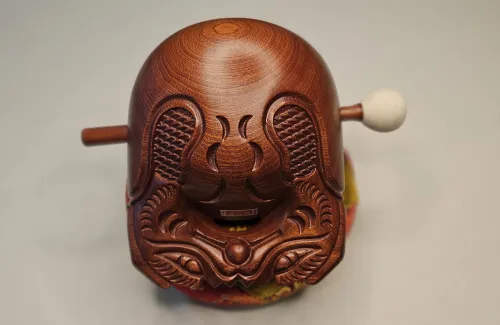
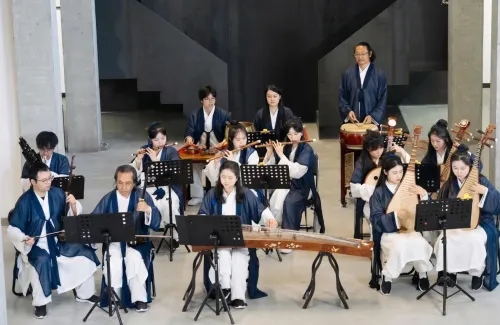
The document established the foundations for the gradual development of an internal professional infrastructure dedicated to the study of Daoist ritual music, the basics of traditional Chinese musical instruments, and their ritual function in the context of Daoist liturgy. At the same time, it envisages the gradual establishment of learning modules, guest visits by experts, and the formation of a more stable system of knowledge transmission within the community, with the aim of reducing dependence on occasional external performers and strengthening autonomous musical practice in Europe in the long term.
International Presentations (Summer 2025)
In July and August 2025, the SDT initiative was presented at three separate working meetings in the People’s Republic of China, namely in Beijing (Baiyunguan) and in the provinces of Hubei (Wudangshan) and Jiangxi (Chongdao Gong). The purpose of these meetings was to establish professional dialogue with institutions that preserve a living Daoist musical tradition and to present the planned development of the European Department of Daoist Music and the Study of Traditional Chinese Musical Instruments.
Daoism in China is basically divided into the Quanzhen and Zhengyi traditions, with ritual practice, including ritual music, differing between them in both stylistic and institutional frameworks. In this context, the first meeting was held at Baiyunguan in Beijing, which is regarded as one of the central centers of the Quanzhen tradition and as the seat of the Chinese Taoist Association and related international structures, including the World Federation of Daoism.
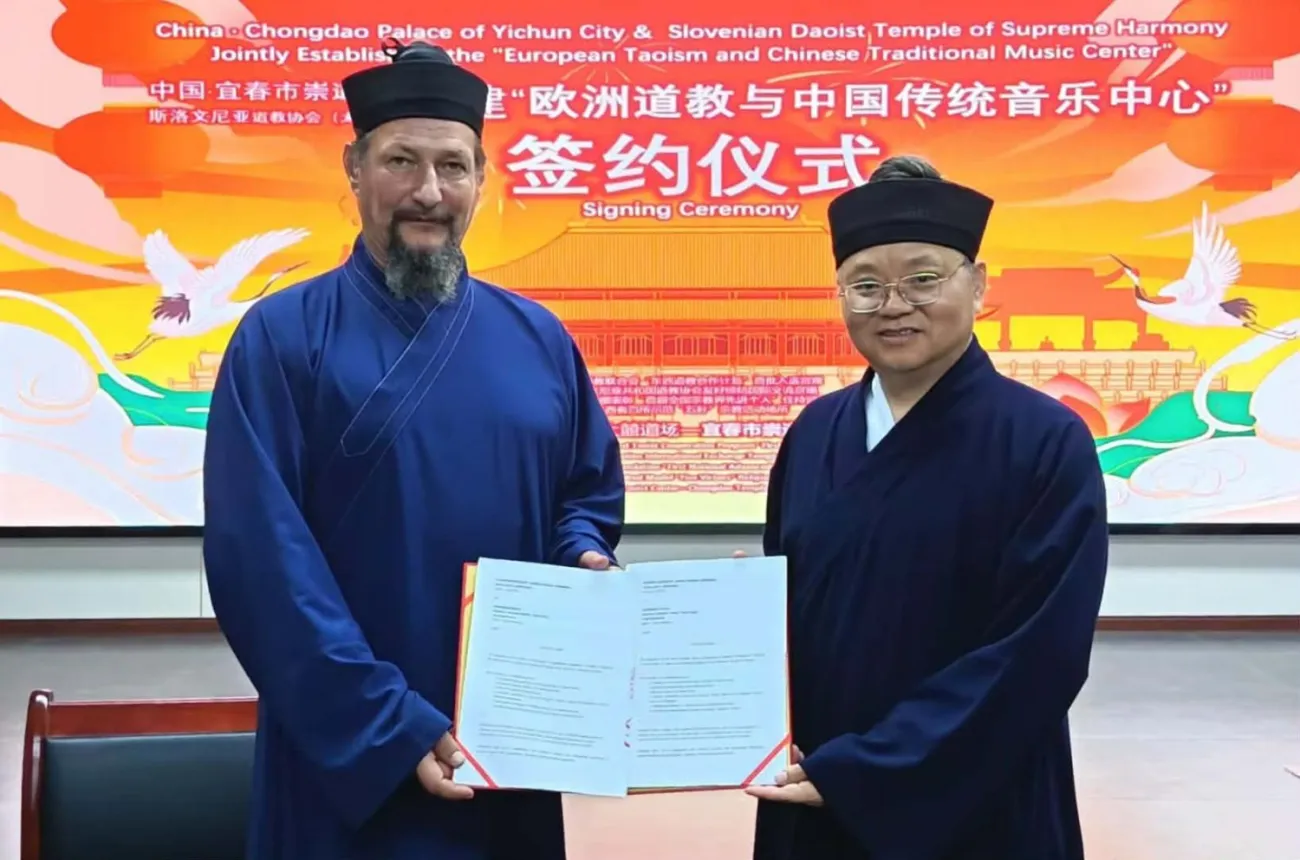
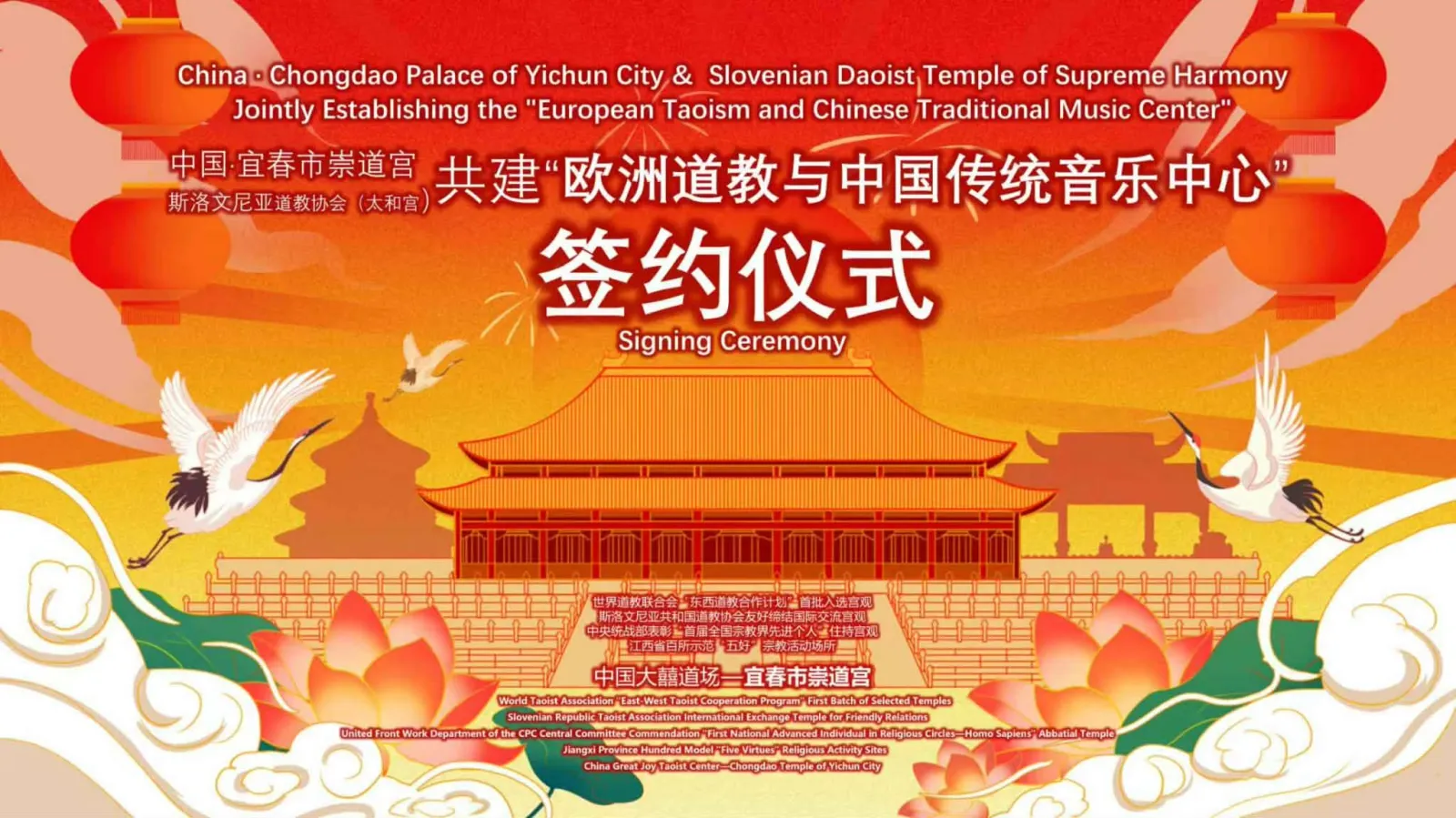
At the meeting, the initiative of the Slovenian Daoist Temple to develop a European department of Daoist music was presented. The interlocutors listened to the initiative and supported it in principle, which enabled further professional connections. This meeting formed the basis for the following two, where the initiative was further elaborated into a cooperation program. With representatives of the Quanzhen tradition (with the sister temple Chongdao Gong), a letter of intent for three years of cooperation was signed on 13 August 2025.
Institutional Establishment in Slovenia
Following these meetings, the Slovenian Daoist Temple also established the Department of Daoist and Traditional Chinese Music within its academic council, with SDT member Maj Dolšak Fabris/Yuan Ximing assuming its leadership. This created a formal institutional structure for carrying out a research, educational, and developmental program in the field of Daoist and traditional Chinese musical practice in Europe.
The agreements concluded place the Slovenian Daoist Temple in the role of initiator and bearer of the development of Daoist and broader traditional Chinese music in Europe. It has thereby been assigned the role of a coordinating and developmental center that promotes research, education, and the gradual establishment of lasting forms of knowledge transmission concerning Daoist ritual music and traditional Chinese musical instruments in Europe, in cooperation with relevant professional and religious partners from the Chinese cultural sphere.
Yuan Weiqi, Rector of SDT
福生无量天尊 / Fú shēng wú liàng tiān zūn