Music Department
First training for SDT members on Daoist music at Chongdao Gong
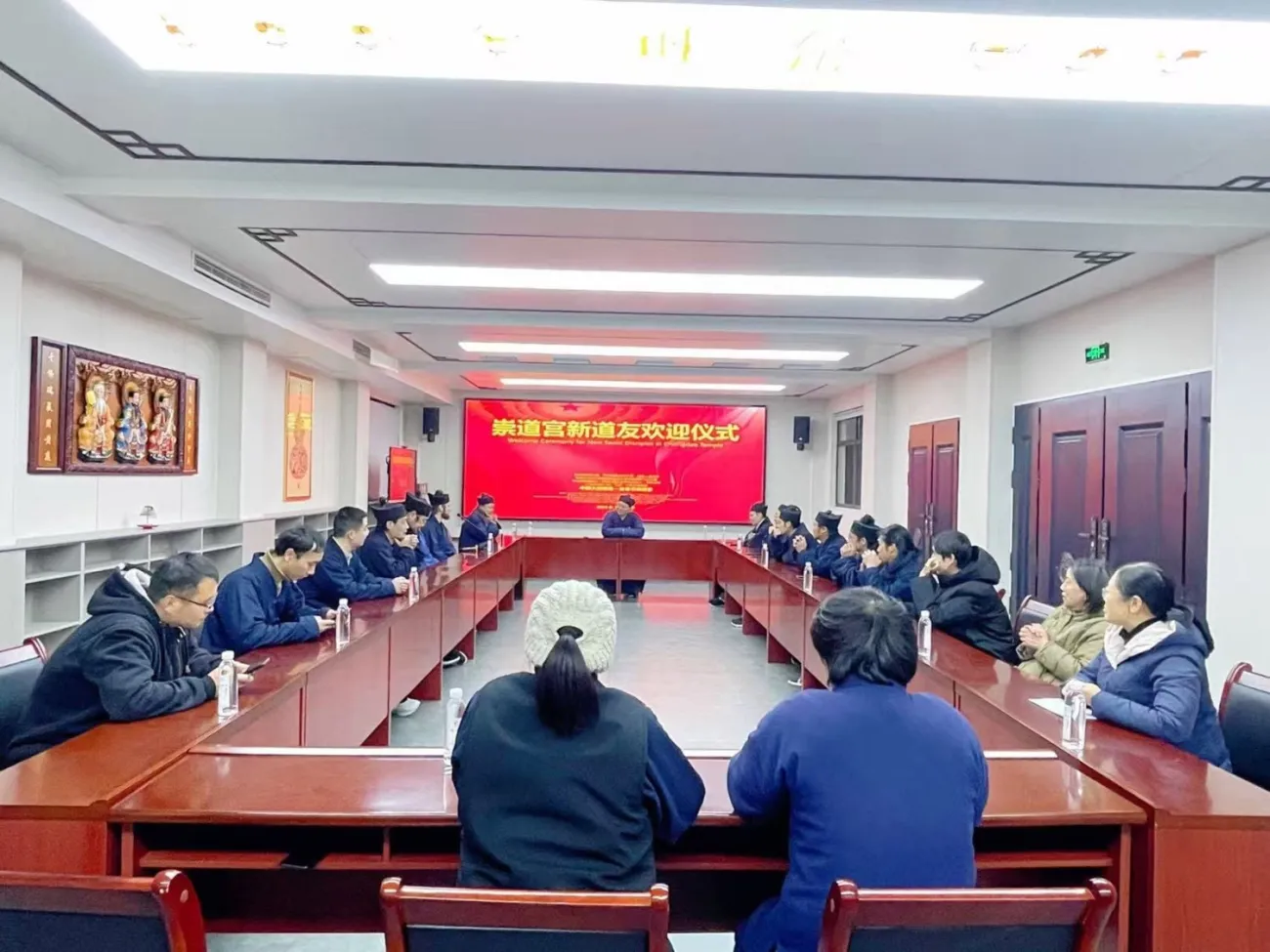
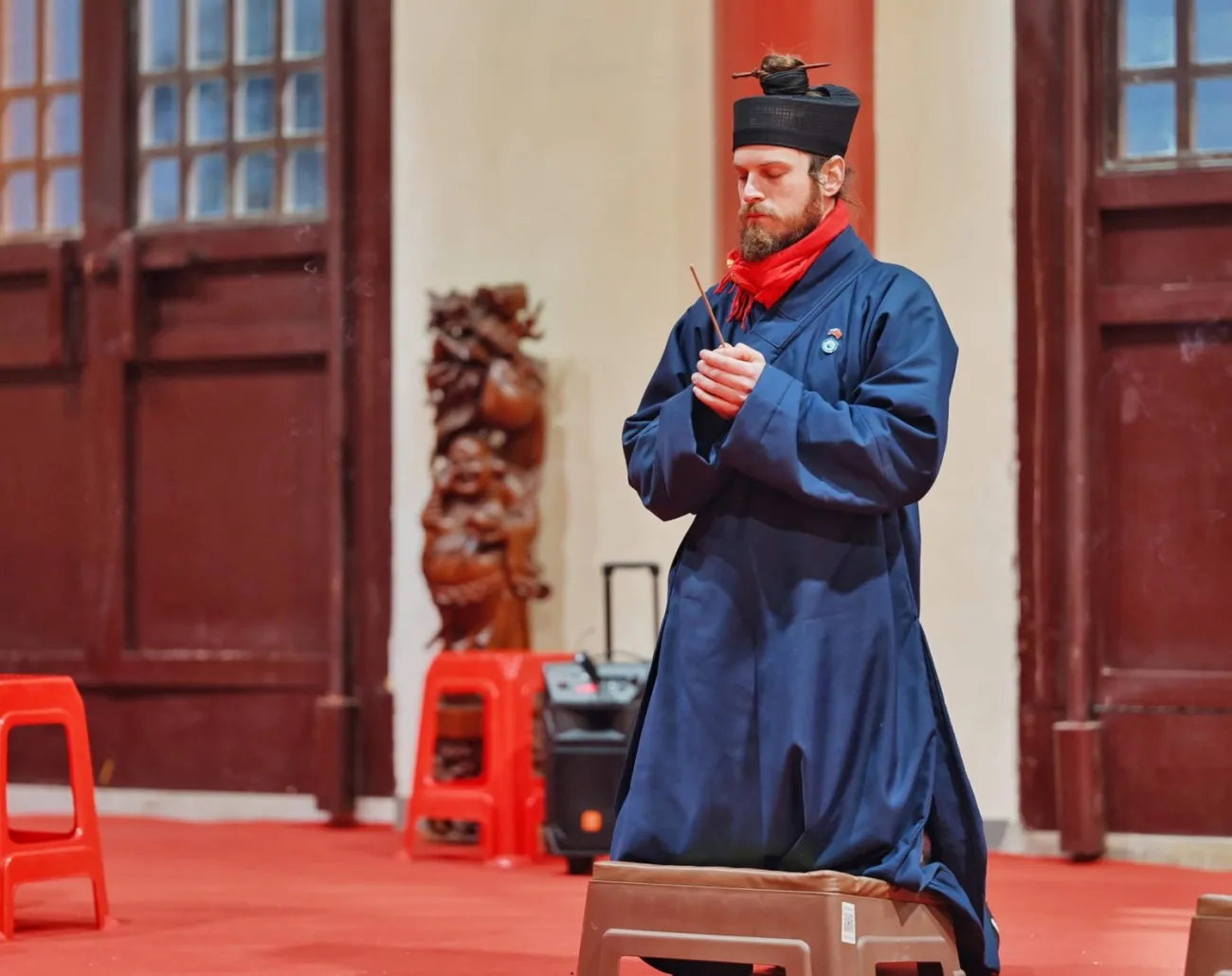
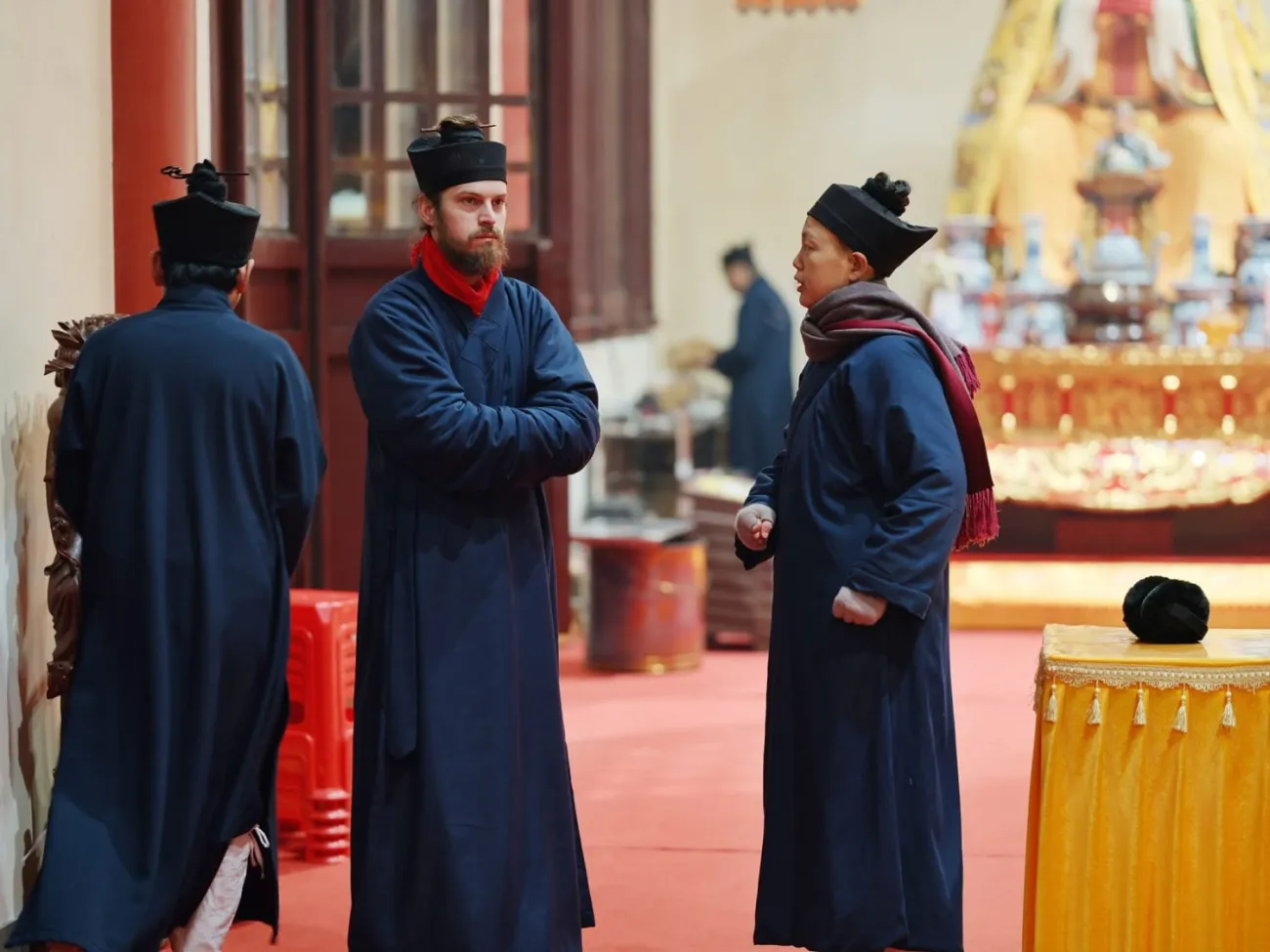
I visited Chongdao Gong (崇道宫), a temple of the Quanzhen lineage (Quanzhen pai 全真派) in Jiangxi Province (江西省), from January 29 to February 6, 2026.
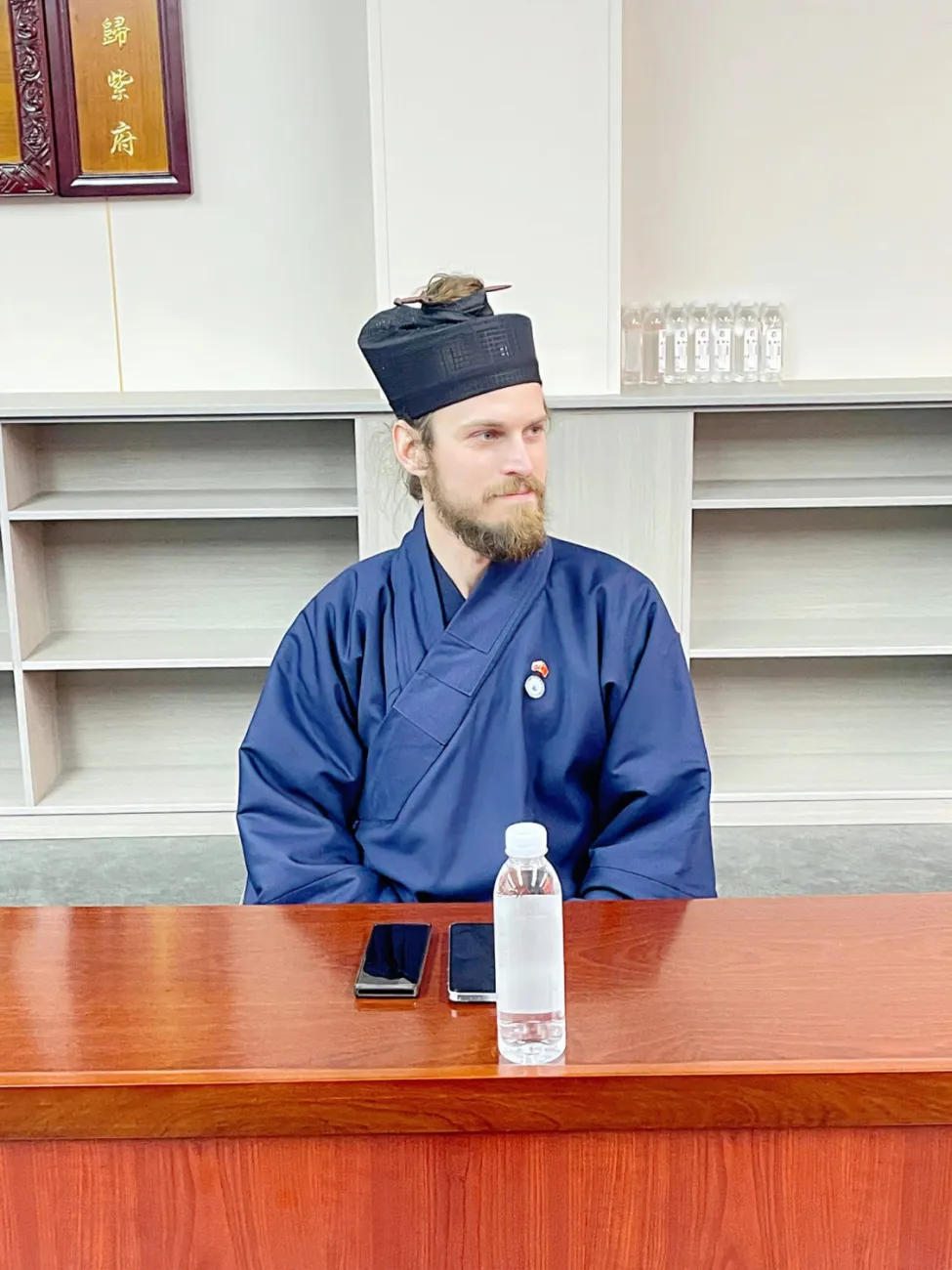
During this period, on the basis of the sister-temple agreement between Chongdao Gong (崇道宫) and the SDT, a nine-day training course took place on the standardized Daoist ritual music (Shifangyun十方韵) of the Quanzhen lineage (Quanzhen pai 全真派). It was conducted by Daoist masters Ou Xuan Daozhang, GaoZhi Daozhang, and Wang Daozhang under the guidance of the monastery’s abbot, master Song Chongdao.
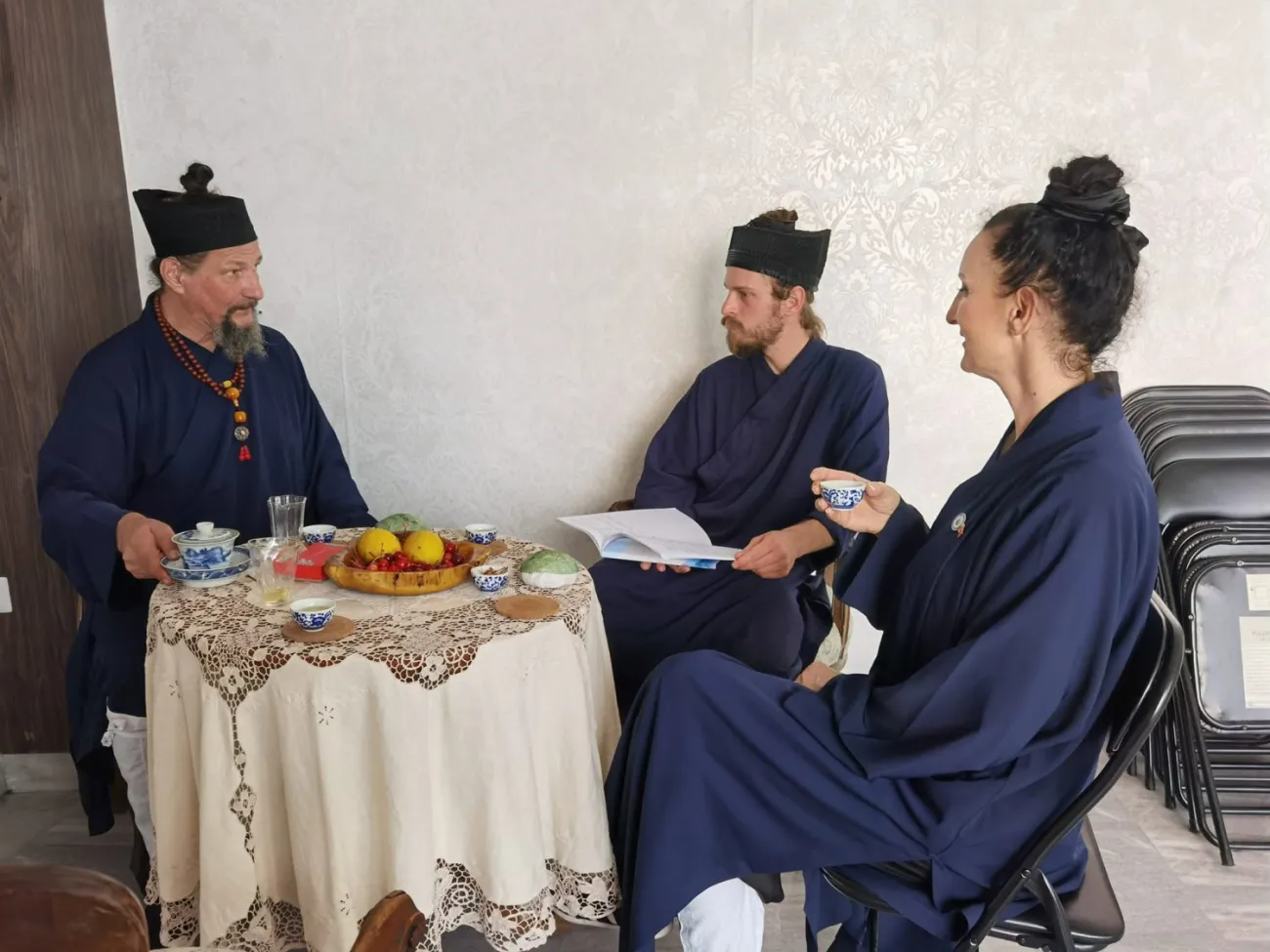
The aim of the training was to become acquainted with Daoist ritual music and the themes it encompasses. Because the training period was short, in-depth study of certain topics was not possible. The program was richly designed and included both theoretical and practical components. The knowledge was passed on to us by monks and nuns residing in the monastery. The training took the form of conversations, observation, and participation in musical practice.
The main theme was the morning and evening Daoist ritual, which is a daily practice in Daoist temples. The most important theoretical topics of the training included: an overview of the origins of Daoist music, basic music theory on the staff notation system and the numbered musical notation system (Jianpu 简谱), and an introduction to the morning and evening rituals.
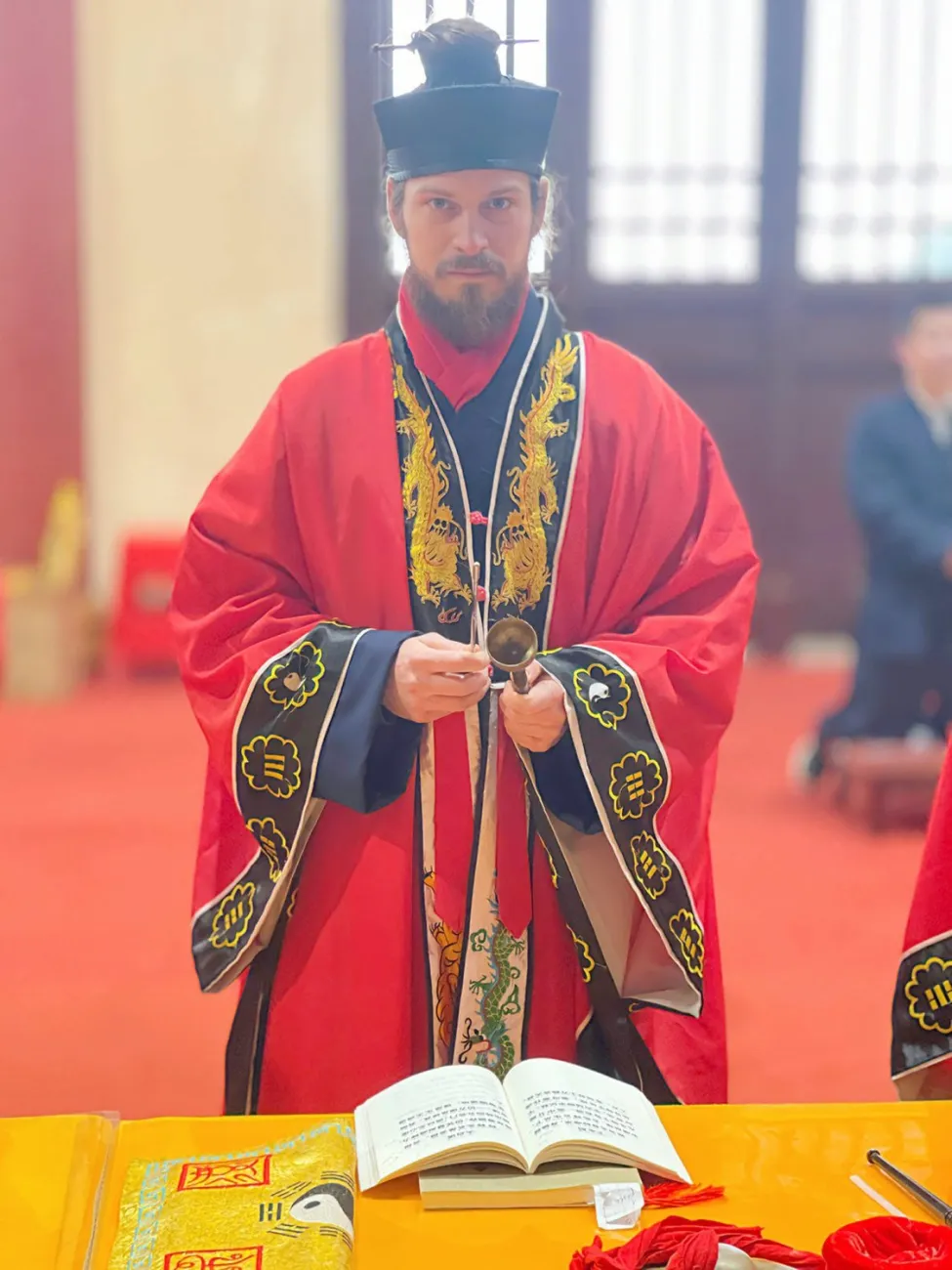
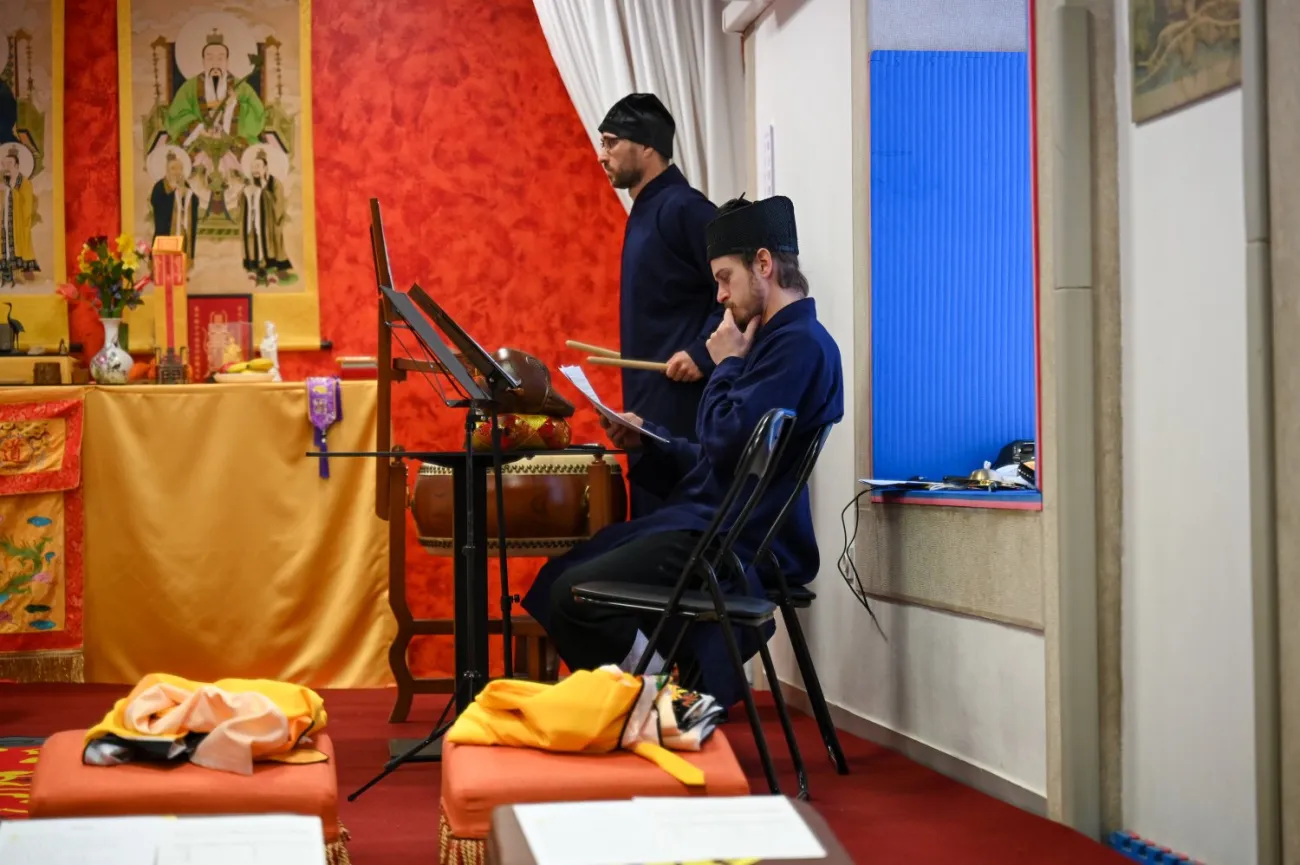
In the practical part of the training, we practiced and learned ritual chanting, playing various instruments included in the ritual, and participating in the ritual itself.
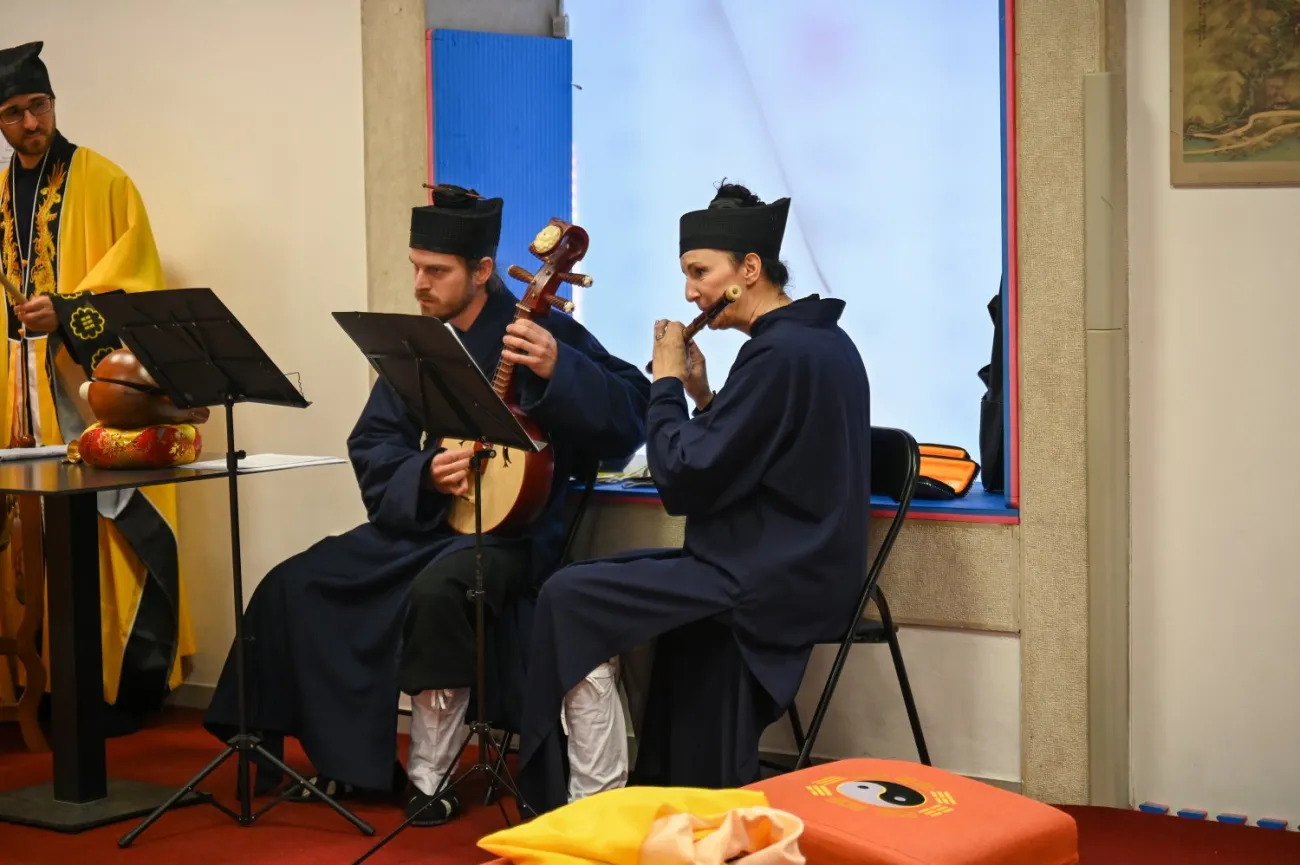
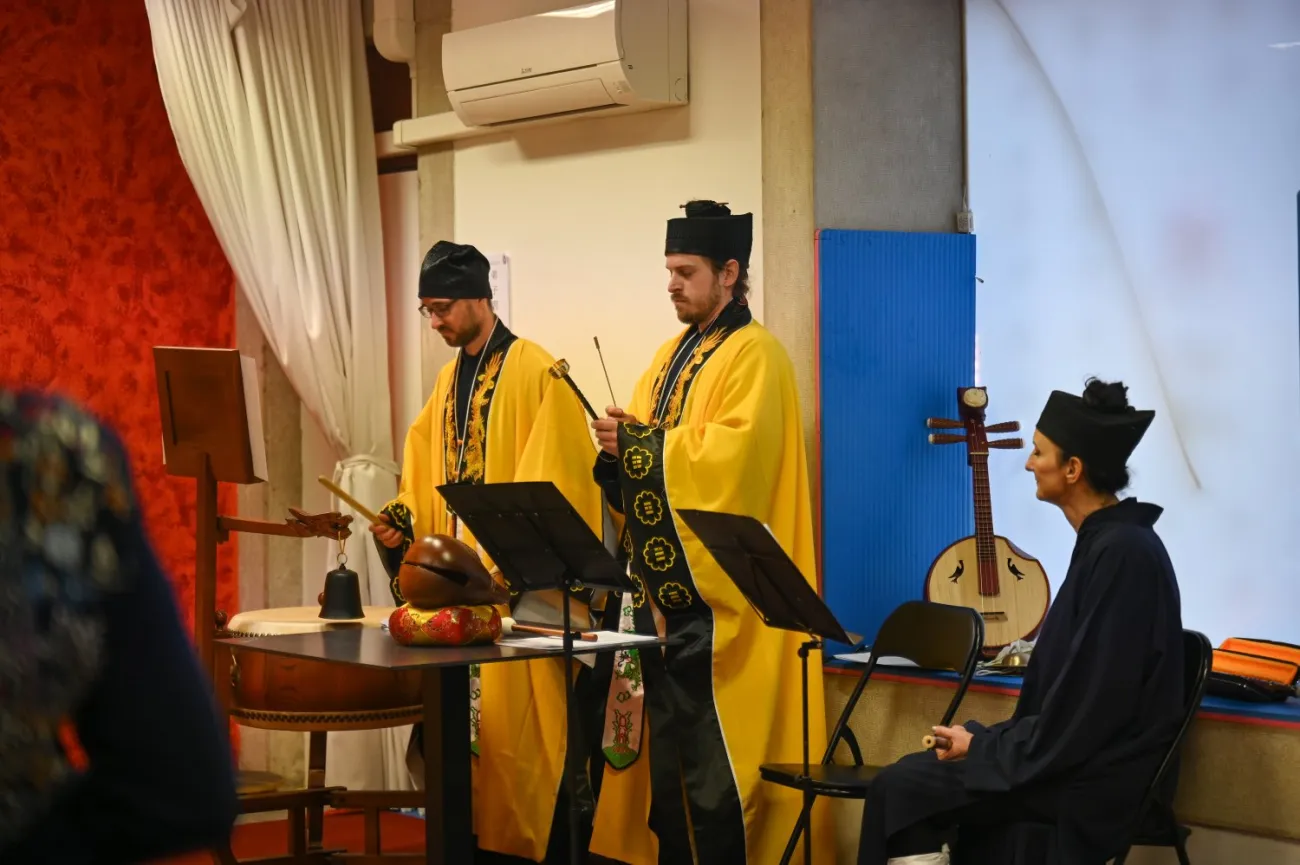
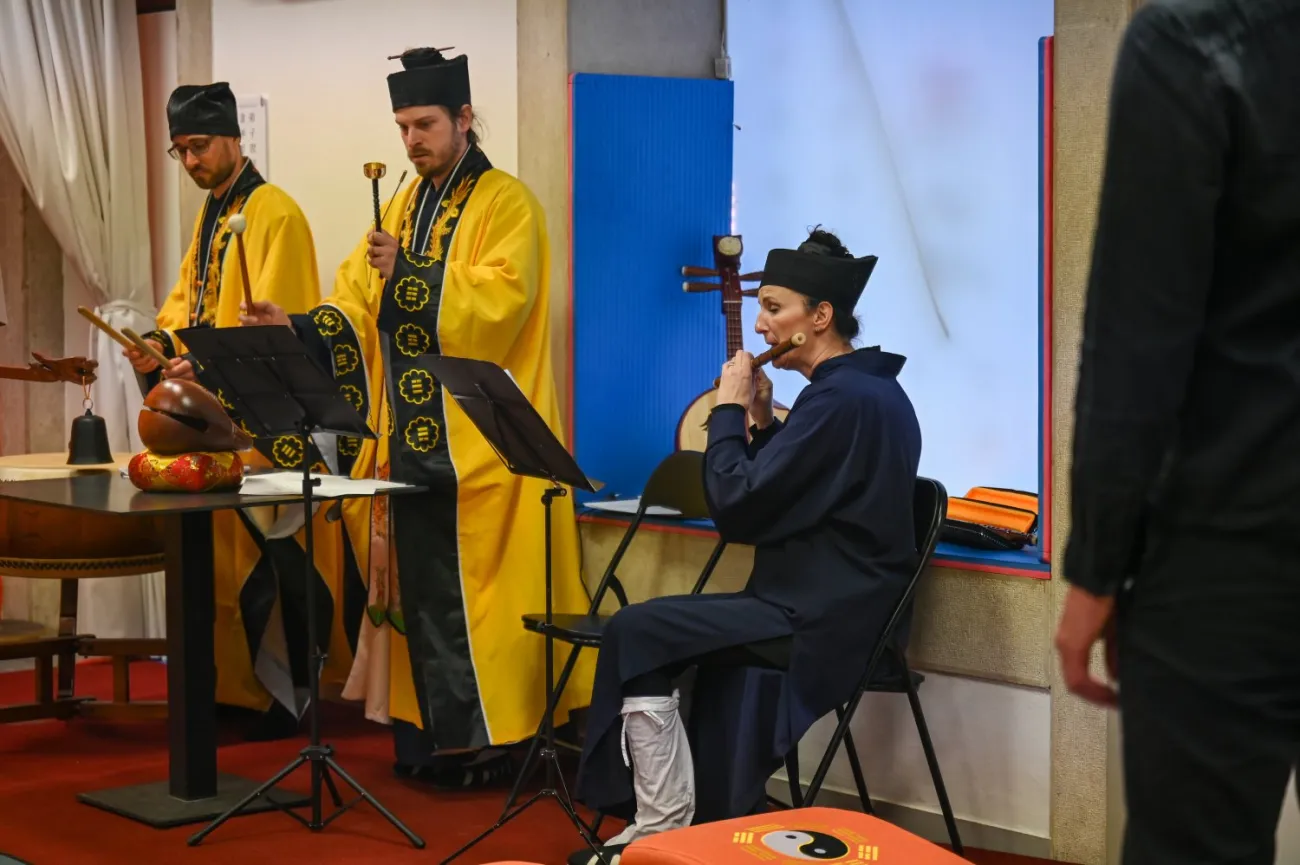
In the ritual instrument sessions, we learned to play percussion instruments, from the wooden fish (Mu Yu 鱼) to the small handheld singing bowl (Yin Qing 引磬), the drum and bell (Gu & Zhong 鼓钟). We became acquainted with different types of cymbals (Cha 镲, Bo 钹, Nao 鐃), the handbell (Di Zhong帝钟), the small handheld gong (Dang 铛), and the large singing bowl (Qing 磬). We also came to know and try melodic instruments. We practiced playing the guzheng (Guzheng 古筝) and the yangqin (Yangqin 扬琴), and I was also introduced to the sheng (Sheng 笙).
In traditional Daoist music, we notice recurring melodic and rhythmic patterns. Phrases do not end with measures. Everything seems as if it pays no attention to them, as melodies interweave with one another and the rises and falls in pitch appear to us to be accidental.
Although we follow a “common thread,” compared with the Western logic of music, where recurring phrases are characteristic of certain parts of a song and usually end at the end of a measure, we do not find such connections. I could say that there is “nothing to hold on to” and that the music travels onward, further and further.
The music theory of Daoist music is deeply connected with Daoist philosophy and is based on theories of healing, the five elements, and the five dynamic processes. Thus, the fact that we do not stop and that the story continues on and on brings us closer to a way of thinking, non-attachment, and so on.
The music itself is quite simple. Each instrument has a fairly simple and clear role. But when we listen and experience all the melodies at once, as ritual, we understand that in its simplicity the music is very complex. This feeling is also difficult to describe.
Even playing, for example, the wooden fish is simple. We play only, for instance, on every sixteenth note or eighth note. Yet within the ritual it becomes more complex, because we play the wooden fish during recitation; we need to know the entire hour of the ritual and know when the wooden fish provides the rhythm and when it is silent. A musician who confidently knows and plays the instruments during the ritual can sing and play several instruments at the same time, for example the wooden fish and the small handheld singing bowl.
Music is an indispensable part of Daoist ritual. Its purpose is to make harmonization easier and to establish a connection with the transcendent. Each instrument has its precise role. The most important role belongs to the voice, followed by percussion and then melodic instruments.
For example, the voice represents the connection with the transcendent and the harmonization of the environment and of the performer themselves. The drum sets the general rhythm of the ritual music, the wooden fish sets the rhythm of the recitation of liturgical texts, and the singing bowl represents “respect” toward the transcendent. Melodic instruments enter as accompaniment and support for the voice, and connect the various instruments and sounds with one another. They likewise encourage the creation of an ethereal, immaterial atmosphere.
After completing the training, participants have enough knowledge to gradually introduce the performance of ritual and music in their own environment.
Maj Dolšak Fabris, Yuan Ximing 袁, Head of the Department of Daoist and Traditional Chinese Music of the SDT