Articles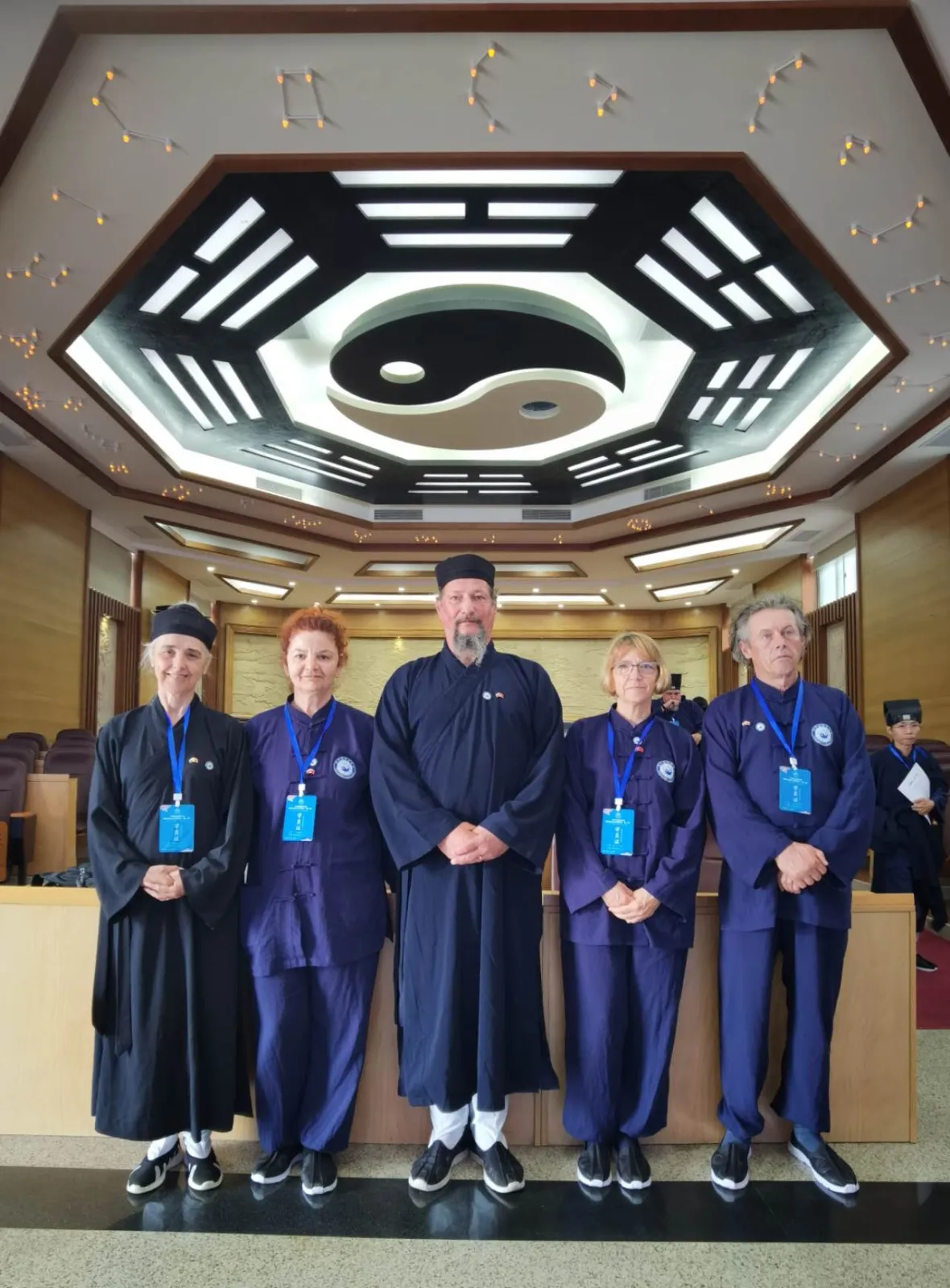
The Second International Seminar on Daoist Culture: When Learning and Practice Merge into One, and Knowledge and Action Become One
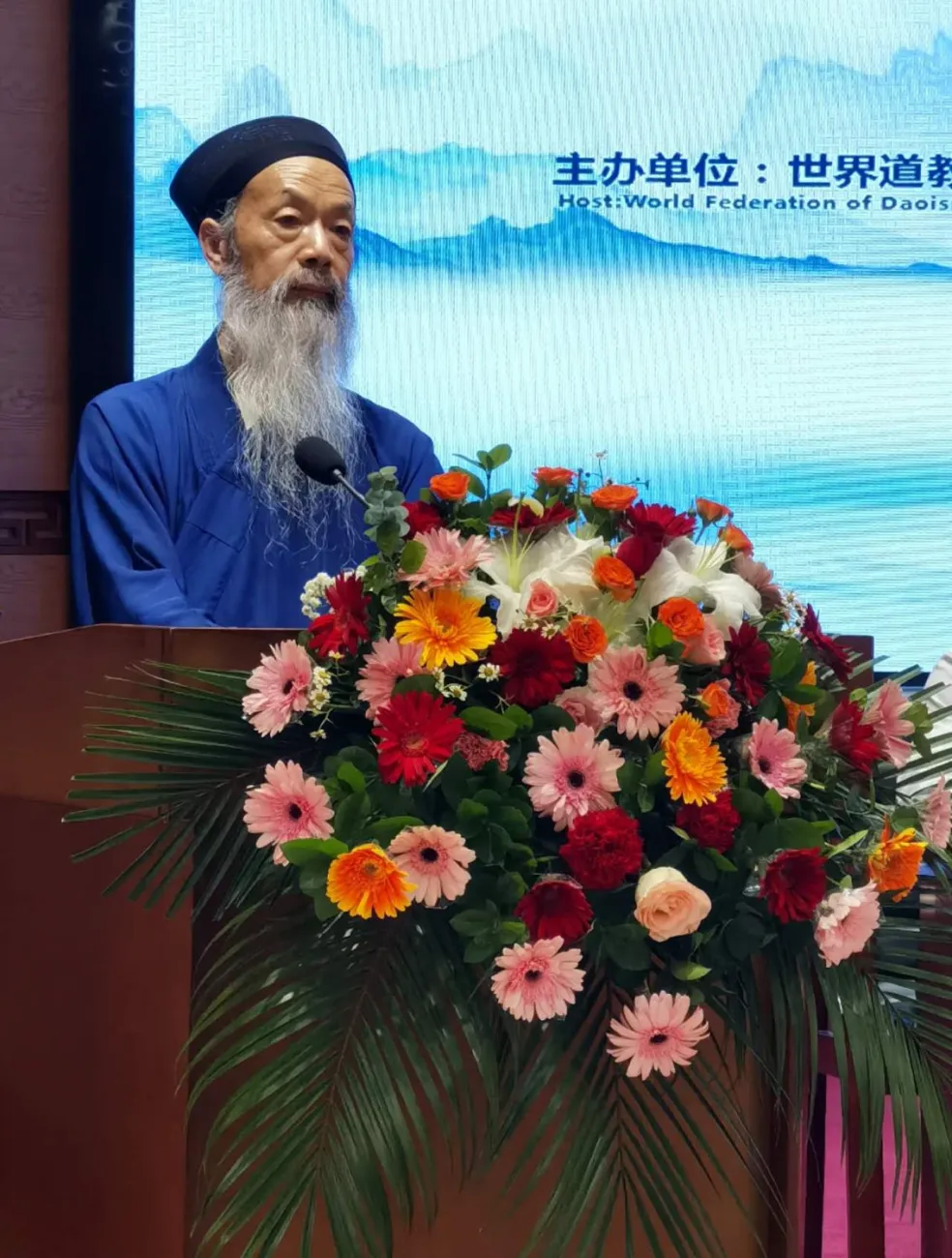
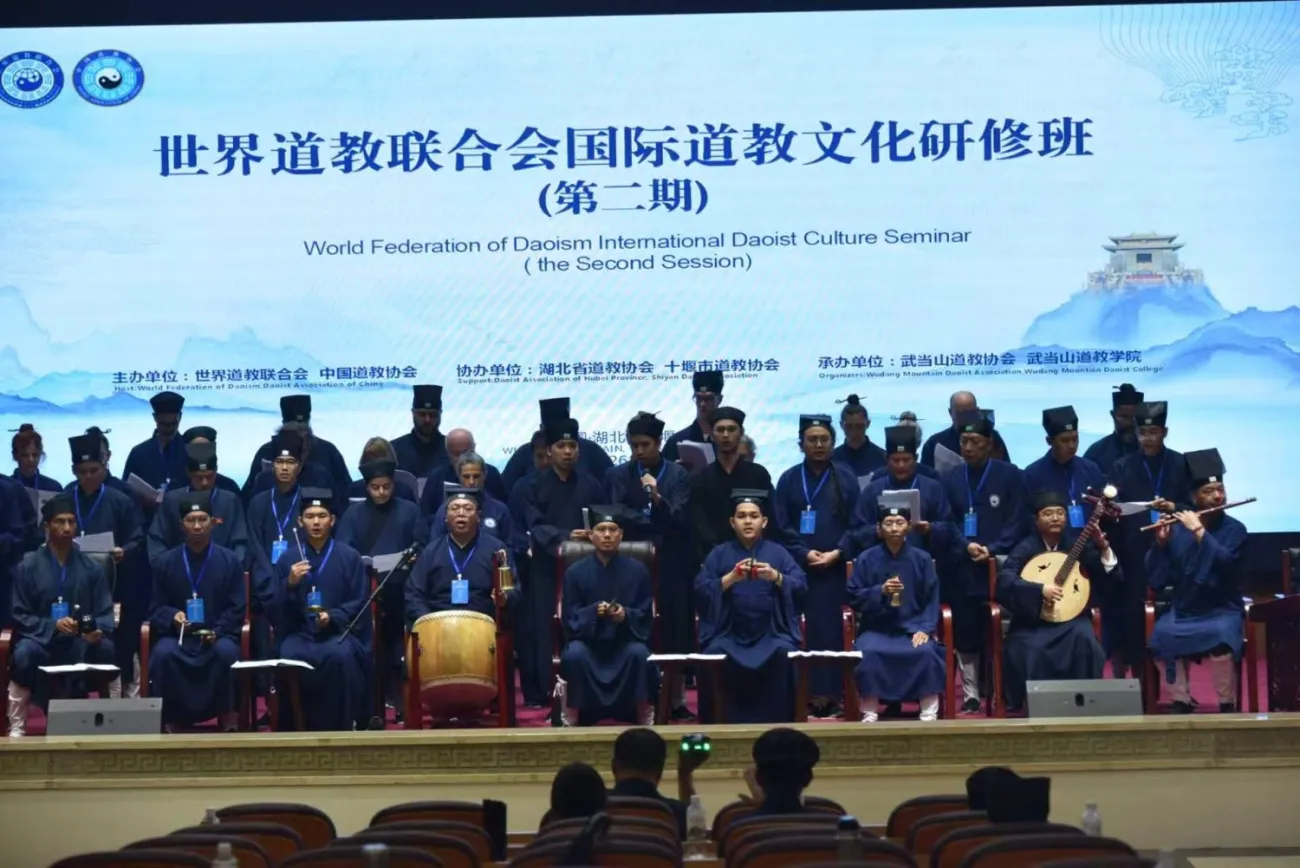
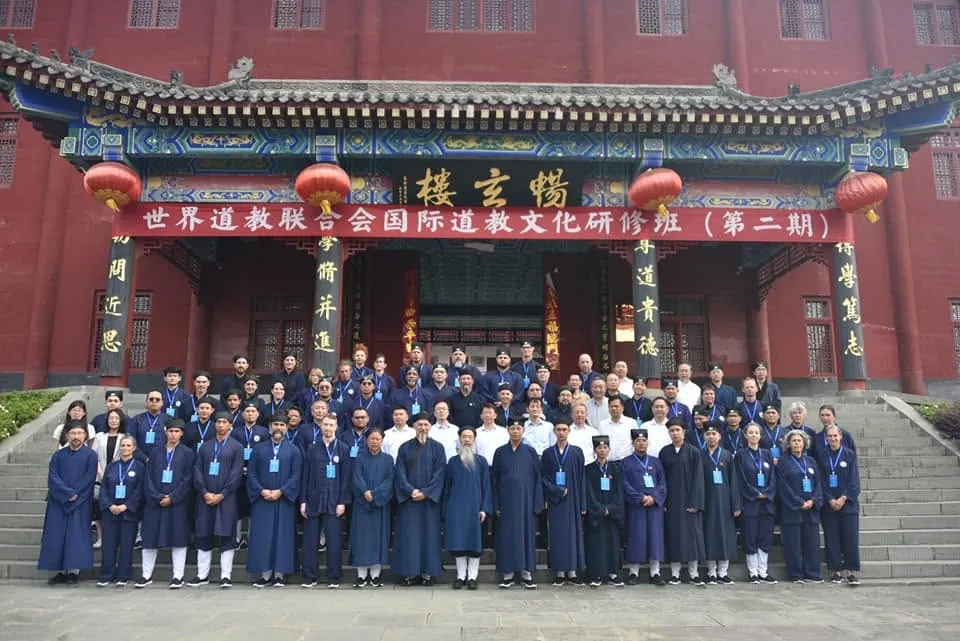
The Second International Seminar on Daoist Culture took place from June 1 to 17 in the city of Danjiangkou (丹江口), Hubei Province. Under the auspices of the World Federation of Daoism and the Chinese Taoist Association, as well as the Daoist Association of Hubei Province and the Shiyan Daoist Association, it was organized by the Wudang Mountain Daoist College.
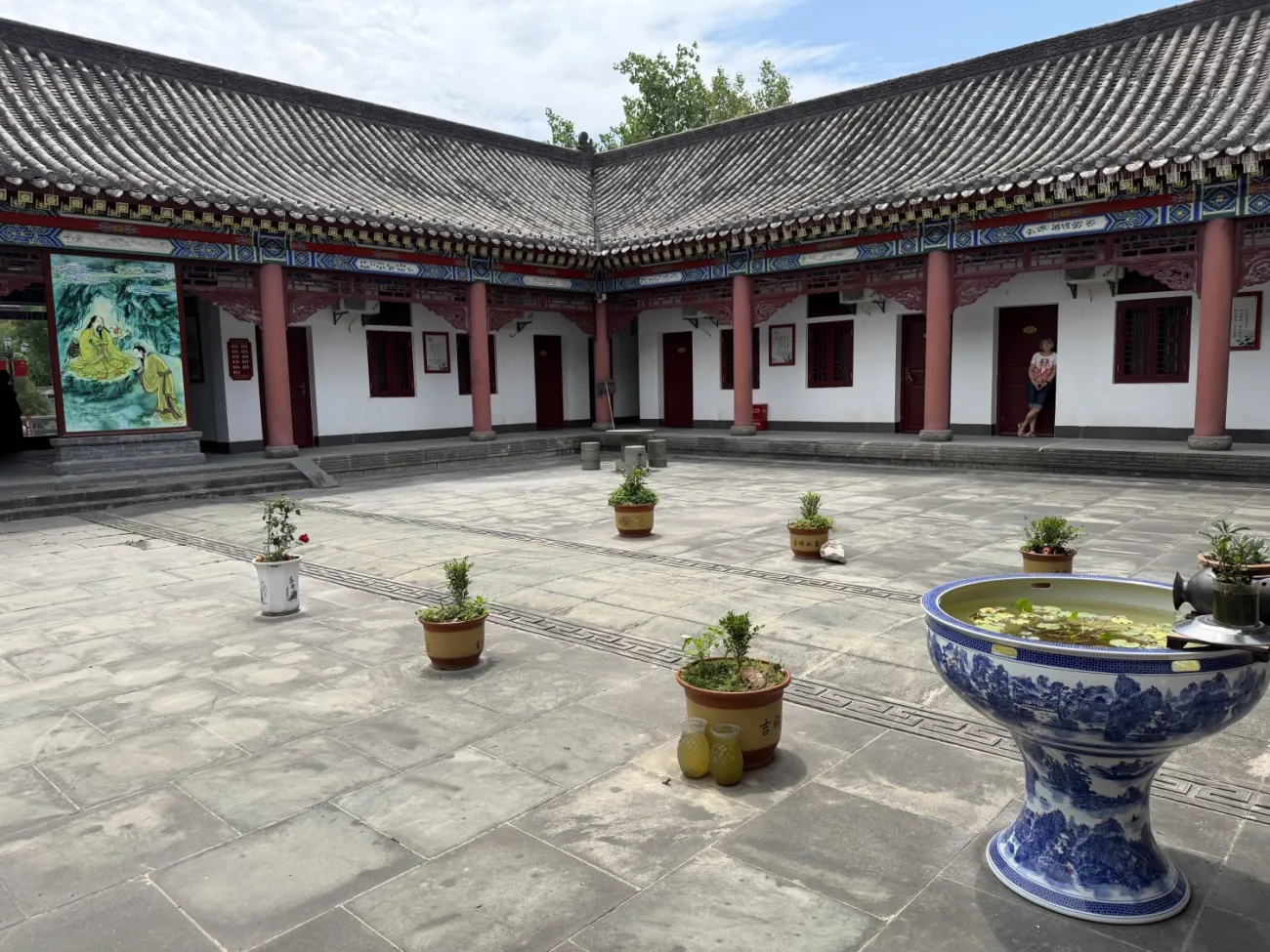
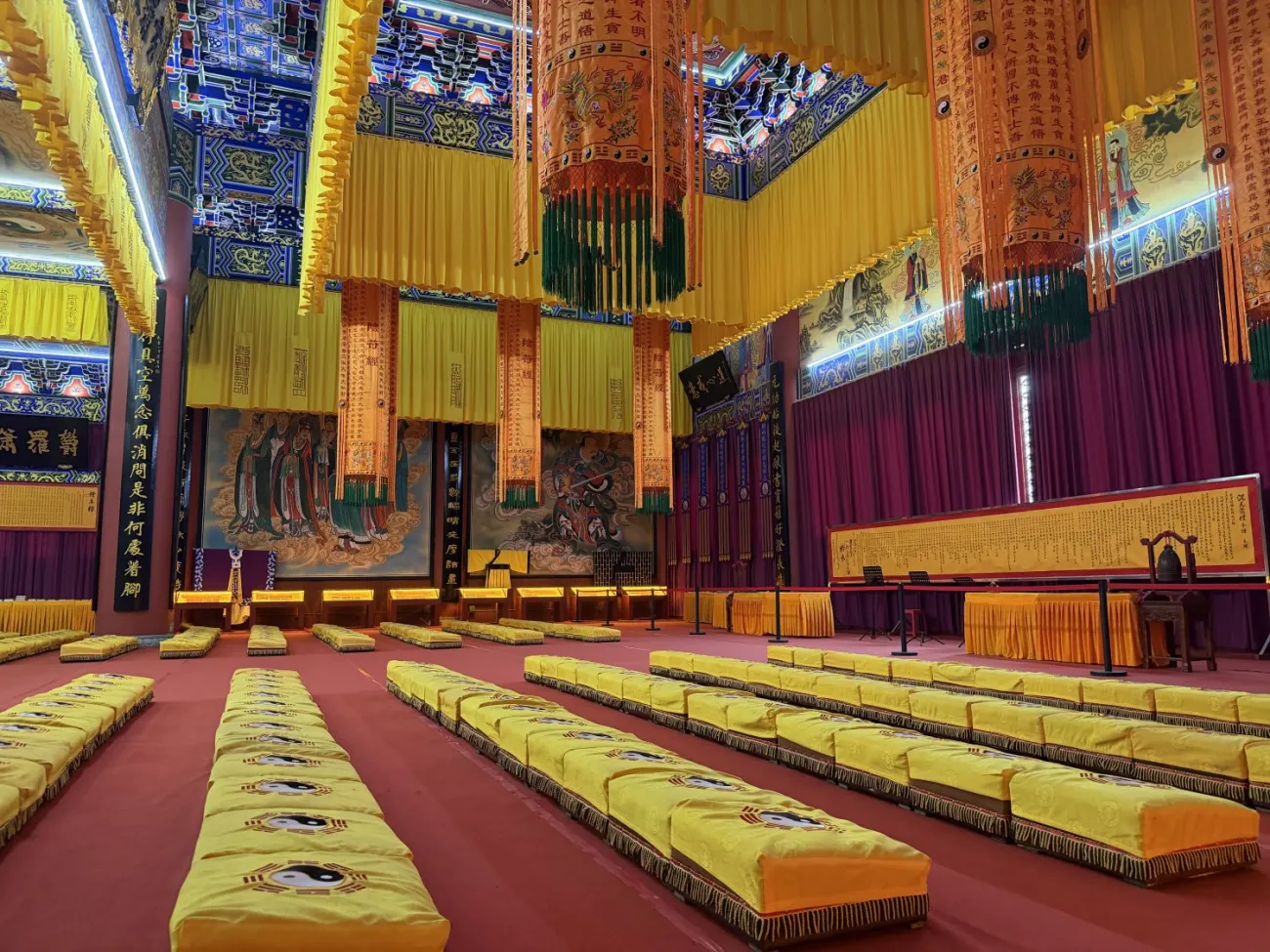
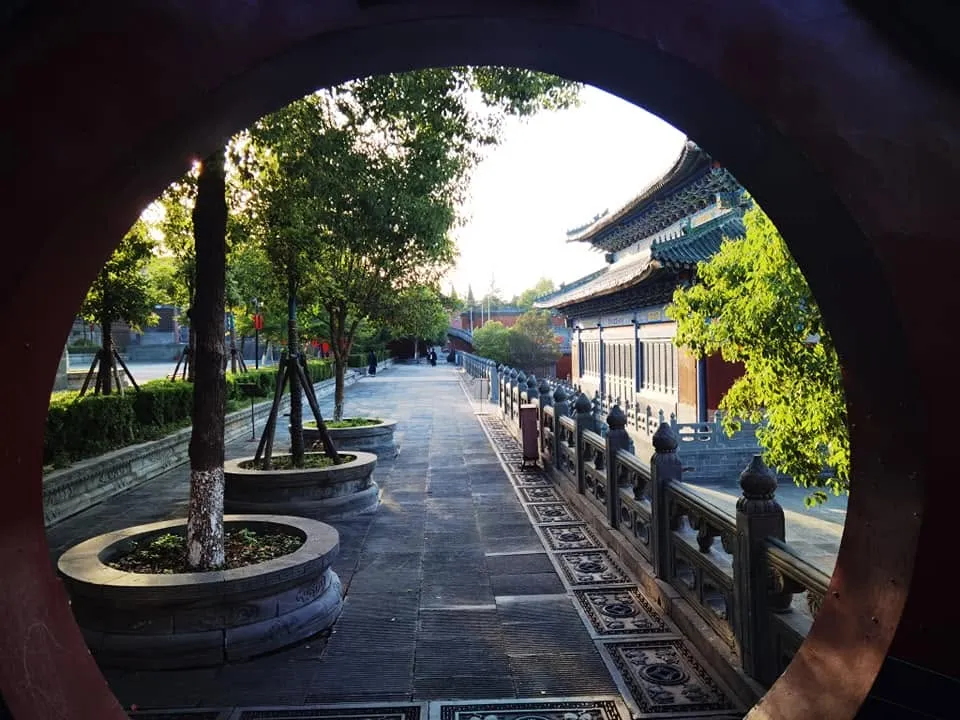
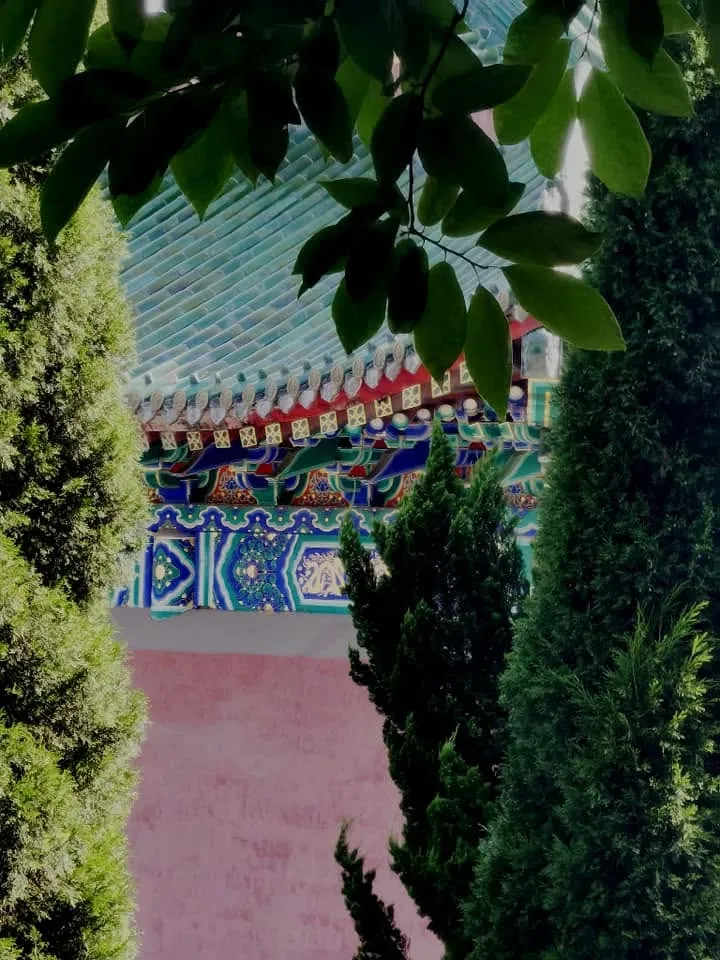
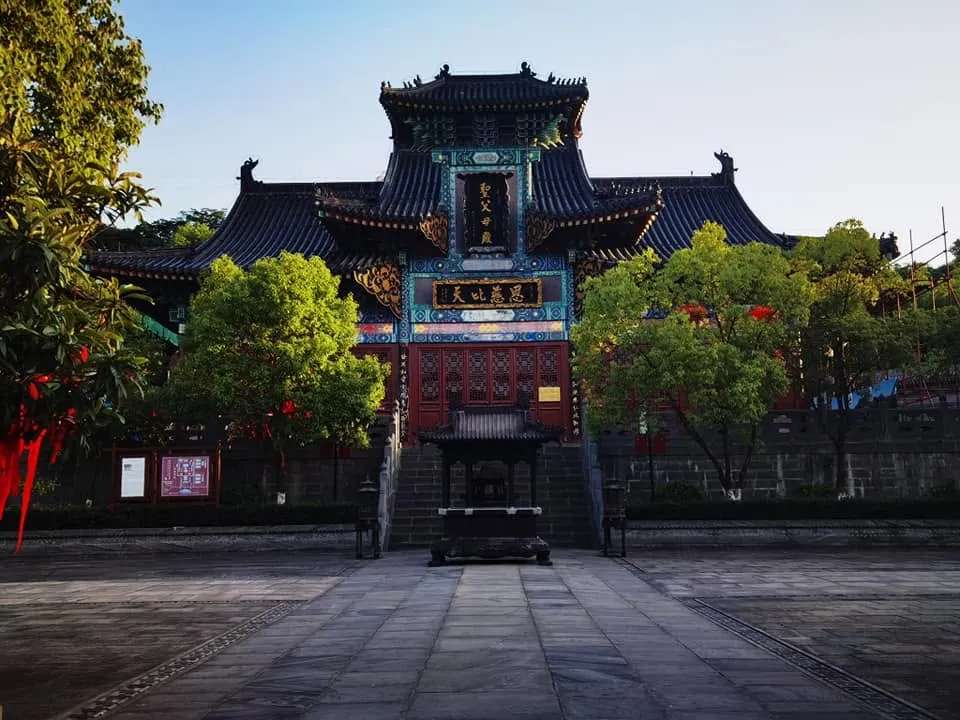
The Academy is one of China’s most prominent institutions for acquiring and deepening theoretical and practical knowledge in the field of Daoist culture. It hosted the seminar on its premises, which are part of Jingle Palace (净乐宫) in Danjiangkou.
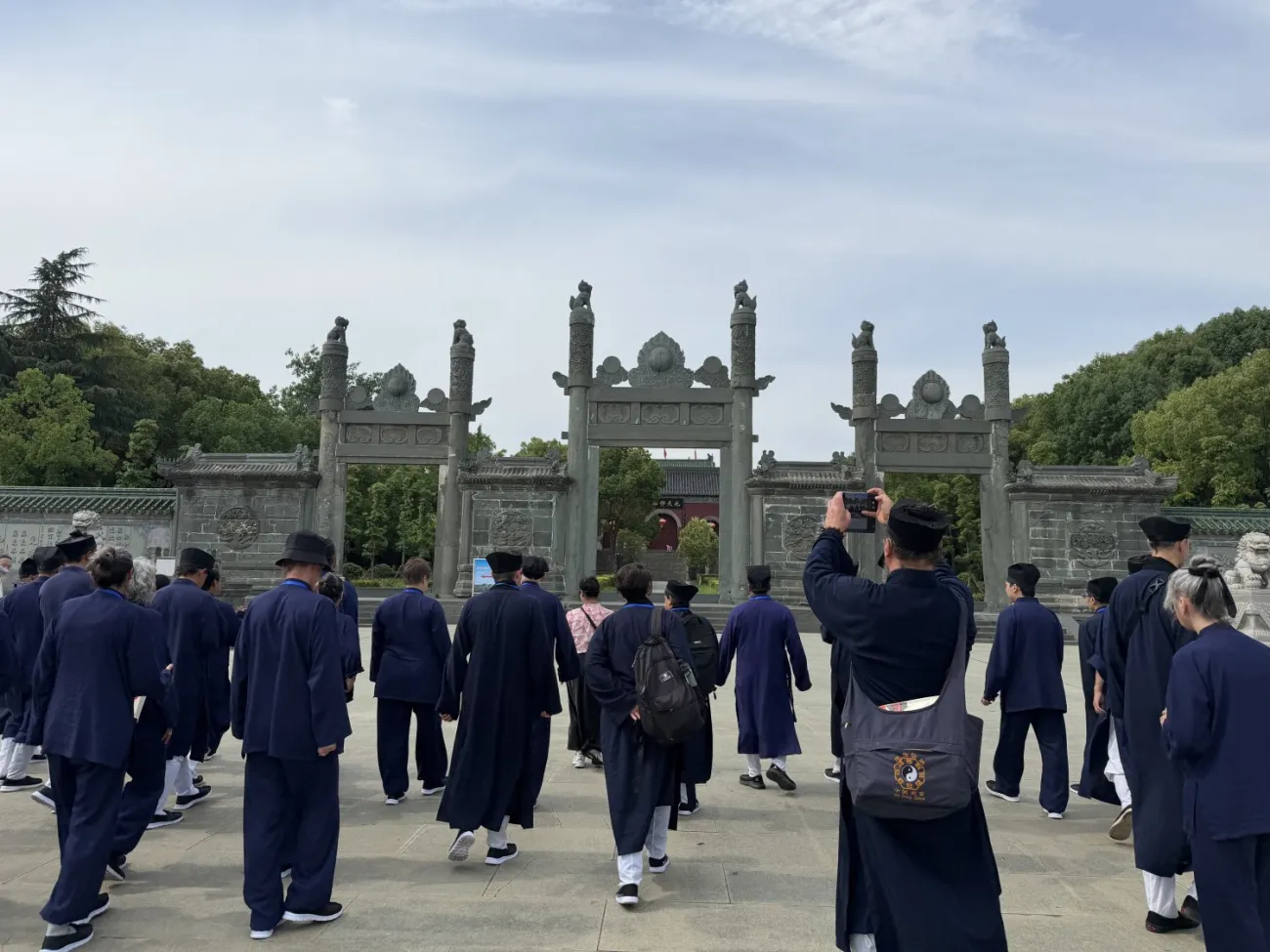
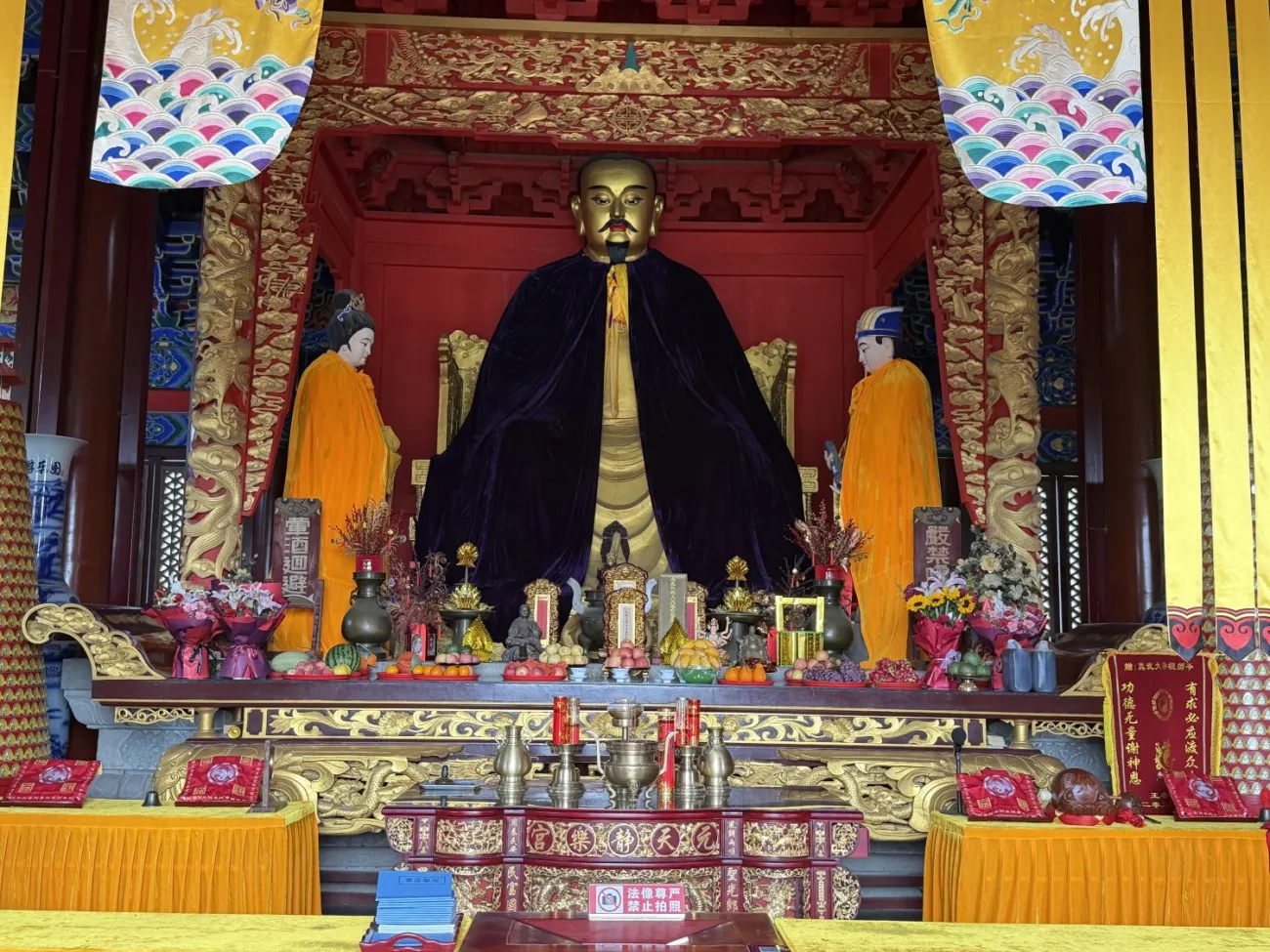
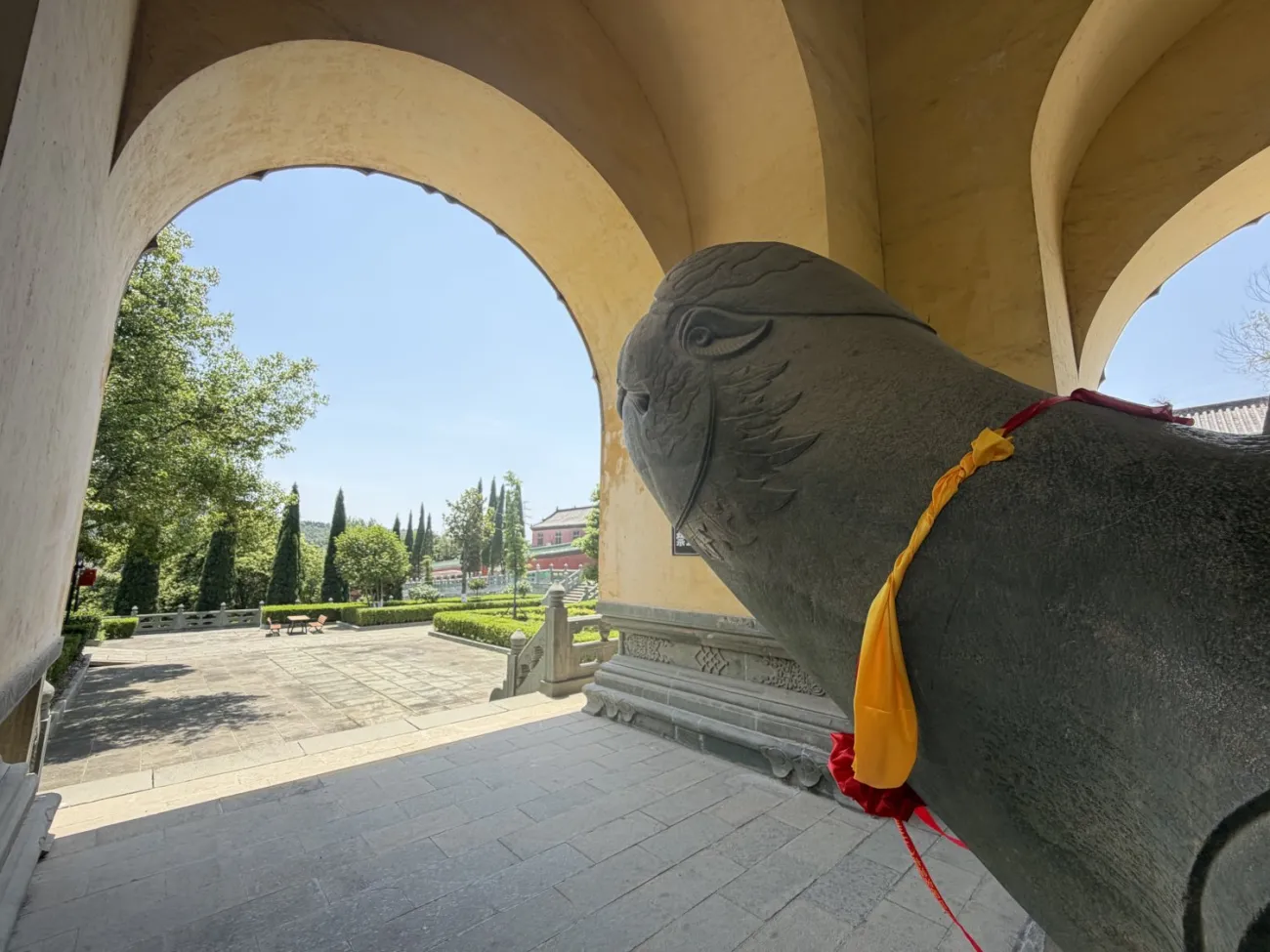
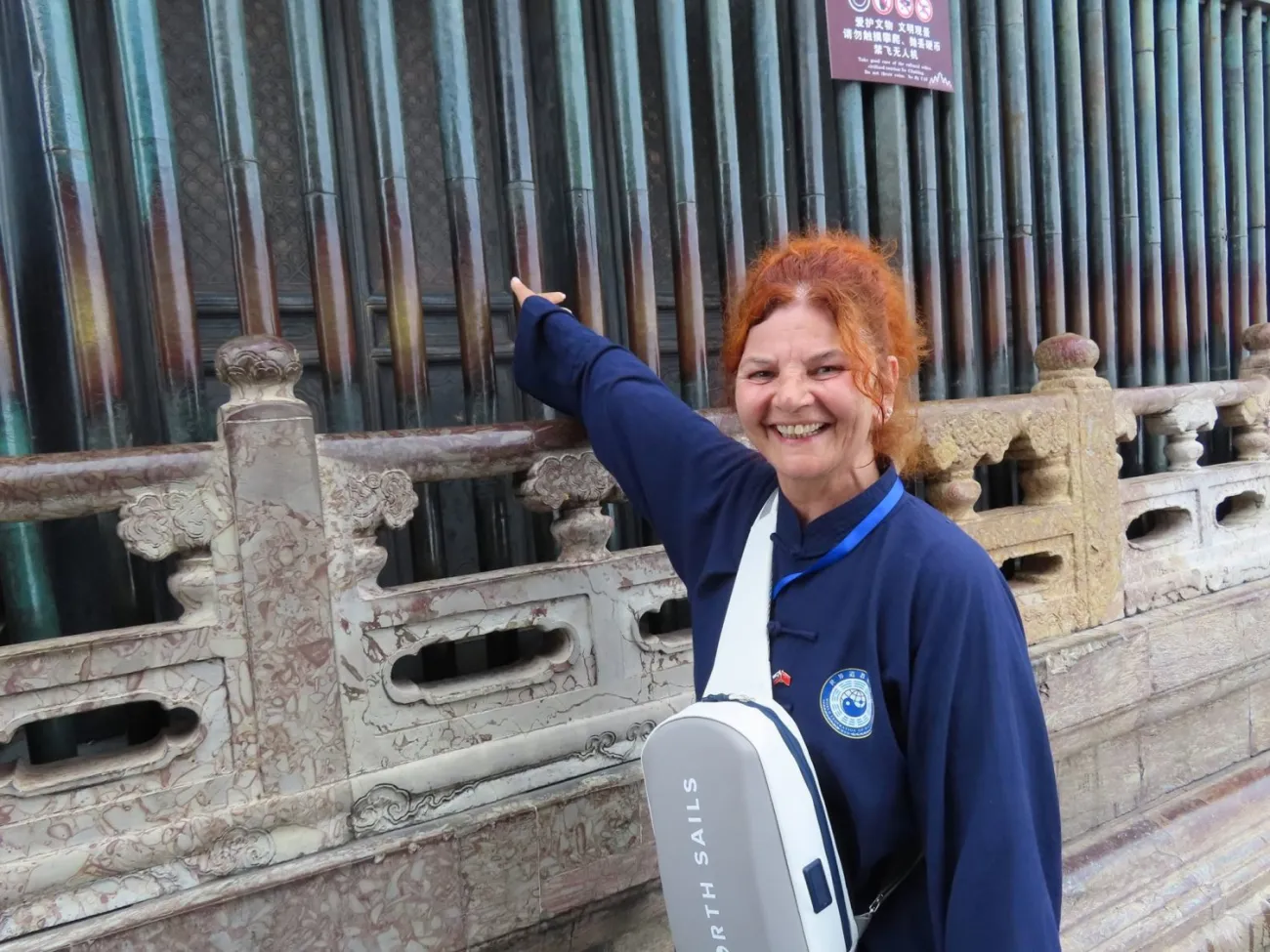
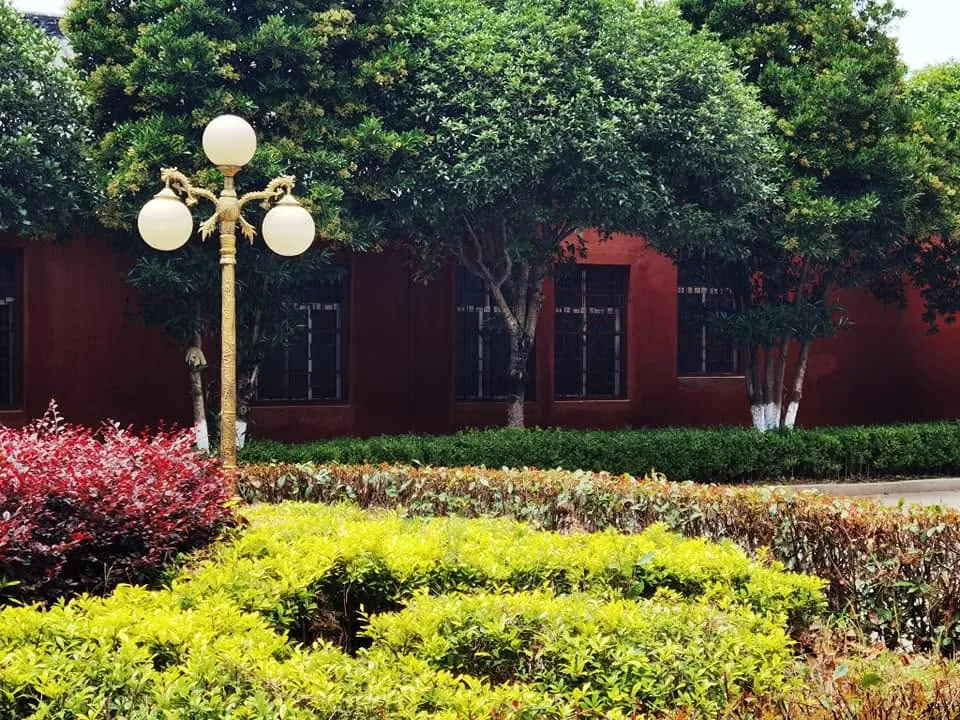
The original Jingle temple was built during the Ming dynasty in the early 15th century. It was regarded as the “first monastery” in the magnificent complex of ancient buildings of the Wudang Mountains. It was dedicated to the supreme Daoist deity Xuanwu. Several decades ago, during the construction of Danjiangkou, Asia’s largest reservoir, which also supplies drinking water to Beijing, the temple was submerged. Sadly, many residents had to move out of the valley, although the state provided them with new homes. Before the submersion, many distinctive stone and wooden parts of the old temple and its cultural artefacts were also saved, including the turtles bearing enormous steles. The reconstruction and restoration of the temple, for which architects used plans from the Ming dynasty period, began in 2002 and were completed after 14 years. Jingle Palace thus came back to life as a witness to Daoist cultural heritage and, not least, to the care devoted to preserving it.
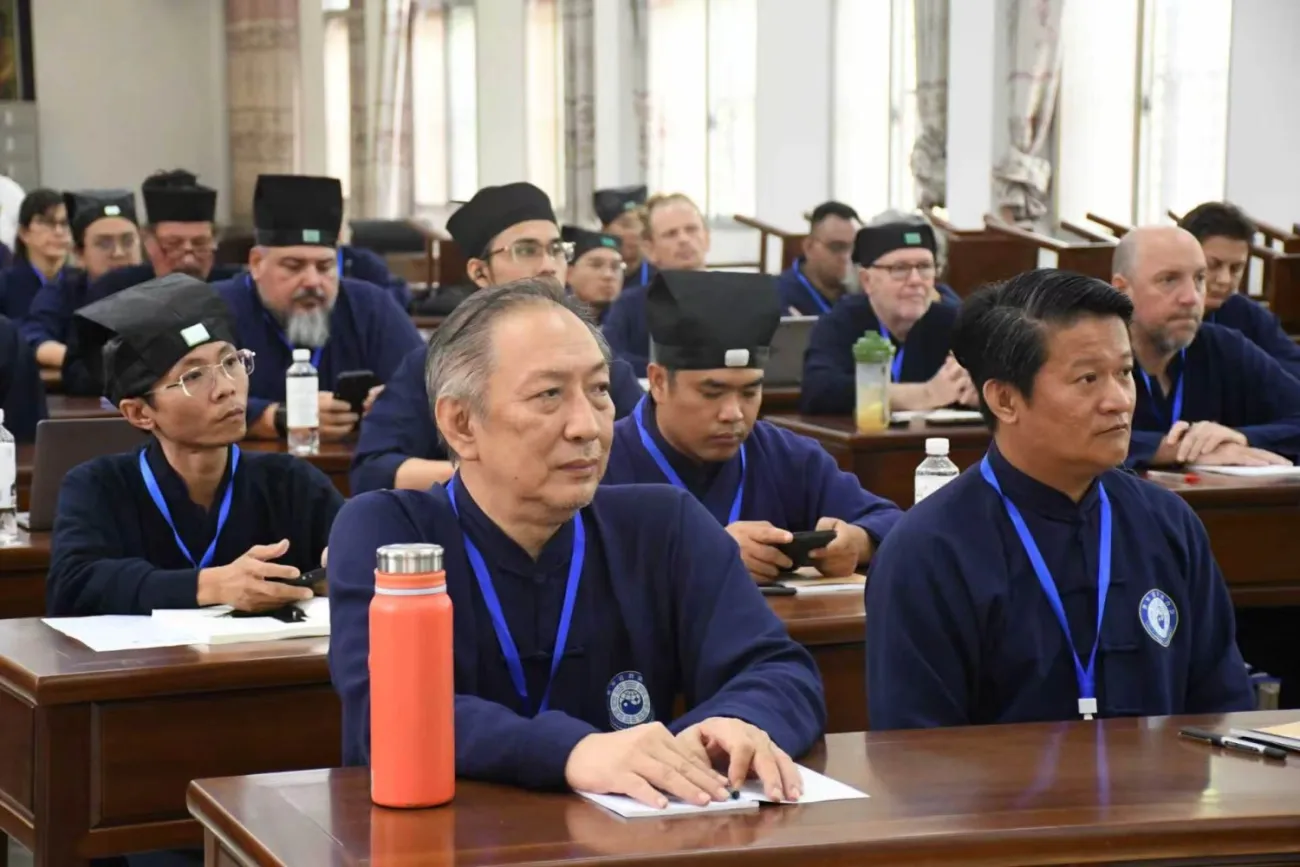
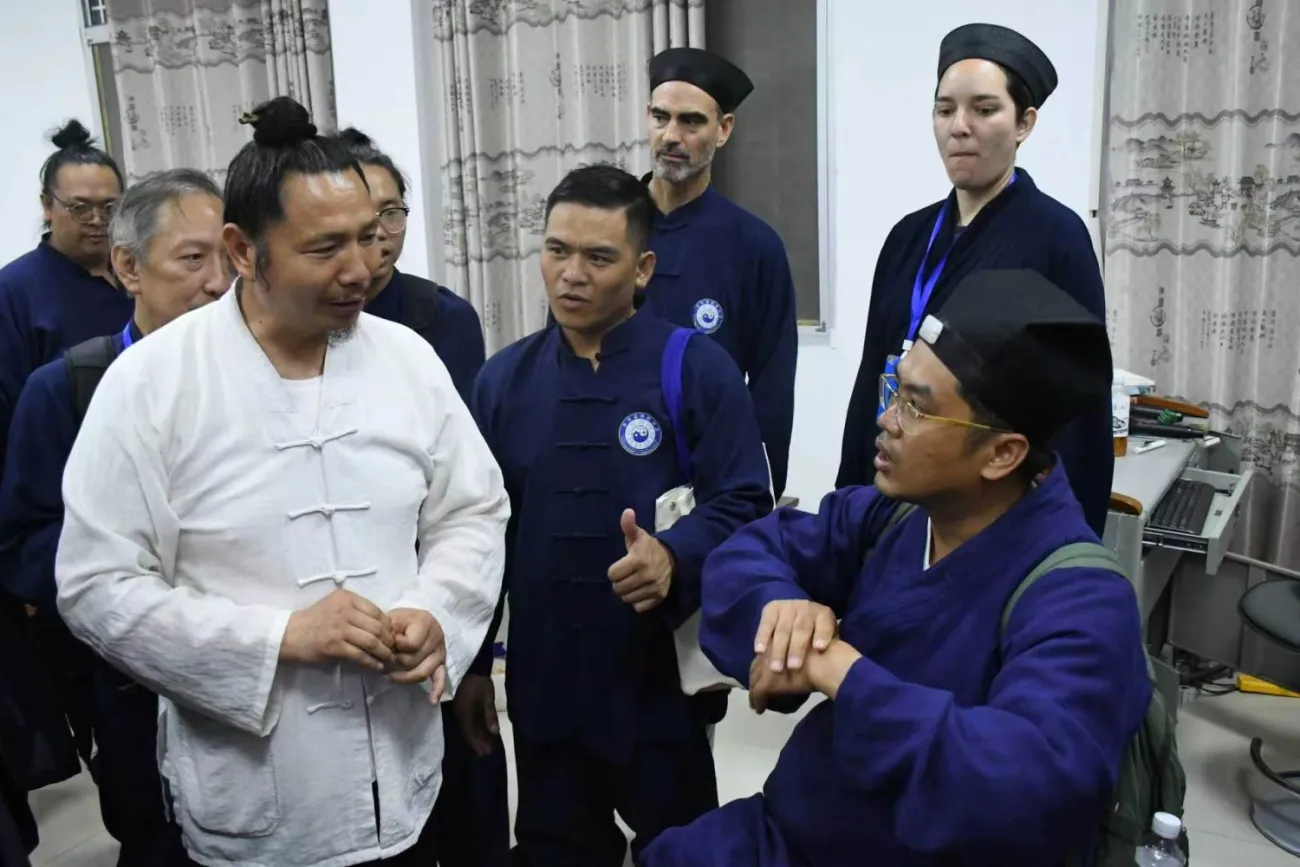
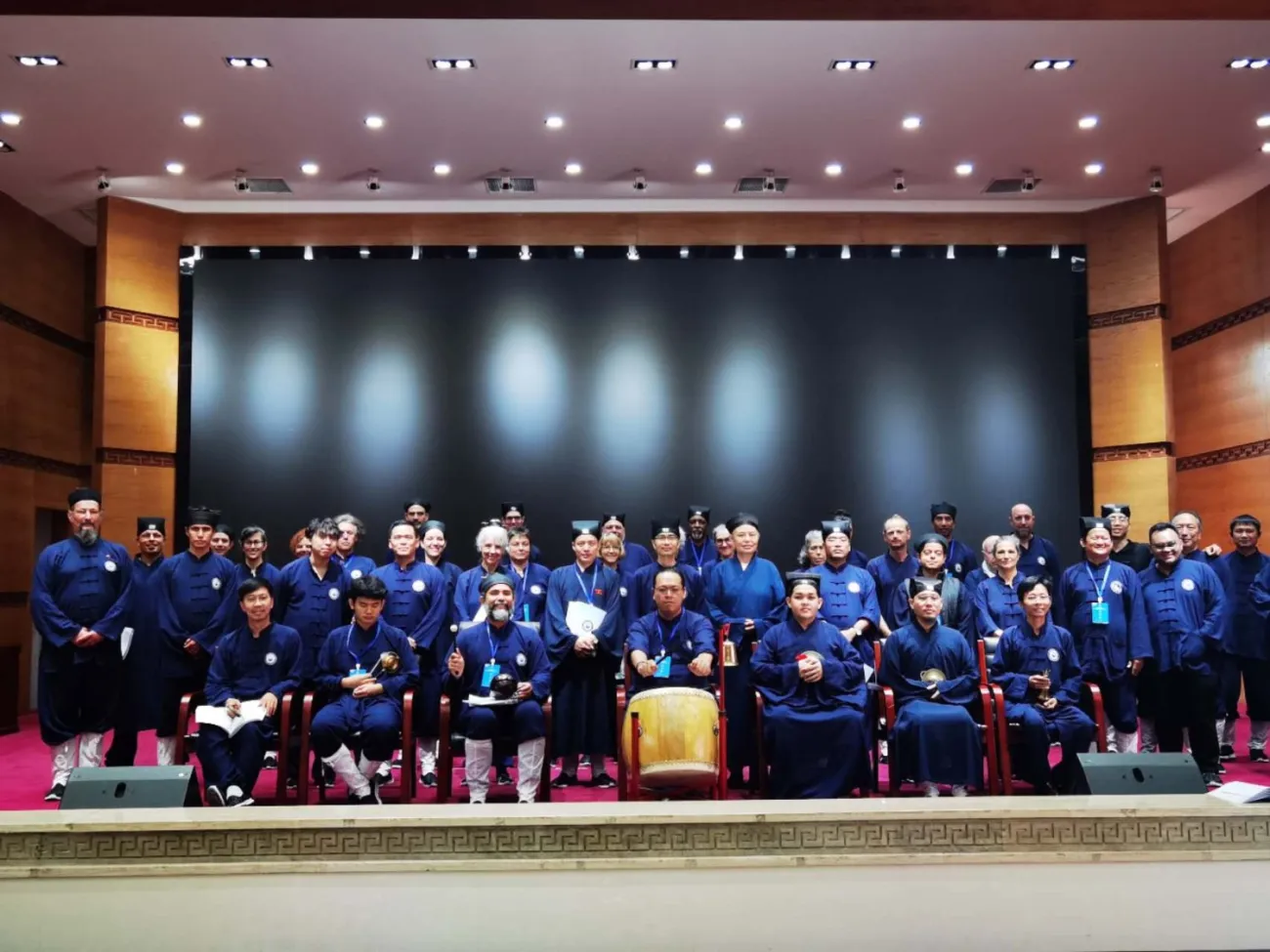
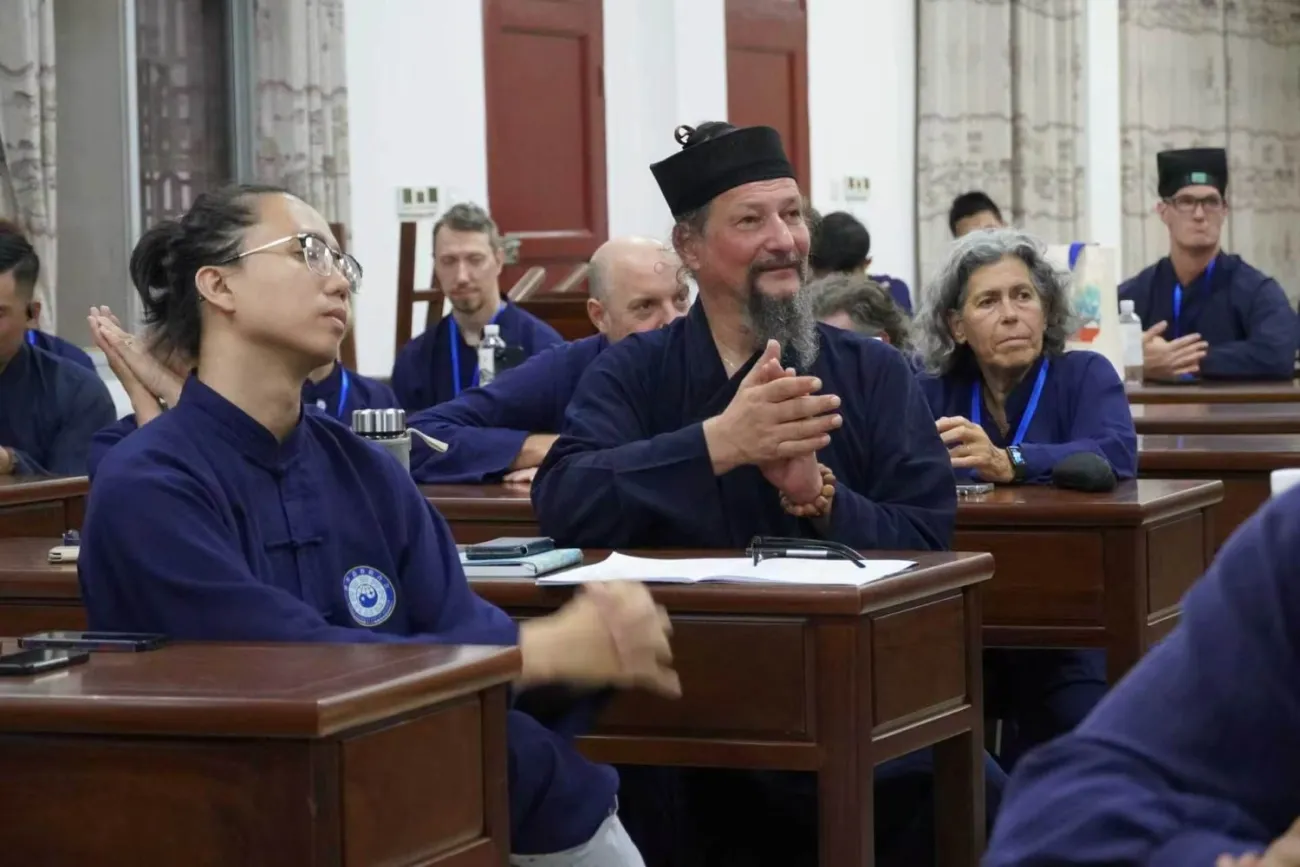
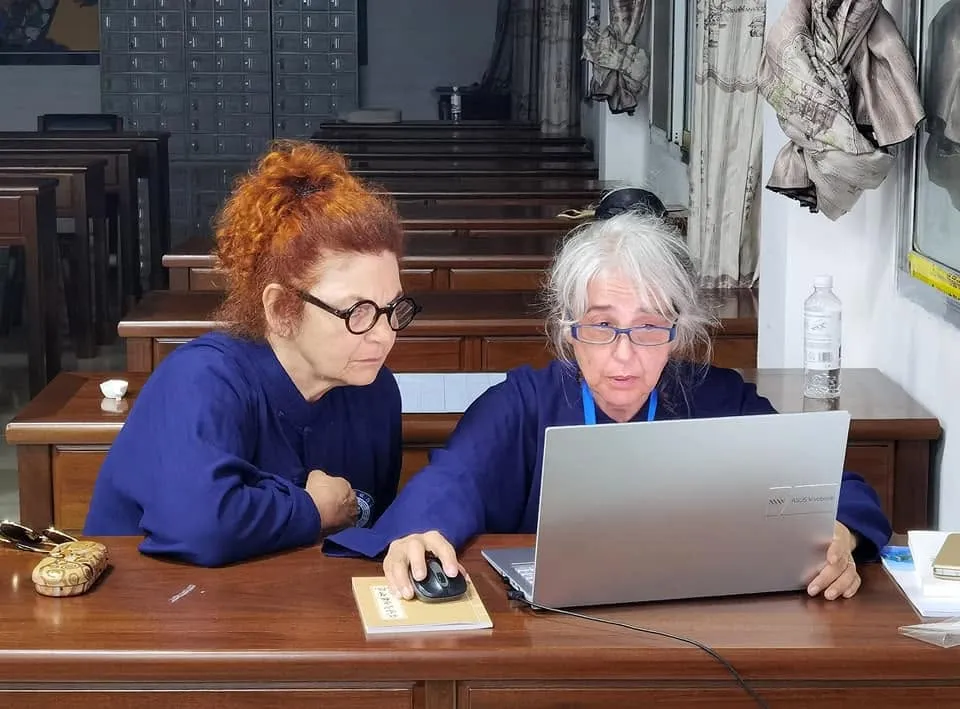
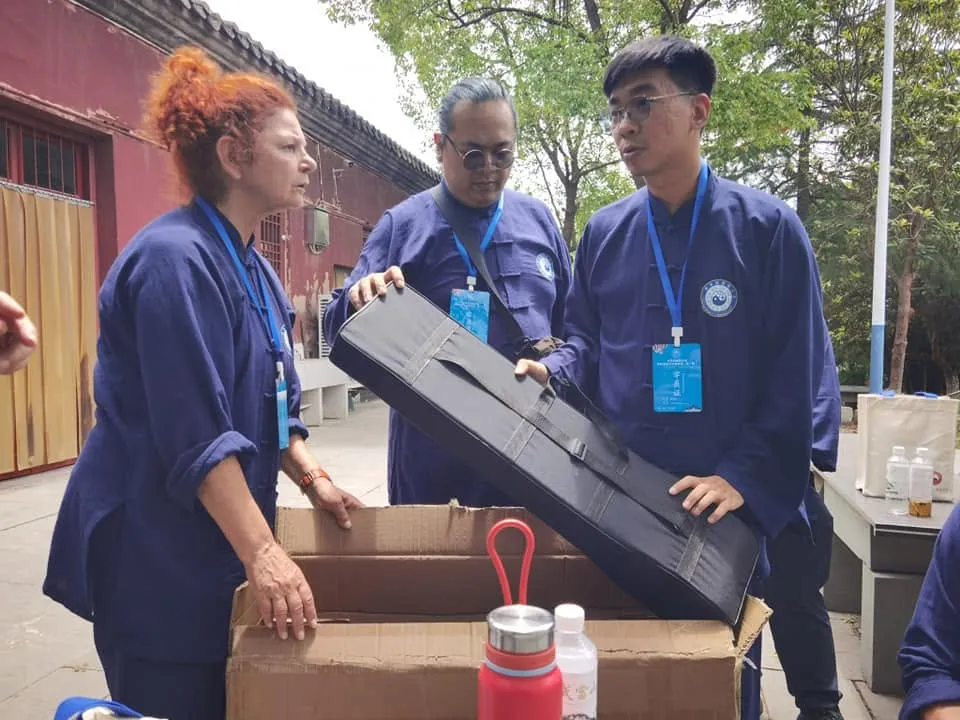
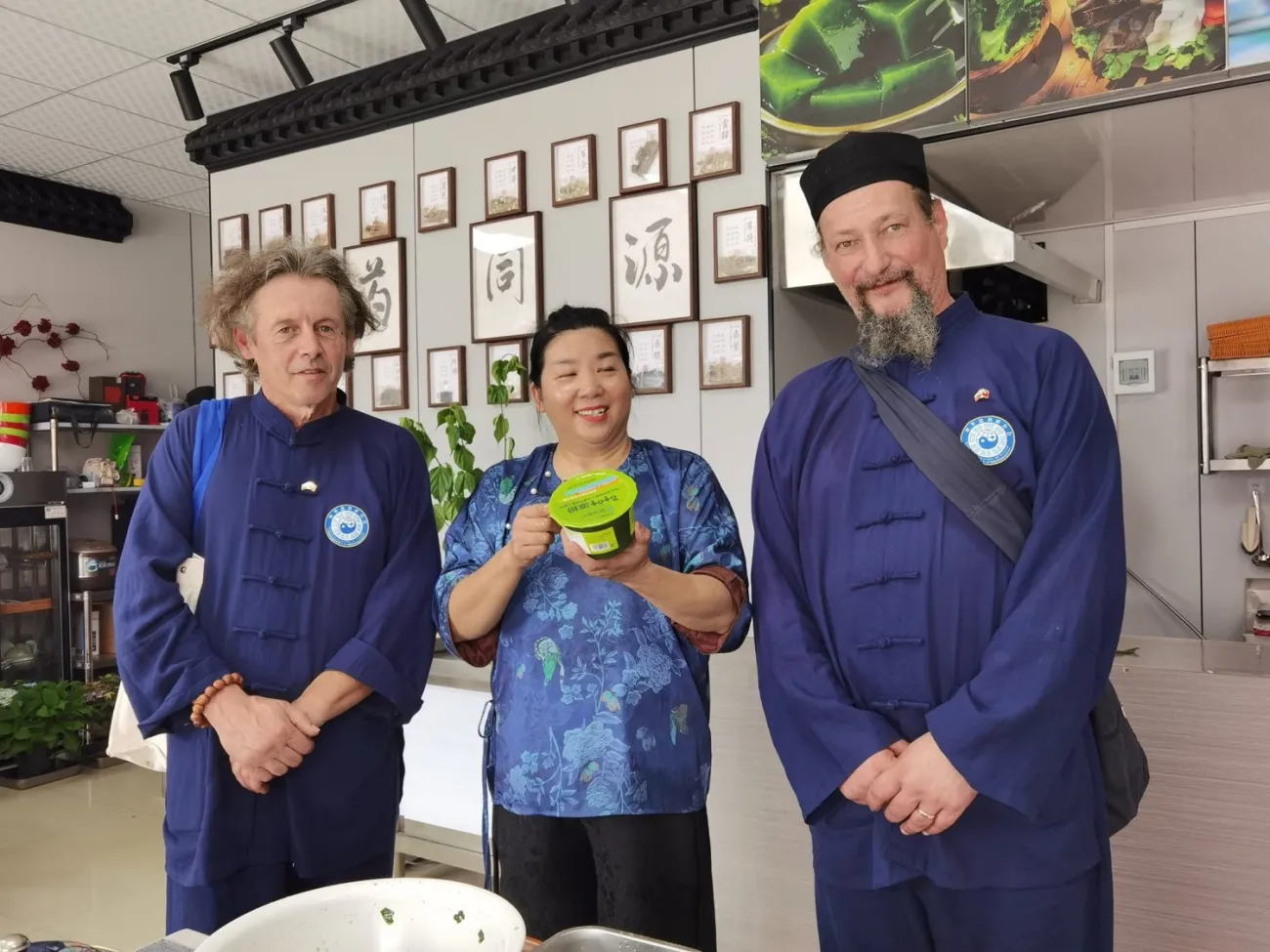
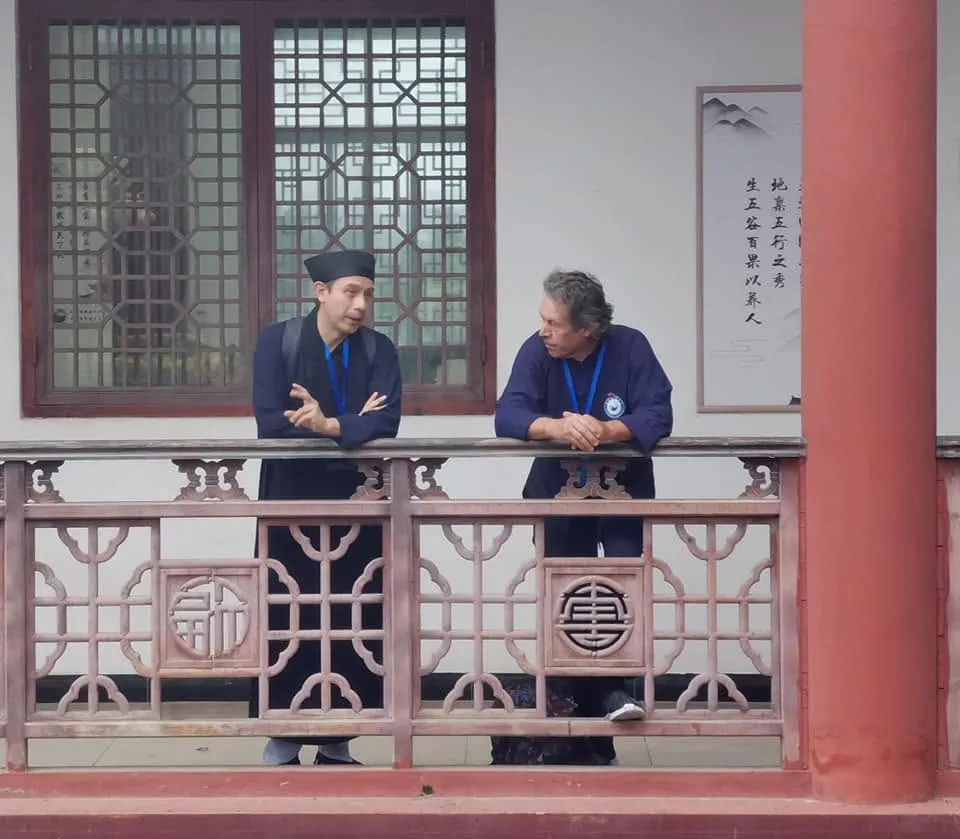
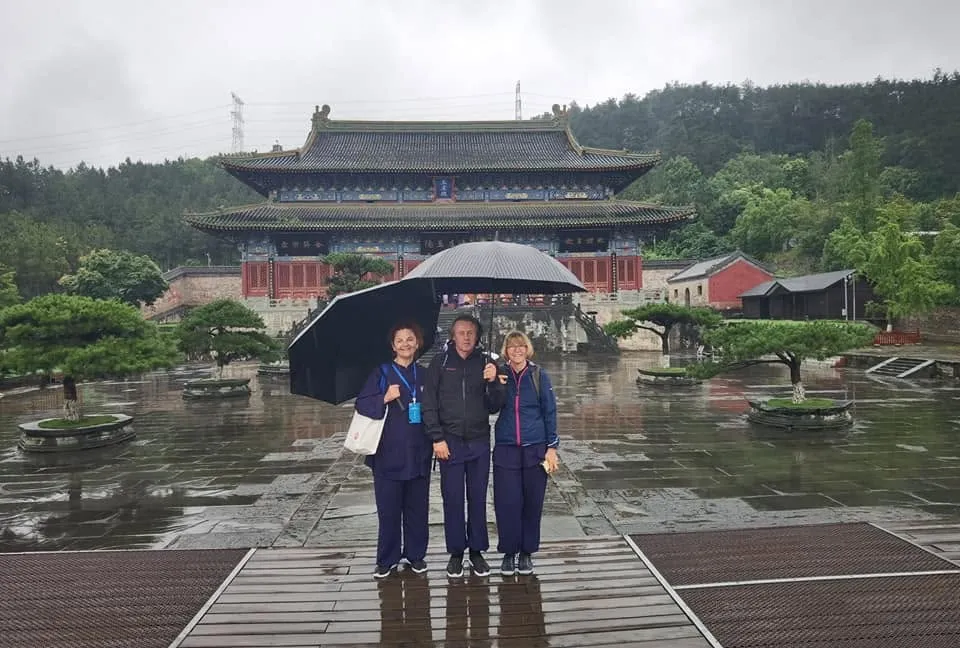
The students invited to the training flew to Danjiangkou from different parts of the world, from Vietnam to Indonesia, Mexico, the United States of America, Switzerland, France, Russia, and of course Slovenia. Our group consisted of five members of the Slovenian Daoist Temple of Supreme Harmony (SDT), which also made it possible for us to attend the seminar. The group included SDT Rector Jure Čeh, SDT Vice-rector Darija Mavrič Čeh, SDT member Špela Hrastnik, SDT senator Uroš Hrastnik, and myself.
At the opening ceremony, the President of the World Federation of Daoism, Li Guangfu (李光富), emphasized, among other things: “We are pleased to see that Daoist friends have become like seeds of Daoist culture sown throughout the world. In their own countries they have taken root, grown, blossomed, and borne fruit. They have brought fresh vitality to the international dissemination of Daoist culture. Today, another fifty Daoist friends from eight countries have travelled thousands of kilometres to gather here. Today they will begin a new journey of learning the Dao and self-cultivation.”
Daoism is an important part of traditional Chinese culture and a spiritual treasure of humanity, he further stressed: “Its core ideas, such as ‘the Dao follows nature’/ Dao fa ziran (道法自然) and ‘the highest good is like water’/ Shang shan ruo shui (上善若水), represent the Chinese people’s profound insight into the laws of the universe, the patterns of nature, and the true meaning of life. These ideas not only offer guidance for personal self-cultivation, but also provide valuable Eastern wisdom for addressing the shared challenges faced by today’s world, such as the ecological crisis and conflicts between civilizations.”
The seminar was taught by renowned masters, teachers, and instructors from different Daoist fields — one could say from the many faces of Daoism, which flow together into a comprehensive insight into an ancient, yet still very living, wisdom of life. This wisdom does not offer instant answers; rather, it opens ever new questions and reveals ever new paths of the Way, the Dao, in exploring the depths of the human being, inner cultivation, existence, the cosmos, and the yin-yang interconnectedness of everything on the micro and macro levels, where the galactic energies of the universe’s spacelessness and timelessness swirl and balance.
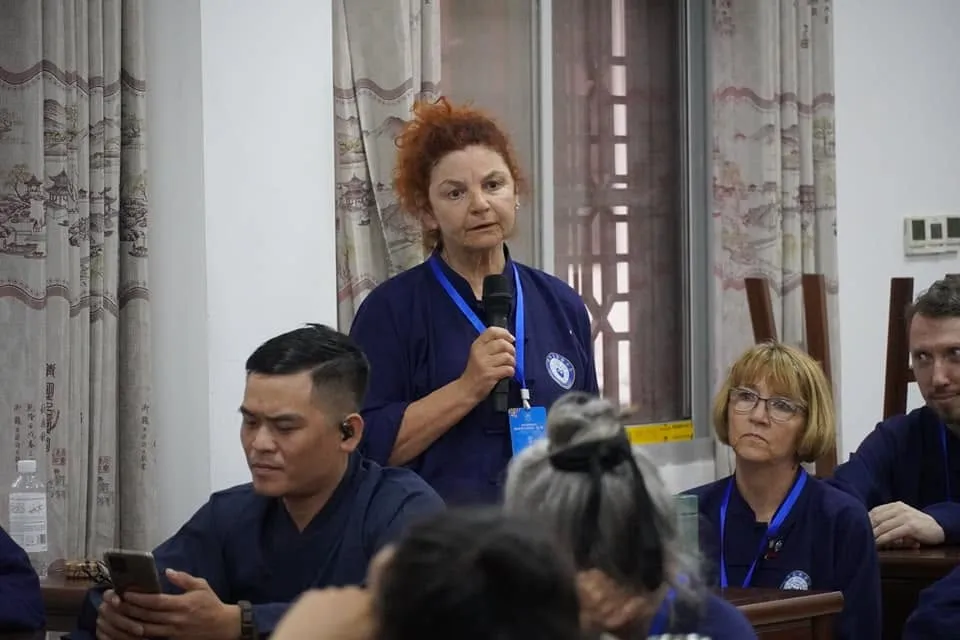
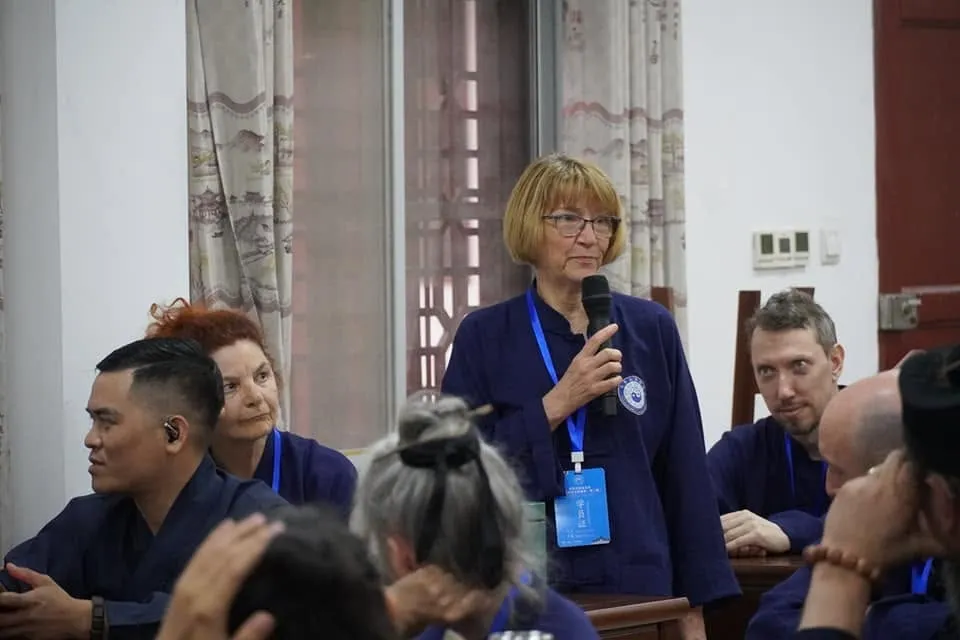
The seminar was very well structured, with a balance of theoretical and practical lectures and exercises scheduled throughout the day. It had been upgraded on the basis of last year’s experience. In my view, it was a very good decision that, unlike last year, when participants immediately took part in the morning and evening rituals, we first learned to sing and recite the ritual texts. This year’s main themes were precisely the Wudang morning and evening rituals and Wudang Taijiquan.
Wudang Morning and Evening Rituals
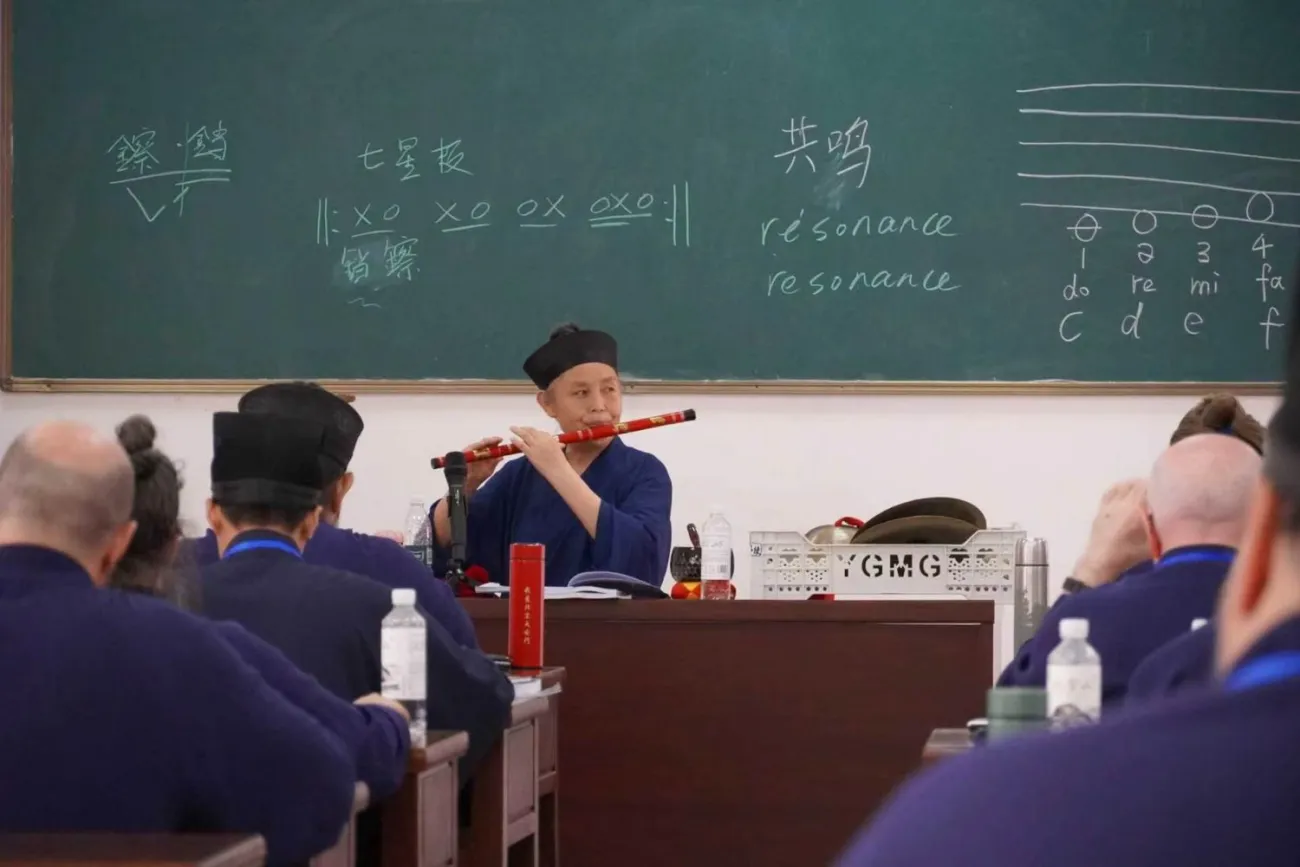
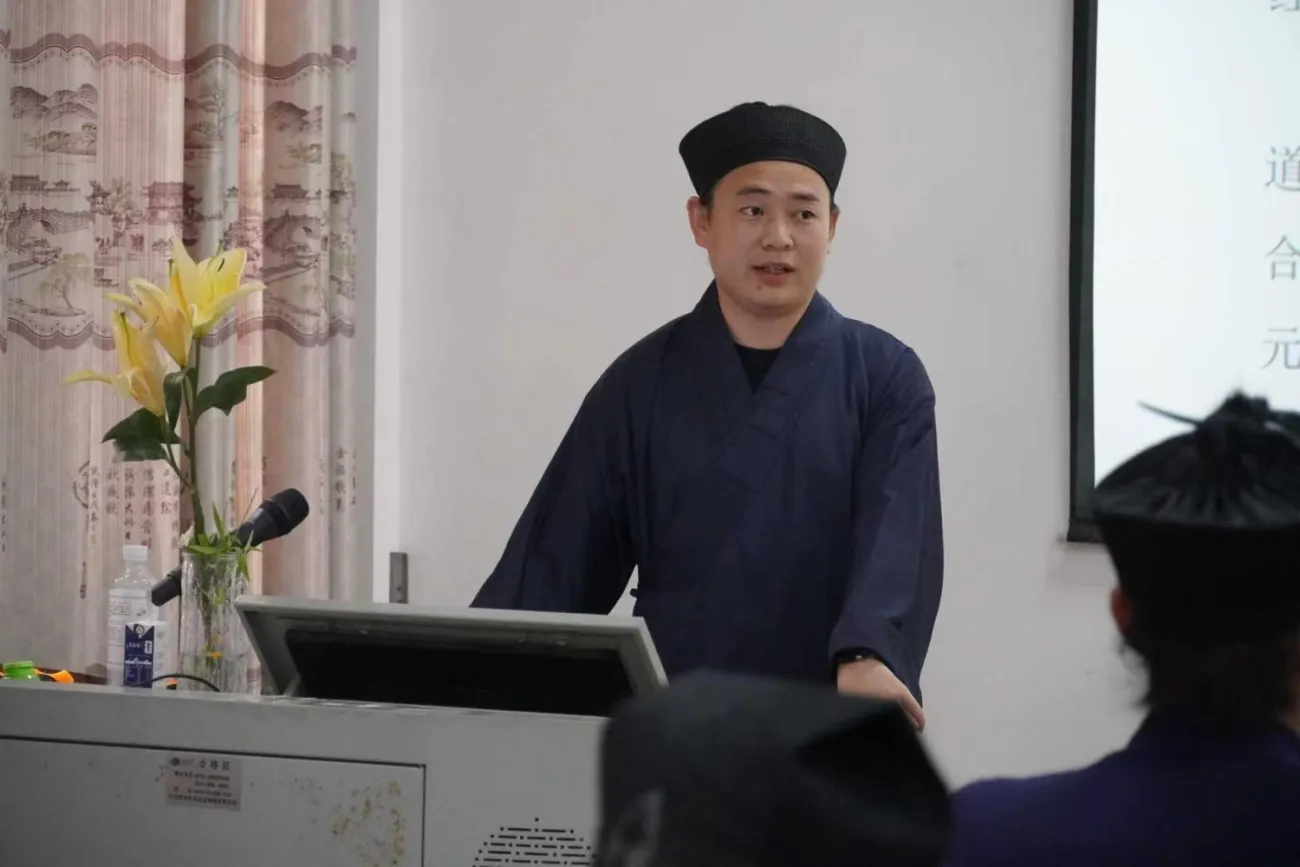
We were introduced to the Wudang morning and evening rituals by one of China’s most prominent masters in this field, Wu Junli (武俊丽), who is also Deputy Secretary-General of the Wudangshan Daoist Association and whose work makes an important contribution to the preservation of Daoist music and the promotion of Daoist culture in China and around the world.
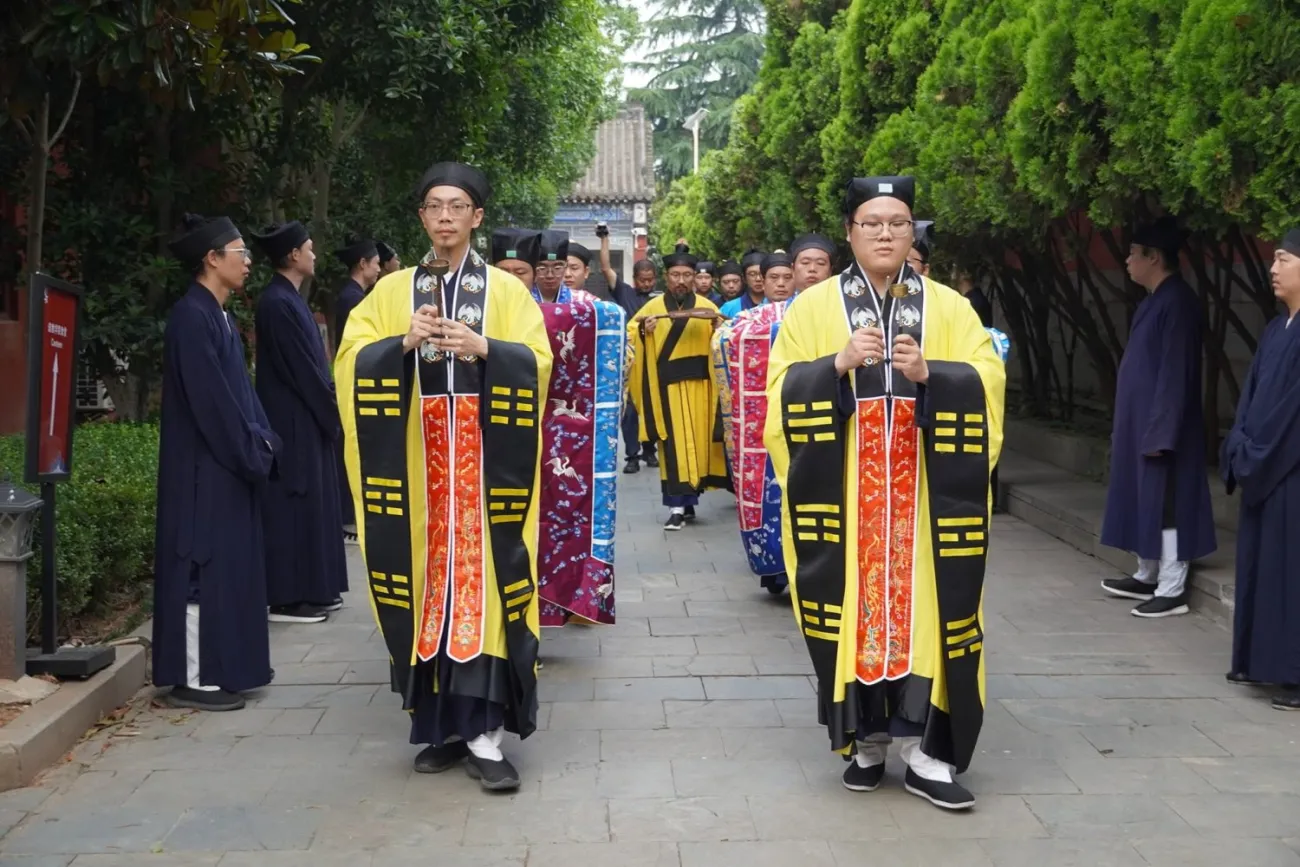
In her lectures and workshops, we learned to sing and recite two sets of ritual texts performed by Daoist priests as regular daily morning and evening liturgy between 5 and 7 a.m. and between 5 and 7 p.m.
Accordingly, the ritual writings are collected in two parts: The Supreme Daoist Scriptures of the Morning Ritual and The Supreme Daoist Scriptures of the Evening Ritual. They include sacred texts, poetic hymns, and sacred incantations from fundamental works such as Eight Great Divine Incantations, the Daode Qingjing jing on Clarity and Stillness, spoken by the Supreme Lord Lao, The Golden Letter on the Jade Seal of the Mind of the Celestial Ruler of Imperial Majesty, as well as hymns to various Immortals and True Lords.
The aim of the morning and evening rituals is to awaken a person’s “original nature” and “true heart-mind consciousness.” Without ritual singing and recitation, it is not possible to preserve “primordial harmony.” These writings are also a gateway to human virtues and to the path of inner cultivation, that is, the nurturing of one’s own spiritual nature.
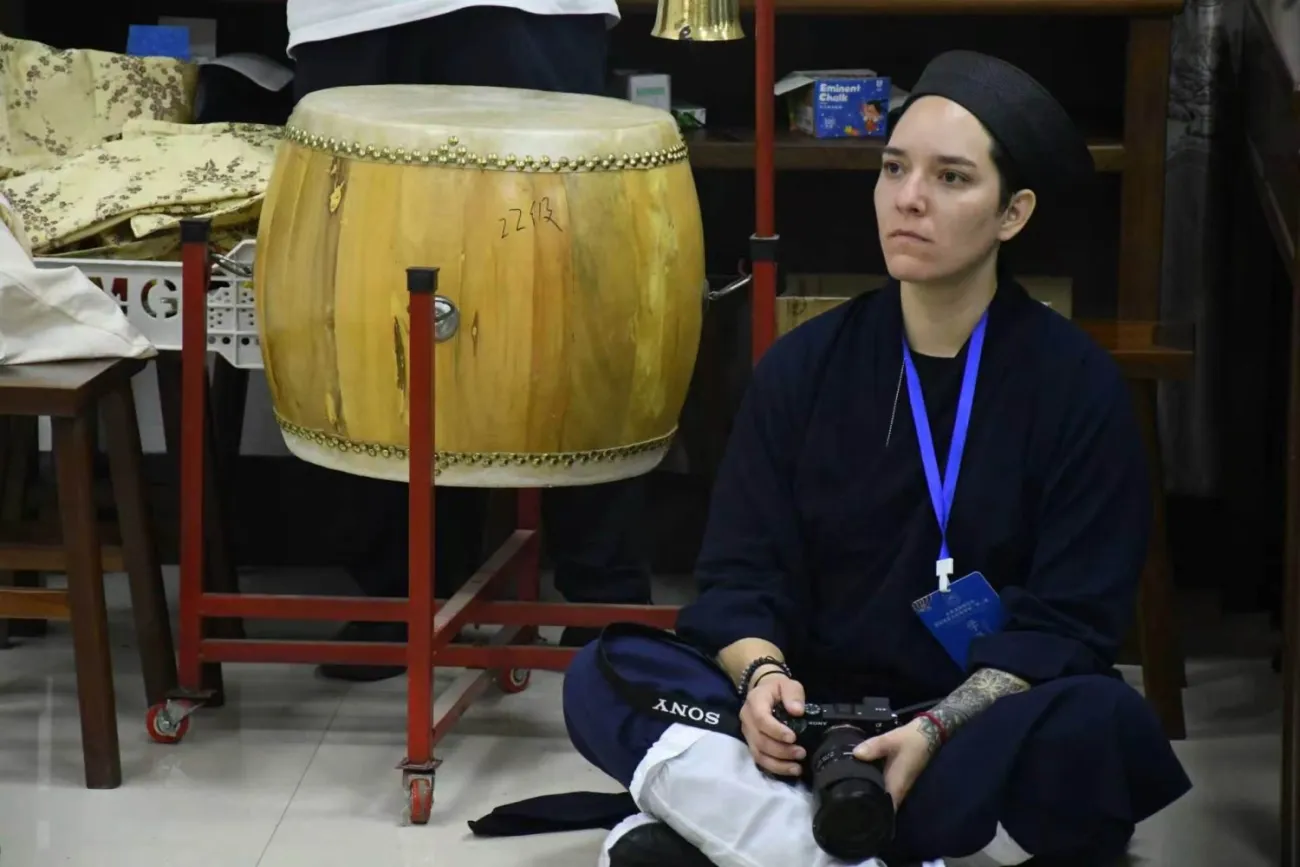
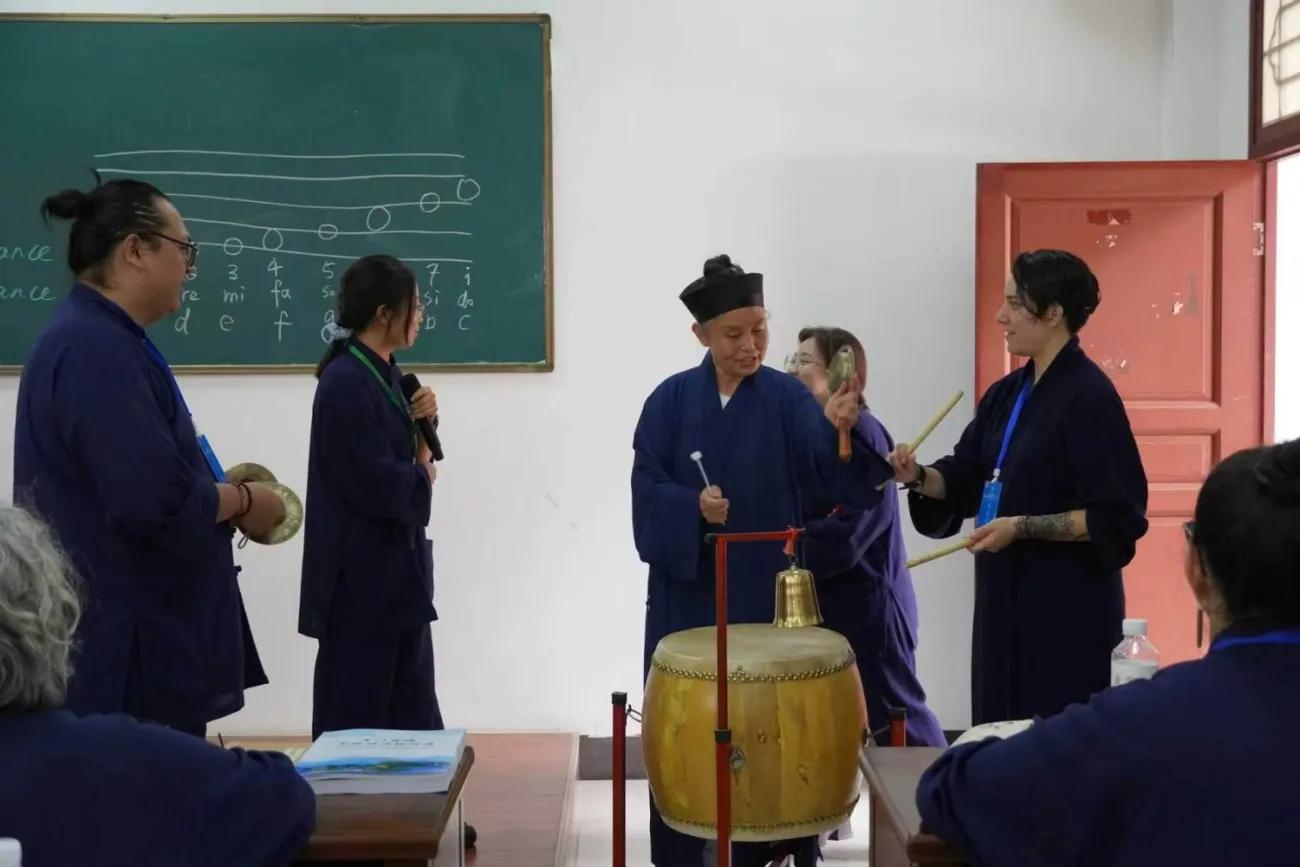
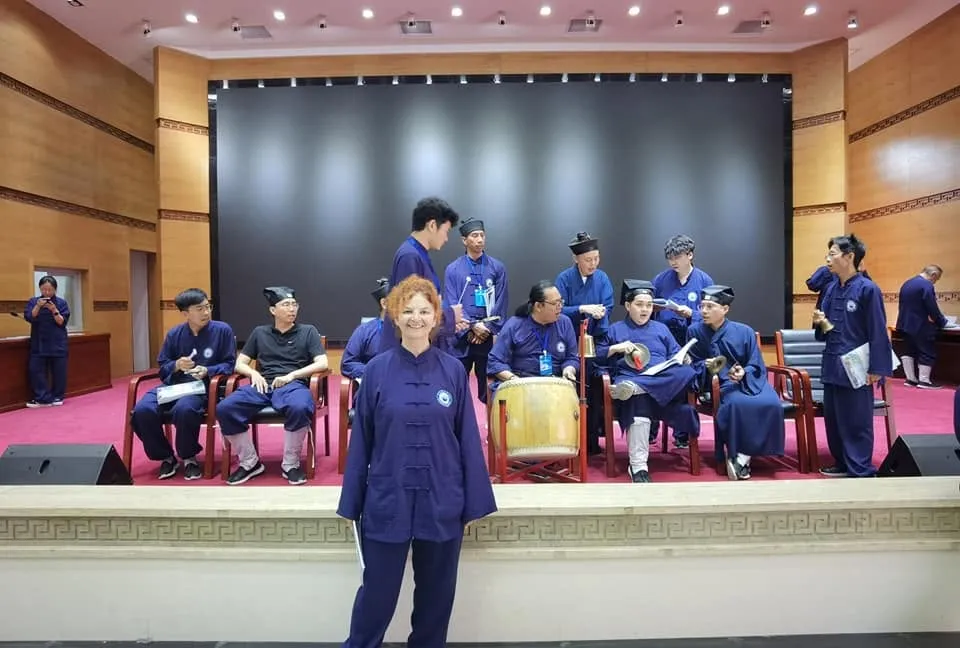
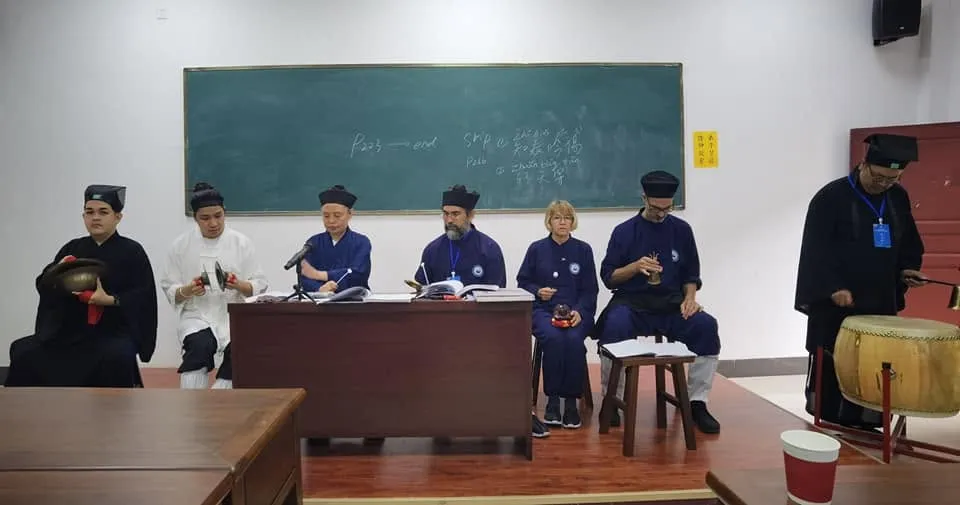
During the lectures, we accompanied the singing and recitation with percussion instruments, and the lecturer repeatedly invited us to try playing the instruments, which form the backbone of the ritual rhythm. We had at our disposal a drum, wooden fish, cymbals of various sizes, a small gong, a singing bowl, and a bell.
At first it was truly difficult to catch the rhythm and melody and to follow master Junli’s exceptional singing. Yet through persistent daily practice, repetition, and her calm, encouraging, always smiling patience, we nevertheless managed to learn enough that in the final days we could already actively take part in the morning and evening ritual in one of the temple halls. In learning, at least a basic knowledge of the pronunciation of pinyin, which I had practised for some time before leaving for China, certainly helped me.
When You Feel the Full Power of Ritual Singing, Recitation, and Music
The morning and evening rituals do not differ in their sequence; only the songs and recitations are different.
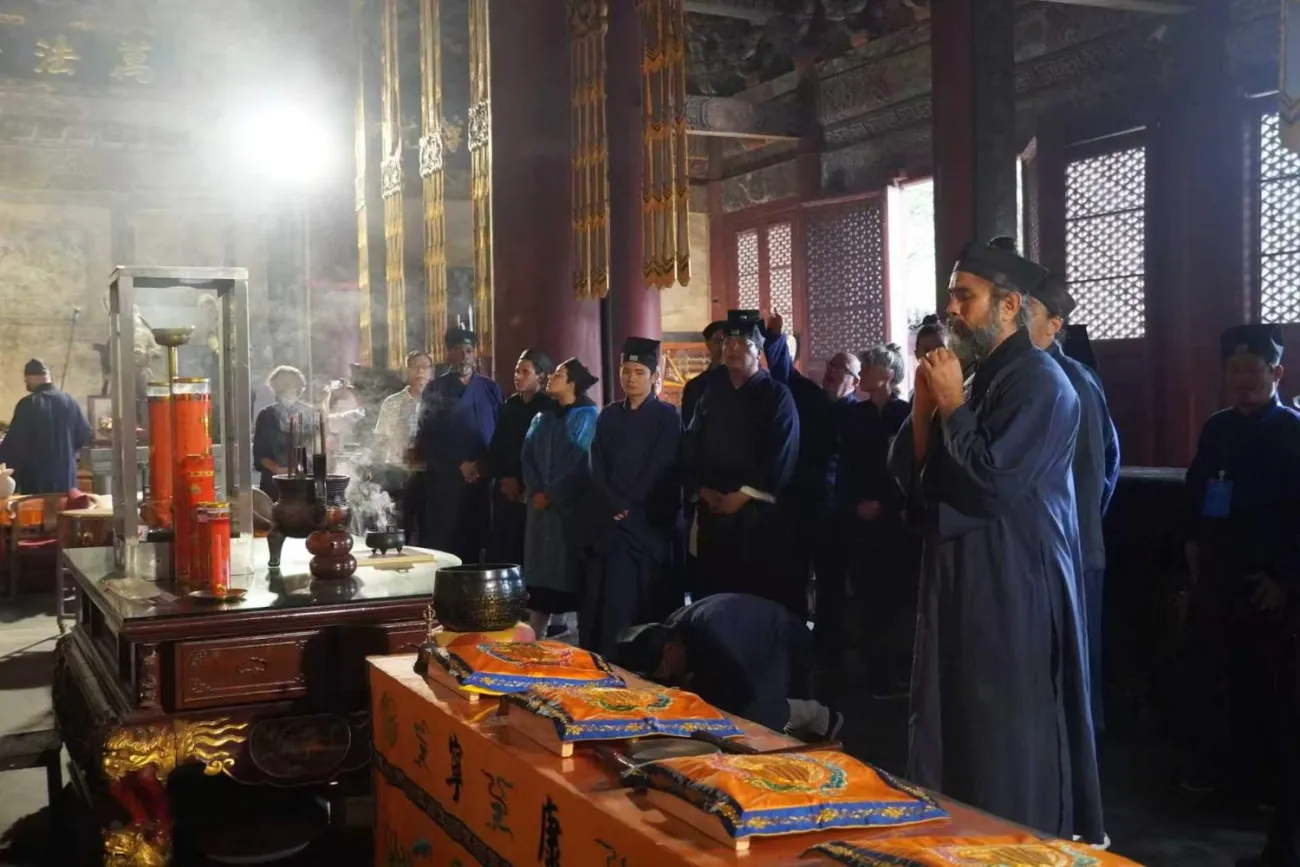
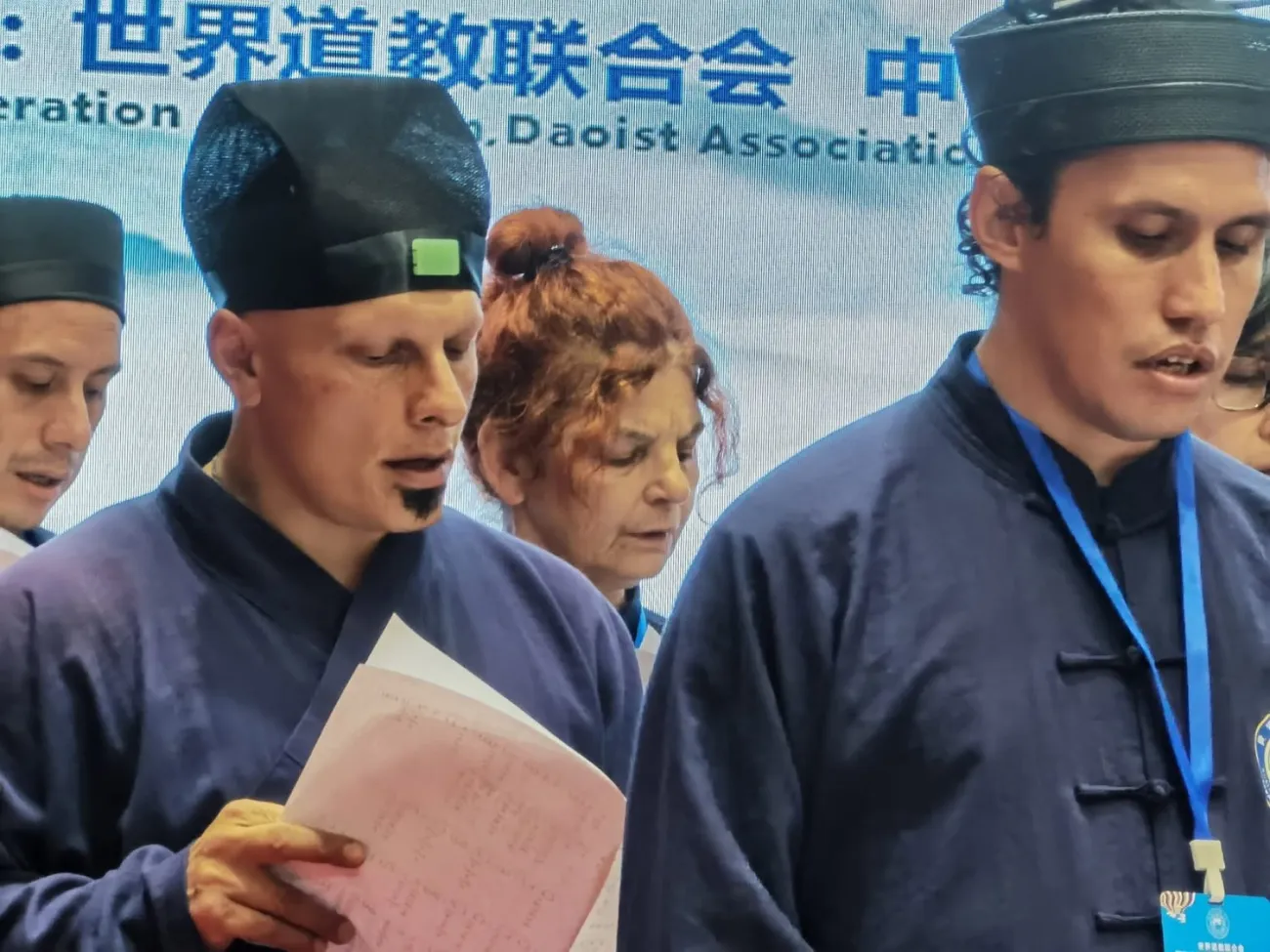
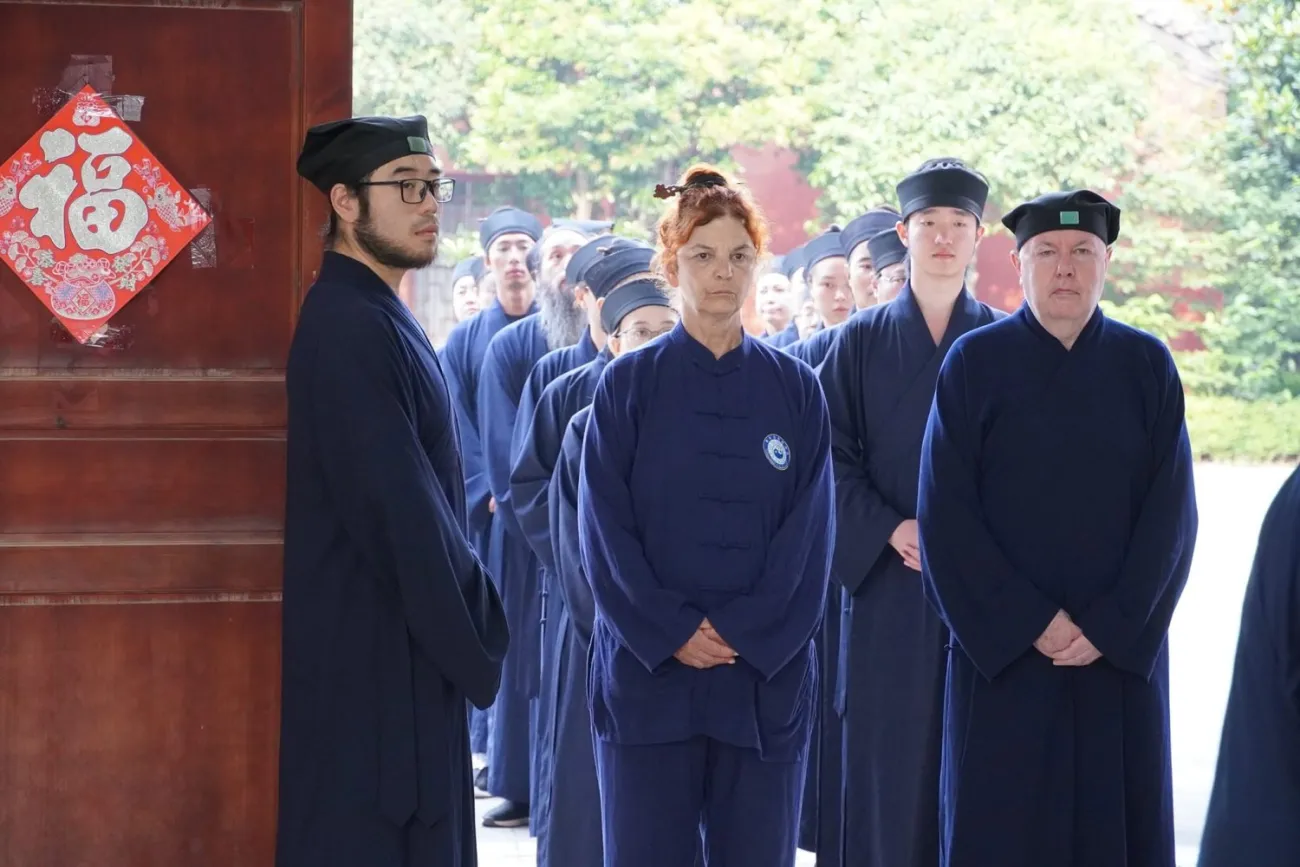
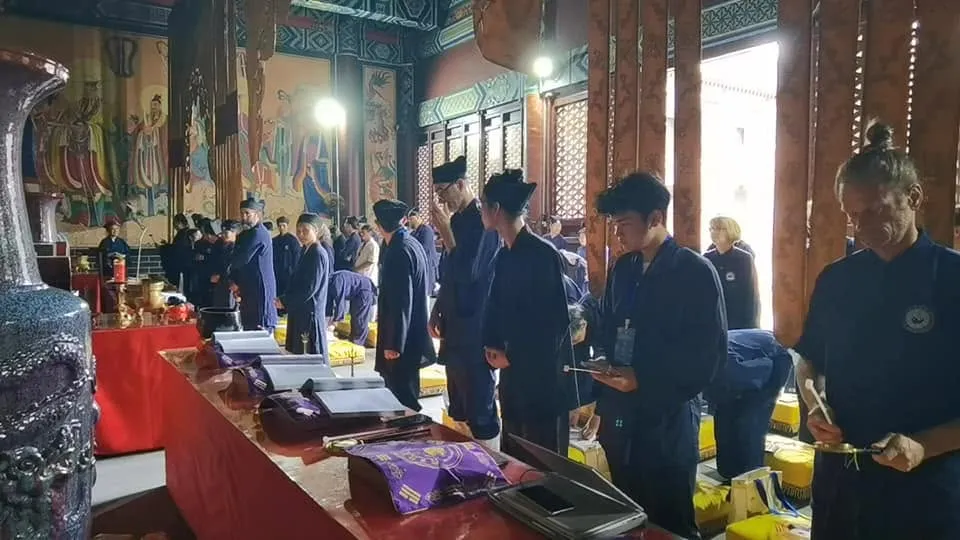
The call to the ritual in one of the halls of Jingle Palace began with the drum. When the drumming was repeated for the second time at six in the morning, Daoist priests, seminar students, and outside visitors gathered in two lines. Upon entering the temple, we bowed to the deities and then to one another. We took our places by the kneeling stools. The nearly hour-long ritual began with drumming and a bell, a ritual bow — koutou (叩頭) — and then the singing and recitation of ritual texts, which at moments reach an incredibly rapid rhythm. I should add that in Daoism, koutou expresses, among other things, deep respect and connectedness with nature, the cosmos, and the Dao. By taking part in the ritual, we could fully feel its power and perhaps better understand master Junli’s instruction that during the singing and recitation of ritual songs it is necessary to “empty” the brain so that qi can begin to circulate at all. When we asked her what is essential in the singing, which resembles throat singing but is much more resonant, she replied that the voice must come from the dantian and then resonate in the head.
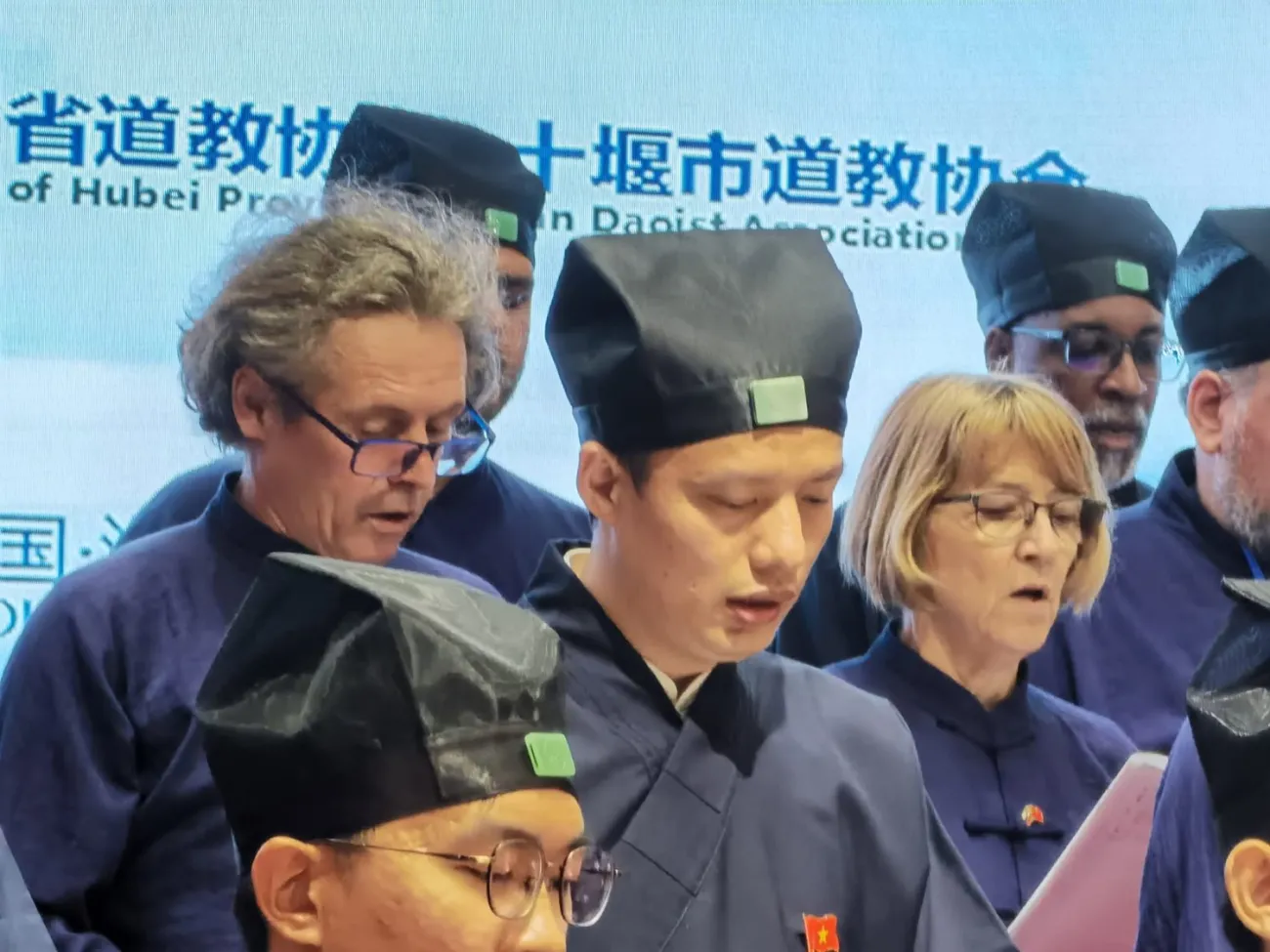
With two ritual songs, we — in my view successfully — presented more than half a month’s work from our lectures. These were Xiao zan (小讚), or Small Hymn, and San gui yi (三皈依), or Three Refuges. The latter is one of the fundamental Daoist texts. It represents a vow to the three treasures of Daoism. These are: Dao (道), the supreme truth and the way of nature; jing (經), the sacred scriptures that transmit wisdom; and shi (師), teachers, or masters. The musical ensemble, made up of skilled students from Indonesia, Vietnam, and Mexico on percussion instruments, was joined during the performance by music masters and students from the Academy, who enriched the sound of the percussion with the transverse flute dizi (笛子), the Chinese lute pipa (琵琶), and the Chinese hammered dulcimer from the family of struck zithers, or yangqin (扬琴). During rehearsals, when we sometimes sang and recited for 40 minutes at a time, Professor Junli kindly handed out throat sweets to us several times, and at the end of the seminar she gave each of us a talisman.
Wudang Taijiquan
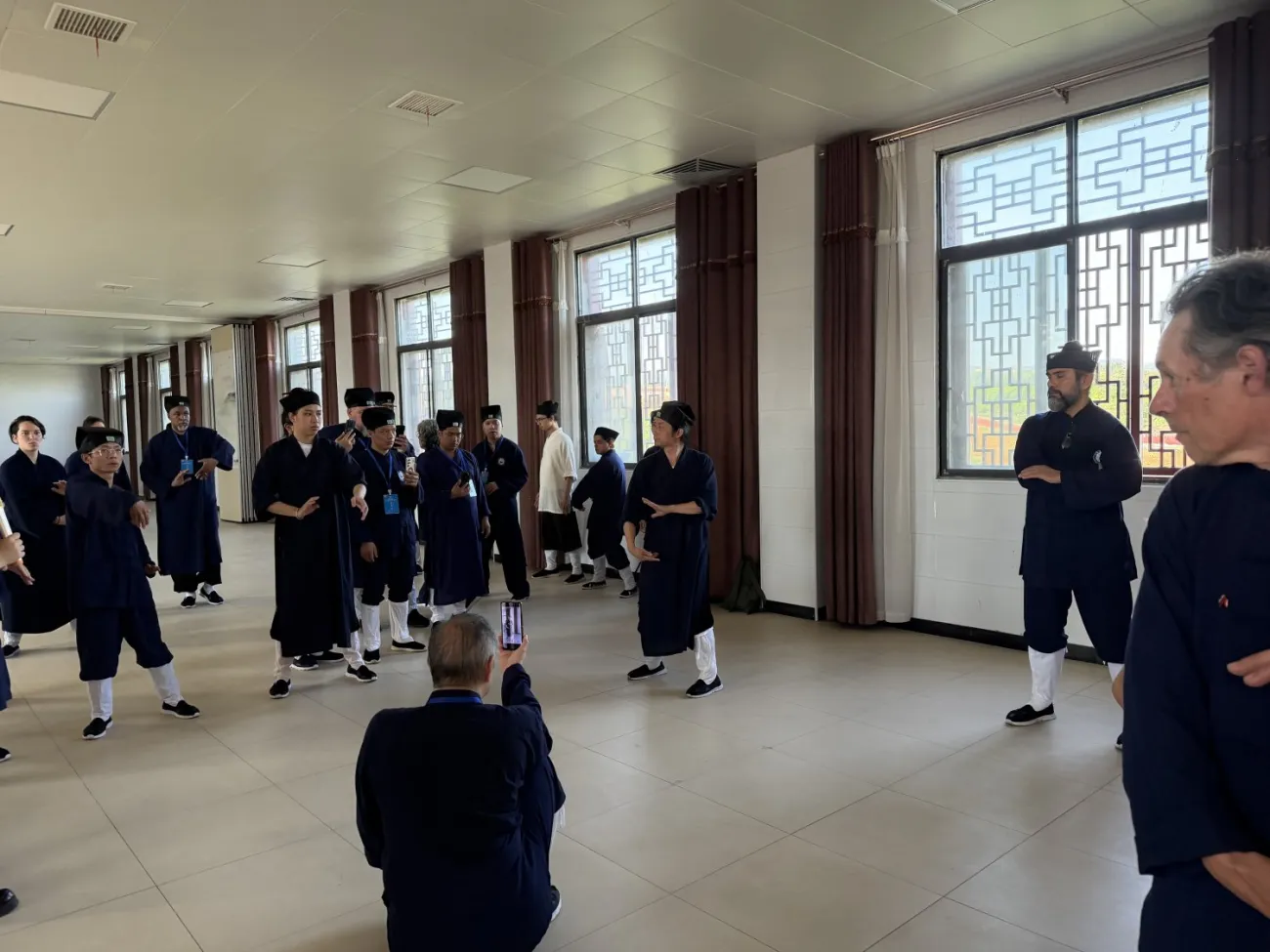
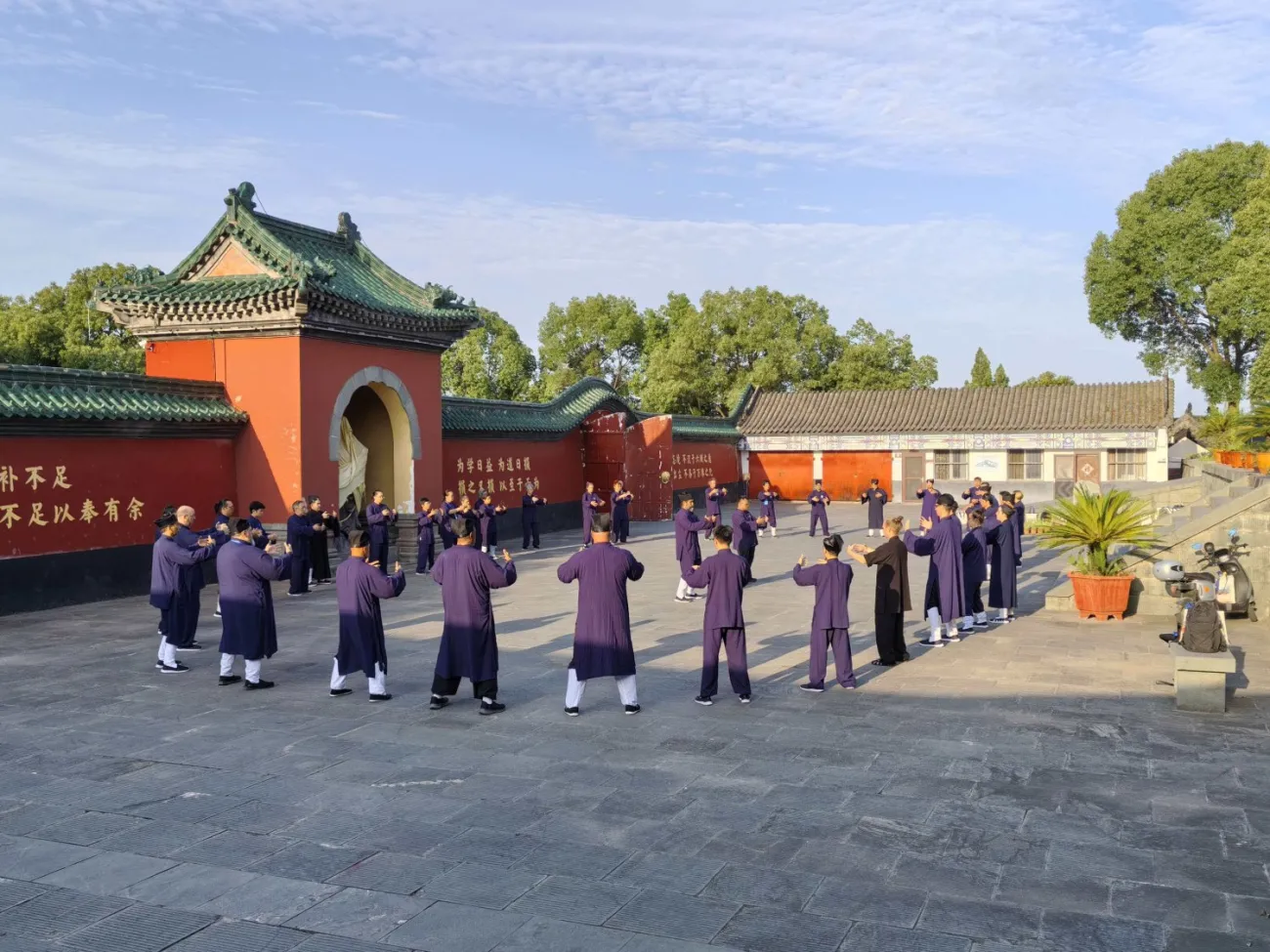
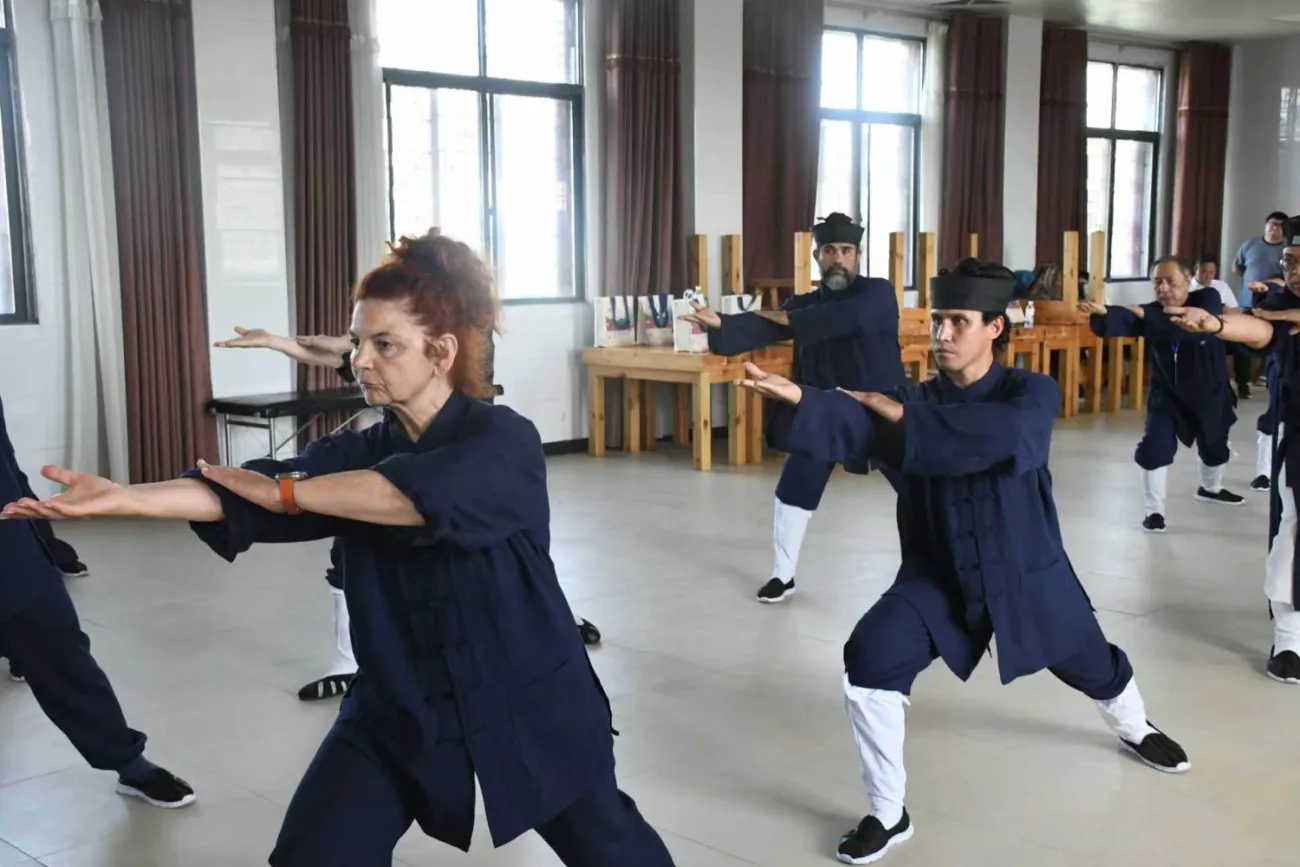
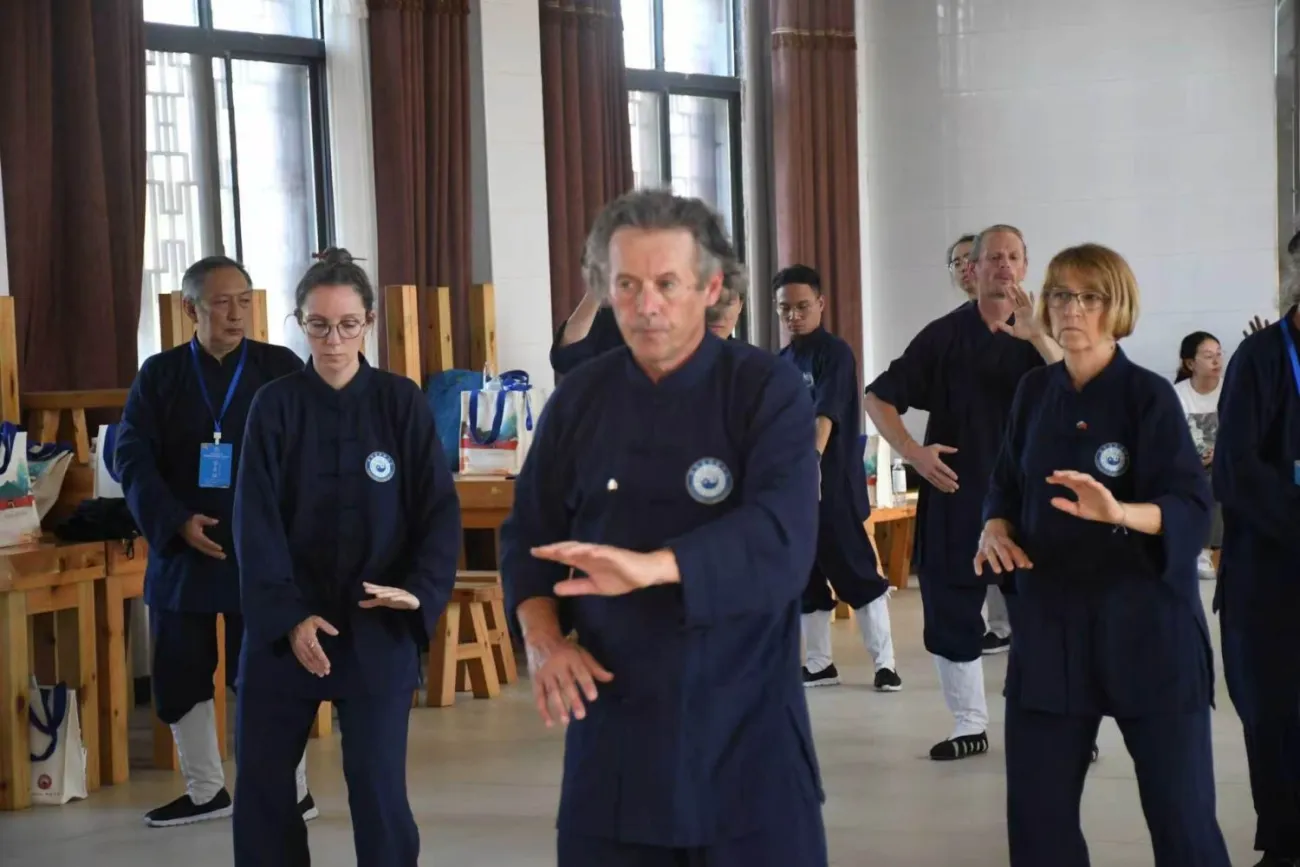
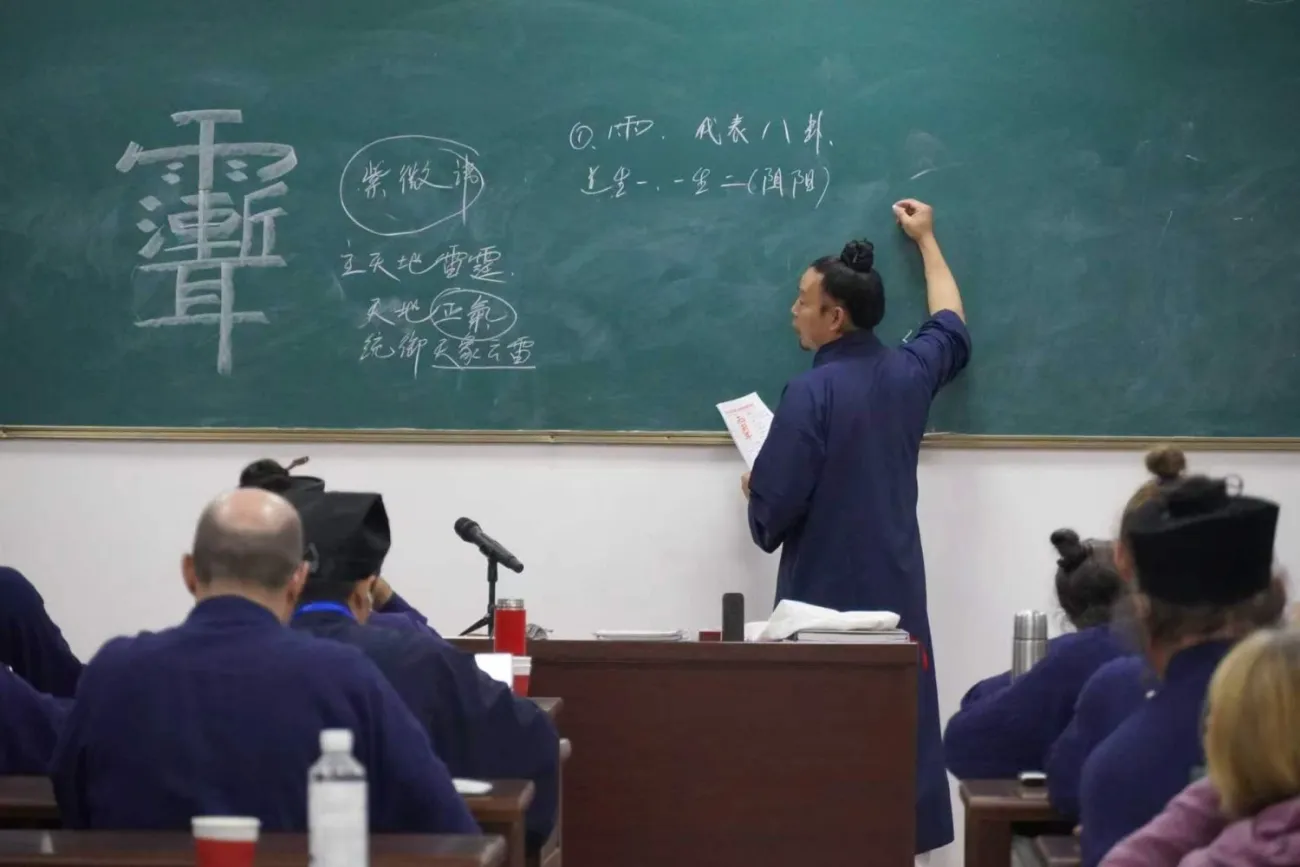
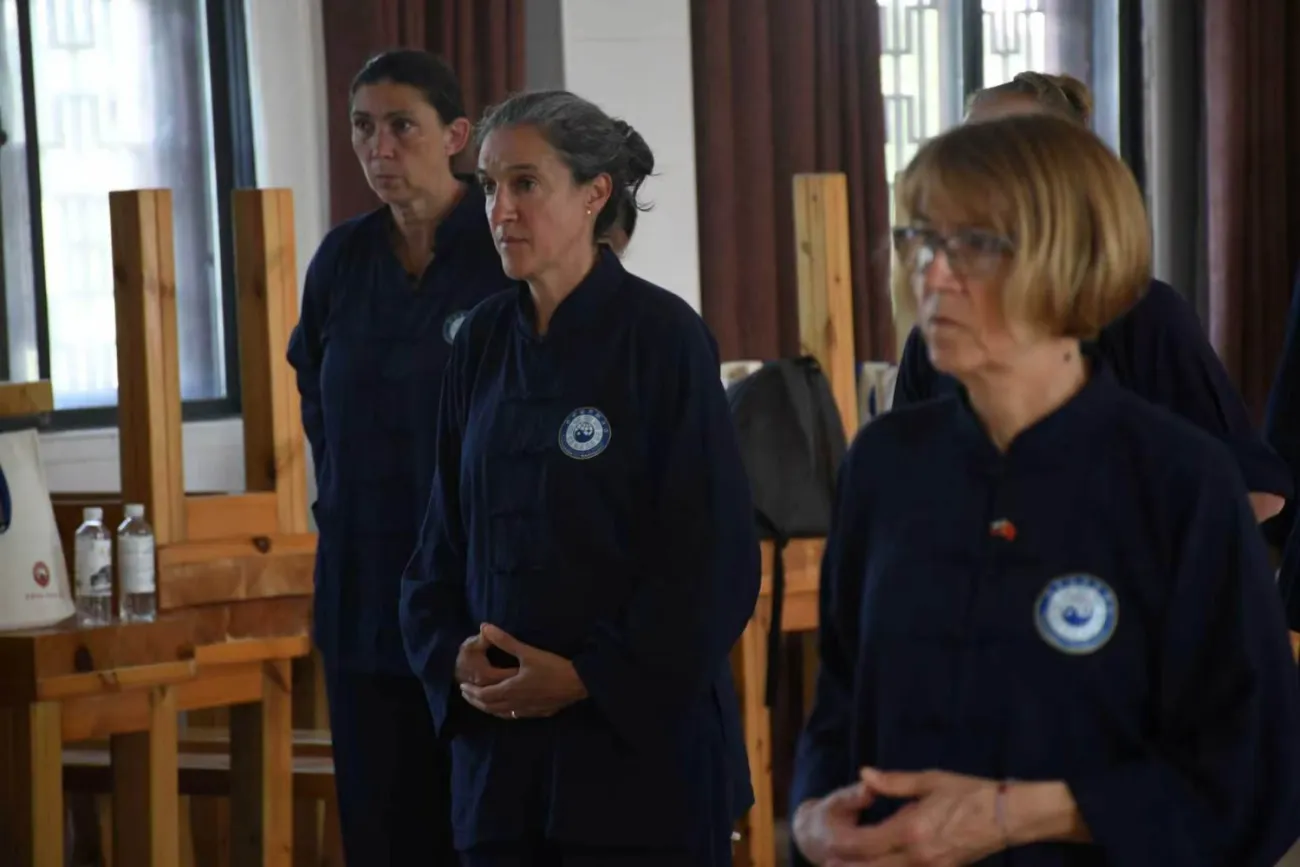
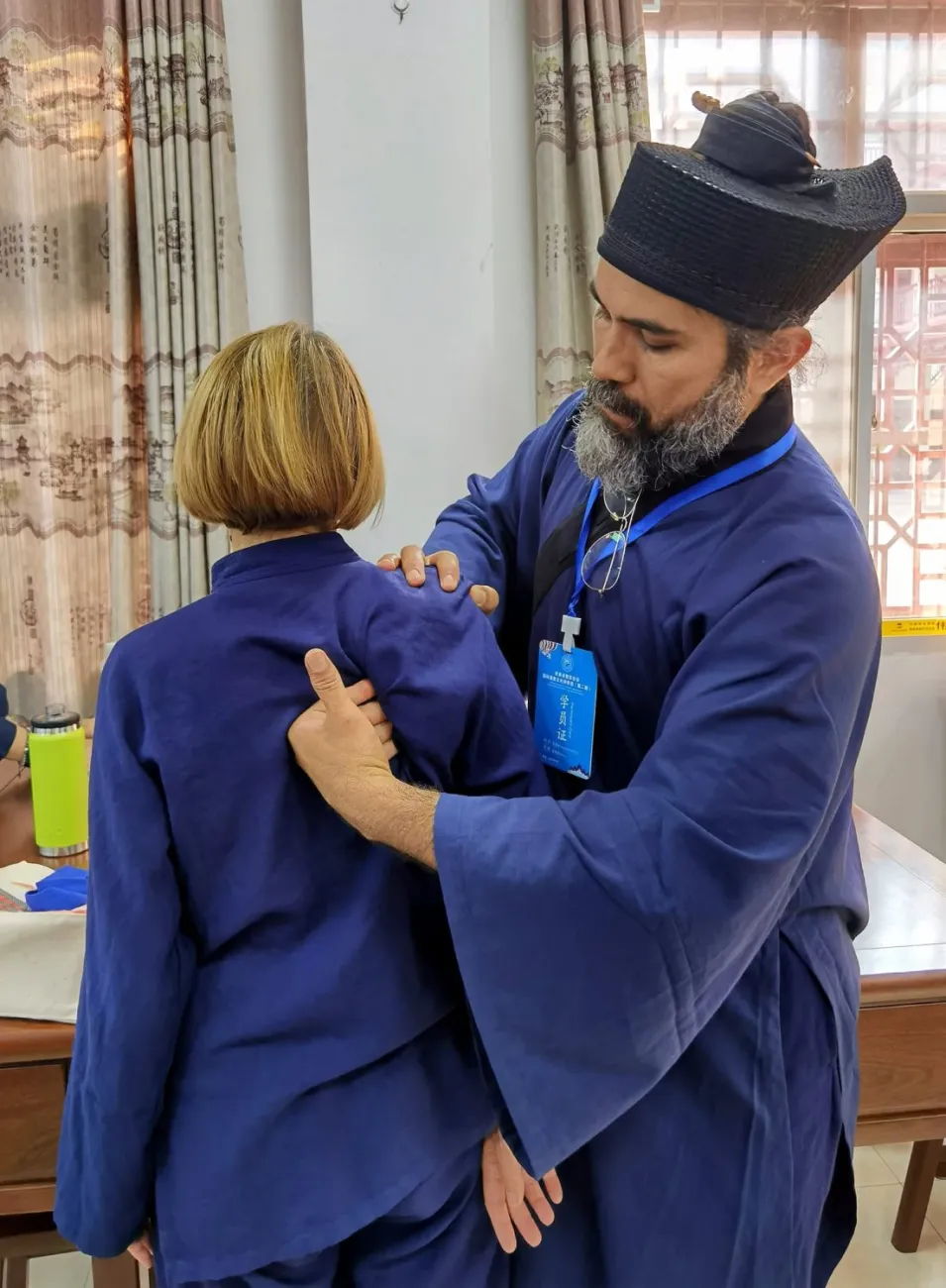
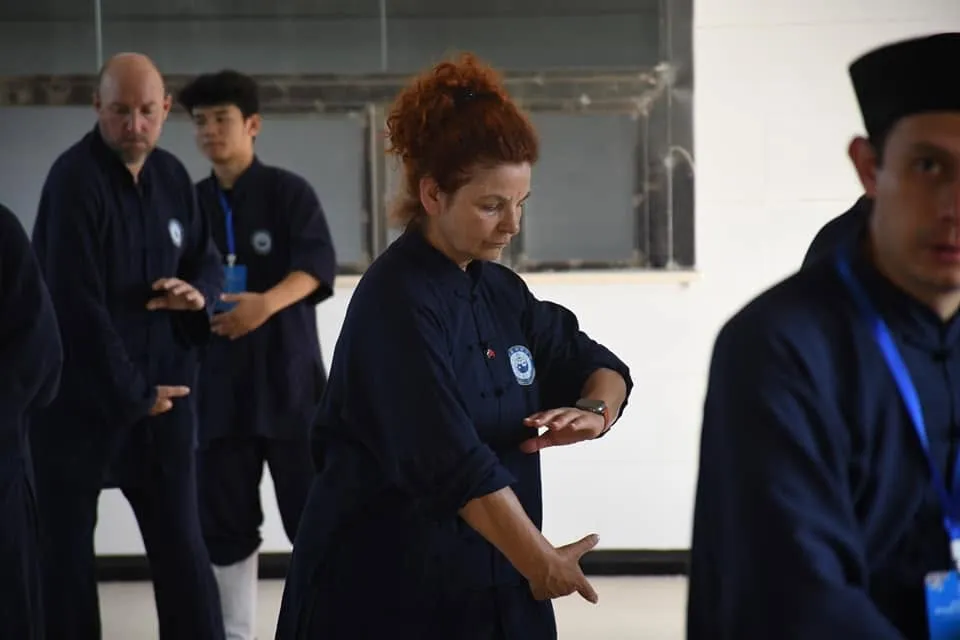
The Wudang Taijiquan workshops (Wudang Wushu / 武当武术) were also extremely intensive. They were led by the renowned master Zhang Weishen (张微神), who is also one of the Academy’s professors. We trained every day, and every other day both in the morning and in the afternoon. Every day before breakfast we had “health-preserving exercises.” We learned standing meditation in the taiji posture, the Wudang taichi 18 form, and the Wudang qigong Eight Brocades. Above all, in all the exercises master Weishen taught us to listen to our bodies, to relax mentally and physically, and to breathe properly. This enables qi to circulate: on inhalation it rises from the dantian (the point below the navel), and on exhalation it descends into it. First and foremost, he encouraged us to use the mind and softness in movement, rather than crude force. This is also one of the fundamental principles of Wudang taichi. What is essential is that we consciously direct the movements. For example, to raise the hand, we direct the mind toward the goal, and the hand will, so to speak, move spontaneously and naturally. Movement without strain, which in its spontaneity can be compared to walking, is transferred in taichi to the whole body.
Wudang taichi is an internal martial art. In contrast to external styles, which focus on external action and explosive power, the internal arts are devoted to cultivating the body’s internal energetic systems. These are the three treasures (Sanbao / 三宝): jing — essence, original physical energy; qi — energy, breath, vital force; and shen — spirit, mental and spiritual alertness. Essential is the cultivation of the inner elixir, or Neidan (内丹) — internal alchemy, a fundamental Daoist practice of spiritual and physical transformation. In this process, jing is transformed into qi, qi into shen, and shen returns to wu or emptiness. The unity of inner mind and outer movement is the highest achievement of Wudang taichi: it requires complete coordination of movement as external manifestation, breathing as internal process, and consciousness as the “commander.”
During the seminar we completed the Wudang taichi 18 form, learned the basic steps of taichi, and practised exercises for calming and releasing tension. We practised elements of the Wudang Eight Brocades form and tried standing meditation, which has two bodily postures: wuji and taiji. The latter is often called “embracing the tree,” although the master described this posture as “embracing a balloon.” Standing meditation is the foundation of Wudang martial arts, as it enables the cultivation of internal qi. I myself had quite a few difficulties with this form of meditation when we first practised it for a good 40 minutes; it was much easier the second time, when the meditation ended after 15 minutes — and I also knew that breakfast would follow! Master Weishen warned us that in standing meditation we should not force ourselves beyond the point where we notice difficulties. The essence of it all is relaxation, which allows qi to circulate, not persisting at any cost. There is no need to compete with others, no need to clench one’s teeth to the last drop of sweat, but simply to observe oneself, one’s body, and one’s mind. Over time, this relaxation leads to being able to remain in the posture for longer and longer.
Gradually, you begin to realize how important it is to connect the breath correctly with movement and to remain “awake” throughout — in short, to perform movement consciously, movement that must be calm, slow, and flowing, as if water were playing with air. The symbol of the Wudang martial arts is the Great Warrior Xuanwu. His symbol is a turtle around which a snake coils. The turtle signifies groundedness, peace, water, yin, while the snake represents flexibility, constant movement, yang, and fire. Together they symbolize yin and yang, the harmony of water and fire, which is a key symbol of Daoist philosophy, without which the Wudang martial arts would not exist either. On the final day of practice with master Weishen, all of us successfully passed the knowledge test in groups of four by performing the taichi 18 form. The master rewarded us with a wooden amulet, and the female students also received a bracelet.
The Wisdom of Fundamental Daoist Works and Their Embodiment through Diverse Activities
In addition to the themes mentioned above, at the seminar we became more closely acquainted with the history of the development of Daoist thought, lectured on by Professor Luo Lin (骆淋), and with the interpretation of certain chapters of the fundamental Daoist text Daode jing under the guidance of Professor Dai Lisong (戴理松).
We were introduced to the famous classical text Thousand Character Classic / Qianzi wen (千字文) by Professor Deng Xuelin (邓学林), who also presented the profound meaning of the tea ceremony at the evening meetings.
The evening meetings were thematically diverse, which shows how all aspects of life — from arranging the home and caring for health to ritual music, calligraphy, movement in harmony with nature and originating from the movements of animals, the tradition of incense, and the tea ceremony — are permeated with the basic principles of Daoism, the great majority of which derive from Laozi’s Daode jing.
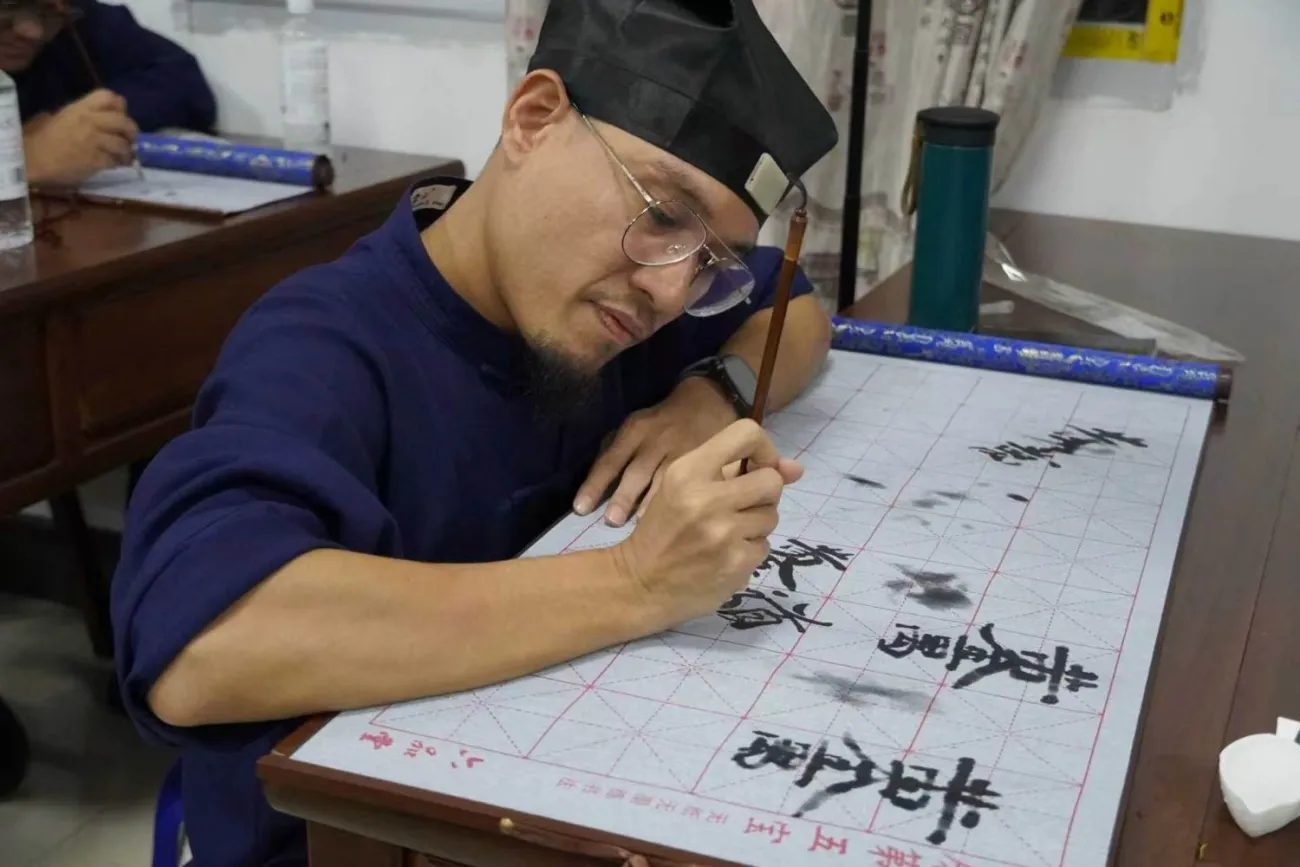
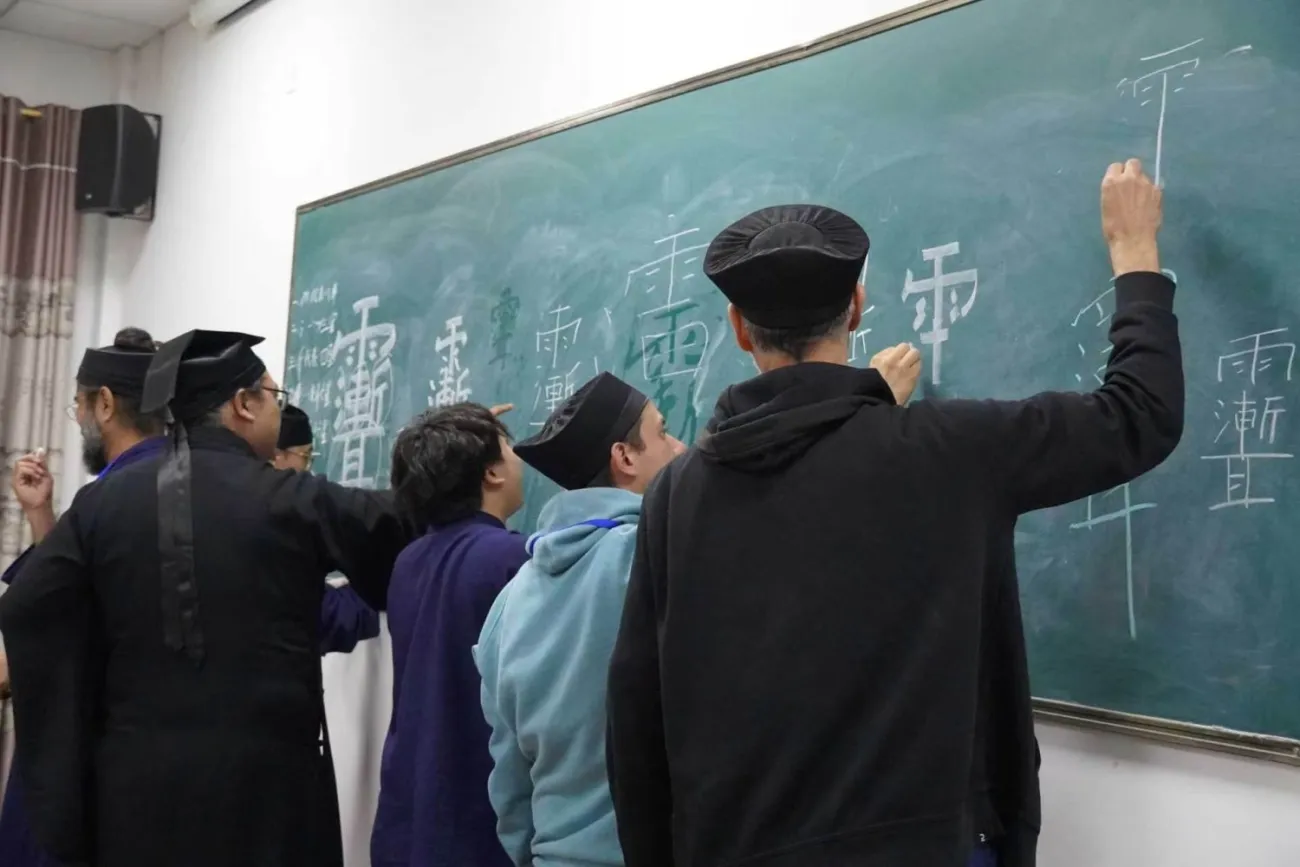
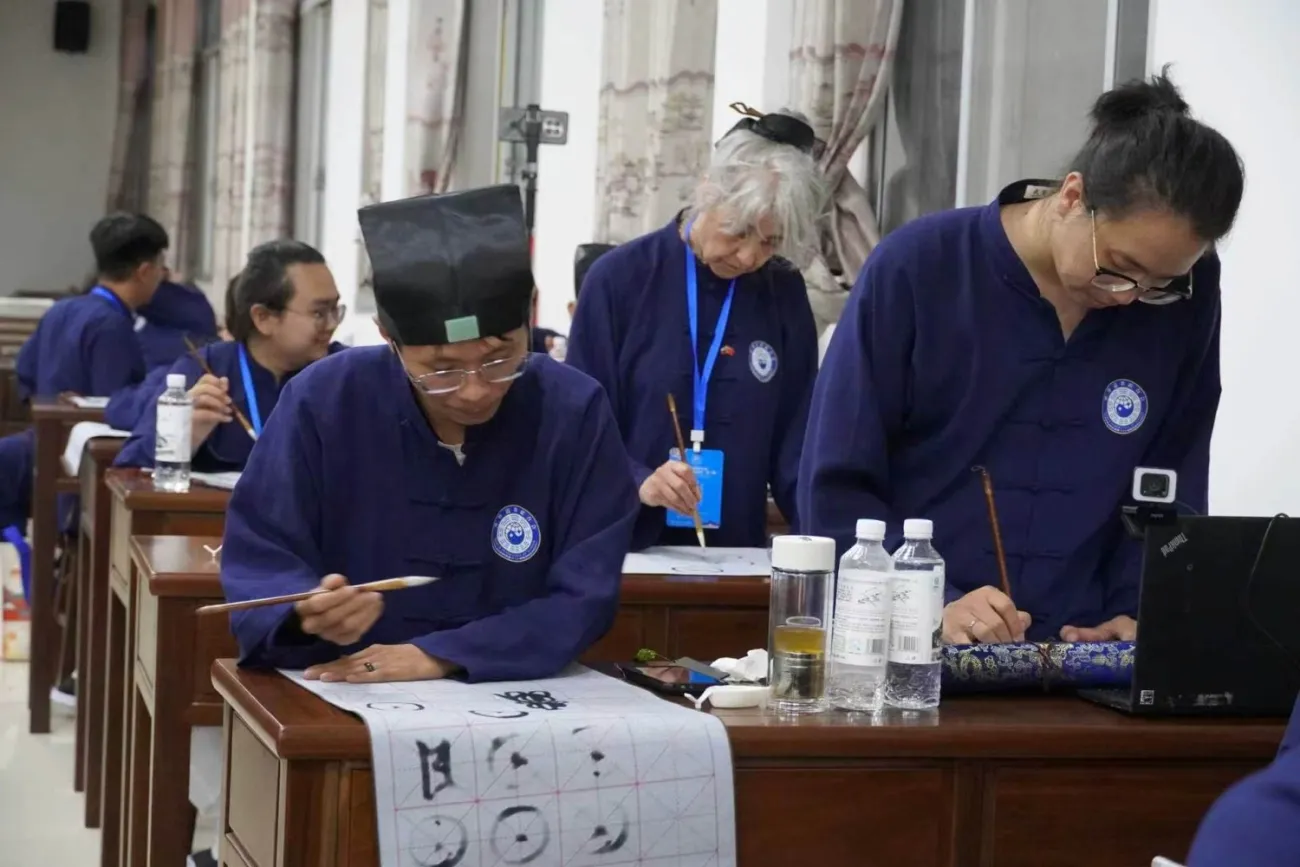
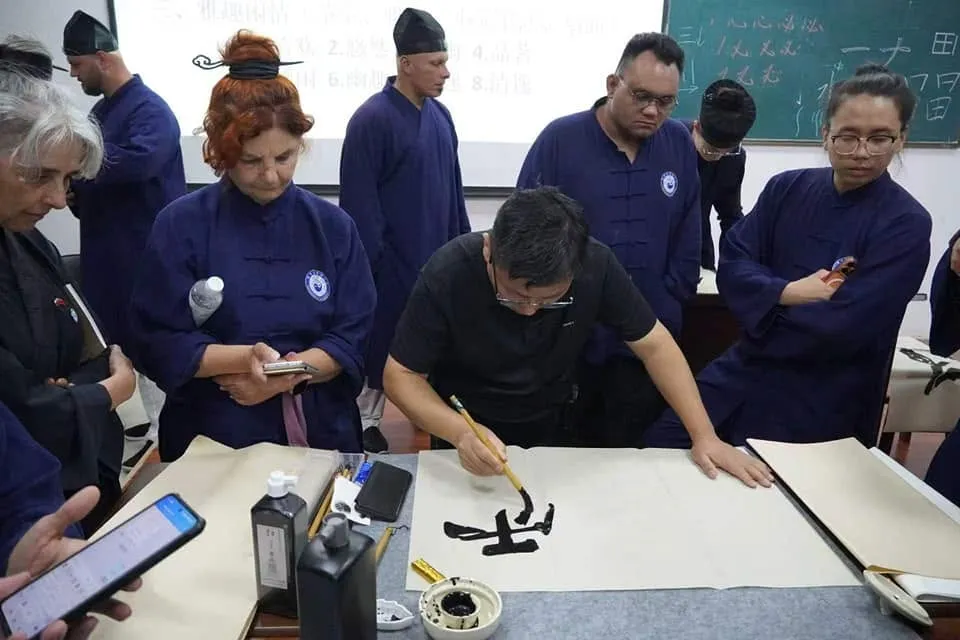
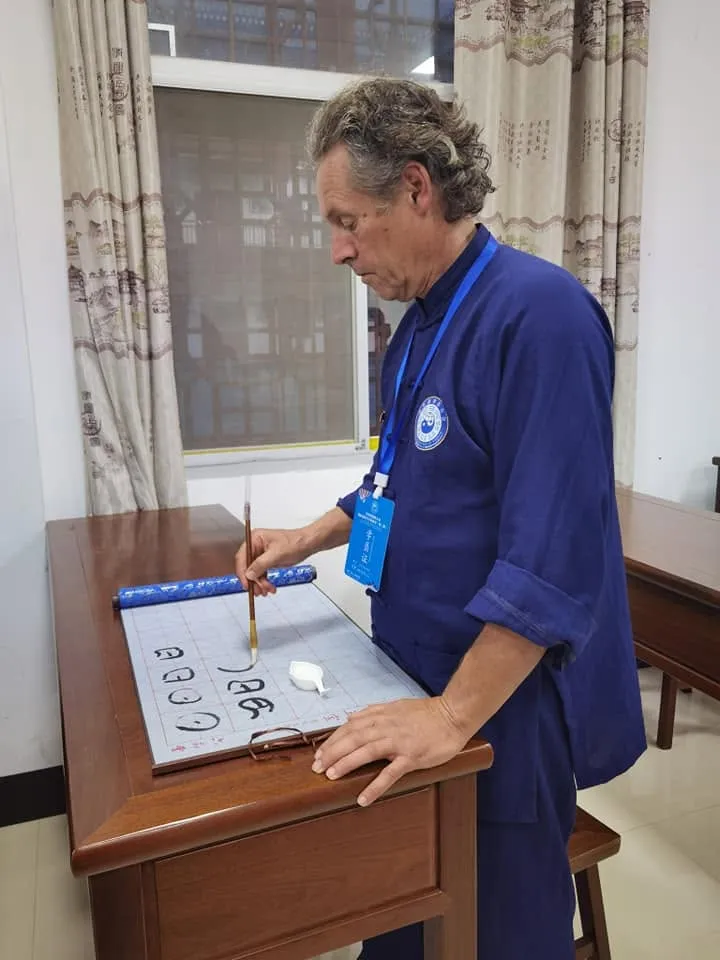
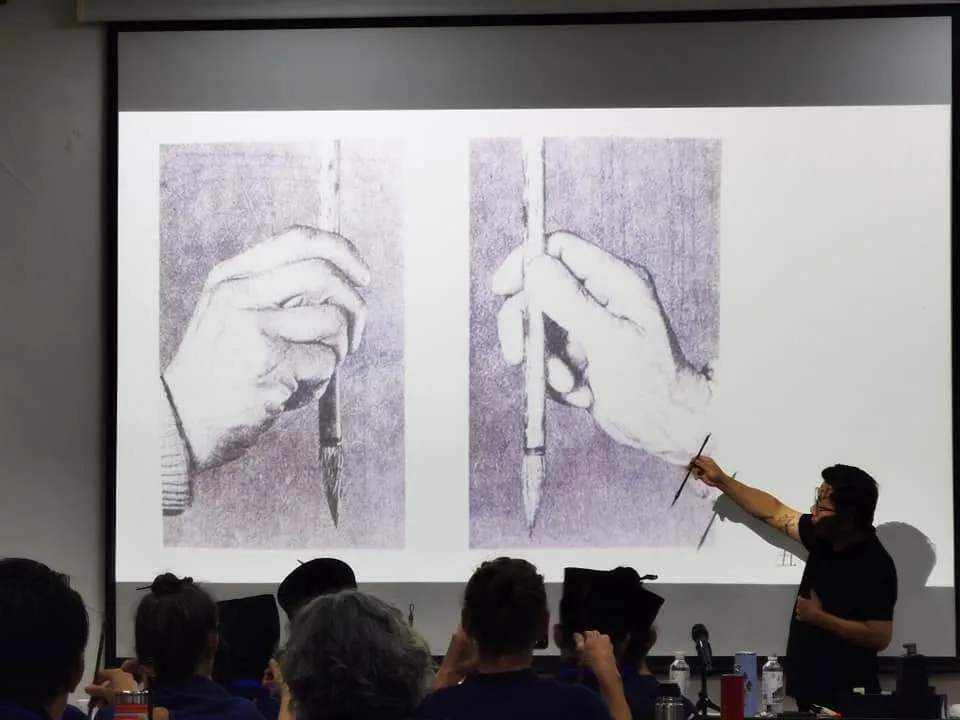
Among other things, we became acquainted with the seven-stringed instrument guqin (古琴), played by a renowned Chinese musician. In the calligraphy workshops (shufa / 书法), we learned, among other things, how Chinese characters developed from observing natural phenomena and everyday human actions and fundamental relationships. For example, the character for water — shui (水) — represents the winding flow of a river. Calligraphy is a supreme art. The professor explained to us that the writer must harmonize their strokes with the brush so that they can flow as spontaneously as possible, according to the principle of ziran. In the final lecture, he wrote our names or selected thoughts on special paper, which his assistant then stamped. I chose my Chinese name Xuan Nu (玄女 / Mysterious Warrior), and this small work of art already adorns my home.
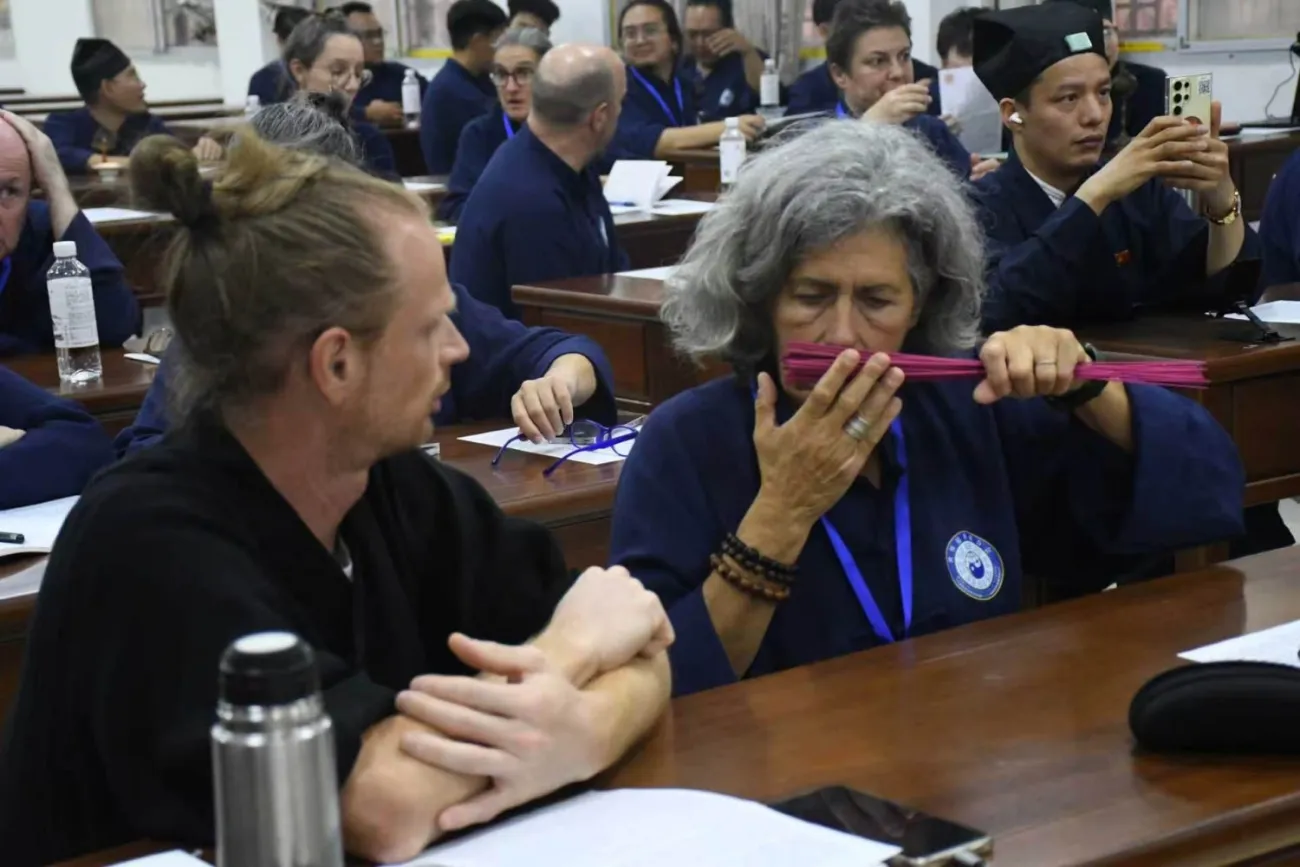
At the evening devoted to the traditional culture of incense, the lecturers emphasized the connection between fragrances, communication with the soul, and the Dao. Incense in various forms is made from local plants, and we also learned in practice about its use in strengthening the health of the internal organs.
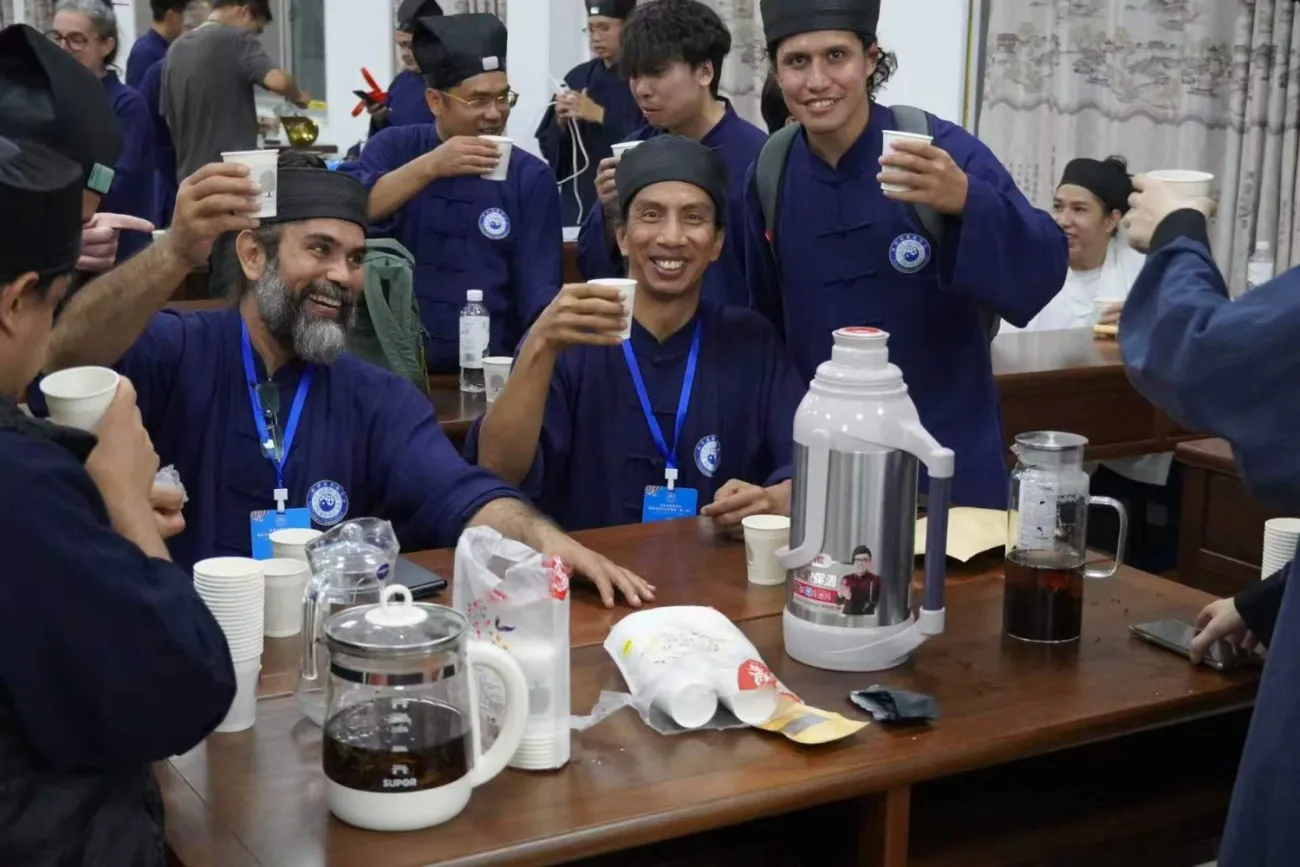
As mentioned, Professor Deng Xuelin introduced us to the tea ceremony (Cha dao / 茶道). As he said, drinking five types of tea — white, green, yellow, red, and dark — is closely connected with internal alchemy or transformation: the five teas are intended to support the five different qi and thus the five meridians of the main internal organs (the lungs, liver, spleen, heart, and kidneys). However, he cautioned that when strengthening the body with tea, one must always treat the true cause of the problem, not merely its consequences. Therefore, in the case of heart problems, it is not necessarily the case that we must drink red tea, since the problems may have their cause in an imbalance of some other organ.
We also received basic knowledge about talismans and an insight into the extensive, broad field of traditional Chinese medicine (TCM). This represents millennia of experiential knowledge about health, passed down from generation to generation. TCM is not only treatment, but a holistic philosophy based on the concept of yin-yang, and its roots originate in Daoism. TCM believes in the self-healing abilities of our body. Its aim is to establish physical and psychological balance by strengthening the dynamic movement of the body’s five qi.
We achieve this by practising Wudang Taijiquan, where every movement is composed of a yin and a yang posture, and also by doing things at the right time — at the right hour of the day, in the right season — with moderation always being the best attitude. We do not go to extremes in any direction. When students asked how long one should “sit in silence,” the professor’s answer was: nothing too much, nothing too little. Sitting in silence for too long is likewise not good; there is no specific duration, as it is adapted to the individual.
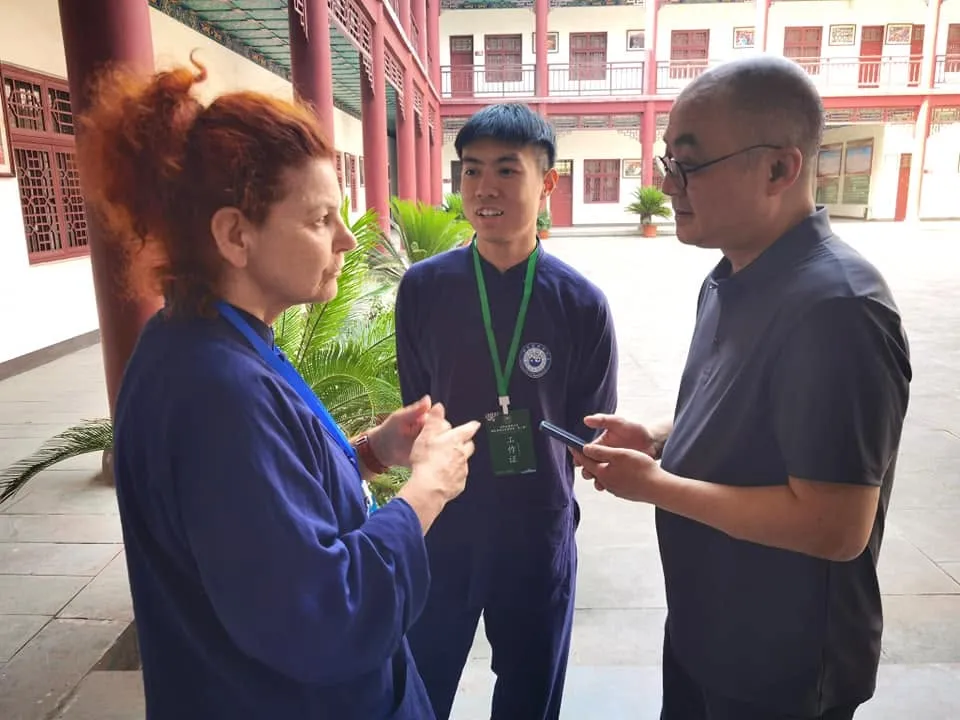
I should also mention that the lectures were translated into English by linguistics student Dan Yili, and that, in addition to the organizers, the volunteers also invested a great deal of effort, patience, and kindness to ensure that everything ran without major complications. They translated at the Wudang Taijiquan workshops and helped resolve our small everyday difficulties.
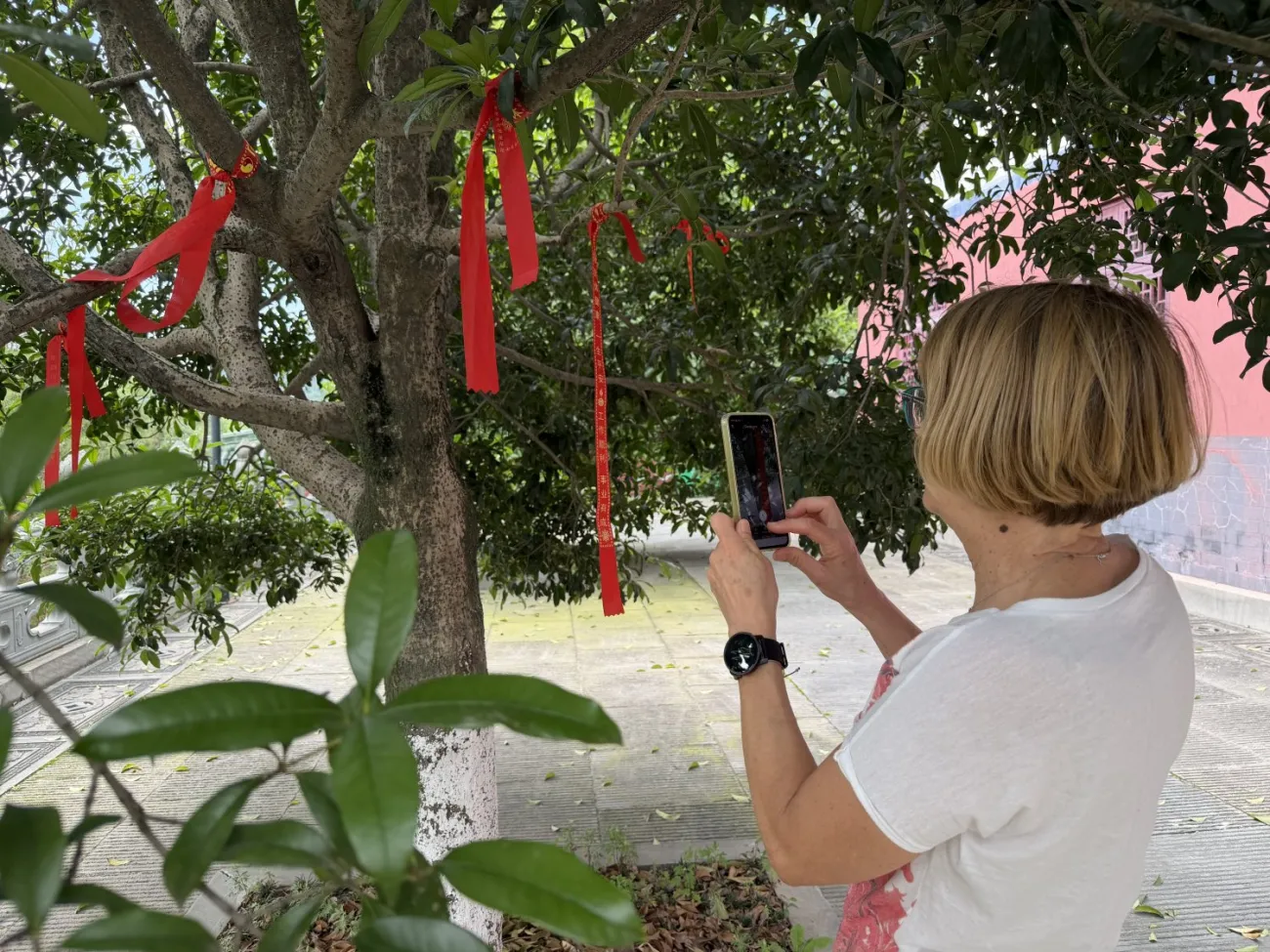
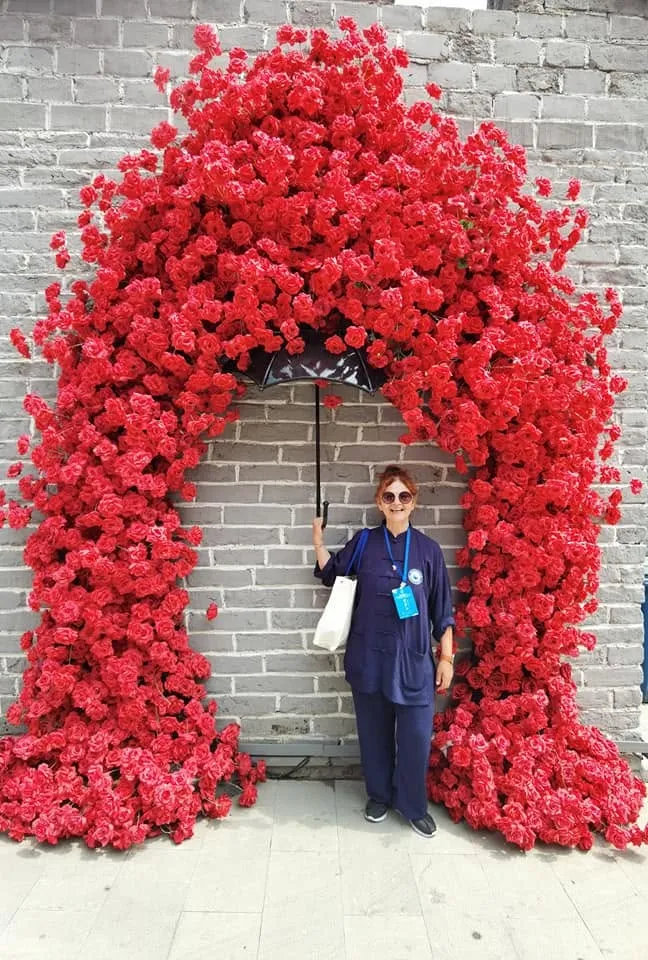
Here I must emphasize the exceptionally good vegetarian food prepared by the kitchen team, while the cleanliness of the large park with its lush magnolias and other subtropical trees and plants was maintained daily by numerous members of staff.
Closing Ceremony with a Welcoming Address by fangzhang Wu Chengzhen
At the closing ceremony, Wu Chengzhen (吴诚真), the first Daoist woman master with the highest title of fangzhang (chief abbess of a monastery) in the history of Chinese Daoism and President of the Daoist Association of Hubei Province, also addressed those gathered. Her home monastery is the famous Changchun Temple (长春观 / Monastery of Eternal Spring) in the city of Wuhan.
She congratulated the participants on successfully completing the half-month training under the auspices of the World Federation of Daoism, after which we were awarded certificates.
“Although we come from different places, we are united by the same search for the Dao on Mount Wudang,” Abbess Chengzhen emphasized. “By staying on this thousand-year-old mountain, you have begun a journey of seeking your roots, coming to know the Dao, and spiritual practice. At the same time, you have written a beautiful new chapter in mutual understanding between China and the world.”
She pointed out that through the study of classical texts, we participants discovered the principle that “the Dao follows nature”, while through intensive practical training, morning and evening, we encountered the profound wisdom of Wudang taichi and methods for preserving health. In her words, we students proved that learning and practice had merged into one, and that knowledge and action had become united.
At the end of her speech, she gave us a powerful message for the road ahead, about transcending boundaries: “Goodness knows no borders, and for those on the path of the Dao, distance does not exist. This awarding of certificates is not the end of your spiritual path, but a new starting point for bringing good to all living beings. I hope that you will become messengers of friendship and cultural exchange between China and the world, and that you will carry the wisdom of Chinese Daoist culture to your homelands. Spread the beautiful concepts of the Dao’s free nature, harmony, and coexistence to all four corners of the world. May the bond of the Dao, which transcends national borders, continue forever. May human civilization, through exchange and mutual learning, live and flourish without end.”
I should add that before the seminar began, SDT Rector Jure Čeh and Vice-rector Darija Mavrič Čeh paid a courtesy visit to Abbess Wu Chengzhen at her temple. You can find more about this at the following link:
The Journey Home
The journey home, to Koper, was long, but certainly too short for me to process the impressions from this very richly designed and very well organized seminar on Daoist culture. It left an indelible mark. We all returned home a little changed, with a full bag of knowledge, perhaps with a slightly deeper sense of the profound connectedness of everyone and everything — nature, the cosmos, and the human being — and with some very approximate sense of what wu-wei is: natural, spontaneous action for the benefit of all beings.
As Wu Chengzhen said, we began a journey of seeking our roots, coming to know the Dao, and spiritual practice. At the same time, we wrote a new chapter in mutual understanding between China and the world, and in friendly, peaceful, respectful connection among people from all corners of our planet.
I intend to devote separate, independent articles to the history of the development of Daoist thought, the Daode jing, and the Thousand Character Classic. The same applies to the two excursions and the ritual day, when strict rules also applied in the dining hall. I also experienced first-hand how very effective the Chinese healthcare system is, and above all the kindness of the medical staff at the hospital in Danjiangkou and of the seminar volunteers, especially Nox, who accompanied me for treatment. SDT Vice-rector Darija Mavrič Čeh, as well as the other members of our small Daoist expedition, also watched over my well-being with great care throughout. But more about all of this — the impressions from Shanghai and the three-day meditative wandering through the cradle of Daoism, the Wudang Mountains — will likewise follow in future writings.
Lea Širok (Xuan Nu), Director of the SDT Media Centre