



 History
The Garden Without an East – A Work of Philosophy and Literature
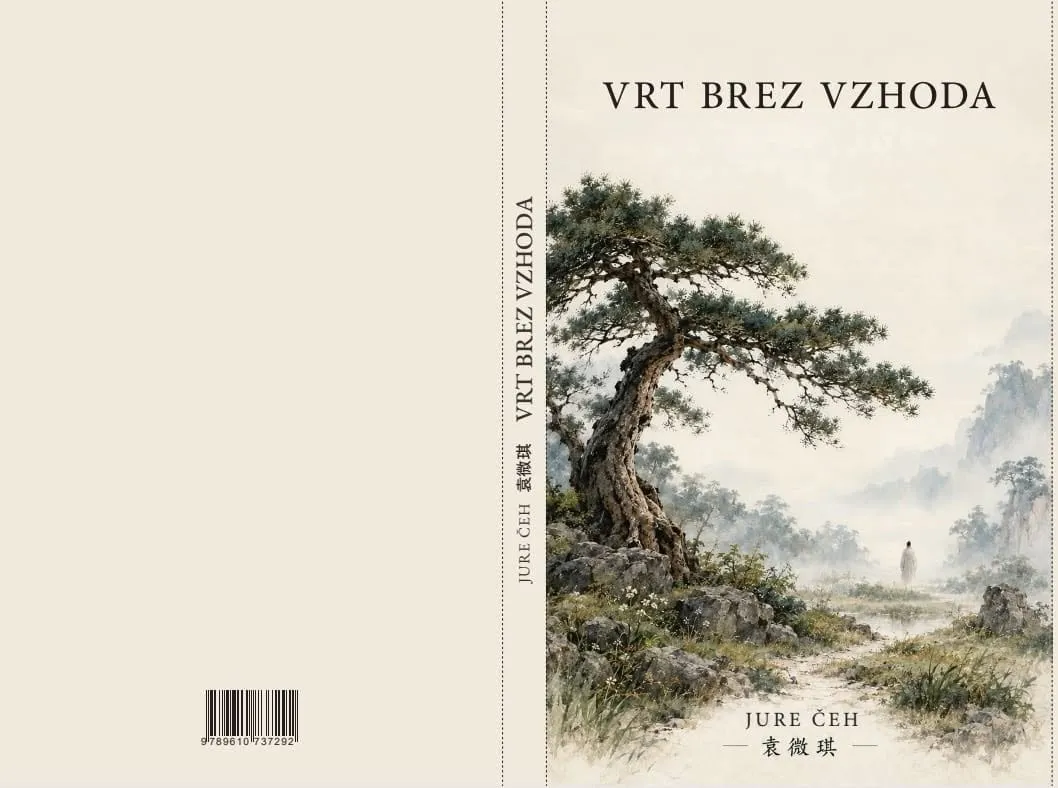
On November 28, 2026, the twentieth day of the tenth month of the Year of the Fire Horse (丙午年十月二十), the philosophical and literary work Vrt brez vzhoda was published. Its author, Yuan Weiqi (Jure Čeh), serves as Rector of the Slovenian Daoist Temple of Supreme Harmony and Deputy Secretary-General of the Svetovna Daoistična Federacija (World Federation of Daoism).
The publication date has special significance in the traditional Chinese calendar. In the system of heavenly stems and earthly branches (天干地支), the year and the day share the same pillar in the sexagenary cycle, 丙午 (Bǐngwǔ), which represents the Fire Horse. In the Daoist calendar tradition, the 丙午 day is designated 天會 (Tiānhuì), or the Heavenly Assembly, one of the eight traditional assembly days (八會日) associated with Daoist ritual practice. The book reached readers on a day that bears the sign of the Fire Horse twice, once for the year and once for the day, and holds a special place in the Daoist calendar as 天會 (Tiānhuì), the Heavenly Assembly.
Source: Shangqing Lingbao Dafa (上清靈寶大法), vol. 8, chapter 齋戒禁忌門.
The author wrote and published the book independently, outside the publishing program of the Slovenian Daoist Temple. It appeared in a limited print run of 300 copies.
Philosophical themes and starting points
Vrt brez vzhoda is a multilayered philosophical and literary work that explores questions of knowledge, being, language, otherness and the limits of human understanding. It brings different philosophical, religious and cultural traditions into dialogue. Daoist thought is one important starting point for the book’s themes and their interpretation.
The paradox at the heart of the title – a garden without an east – raises questions about orientation, the idea of a center and what gives any one starting point priority. No single direction defines the garden, and it offers neither a definitive path nor a universal key to understanding. Its philosophical design calls into question the human need to establish absolute starting points and arrive at definitive explanations of the world.
The book’s philosophical starting points intersect with several fundamental concepts in Daoist teaching, particularly its understanding of the Dao, natural spontaneity (自然, zìrán), unforced action (無為, wúwéi) and the limits of language and conceptual thought. A well-known line from the opening of the first chapter of the Daode jing (道德經) illustrates those limits: 名可名,非常名 – Míng kě míng, fēi cháng míng. “The name that can be named is no enduring name.”
The author conceived the work as an independent inquiry into questions that arise when different traditions of thought from around the world enter into dialogue, rather than as a systematic account of Daoist teaching.
Although the book was published independently of the Slovenian Daoist Temple, its themes connect with the broader philosophical and intercultural dialogue that SDT fosters through its work.
Bibliographic details:
- Title: Vrt brez vzhoda
- Author: Yuan Weiqi (Jure Čeh)
- Year of publication: 2026
- Publication date: November 28, 2026
- Publishing status: Self-published
- Print run: 300 copies
- Type of work: Philosophical and literary work


