Articles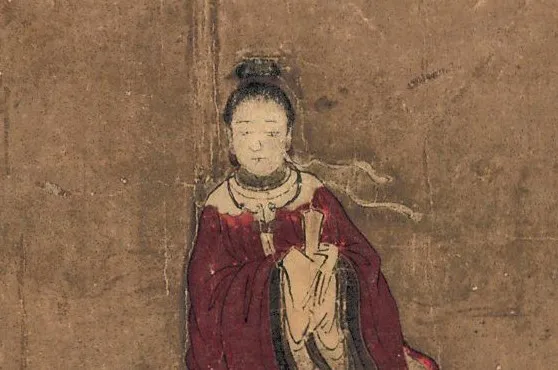
GODDESS MAZU, PROTECTOR OF FISHERMEN AND SEAFARERS
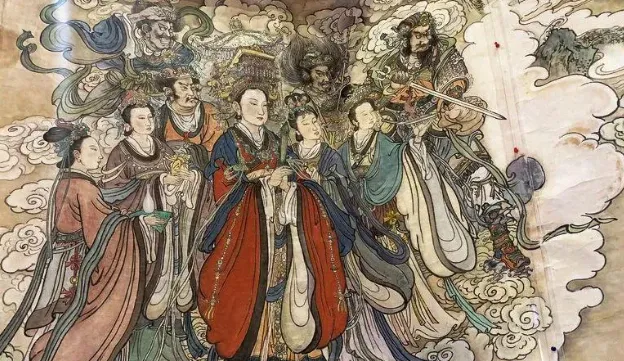
Mazu is one of the most beloved Chinese female deities. She is the protector of fishermen and sailors—in difficult situations at sea, she sometimes appears as a young woman in red clothing and shows them the way out of danger. Her name literally means “female ancestor,” or ancestor on the maternal line. She is therefore also regarded as a protector of women, who turn to her for help in the hardships of everyday life.
In most sources she is presented as a real person, born in 960 on the small island of Meizhong in the region of Putian. She was called Mo or Moniang, meaning “silent girl.” This name is said to have been chosen because for a long time she made no sound: in some accounts she did not cry at birth, in others she remained silent for a month, and in some she did not speak until the age of four. She had special abilities: she could sense approaching danger, human distress, troubles at sea, and similar situations; she could foretell events, call forth rain, and stop storms. Her biographies often mention the story of how she saved her father and brother when they were caught at sea in the middle of a storm. She was sitting on the shore, spinning thread. Suddenly she entered a special state. She sensed a violent storm at sea and knew that her father and brother were in it. She tried to save them: she succeeded in saving her father, but her brother drowned because her mother’s call “awakened” her. When her father returned from the sea, he spoke of his miraculous rescue.
Even as a child, she decided that she would not marry, but would instead help people who found themselves in all kinds of hardship. She is said to have died on the 9th day of the 9th month in the year 987: according to one story, while seated in meditation; according to another, she climbed to the summit of a mountain and ascended into Heaven; yet another says that she died while carrying out a rescue.
Her personal story is described somewhat differently in the Daozang. In the Taishang Laojun Shuo Tianfei Jiuku Lingyan Jing 太上老君说天妃救苦灵验经 (Scripture Spoken by the Most High Lord Lao on the Miraculous Salvation from Suffering by the Heavenly Consort), it is written that Taishang Laojun (the Most High Lord Lao) wished to help people who found themselves in severe distress when the sea and wind revealed their untamed nature. Guangjiu Zhenren stepped before him and said: “In the Northern Dipper dwells the Jade Maiden of Wondrous Activity. Since ancient cosmic ages she has cultivated all perfect virtues and vowed to spread the true teaching, save all sentient beings, and bring peace and well-being to all.” The Heavenly Worthy then commanded the Jade Maiden of Wondrous Activity to be born among human beings and save the people from their suffering. In the year jiashen (984; her usual year of birth is considered to be 960, the year gengshen), on the 23rd day of the 3rd month, at the hour of the dragon, she was born into the world. From birth she was imbued with mysterious powers; when she grew up, she revealed miraculous abilities. She devoted herself to cultivating the perfect Dao, manifested great supernatural powers, and saved the people. She vowed to help all sentient beings remove disasters, dispel calamities, support all who found themselves in distress, and free them from suffering. When her merit had ripened and she had fulfilled the fruit of her path, she ascended to Heaven in broad daylight. The local gods and guardians of the land reported this to the Three Heavens.
There is also another story: Mazu was born into the influential Lin family of Putian. Her parents already had six children: five daughters and a son, who was of weak health. Her mother, Wang, therefore asked Guanyin to help them have another son. The goddess gave her a pill; as soon as she swallowed it, she became pregnant. On the 23rd day of the 3rd lunar month, a beam of red light shone into her room from the west, and a strange fragrance spread through the space. At that moment she felt a sharp pain in her abdomen: Mazu was born. At first her parents were disappointed to have another daughter, but they soon realised that this was no ordinary child. When she was eight, the family tutor taught her writing and reading; at thirteen she met a Daoist monk who taught her secret practices that strengthened her spiritual power. According to another version, it was a Buddhist monk who recognised in her a manifestation of Guanyin… It is difficult to combine these stories into one logical whole, but we may conclude that Mazu transcends religious limitations and attachments, since both her development and her activity are open to all who need her.
Because of her modesty, compassion, and gifts, Mazu was already highly respected during her lifetime. Immediately after her death, the local people built a temple for her, where they could light incense and honour her. Her veneration soon spread beyond Putian or Meizhou alone—along trade, political, military, and other maritime routes.
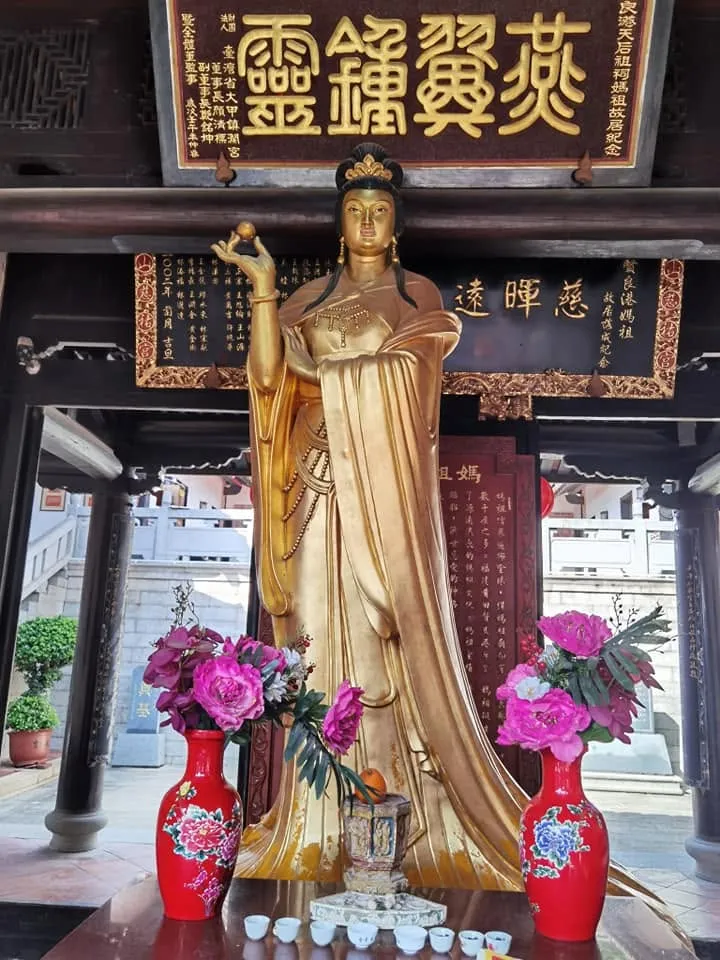
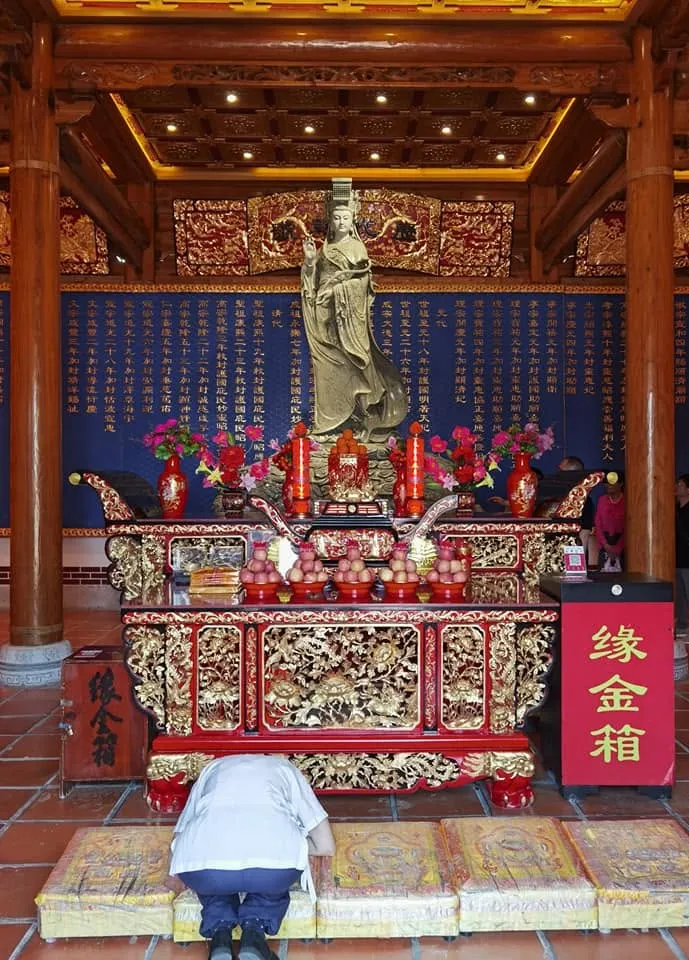
The mother temple, and probably the oldest, is in Xianlianggangu (Putian City, Fujian Province), where there is a statue of the goddess Mazu from the Song dynasty. Copies are made from it and, in a special ritual, presented to various religious centres. In this way a direct relational bond (mother–child) is established and maintained between the original temple and the other temples dedicated to her.
During the Yuan and Ming dynasties (13th to 17th centuries), when Mazu was proclaimed the protector of the empire and received the title Tian Hou (Heavenly Empress), her veneration spread throughout all of China, especially along the coast.
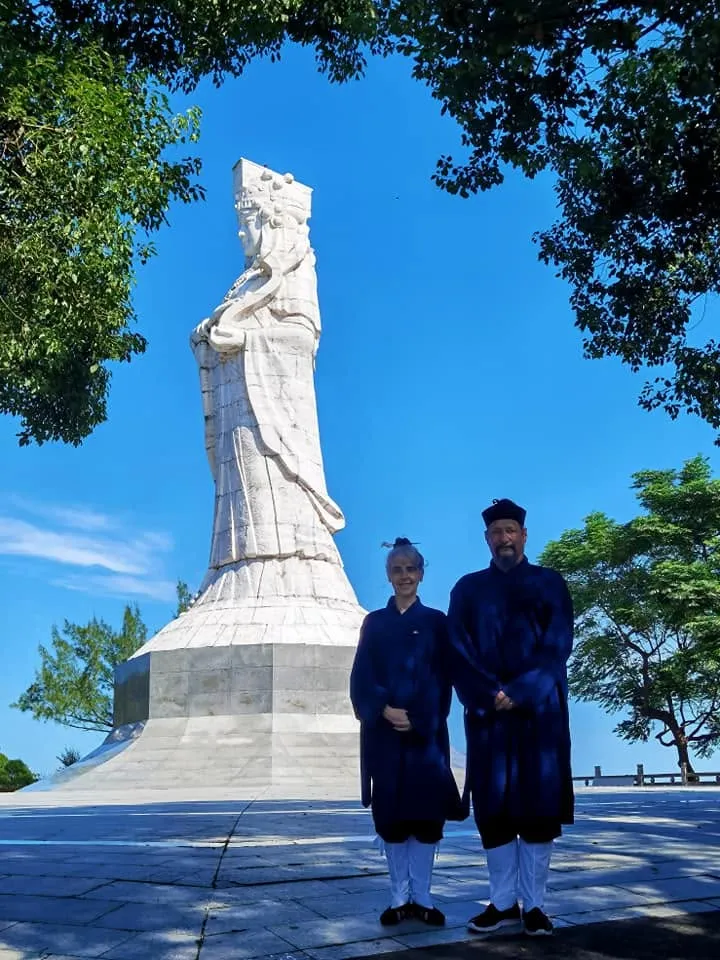
In the 15th century, the cult of the goddess Mazu also reached Hong Kong and Macao. Of particular interest is the temple in Macao, the A-Ma Temple, which gave the place the name “A-ma-gau.” Today the temple is protected by UNESCO as part of the world cultural heritage.
A special relationship exists between the mother temple and nearby Taiwan, where the largest number of temples dedicated to Mazu stand. The reason is simple: in the 17th century, Chinese people from Fujian migrated to Taiwan in search of a better life. They wished to maintain their connection with home through their religious practice. Therefore, in 1694 the Buddhist monk Shubi came to Beigang and brought with him a statue of the goddess from Meizhou. A suitable place was quickly found where it could be installed and venerated. As the number of devotees grew, the temple also changed and expanded. One of the most important is Chaotian Temple in Beigang, founded in 1694 when the monk Shubi brought to the island a statue of the goddess from Meizhou. Throughout its history, the temple has been renovated and enlarged several times.
Perhaps even better known is Jenn Lann Temple, where every year on the 23rd day of the 3rd lunar month a multi-day procession across the island begins. On the day before the start, the qi’an ritual is performed, in which prayers are made for a safe journey and Mazu is invited into the palanquin in which eight men will carry her for nine days. During the procession, a kneeling ritual is performed several times: pilgrims kneel before Mazu, and she is carried above them in the palanquin. The procession moves across the island. From time to time, the statue of Mazu is also taken to the mother temple in Xianlianggangu, so that it may renew its connection with the source and be filled with energy again. Over nine days, the pilgrims walk more than 300 kilometres across the island.
Temples dedicated to Mazu have also been built beyond China’s borders: in Singapore, Indonesia, Vietnam, Malaysia, Canada, the United States, and many other places. There are also four smaller shrines in Europe, in London, Paris, Rotterdam, and Rome, and her veneration is certainly present in many other Daoist as well as Buddhist temples.
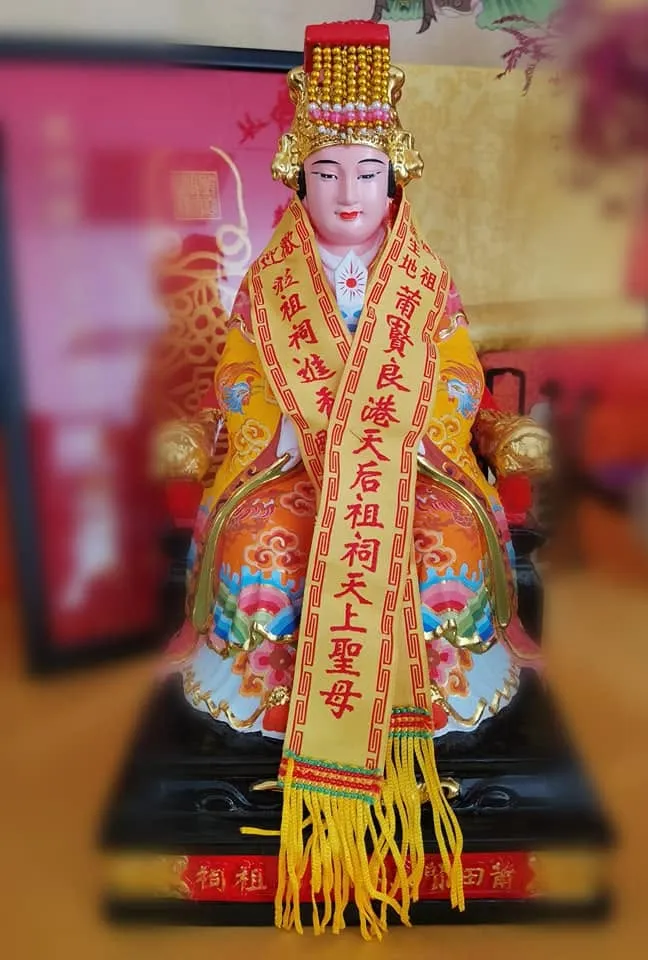
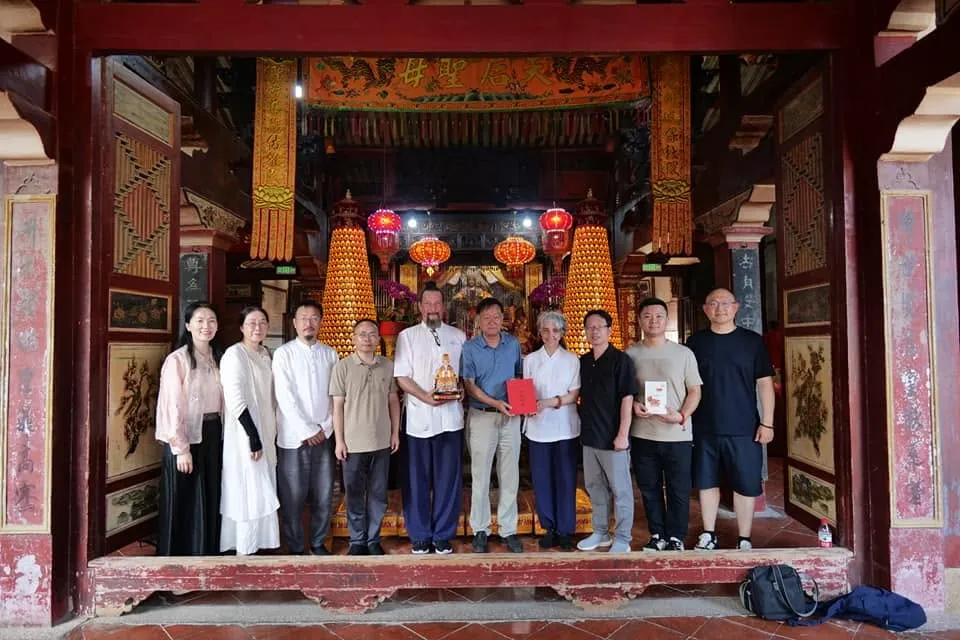
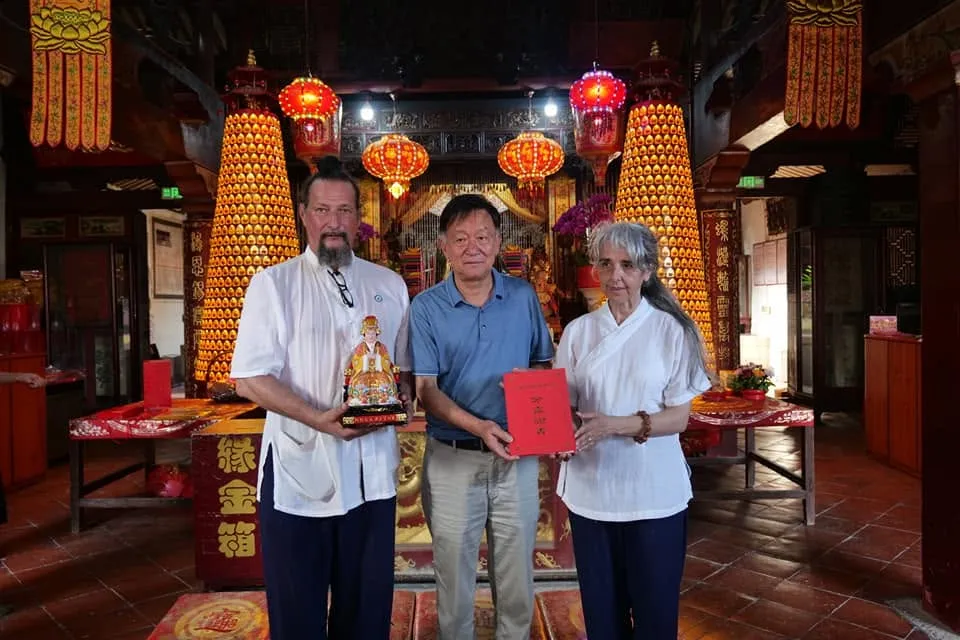
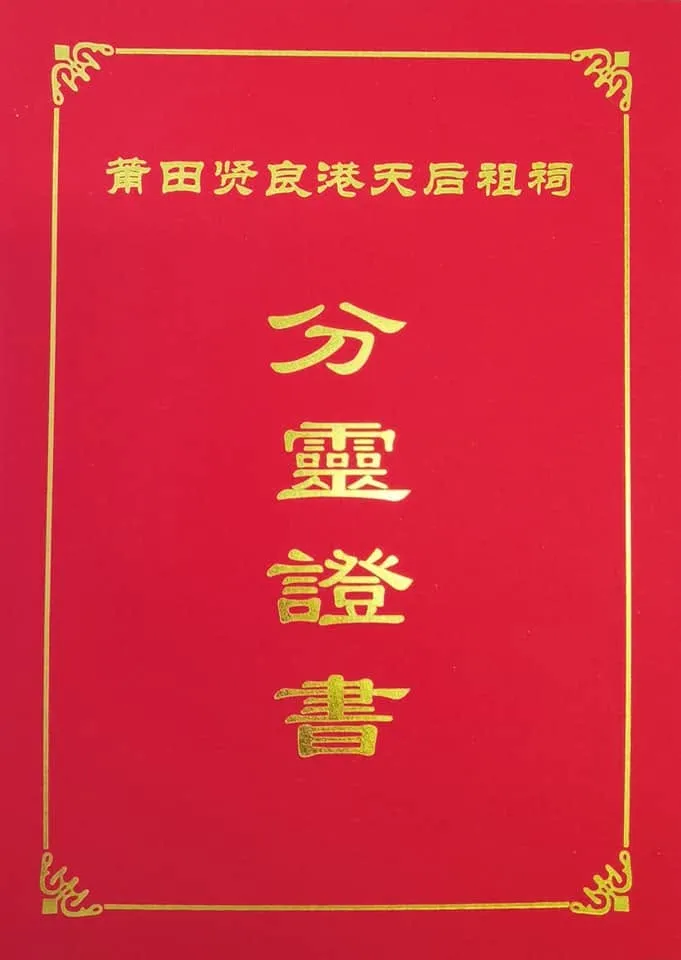
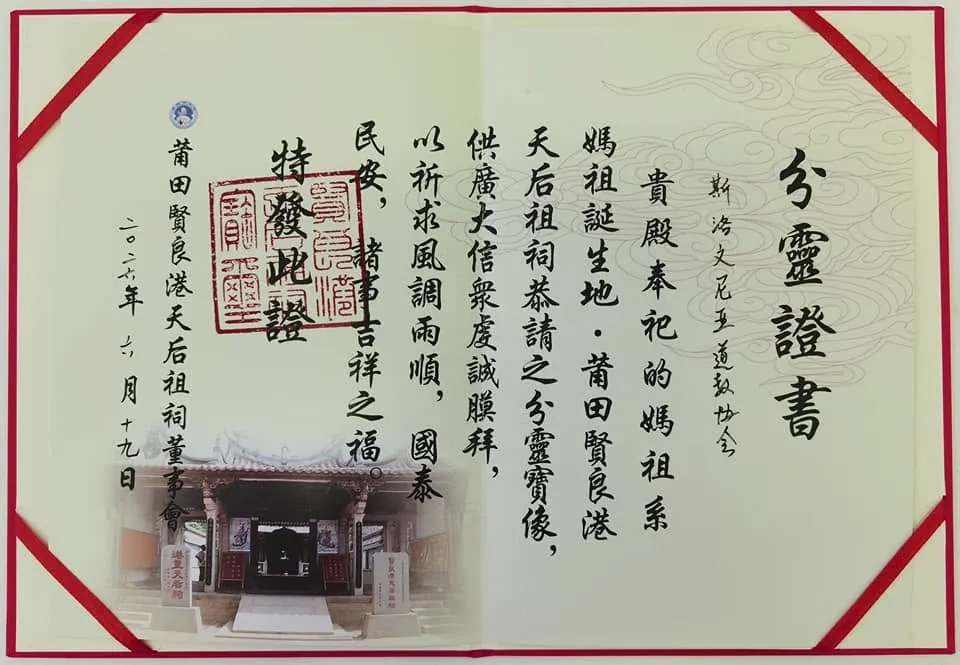
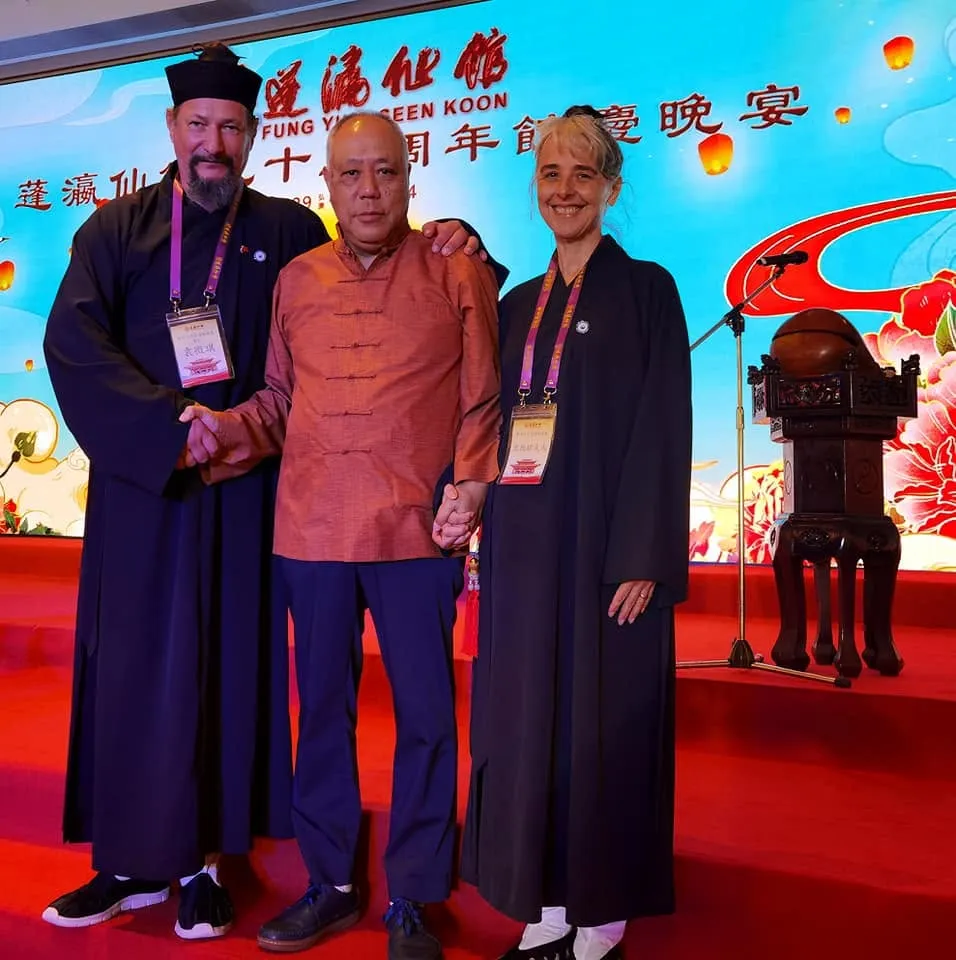
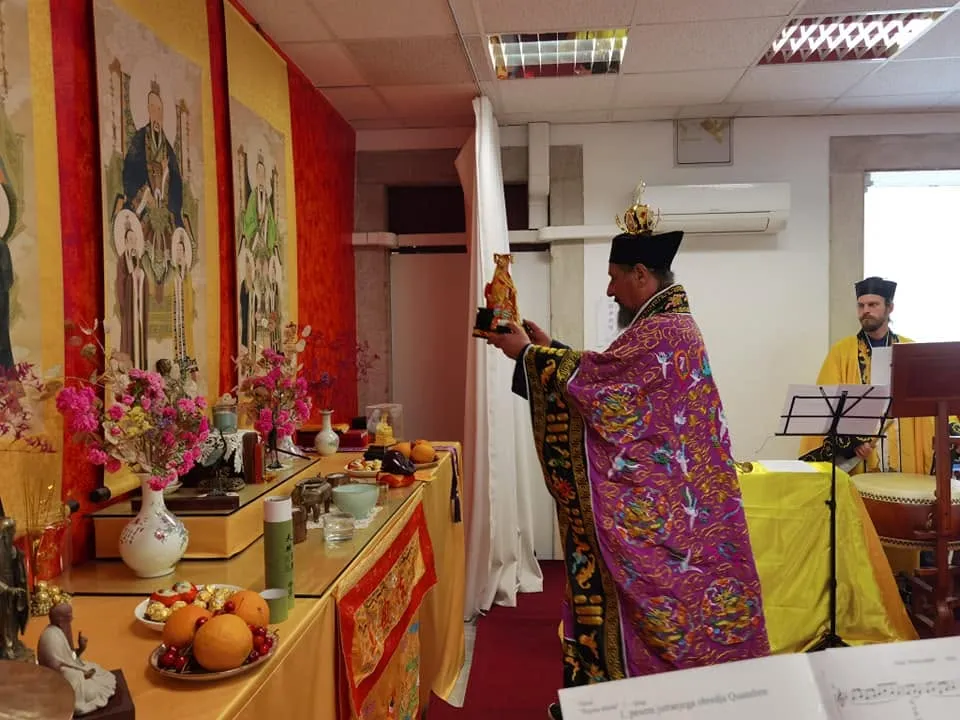
In Europe, the only registered temple with a daughter statue of Mazu is the Slovenian Daoist Temple of Supreme Harmony. On 19 June 2026, Rector of SDT Yuan Wei Qi received the consecrated replica from Lin Zidi, Chair of the Board of the Ancestral Sanctuary of the Goddess Mazu in Xianlianggangu. The consecrated statue, with a certificate proving that it was made after the original and at the same time confirming the direct kinship connection between the two temples, was handed over in a special ritual. On this occasion, the wish was expressed that in a few years the statue would return once more to visit its birthplace.
On the feast of Lingbao Tianzun, the statue was solemnly placed on the altar of SDT.
Mazu’s Journey to Slovenia
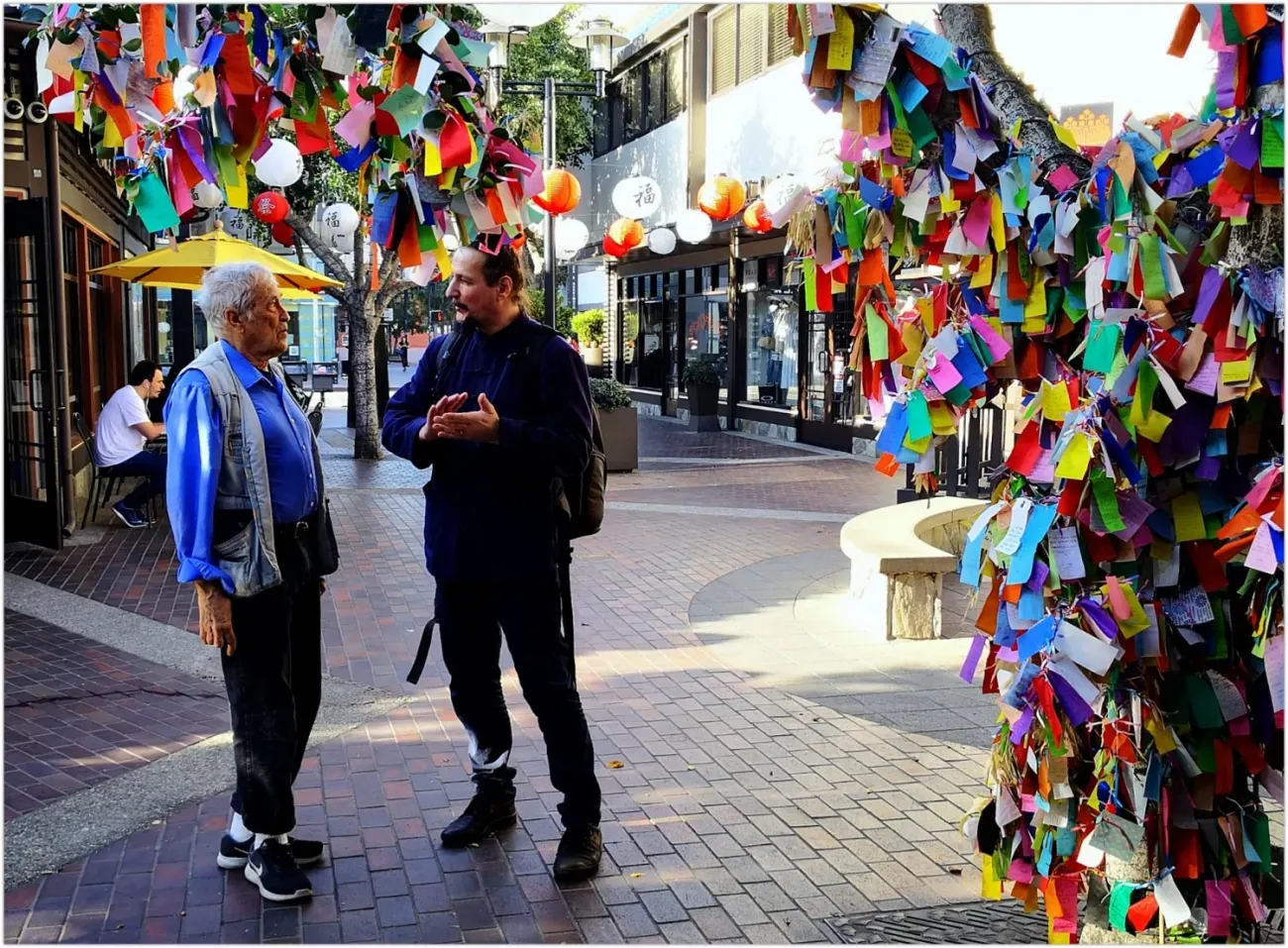
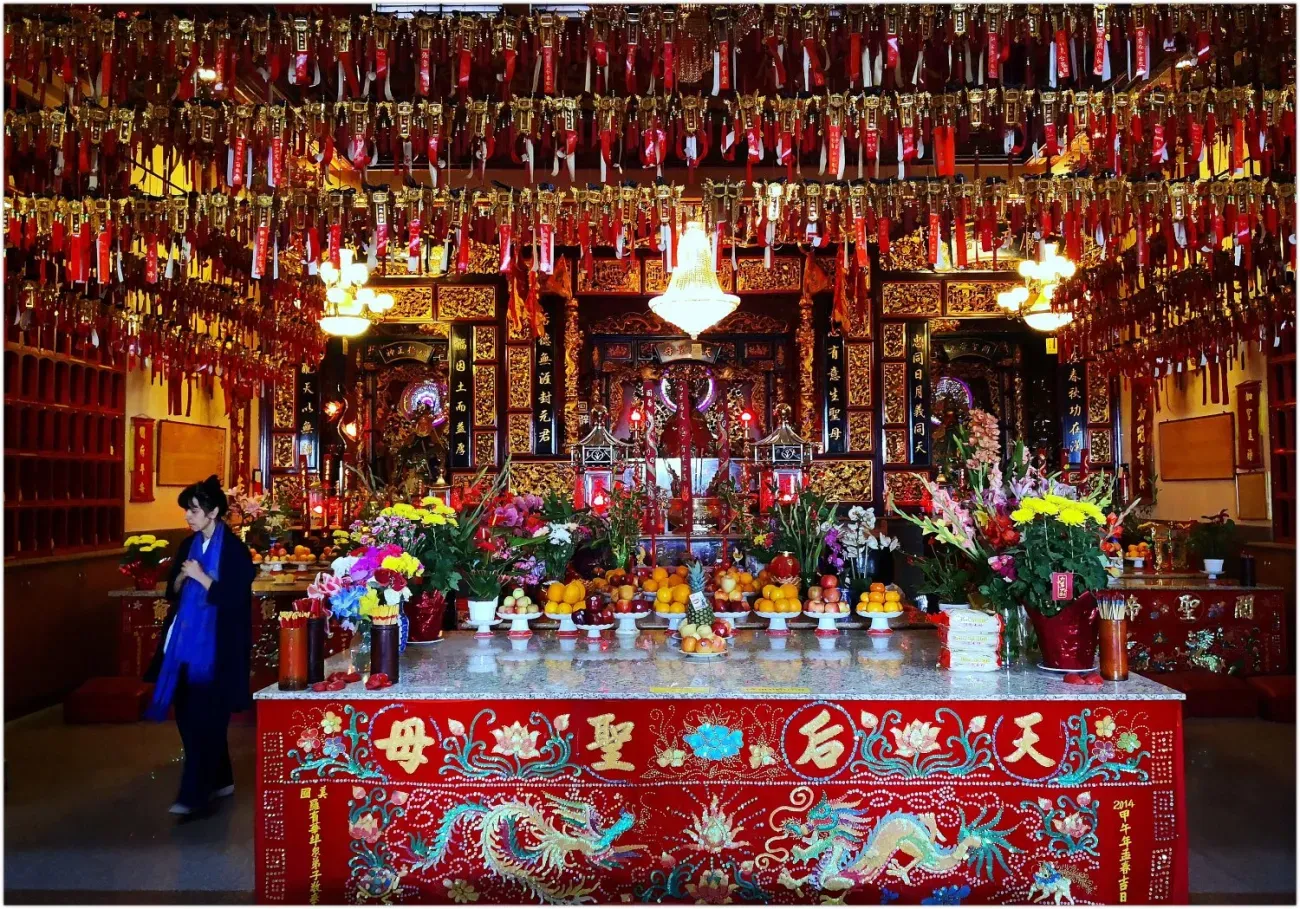
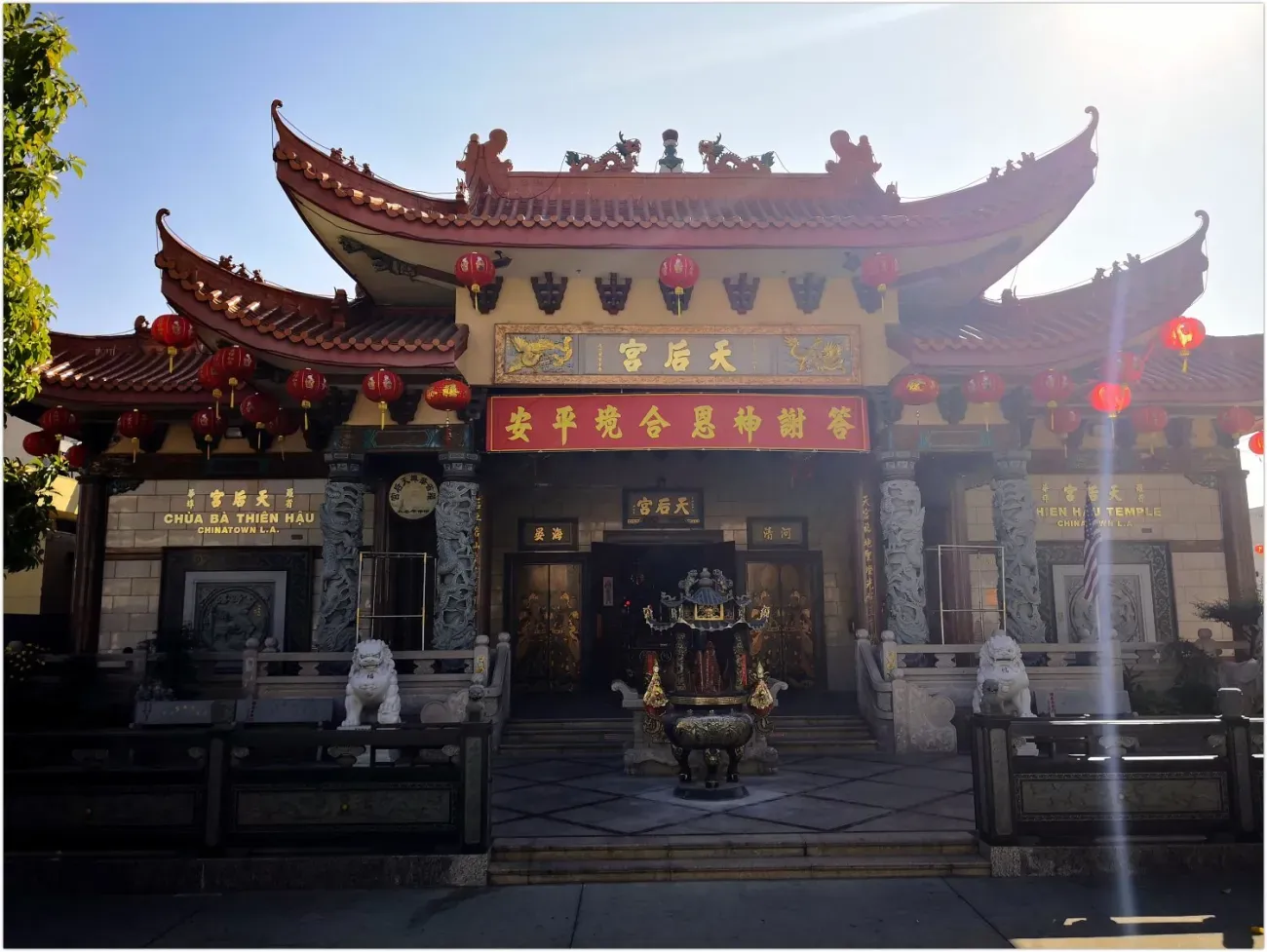
The first contact with Mazu took place in 2014, when Rector of SDT Yuan Wei Qi and I visited Mr Michael Saso in Los Angeles: in the middle of the local Chinese-Vietnamese quarter stands a temple dedicated to her, called Thien Hau, the Temple of the Heavenly Queen.
In 2024 we visited Macao and the A-Ma Temple dedicated to her, where we obtained a small statue of her and brought it to the SDT temple. That small statue has now found its way to our home, where it has taken its place on the family altar, while in its place in the temple stands a replica of the original from her birthplace, Putian. In this way, Mazu has connected two peoples: the Chinese and the Slovenian …
To conclude, here is a passage from the Taishang Laojun Shuo Tianfei Jiuku Lingyan Jing 太上老君说天妃救苦灵验经 (Scripture Spoken by the Most High Lord Lao on the Miraculous Salvation from Suffering by the Heavenly Consort), composed between 1409 and 1413:
With humility we turn to You, upon whom the title of Limitlessness (Wuji) was bestowed by sacred decree,
merciful and benevolent supreme numinous guardian of the Northern Dipper.
Your majestic form is revealed above the vast sea,
your virtue pervades the world, and all under Heaven honour You.
You protect the state, save the people, and nothing can restrain You;
in an instant You come to the aid of those in danger and deliver them from peril.
You travel through the heavens, walk among human beings,
cross the seas, and visit the underworld.
Before You demons and evil spirits bow down,
apparitions and monsters withdraw into hiding.
You turn misfortune into blessing in a single moment;
You bestow blessings and dispel disasters to the last trace.
Whoever lights incense with a sincere heart and offers a request to You,
You hear them and receive their prayer.
With the sincerest heart, we entrust ourselves and offer honour!
Vice-rector of SDT; Yuan Wei Heng