

 Events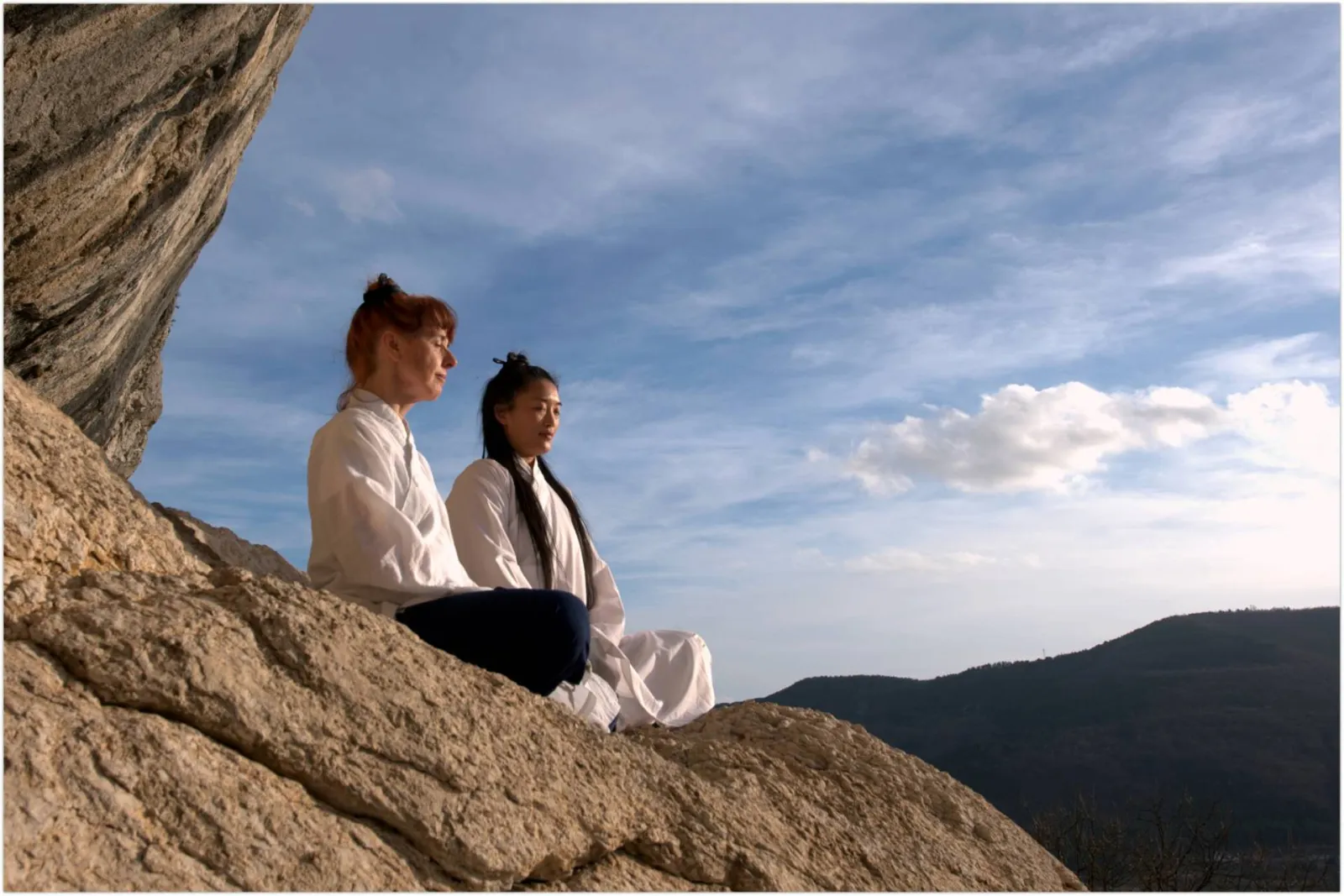
Monday Sitting in Oblivion
12 October 2026, 20:00 — 21:00 | Main Temple
Admission is free; donations are welcome.
Time & Location
12 October 2026, 20:00 — 21:00 | Main Temple
About the event
Daoism does not derive from the Latin term meditatio, which in the Western tradition often means contemplation, rational reflection, or mental concentration, but from an entirely different experiential horizon, where the central practice is closer to the notion of zuò wàng 坐忘 — “sitting in oblivion.”
In this context, it is not about creating mental content or directing it, but about gradually calming and letting go of all mental grasping: the practitioner quiets active thought, releases attachment to ideas about self and world, tries to stop controlling experience, and allows the natural flow (Dao) to express itself of its own accord. Zuò wàng is therefore not “doing something,” but precisely the cessation of interference, opening a space for what Daoism understands as transcendent and ungraspable through conceptual thought.
What does Daoism mean? Nothing.
What does meditation mean? Nothing.
What does your presence, driven by fascinations or perceptions, mean? Nothing.
What does the reality that may unfold before you mean? Much.
This thought points to the essence of the Daoist view: concepts in themselves have no final, fixed meaning, but function as pointers that direct attention beyond words and concepts. The true dimension is revealed only in the direct experience of reality, which exceeds explanations and definitions. In this sense, zuò wàng is also connected with the broader Daoist principle of wu wei (non-action) — action without force, which follows the natural flow of things and arises not from will, but from alignment with the Dao.
We ask only that you enter the space quietly and respectfully toward all participants, and leave it just as quietly, so as not to disturb others.


