 History
Paying of courtesy visit on Fang Zhang Wu Chenzhen, head of Changchun Temple in Wuhan
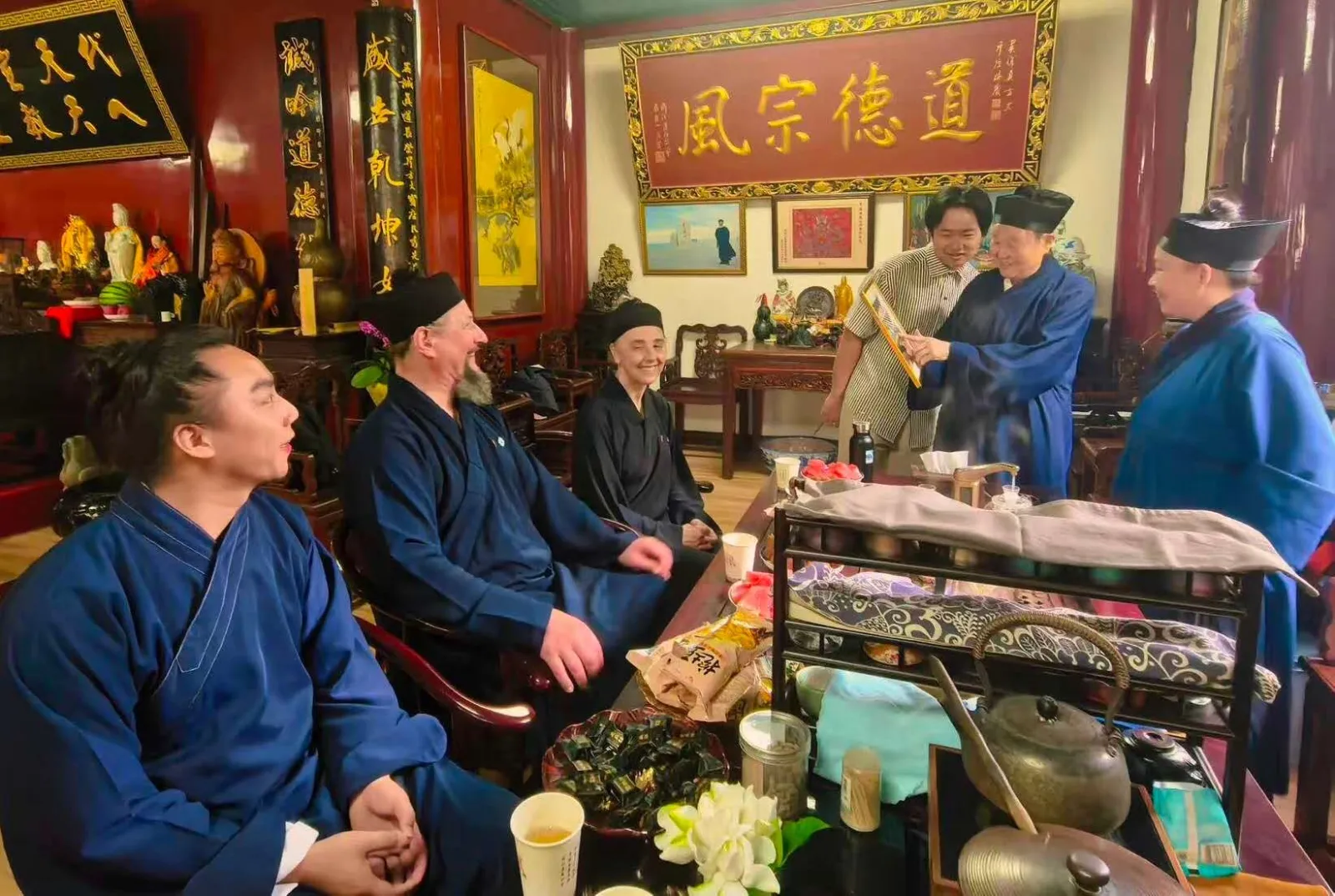
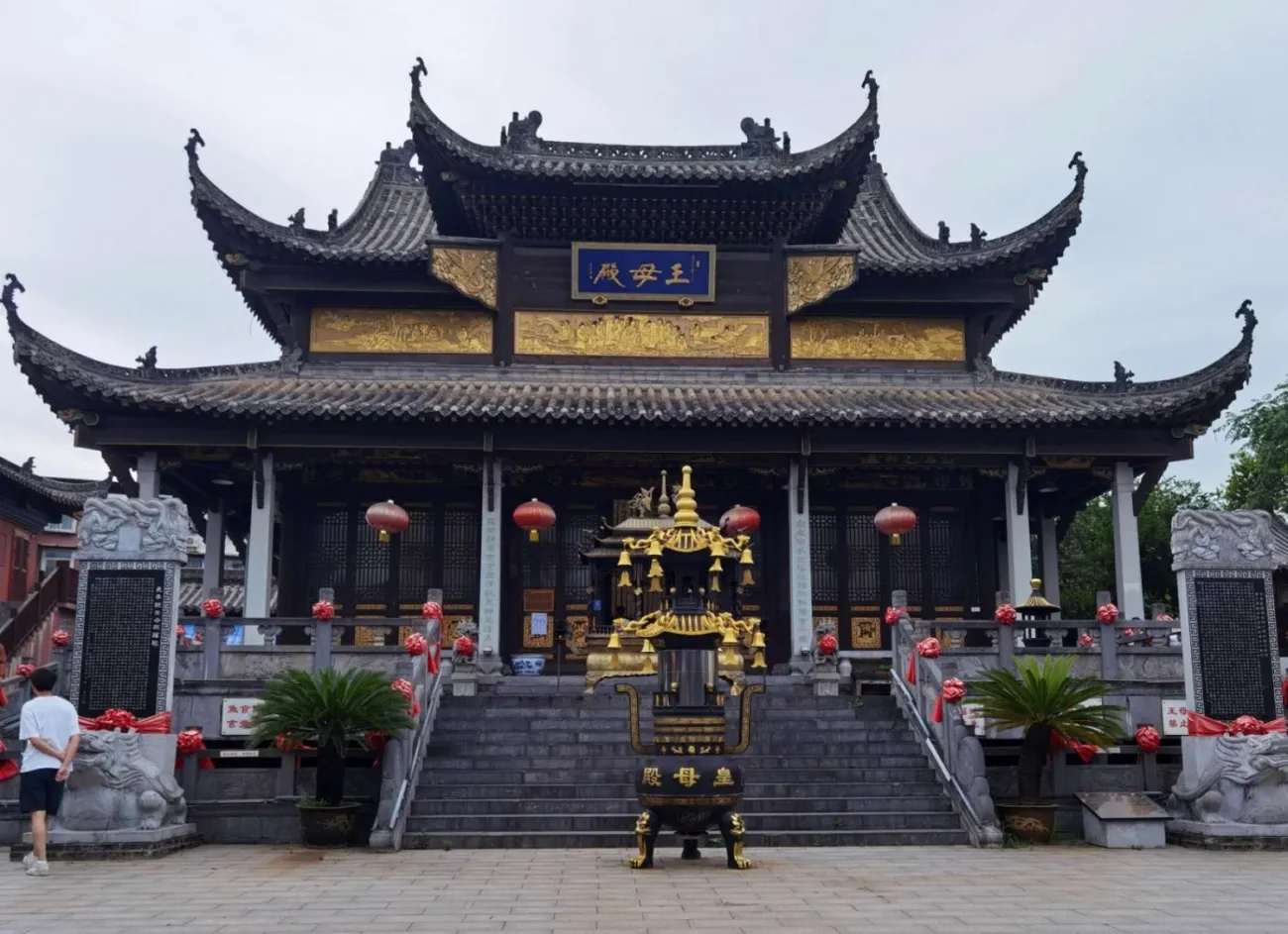
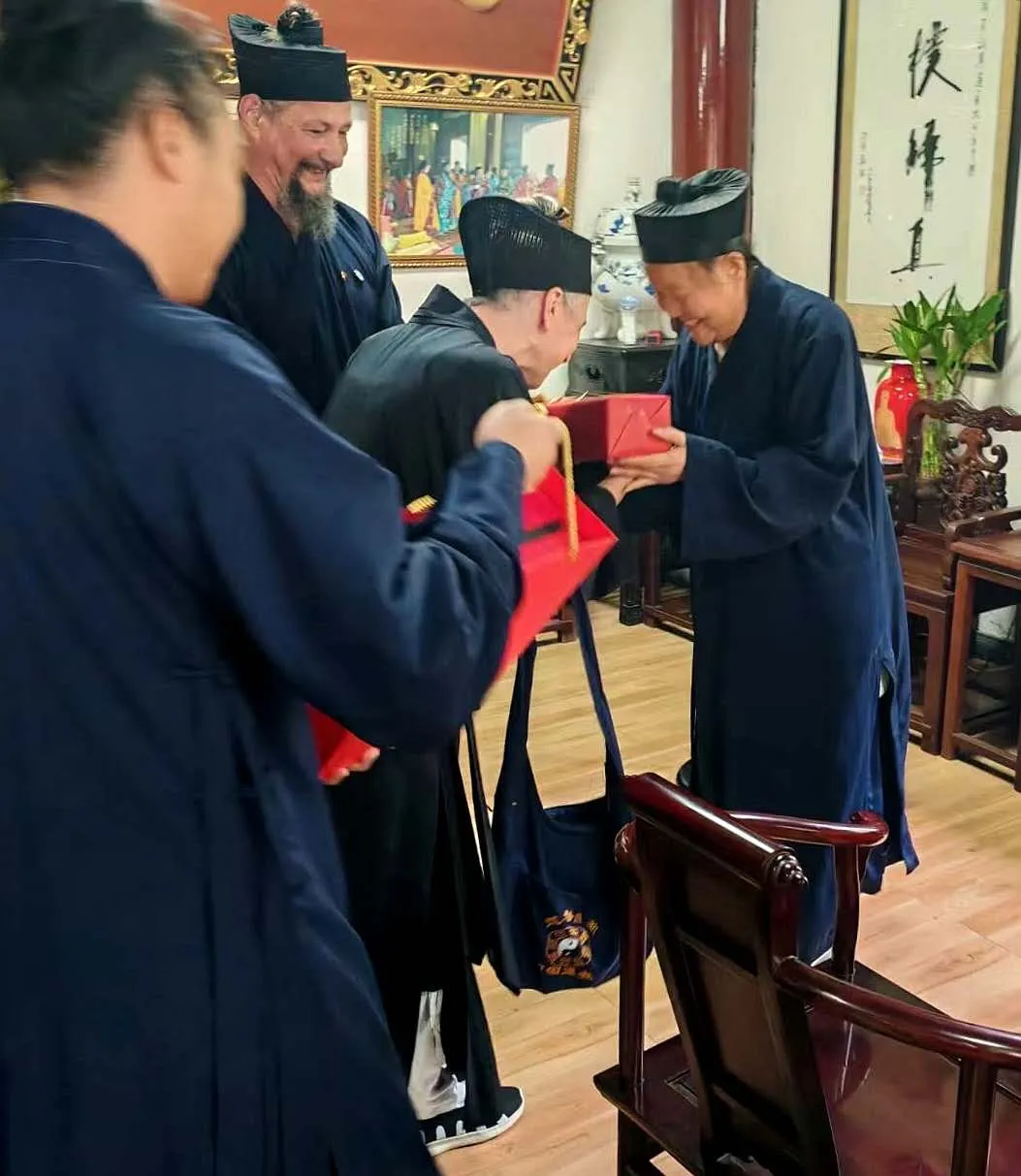
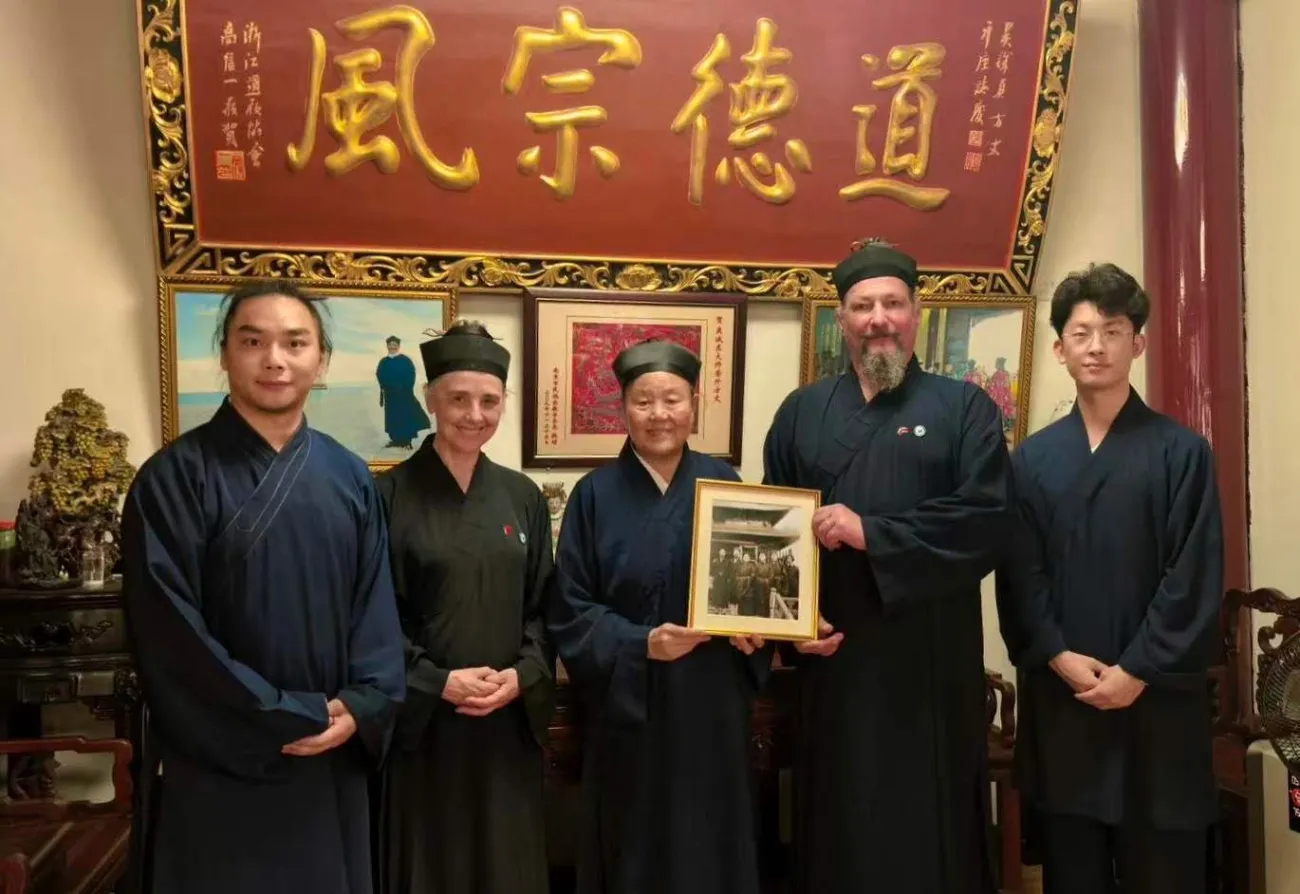
On the way to the Second International Seminar of Daoist Culture in Danjiangkou, the delegation of the Slovenian Daoist Temple (Rector Yuan Weiqi, Vice-Rector Yuan Weiheng) stopped in Wuhan. Together with SDT representative in China Tian Weize and his student Lin Sicheng they visited the Vice President of the Chinese Daoist Association and head (Fang Zhang) of the Changchun Temple, Wu Chengzhen. The visit was organised by brother Li Xinhong.
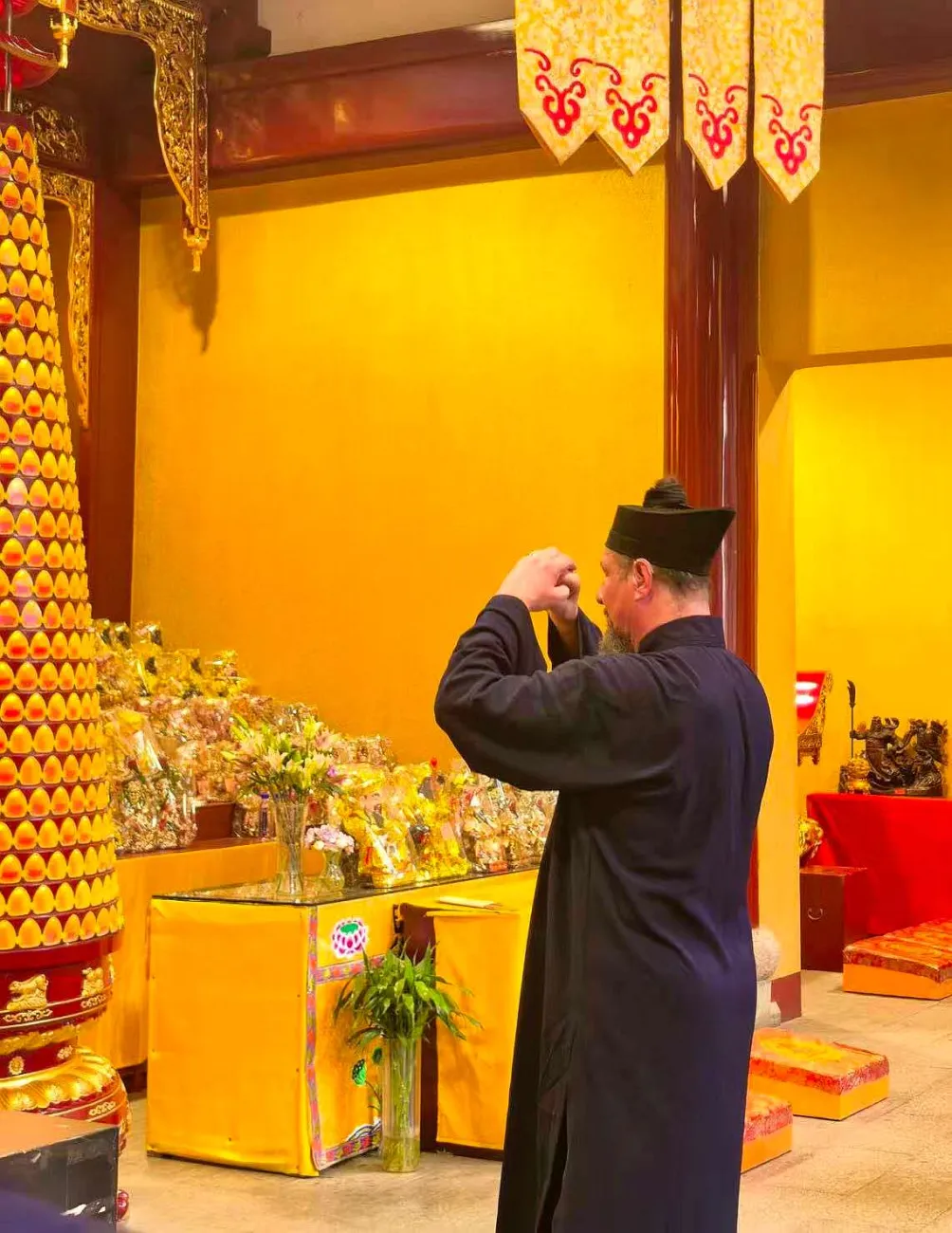
Despite her busy schedule, she kindly took time to received them. After guided tour through the temple complex, they met with Fang Zhang. After short conversation in her tea room, she invited them to temple restaurant to take lunch together. In pleasant discussion, they talk also about the difficulties of appropriately translating daoist terminology in Western languages. Li Xinhong who translated conversations from Chinese to English and vice versa admitted that there is a big problem because of different language and cultural concepts. Because this topic could be interesting for wider audience, rector of SDT asked Li Xinhong to prepare text about the temple and its Fang Zhang Wu Chengzhen for SDT website: he kindly agreed.
The cordial meeting took place on the festival of Immortal Lü Dongbin. It was very special day for Slovenian Daoist temple: on this day 8 years ago three initiators of its establishing (Jure Čeh, Darija Mavrič Čeh in Miha Virant) submitted all documentations to official registration in the list of slovenian religious community.
Brief Description of Changchun Guan
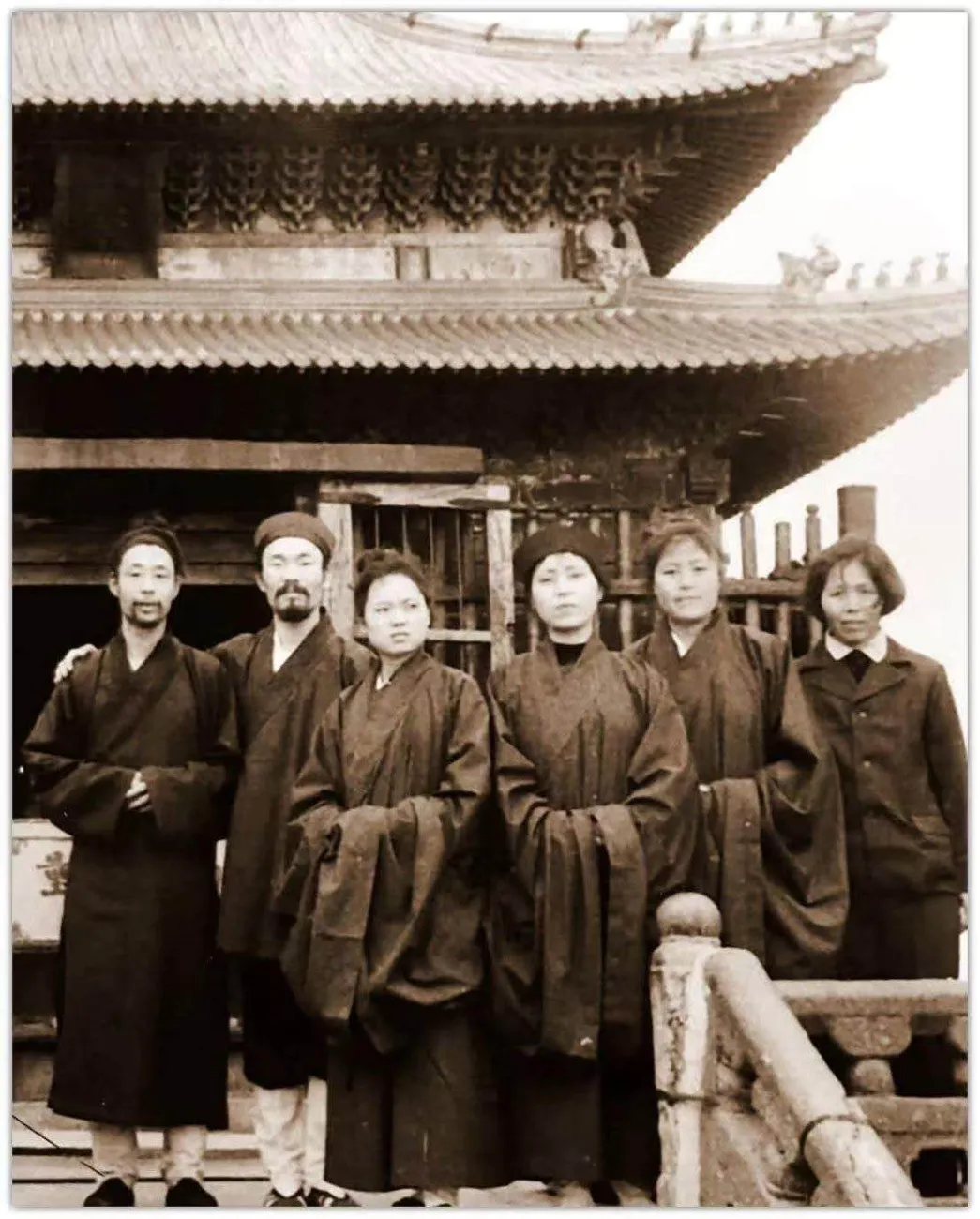
Changchun Guan, one of the most important Daoist temples in Wuhan, may be understood through two intertwined layers of history: legendary memory and recorded history. The legendary layer reaches back to the era of Laozi. According to local tradition, the area where the temple now stands was once a watery inlet thick with pine trees and was therefore known as Pine Island. It was also associated with Double Mountain (Shuangfeng Shan), a name connected with the local topography. Tradition further holds that Laozi, while travelling south to meet the “Five Elders” of Lufu, passed through this region and stopped at the long pine-covered island at the foot of Double Mountain. In later generations, people commemorated this visit by identifying the place with Laozi’s passage and establishing a sacred site sometimes referred to as Laozi Palace. Although these stories are important in shaping the sacred imagination of the temple, they belong to the realm of cultural memory rather than verifiable historical fact.
From the perspective of written history, the broader landscape of the site entered historical and literary memory much earlier than the present temple itself. The hill on which Changchun Guan stands was historically part of Huanghu Hill, later known as Snake Hill, an area deeply embedded in the cultural history of Wuchang. Official local history notes that this mountain already had established names before later periods and became an enduring landmark in Wuhan’s political, military, and literary life. In this sense, the sacred geography surrounding Changchun Guan can be situated within a historical landscape known from early imperial times and strongly visible in Tang-era cultural memory.
The temple institution known specifically as Changchun Guan, however, is generally traced to the Yuan dynasty, when disciples of Qiu Chuji built it in his memory and named it after his Daoist title, Changchunzi. Later records show that the temple became an important Quanzhen Daoist centre in central China. Because it occupied a strategic height near Wuchang, it was repeatedly damaged in warfare and repeatedly rebuilt. Major destruction occurred during the Taiping conflict in the nineteenth century, followed by substantial reconstruction in the Qing period. In modern history, the temple also became associated with the 1911 Revolution and the Northern Expedition, showing how religious space and political history were closely intertwined at this site. Thus, Changchun Guan is best understood as a place where legend, sacred geography, institutional Daoism, and modern Chinese history converge.
A Brief Introduction of Wu Chengzhen (Fang Zhang)
Wu Chengzhen, the current Fang Zhang, is widely recognised as a significant figure in contemporary Daoism. As the first female Fang Zhang, her appointment marked an important moment in the history of Chinese Daoism, symbolising both continuity within the religious tradition and a new stage in the recognition of women’s leadership in Daoist institutions. Her life and work embody devotion to faith, commitment to public service, and dedication to the preservation and development of Daoist culture.
From an early age, Wu Chengzhen showed a deep spiritual inclination. In her youth, she chose to chu jia and become a Daoist priest, inspired in part by her admiration for He Xiangu, the only female immortal among the legendary Eight Immortals. This early aspiration reveals not only her religious sincerity but also her desire to pursue a life of cultivation, compassion, and transcendence. The image of He Xiangu offered her both a spiritual model and a symbol of female possibility within the Daoist tradition.
Throughout her religious career, Wu Chengzhen has made important contributions not only to Daoist practice and temple administration but also to charitable work. Her efforts in public welfare reflect a broader understanding of Daoism as a living tradition that should benefit society as well as cultivate the individual. Through charity and community-oriented activities, she has demonstrated that religious leadership is not limited to ritual authority, but also involves social responsibility and moral example.
In recent years, Wu Chengzhen has also played an important role in the restoration and development of temple architecture and religious space. She is currently involved in the refurbishment of Chengqiwen Hall and Laichengzong Hall, projects that reflect both respect for historical heritage and concern for the future of Daoist culture. These restoration efforts are not merely physical repairs; they represent the renewal of sacred space, the continuation of ritual life, and the preservation of cultural memory for future generations.
Looking ahead, the planning of Changchun Tower further demonstrates her long-term vision for the development of the temple. Under her leadership, Daoism is presented not as a relic of the past, but as a dynamic tradition capable of renewal in the modern world. Wu Chengzhen therefore stands as an influential religious leader whose life bridges spiritual cultivation, institutional leadership, charitable commitment, and cultural preservation.