

 Daoist Practices
Nourishing Life in Accordance with the Dao: The Way of Yangsheng, Virtue Cultivation, and Physical and Mental Well- Being
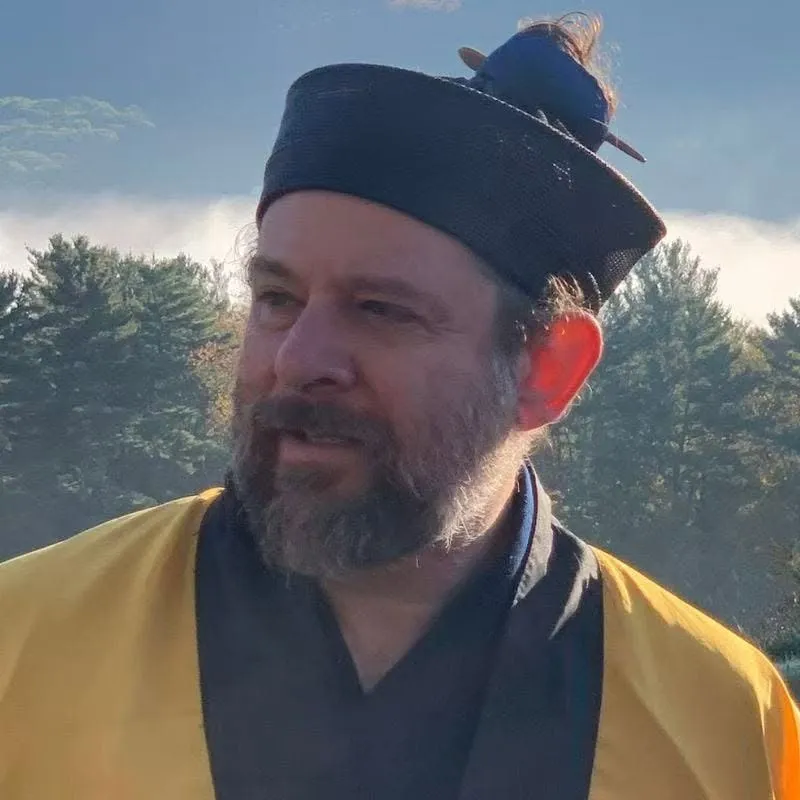
Dr. Jack Schaefer (解理玄, Xie Li Xuan) is a 22nd-generation Daoist priest in the Quanzhen Longmen Dantai Bidong Zong lineage of Sichuan, a 25th-generation priest in the Quanzhen Longmen Qingyun Dao lineage of Zhejiang, and a 31st-generation lineage holder in a Maoshan tradition. His contributions to Daoist teaching, scholarship, and cultural exchange have been recognized by the Chinese Daoist Association.
A Chinese medicine practitioner for over 27 years, Jack is a teacher and translator whose work bridges Daoist cultivation, classical literature, Chinese martial arts, qigong, and nourishing life (yangsheng 養生). With Josh Paynter he has co-translated and published six books, including the Zaowan Gongke Jing, Beidou Jing, Sanguan Jing, and Yushu Jing, with the Duren Jing coming in 2027. His latest publication is Qiu Chuji's Discourse on the Subtle Essentials of Nourishing Life (攝生消息論).
Jack is co-founder and co-abbot of Parting Clouds, Qingyun Dao Yuan (清雲道院), a worldwide organization dedicated to preserving and transmitting lineaged Daoist teachings through study, practice, and community.
***
Introduction: Rediscovering the Way of Yangsheng
The opening chapter of the Huangdi Neijing: Suwen (Yellow Emperor's Inner Classic: Basic Questions) raises a question closely related to human physical and mental well-being—a question that remains highly relevant today. The Yellow Emperor asks Qibo why people in ancient times could live to one hundred years of age while maintaining their vitality, whereas people of his own era often experienced aging, weakness, and illness at a much earlier age. Qibo's answer does not attribute the difference to variations in physical constitution. Rather, he explains that the key lies in how people understand life and how they organize their daily lives. The ancients understood the Dao, recognized the patterns governing the transformations of yin and yang, and were familiar with calendrical principles and related methods of calculation. Consequently, they were able to recognize the appropriate times for different activities.
The significance of this exchange lies in its understanding of health as a series of interconnected relationships. Human beings do not exist independently of their surrounding environment or the patterns governing the operation of Heaven and Earth. The changing seasons, variations in temperature, rhythms of sleep and daily activity, the balance between diet and physical exertion, and the regulation of emotional states all influence life and health. Genuine yangsheng requires an understanding of these relationships and the ability to respond appropriately according to particular circumstances.
This understanding lies at the heart of the Chinese tradition of yangsheng (養⽣), or nourishing life. Yangsheng encompasses a broad range of practices intended to preserve vitality, prevent illness, regulate the body and mind, and promote longevity. However, understanding yangsheng merely as a collection of healthpreserving techniques does not fully capture its deeper meaning. Within the Daoist tradition, yangsheng also signifies cultivating a way of life that accords with the Dao.
The She Sheng Xiao Xi Lun (攝⽣消息論, Discourse on Subtle Essentials of Nourishing Life) is an important example of this comprehensive understanding of yangsheng. The text integrates Chinese medical theory, seasonal transformations, physical cultivation, and the cultivation of virtue, translating broader principles into practical guidance for everyday life. Its discussions extend beyond what one should eat or how one should sleep. They also address how to regulate desires, preserve jing and qi, respond appropriately to one's environment, and cultivate oneself.
This paper argues that Daoist yangsheng offers a holistic perspective for understanding human physical and mental well-being. From this perspective, physical health, the cultivation of virtue, Daoist spiritual practice, and living in harmony with nature are not separate pursuits, but mutually supportive dimensions of a single path of cultivation. Through an examination of the She Sheng Xiao Xi Lun, this paper will further explore how yangsheng can serve both as a practical form of daily cultivation and as an expression of the Daoist ideal of cultivating virtue, nourishing life, and fostering harmony throughout the world.
Yangsheng: A Comprehensive Tradition of Cultivation
Yangsheng represents an important and continuous thread within the Chinese intellectual tradition, encompassing knowledge of nature, health, longevity, and the cultivation of human life. Historically, yangsheng practices have been remarkably diverse, including dietary regulation, breathing exercises, daoyin (導引) and other forms of physical activity, various methods of seated meditation and visualization, the consumption of nourishing substances, emotional regulation, sleep practices, and the preservation of jing and qi. These practices developed over time through the interaction of early philosophical traditions, Chinese medical theory, cosmological understandings of the correspondence between Heaven and humanity, Daoism, the traditions of the fangshi (⽅⼠), and other currents of Chinese thought and culture.
Early classical works such as the Zhuangzi and the Lüshi Chunqiu already contain numerous discussions concerning the preservation and nourishment of life. By the time of the Huangdi Neijing, these ideas had become more systematically developed and were used to explain the relationship between the human body and the transformations of nature. Human health was understood to be closely connected to the transformations of yin and yang, the changing seasons, the circulation of qi, the regulation of emotional states, and the appropriate cultivation of the body and mind.
Within Daoist communities, these ideas developed into a variety of practical methods. Breathing exercises, daoyin, seated meditation, visualization, dietary moderation, various methods of physical regulation, sound-based therapies, and the cultivation of virtue could all become components of yangsheng. The importance of these methods does not lie in their number, but rather in how they work together to regulate and nourish the human body and mind as a whole. It is precisely this holistic perspective that distinguishes yangsheng from approaches that treat different aspects of health as separate and unrelated.
For example, physical exercise without sufficient rest may not nourish the body but instead deplete it. Dietary regulation that fails to account for seasonal changes may overlook the changing needs of the body. Even seated meditation and internal cultivation may be affected by excessive desires, emotional agitation, or disorder in one's daily life. For this reason, the yangsheng tradition has consistently emphasized the interrelationship among all aspects of human life.
Yangsheng also embodies a distinctive understanding of the human body. The body is not simply a material entity separate from its environment and the patterns governing Heaven and Earth. Rather, it is a living microcosm corresponding to the greater cosmos. The transformations and movements of Heaven and Earth are reflected within the human body through the waxing and waning of yin and yang, the circulation of qi, and changes in the condition of the zang-fu organs and the body's various systems. Therefore, nourishing the body also means participating more consciously in the various relationships that sustain life.
This does not mean that all yangsheng practices belong exclusively to Daoism, nor that the different philosophical, medical, and religious traditions throughout Chinese history have understood yangsheng in precisely the same way. More accurately, yangsheng constitutes a shared field of cultivation that different traditions have developed and enriched according to their respective aims. Within Daoism, however, its significance extends beyond maintaining physical health. It also provides the necessary foundation for practitioners to undertake deeper forms of Daoist cultivation.
The She Sheng Xiao Xi Lun
The She Sheng Xiao Xi Lun is preserved in Daoist collections including the Zhengtong Daozang (正統道藏, Zhengtong Daoist Canon) and the Daozang Jiyao (道藏輯要, Essentials of the Daoist Canon). It brings together Chinese medical knowledge, Daoist cosmology, and methods of cultivation, presenting a comprehensive approach to nourishing life. Although relatively brief, the text addresses numerous subjects, including seasonal rhythms and daily routines, diet, sleep, emotional regulation, bodily signs and symptoms, the circulation of qi, and the preservation of jing and qi.
One of the text's most important characteristics is its strongly practical orientation. Rather than simply presenting abstract principles, it organizes specific guidance for nourishing life according to the cycle of the four seasons. Each season has its own characteristics in terms of the movements of Heaven and Earth and their corresponding relationships, and each places different demands upon the way people organize their lives. By understanding these patterns, practitioners can determine which ways of living are most appropriate as the external environment changes.
This also makes the She Sheng Xiao Xi Lun particularly well suited to serving as a guide for daily cultivation. It encourages practitioners to observe nature, understand the characteristics of the different seasons, and adjust their everyday lives accordingly. The transformations of Heaven and Earth are not merely objects of contemplation; they also provide a basis for human action.
The She Sheng Xiao Xi Lun further demonstrates the close relationship between Chinese medicine and Daoist cultivation. The text employs numerous Chinese medical concepts, including regulating qi, harmonizing yin and yang, preserving jing, and attending to the functions of the zang-fu organs. At the same time, it incorporates elements of the Daoist understanding of the body, such as the internal landscape of the body, spiritual imagery associated with the organs, and cultivation methods involving nourishing and guarding qi.
These subjects should not be too quickly separated according to modern categories such as medicine, religion, or philosophy. Within the worldview reflected in this text, they collectively constitute an understanding of human life as an integrated whole. The regulation of the body, the correspondence between Heaven and humanity, and Daoist cultivation can all be understood as different dimensions of the same process of practice.
The importance of the She Sheng Xiao Xi Lun lies not simply in its preservation of particular methods for nourishing life, but more significantly in its demonstration of how principles of cultivation can be translated into a coherent way of living. Its enduring value lies in connecting an understanding of the patterns governing nature with the practical organization of human daily life.
Seasonal Yangsheng: Harmonizing with the Movements of Heaven and Earth
Living in accordance with the four seasons provides one of the clearest examples of harmony within the yangsheng tradition. In the traditional Chinese understanding of the correspondence between Heaven and humanity, the four seasons reflect the waxing and waning of yin and yang and are associated with the movements of the Five Phases. These transformations correspondingly influence the condition of the human body, the circulation of qi, and the ways in which daily life should be regulated.
Spring governs the generation and emergence of life; summer governs growth and flourishing; autumn governs gathering and contraction; and winter governs storage and preservation. These are not simply descriptions of external climatic changes. They also provide a fundamental framework for understanding how people should respond to nature and adjust their ways of living.
The She Sheng Xiao Xi Lun translates this principle into practical guidance, addressing sleep and daily routines, diet, clothing, physical activity, rest, and emotional regulation. It reminds practitioners that the same way of living is not necessarily appropriate for every season. Yangsheng therefore emphasizes adapting to the appropriate time and adjusting according to circumstances rather than rigidly adhering to fixed practices.
Winter provides a useful example. Winter is associated with storage and the preservation of jing and qi. According to this principle, excessive expenditure of one's resources during a season intended for preservation may compromise the body's ability to respond to the transformations of the following spring. Similarly, excessive dissipation during summer may affect the process of gathering and replenishment during autumn.
The importance of these teachings lies in their preventive understanding of health: the way we live today may influence our ability to resist illness and imbalance in the future. This differs from a passive model of health in which attention is given only after symptoms appear. Instead, practitioners are encouraged to recognize how daily habits, seasonal transformations, and accumulated patterns of behavior continually influence health over time.
Prevention, in this sense, means establishing appropriate relationships between oneself, the seasons, the environment, and one's own physical condition before significant imbalances arise.
Seasonal yangsheng also requires careful observation. People should not rely solely on the calendar, but must also pay attention to actual environmental changes and the condition of their own bodies. The principles of seasonal yangsheng provide direction, but their practical application requires judgment based on actual circumstances. Harmony is not the result of mechanically following rules. Rather, it emerges through understanding change and responding to it appropriately.
From this perspective, living in accordance with the seasons represents a practical expression of the Daoist principle of shunying (順應), or responding in accordance with the natural course of things. Practitioners do not attempt to impose a fixed pattern upon life. Instead, they cultivate a sensitivity to change and learn to adjust accordingly. This is neither passive inaction nor a rejection of purposeful activity. It is the practice of taking appropriate action based upon an understanding of the conditions at hand.
Thus, the seasonal teachings of the She Sheng Xiao Xi Lun demonstrate that yangsheng is, first and foremost, a practice of learning how to observe. To nourish life, one must observe the transformations of the natural world, understand the relationship between these transformations and the body, and organize daily life accordingly. Harmony begins with awareness. We never exist in isolation, but are always situated within a network of relationships.
Nourishing Life Through the Cultivation of Virtue
The theme of this year's forum, "The Dao Gives Rise to Virtue and Transformation; All Under Heaven Dwells in Harmony" (道⽣德化,天下和合), invites us to consider the relationship between the cultivation of virtue and physical health. The She Sheng Xiao Xi Lun offers an important perspective on this subject because it does not separate human behavior from health. The regulation of emotions, moderation, and appropriate patterns of behavior are themselves components of the practice of nourishing life.
Here, de (德), or virtue, should not be understood merely as adherence to a set of moral rules. It can also be understood as cultivating a disposition that enables one to respond appropriately to the various circumstances of life. A person who understands moderation does not carelessly deplete the body. A person who possesses awareness pays closer attention to how their actions affect their own body, other people, and the surrounding environment. A person who understands balance recognizes when activity, consumption, or desire has become excessive or inappropriate.
These qualities have ethical significance because they concern how a person lives. At the same time, they have practical significance because one's habits and patterns of response directly influence the conditions necessary for maintaining health. These two dimensions are not identical, but within the Daoist understanding of yangsheng, they are closely interconnected.
Emotional regulation provides an important example. The yangsheng tradition maintains that emotional activity cannot be separated from the condition of the body. Prolonged agitation, anger, fear, or anxiety can disrupt the balance of body and mind and interfere with the normal circulation of qi. Therefore, emotional cultivation does not simply mean suppressing emotions. Rather, it means learning to respond more calmly and appropriately to one's emotional reactions, desires, and the circumstances that give rise to them.
The same principle applies to sensory pleasures and the pursuit of enjoyment. Yangsheng does not require people to reject the ordinary pleasures of life. Instead, it repeatedly reminds us to be mindful of imbalance. The question is not whether we can enjoy food, physical activity, human relationships, or material comforts, but whether these pursuits nourish life or deplete it.
From this perspective, moderation is not deprivation. Rather, it preserves the freedom and capacity to act appropriately. By avoiding unnecessary expenditure of one's resources, a person can retain greater vitality for the responsibilities and cultivation that truly matter. This is particularly important within Quanzhen practice, where maintaining physical health supports the long-term practice of seated meditation, internal cultivation, and the continued deepening of one's spiritual realization.
This relationship is also reflected in the principle of xingming shuangxiu (性命雙修), the dual cultivation of nature and life. The cultivation of xing (性), or one's innate nature, primarily concerns one's inner nature and spiritual disposition, while the cultivation of ming (命), or life, concerns the course of human existence, vital force, and the actual condition of the physical body.
Although different Daoist traditions offer varying interpretations of the relationship between xing and ming, the principle of their dual cultivation expresses a holistic understanding of spiritual practice. Spiritual and inner development cannot be separated from embodied human life. Likewise, simply pursuing physical longevity does not constitute genuine spiritual attainment.
Therefore, yangsheng is neither the entirety of Daoist cultivation nor an insignificant preliminary preparation. On the one hand, it creates the conditions necessary for deeper practice. On the other, it brings cultivation directly into everyday life. How we eat, rest, and work; how we regulate our emotions; and how we interact with other people can all become aspects of spiritual practice.
This also provides an important perspective for understanding the relationship between virtue and health. The cultivation of virtue cannot guarantee that a person will never become ill, nor should illness be understood as a moral failure. What Daoist yangsheng advocates is a way of living that moves toward greater harmony through self-regulation, attentiveness, moderation, and awareness. Virtue is not expressed only through extraordinary acts, but also through the discipline and cultivation that permeate everyday life.
Daoist Yangsheng in the Contemporary World
The principles reflected in the She Sheng Xiao Xi Lun remain highly relevant today. The pace of modern life has accelerated, external stimulation has continually increased, and people find it increasingly difficult to maintain stable rhythms of work and rest. Although modern society possesses advanced technologies for diagnosing and treating disease, many people still struggle to establish sustainable daily habits. The pursuit of health is also frequently fragmented into individual products, techniques, and interventions, making it difficult to recognize how these factors collectively influence the person as a whole.
Daoist yangsheng offers a different starting point for thinking about health. Rather than simply asking how to solve a particular health problem, it first asks us to consider how we organize our lives. How do we sleep? How do we work? What do we eat, and what do we consume? How do we respond to stress? Do we recognize the influence of seasonal changes and environmental conditions upon our bodies? Are our habits helping us preserve vitality, or are they continually depleting it?
These questions are not intended to replace modern medicine, but rather to complement another important dimension of health: the prevention and recovery from illness always take place within the context of particular lifestyles and environmental relationships. By emphasizing regularity, moderation, careful observation, and the importance of adjusting behavior in response to changing circumstances, Daoist yangsheng offers a valuable perspective for contemporary approaches to healthy living.
This holistic perspective can also provide inspiration for comprehensive health education. Acupuncture, Chinese herbal medicine, dietary regulation, physical exercise, breathing practices, and seated meditation need not be understood as isolated methods of nourishing life. Instead, they can be considered within a broader framework that also takes into account individual lifestyle habits, environmental conditions, emotional states, and the capacity for self-cultivation.
At the same time, we should not simply impose modern concepts upon this tradition. The ideas of correspondence between Heaven and humanity and the principles of cultivation found in Daoist texts have their own intellectual and religious contexts. They cannot be directly equated with explanations offered by modern biomedicine. Likewise, historical statements concerning longevity should not automatically be treated as conclusions that have been scientifically established.
The value of yangsheng does not depend upon whether every traditional idea can be matched with a particular modern scientific discovery. Its significance lies in establishing an integrated understanding of the relationships among the body, the environment, human behavior, and personal cultivation. Modern research can help us evaluate particular practices, but the broader intellectual framework underlying this tradition also deserves to be understood according to its own internal logic.
For Daoist communities, the contemporary significance of yangsheng also extends beyond individual health. A person who becomes more attentive to the conditions that sustain life may also become more aware of how their actions affect their family, community, nation, and natural environment. Of course, the movement from personal self-regulation to social responsibility does not happen automatically. Nevertheless, the yangsheng tradition provides an important foundation for considering the relationship between personal cultivation and harmonious participation in society and the wider world.
Therefore, the truly important question is not simply how ancient methods of nourishing life can be adapted to modern living. More importantly, it is what modern life can learn from this tradition. It reminds us that physical and mental well-being is not an isolated condition, but rather a relationship that requires continual attention, self-discipline, and adjustment.
Conclusion: Nourishing Life to Achieve Harmony
The approach to yangsheng presented in the She Sheng Xiao Xi Lun represents a comprehensive path of cultivation. Nourishing life concerns not only the body and spirit, but also the cultivation of virtue and the relationship between humanity and the transformations of Heaven and Earth. Its teachings concerning alignment with the seasons, moderation, emotional regulation, ethical practice, and the preservation of vitality reflect an understanding that human health arises from establishing appropriate and harmonious relationships with Heaven, Earth, and the natural world.
The understanding of yangsheng reflected in the She Sheng Xiao Xi Lun demonstrates that the practical regulation of everyday life is itself part of the broader path of Daoist cultivation. Nourishing the body creates the conditions for deeper spiritual practice, while Daoist cultivation itself influences how a person lives in the world. The purpose of preserving vitality is not simply to extend one's lifespan, but also to cultivate clarity, moderation, and a more harmonious relationship with Heaven and Earth.
This perspective continues to offer important insights for contemporary discussions of healthy living. It reminds us that health cannot be understood apart from the rhythms of everyday life, the conditions of our surrounding environment, and the ways in which we respond to the needs and limitations inherent in life itself. It also reminds us that cultivation does not exist only within specialized practices and techniques. It is equally present in our everyday choices, the habits we repeatedly develop, and the awareness and attitude with which we live in the world.
One important aspect of "The Dao Gives Rise to Virtue and Transformation" is learning to avoid unnecessary depletion, understanding when action is appropriate, and developing a greater sensitivity to the continually changing environment around us. "All Under Heaven Dwells in Harmony" means recognizing that human physical and mental well-being is never solely an individual matter. It also affects our relationships with our families, society, and the wider world.
Therefore, yangsheng is not merely a collection of traditional healthpreserving methods passed down through the centuries. It offers a way of understanding life itself: that human existence is fundamentally a continuous process of cultivation. Within this process, the nourishment of the body, the cultivation of virtue, the pursuit of the Dao, and living in harmony with nature can mutually support and fulfill one another.
The enduring lesson this tradition offers us is actually quite simple, even if it may take a lifetime to truly put into practice: Learn to live in accordance with the Dao, and nourish life through a way of living that accords with the Dao.


