

 Daoist Practices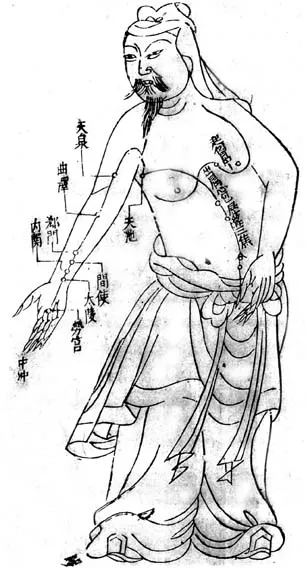
The Twelve Celestial Star Points
Ma Danyang Tianxing Shi'er Xue Zhi Zabing Ge 馬丹陽天星十二穴治雜病歌 (Ma Danyang’s Song of the Twelve Heavenly Star Points for Treating Various Diseases)
Ma Danyang 馬丹陽, personal name Ma Yu 馬鈺, was one of the leading Daoist masters of the early Quanzhen 全真, or “Complete Reality,” tradition. He was born in 1123 into a wealthy family in Ninghai, Shandong. From an early age, he was known for his learning, poetry, and interest in healing. His life, however, was decisively shaped by his encounter with the Daoist master Wang Chongyang 王重陽 (1113–1170), founder of the Quanzhen school.
Ma Yu was married to Sun Bu'er 孫不二, who later became one of the most important women in the early Quanzhen tradition. When they met Wang Chongyang, they gave up part of their wealth and began to follow his teachings. According to tradition, they assisted him during his Daoist retreat and gradually left behind their former way of life. They later each embarked on different paths of Daoist cultivation.
Wang Chongyang taught his disciples inner cultivation, in which the body, breath, consciousness, and cosmos are not understood as separate domains. Among his works is Chongyang Zhenren Jinguan Yusuo Jue 重陽真人金關玉鎖訣 (Secret of the Golden Gate and Jade Lock of Master Chongyang), a text concerned with inner cultivation, visualization, and working with the vital energy qi 氣. Ma Danyang’s later interest in the body and acupuncture points should be understood within this context: the body was not merely a physical object, but a field in which vital energy, consciousness, and cosmic order intertwine.
Ma Danyang became one of the Seven Perfected of the North 北七真, Běiqīzhēn, Wang Chongyang’s seven foremost disciples. They also included his wife Sun Bu'er, who took the Daoist name Sun Qingjing 孫清靜, “Sun, Clear and Tranquil.” Ma Danyang left behind several works, including Shenguang Can 神光璨 (Radiance of Divine Light) and Dongxuan Jinyu Ji 洞玄金玉集 (Collection of Gold and Jade of the Cavern of Mystery).
His name Danyang 丹陽 can literally be understood as “Cinnabar Yang.” In the Chinese Daoist tradition, cinnabar is an important symbol associated with both alchemy and inner cultivation. The name is therefore not merely a personal epithet, but also carries symbolic meaning.
Ma Danyang is also particularly known for a song that connects eleven acupuncture points with their locations on the body, characteristic ailments, and methods of traditional use. The earlier version is known as Tianxing Shiyi Xue Ge 天星十一穴歌 (Song of the Eleven Heavenly Star Points). It is associated with the tradition of Bian Que Shenying Zhenjiu Yulong Jing 扁鵲神應鍼灸玉龍經 (Jade Dragon Classic of Divinely Effective Acupuncture and Moxibustion), which was printed during the Yuan dynasty in 1329.
Later tradition added 太衝 Tàichōng (LV-3) to the eleven points. This produced the collection now known as Ma Danyang Tianxing Shi'er Xue Zhi Zabing Ge 馬丹陽天星十二穴治雜病歌 (Ma Danyang’s Song of the Twelve Heavenly Star Points for Treating Various Diseases). The song was later also included in the renowned Zhenjiu Dacheng 針灸大成 (Great Compendium of Acupuncture and Moxibustion), compiled by Yang Jizhou 楊繼洲 during the Ming dynasty.
The song is simple in structure but highly condensed in content. It is based on the classical Chinese five-character verse. The introduction first lists the twelve points and some of their combinations, then devotes a separate sequence of verses to each point. Each section generally combines three kinds of information: it first describes the point’s location and how to find it, then lists the physical signs and ailments for which it was traditionally used, and may conclude by stating a method of treatment, such as the depth of needling or the use of moxibustion.
The song, however, was not written as a modern medical manual. Its language is that of classical Daoist medicine, using concepts such as wind, cold, heat, dampness, qi, blockage, deficiency, and excess. These terms belong to a particular historical system of understanding the body and cannot simply be equated with present-day biomedical diagnoses.
More important still is something else. The points do not have merely technical names. Their names speak in the language of landscape and sky: we encounter a valley, a pool, an inner courtyard, a mountain, a spring, a passage, and even a fissure. The introductory song mentions the Northern Dipper 北斗 Běidǒu and speaks of the “true mechanism” and a “golden lock” being opened.
The song thus presents the body as a space that is not separate from the world around it. The points of the body are also places. They have their own valleys, mountains, springs, and passages, while their names establish a connection between the body, nature, and the cosmos.
This is precisely why the title “Twelve Heavenly Star Points” is not merely poetic embellishment. In traditional Chinese thought, the body can be understood as a space in which the wider order of heaven and earth is reflected. An acupuncture point is therefore more than a location on the body: it is a point of connection.
Introductory Song
三里、內庭穴,曲池、合谷接。
委中配承山,太衝、崑崙穴。
環跳與陽陵,通里並列缺。
合擔用法擔,合截用法截。
三百六十穴,不出十二訣。
治病如神靈,渾如湯潑雪。
北斗降真機,金鎖教開徹。
至人可傳授,匪人莫浪說。
Sānlǐ and Nèitíng,
Qūchí and Hégǔ,
Wěizhōng paired with Chéngshān,
Tàichōng with Kūnlún,
Huántiào with Yánglíng,
and Tōnglǐ with Lièquē.
When used in pairs,
the corresponding methods are applied;
when used in separate combinations,
the corresponding method is applied.
Three hundred and sixty points,
the secret is contained in these twelve.
In treating illness they act like divine power,
like boiling water melting snow.
The Northern Dipper sends down the true mechanism;
the golden lock opens.
This may be transmitted to a Perfected person;
do not carelessly reveal it to the unworthy.
The final lines are particularly important. Běidǒu 北斗, the Northern Dipper, and zhēnjī 真機, the “true operation” or “true mechanism,” use distinctly Daoist language. Likewise, jīnsuǒ 金鎖, the “golden lock,” evokes the opening of something concealed. The song’s introduction is therefore not merely a therapeutic list, but employs the language of mystery, celestial order, and the transmission of knowledge.
1. 足三里 / Zúsānlǐ / ST-36
三里膝眼下,三寸兩筋間。
能通心腹脹,善治胃中寒。
腸鳴并泄瀉,腿腫膝胻痠。
傷寒羸瘦損,氣蠱及諸般。
年過三旬後,鍼灸眼便寬。
取穴當審的,八分三壯安。
Zúsānlǐ is below the knee “eye,”
three cun between two tendons.
It helps with distension in the chest and abdomen
and effectively addresses cold in the stomach.
For intestinal rumbling and diarrhea,
swelling of the legs, and pain and weakness in the knees and shins.
For wasting and weakness associated with shānghán,
as well as qìgǔ and various similar ailments.
After the age of thirty,
acupuncture and moxibustion are said to bring clarity to the eyes.
The point must be located precisely;
it is then said to bring relief.
Note: xīyǎn 膝眼 literally means “knee eye” and does not refer to the human eye. Cun 寸 is a traditional body-based unit of measurement. In classical medical terminology, the term shānghán 傷寒 has a broader meaning and should not simply be translated as “a cold.”
2. 內庭 / Nèitíng / ST-44
內庭次趾外,本屬足陽明。
能治四肢厥,喜靜惡聞聲。
癮疹咽喉痛,數欠及牙疼。
瘧疾不思食,鍼著便惺惺。
鍼三分,灸三壯。
Nèitíng is outside the second toe;
it belongs to the Yangming channel of the foot.
It addresses cold or paralysed limbs;
the person seeks quiet and cannot tolerate sound.
For hives and rashes,
sore throat, frequent yawning, and toothache.
For malarial or feverish conditions,
when there is no desire for food,
use of the point is said to bring renewed alertness.
The expression wù wén sheng 惡聞聲 means an aversion to hearing or perceiving sound. It should not be translated as the modern diagnosis of misophonia. Ma Danyang is not describing a modern neurological syndrome here.
3. 曲池 / Qūchí / LI-11
曲池拱手取,屈肘骨邊求。
善治肘中痛,偏風手不收。
挽弓開不得,筋緩莫梳頭。
喉閉促欲死,發熱更無休。
遍身風癬癩,鍼著則時瘳。
鍼五分,灸三壯。
Qūchí is located with the elbow bent,
at the edge of the bone.
It effectively addresses pain in the elbow
and conditions in which the hand does not respond because of wind.
When a bow cannot be drawn
and the tendons are so weak that the person cannot comb their hair.
For obstruction of the throat, when suffocation threatens,
and for fever that does not subside.
It is also said to bring rapid improvement
in widespread skin rashes.
4. 合谷 / Hégǔ / LI-4
合谷在虎口,兩指岐骨間。
頭疼并面腫,瘧病熱還寒。
齒齲鼻衄血,口噤不開言。
鍼入五分深,令人即便安。
灸三壯。
Hégǔ is at the “tiger’s mouth,”
between the bones that diverge towards the fingers.
For headache and swelling of the face,
and for alternating fever and chills.
For tooth decay and nosebleeds,
and for a locked jaw when speech is impossible.
Needling or pressure is said to bring relief.
“Tiger’s mouth” (hǔkǒu 虎口) is the traditional name for the area between the thumb and index finger. Here too, the song’s language is vivid: an anatomical location is described through the image of an animal.
5. 委中 / Wěizhōng / BL-40
委中曲月秋裏,橫紋脈中央。
腰痛不能舉,沉沉引脊梁。
痠疼筋莫展,風痺復無常。
膝頭難伸屈,鍼入即安康。
鍼五分,禁灸。
Wěizhōng is at the centre of the transverse crease,
where the pulse runs.
For lower back pain that prevents the person from straightening up,
and when the pain pulls deeply along the spine.
For painful and stiff tendons
and recurring pain caused by “wind blockage.”
When the knee is difficult to extend or bend,
needling is said to bring relief.
6. 承山 / Chéngshān / BL-57
承山名魚腹,腨腸分肉間。
善理腰疼痛,痔疾大便難。
脚氣并膝腫,輾轉戰疼痠。
霍亂及轉筋,穴中刺便安。
鍼七分,灸五壯。
Chéngshān is also called the “fish belly”;
it lies between the muscles of the calf.
It effectively addresses lower back pain,
haemorrhoids, and difficulty passing stool.
For jiǎoqì and swelling of the knee,
as well as painful muscle cramps.
For huòluàn and muscle spasms,
use of the point is said to bring relief.
The terms jiǎoqì 脚氣 and huòluàn 霍亂 should not be translated directly as present-day diagnoses. They belong to historical medical vocabulary and have meanings that are broader than, or different from, those of modern medical terms.
7. 太衝 / Tàichōng / LV-3
太衝足大指,節後二寸中。
動脈知生死,能醫驚癇風。
咽喉并心脹,兩足不能行。
七疝偏墜腫,眼目似雲朦。
亦能療腰痛,鍼下有神功。
鍼三分,灸三壯。
Tàichōng is on the foot near the big toe,
two cun behind the joint.
The pulse at this point is said to reveal life and death;
the point is said to address convulsions and “wind.”
For pain and swelling of the throat and a sensation of distension in the heart,
and for inability to walk on both legs.
For various kinds of hernia and swelling,
and when the eyes seem veiled by clouds.
It is also used for lower back pain;
needling is said to have a “miraculous effect.”
Tàichōng is particularly interesting because of the history of the collection itself: this point was added later to the original eleven, so the present group of twelve is the result of the tradition’s historical development.
8. 崑崙 / Kūnlún / BL-60
崑崙足外踝,跟骨上邊尋。
轉筋腰尻痛,暴喘滿衝心。
舉步行不得,一動即呻吟。
若欲求安樂,須於此穴鍼。
鍼五分,灸三壯。
Kūnlún is by the outer ankle,
above the heel bone.
For muscle cramps and pain in the lower back and buttocks,
and for sudden difficulty breathing with a sensation that rises towards the heart.
The person cannot take a step;
even the slightest movement causes groaning.
If relief is sought,
this is said to be the point to use.
The name Kūnlún 崑崙 is also significant beyond acupuncture. Kunlun is one of the great sacred mountain regions of Chinese mythology and cosmology. The name thus once again connects a point on the body with a wider symbolic world.
9. 環跳 / Huántiào / GB-30
環跳在髀樞,側臥屈足取。
折腰莫能顧,冷風并濕痺。
腿胯連腨痛,轉側重欷歔。
若人鍼灸後,頃刻病消除。
鍼二寸,灸五壯。
Huántiào is at the hip joint;
it is located while lying on the side with the leg bent.
For lower back pain that prevents the person from turning,
and for cold and damp blockage.
The pain extends from the hip along the leg,
while turning the body causes deep groans.
After acupuncture and moxibustion,
the ailment is said to subside quickly.
10. 陽陵泉 / Yánglíngquán / GB-34
陽陵居膝下,外臁一寸中。
膝腫并麻木,冷痺及偏風。
舉足不能起,坐臥似衰翁。
鍼入六分止,神功妙不同。
灸三壯。
Yánglíng lies below the knee,
one finger-width from the outer edge.
For swelling and numbness of the knee,
and for cold blockage and wind.
When the person cannot lift the leg
and sits or lies as though they were elderly.
Needling is said to produce a special and unusual effect.
The name Yánglíngquán 陽陵泉 is composed of the images of yang, a hill, and a spring. Here too, the language of the body is connected with the language of landscape.
11. 通里 / Tōnglǐ / HT-5
通里腕側後,去腕一寸中。
欲言聲不出,懊悩及怔忡。
實則四肢重,頭腮面頬紅。
虛則不能食,暴瘖面無容。
豪鍼微微刺,方信有神功。
鍼三分,灸三壯。
Tōnglǐ is on the inner side of the forearm,
one cun from the wrist.
When the person wishes to speak but no voice comes out,
and for inner agitation and heart palpitations.
In excess conditions, the limbs are heavy,
and the head, jaw, and cheeks become red.
In deficiency conditions, the person cannot eat,
the voice suddenly falls silent, and the face loses its expression.
With a gentle needle prick,
an exceptional effect is said to appear.
The word tōng 通 means “to pass through,” “to allow flow,” or “to open a passage,” while lǐ 里 means “interior.” The name itself thus expresses the idea of a passage or connection with the interior.
12. 列缺 / Lièquē / LU-7
列缺腕側上,次指手交叉。
善療偏頭患,遍身風痺麻。
痰涎頻壅上,口噤不開牙。
若能明補瀉,應手疾如拿。
鍼三分,灸五壯。
Lièquē is above the side of the wrist;
it is located by crossing the hands.
It effectively addresses ailments on one side of the head,
as well as numbness and pain associated with “wind blockage.”
For an abundance of phlegm and fluids that rise and accumulate,
and for a locked jaw when the teeth cannot be parted.
If one properly understands tonifying and dispersing,
the effect is said to appear directly beneath the hand.
The name Lièquē 列缺 is particularly poetic. Liè 列 means “to open,” “fissure,” or “row,” while quē 缺 means “gap,” “lack,” or “crack.” In later tradition, it is often translated as “Fissure in the Sky”. Such a name once again shows that the language of acupuncture points is often the language of nature, space, and the cosmos.
Note for the Reader
This text presents a historical tradition of traditional Chinese medicine and its Daoist cultural context. The descriptions of individual points and their traditional uses are not modern medical recommendations and are not intended as instructions for performing acupuncture or moxibustion oneself. Modern healthcare decisions should be based on qualified medical advice.
Sources
Zhenjiu Dacheng 針灸大成 (Great Compendium of Acupuncture and Moxibustion), Yang Jizhou 楊繼洲, Ming dynasty; the text Ma Danyang Tianxing Shi'er Xue Zhi Zabing Ge 馬丹陽天星十二穴治雜病歌.
Bian Que Shenying Zhenjiu Yulong Jing 扁鵲神應鍼灸玉龍經 (Jade Dragon Classic of Divinely Effective Acupuncture and Moxibustion) — the earlier tradition of Tianxing Shiyi Xue Ge 天星十一穴歌 (Song of the Eleven Heavenly Star Points).
中國哲學書電子化計劃 — Chinese Text Project, Zhenjiu Dacheng 針灸大成 (Great Compendium of Acupuncture and Moxibustion).


