

 A Garden Without an East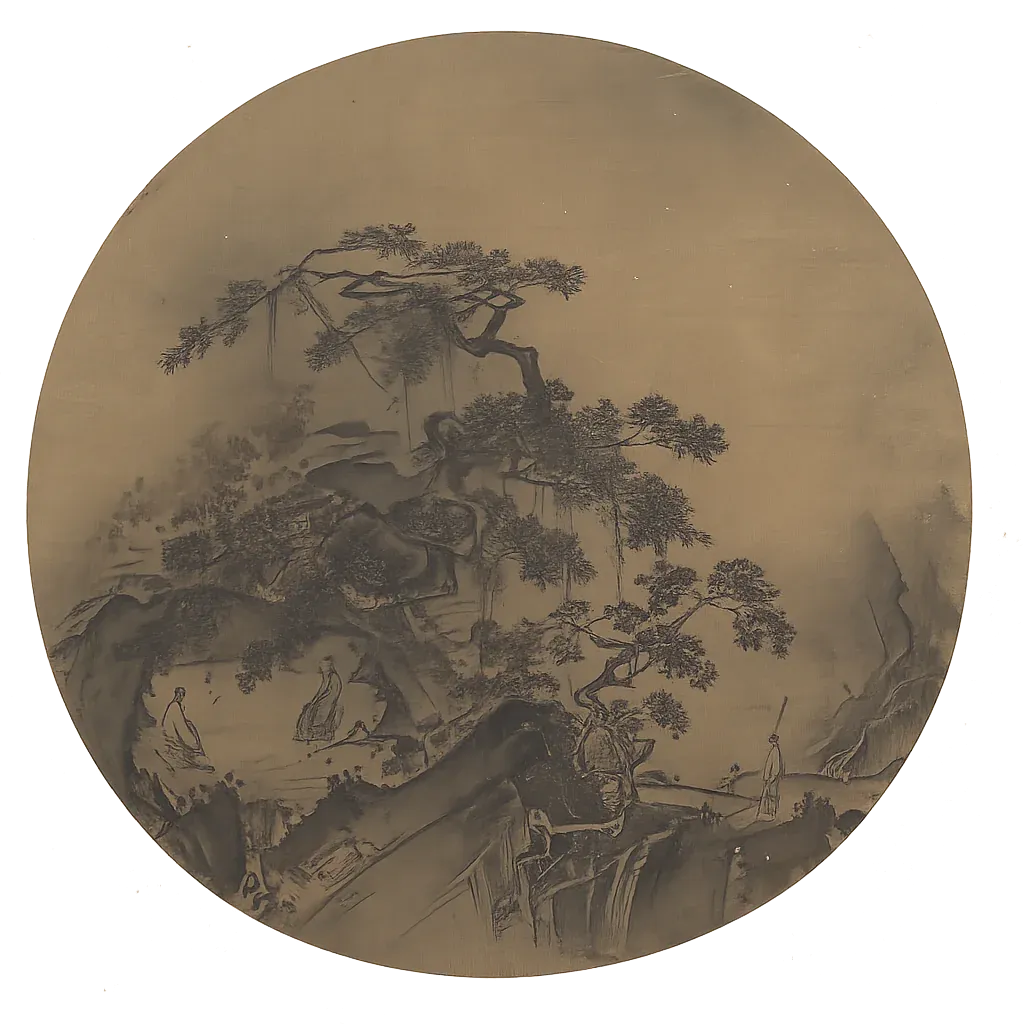
Garden without an East (conclusion)
The garden breathed with the wind, with scents and a rustling sound to which the birds added melody. When the wind blew, the treetops, shrubs and grasses stirred. The surface of the pool rippled, withered stems bent low, and flowers danced the dance of life joyfully with the bees. When the wind blew, a wave of bowing swept across the slope and faded again, as though the earth had briefly breathed in and then breathed out. Paths ran through the grass. Some suddenly vanished among the trees; others branched off and met again in an unfathomable tangle. The garden had no main path. Perhaps because it had no place that needed to be reached. Or perhaps because anywhere in the garden could be reached without a path.
The blue of evening gathered among the trees. A faint trace of light lingered at the foot of the mountains, while the clouds playfully changed their shapes. Billowing one moment, they resembled majestic mountains rising towards the sky; an instant later, they took on the appearance of an island on a lake, undulating dragons, fleeting faces, then assumed forms that could no longer be compared with anything. Their edges dissolved into one another without colliding, always gently embracing in endless transformations. In the mornings and evenings, they celebrated with the sun. Then they donned festive robes of glowing colours, made of translucent fabric finer than silk and richer than brocade. They also knew how to dress in sombre shades of grey when they decided to soak the earth and fill its channels and pools, in which they so loved to admire their reflections. They loved to wander aimlessly. Sometimes they gathered and left for other places, leaving the vast courtyard of the sky to shine in all its blue.
The garden breathed with them too. The stream flowed tirelessly into the distance; shadows danced splendid dances around bodies that never quite escaped them. The leaves of the trees budded bright green and fell in shades of crimson. Moss climbed over rocks, and the carpet of grass liked to change into golden hues and bend its seed heads back towards the earth. The pine grew where it grew. Its roots wound among the stones on the surface and reached deep into the earth; its branches spread wide and gave off an intoxicating scent, and sometimes a thick, fragrant, amber-coloured tear trickled down its bark. It was there, in accepting silence. Two playful squirrels with bushy tails and lively little eyes made their home in its crown.
Cranes liked to stop on their journeys at the pool not far from the pine, drink their fill and fly on into the misty distance.
In the garden there was no clear boundary between day and night; the stars and moon coexisted with the sun and clouds. Among them was a star with the strange name “North Star”, which seemed especially valuable to humans because it remained faithful to its place. The other stars slowly wheeled across the sky, while it always stayed close to the same point. But the North Star neither knew nor cared that humans had turned it into a direction and a calendar.
The garden did not care either. Here there was no north or south, east or west. No tree grew at the centre. The old pine, whose dark crown stood out above the other growth, was not the centre of the garden. It happened to be where it grew. When the wind fell silent, its branches became still. When the wind returned, they moved again. And perhaps that was why there was something in the garden older than all the conversations beneath its crown. A word can name water, but it cannot drink in a person's stead. It can name a fish, but it cannot become a fish. It can name a path, but it cannot walk along it. Words gave shape to many thoughts: maps, directions, paths, laws, doctrines, dogmas and names. Yet lovers of words often could not match the softness of clouds in their transformations, nor the patience of the pine.
The gathered company still sat quietly beneath the pine's crown beside the nearby water. Many had realised that the current did not need them. On the surface of the pool, the reflection of a star trembled for a moment and disappeared. The pool, like an ancient mirror.
The old masters wrote: “Quán zhě suǒyǐ zài yú, dé yú ér wàng quán; tí zhě suǒyǐ zài tù, dé tù ér wàng tí; yán zhě suǒyǐ zài yì, dé yì ér wàng yán 筌者所以在魚,得魚而忘筌;蹄者所以在兔,得兔而忘蹄;言者所以在意,得意而忘言。When you catch the fish, you forget the net. When you understand the meaning, you forget the words.”
And very likely this writing, too, is unimportant. Then only what can no longer be captured in words remains: “Jì rù zhēn dào, míng wéi dé dào, suī míng dé dào, shí wú suǒ dé 既入真道,名為得道,雖名得道,實無所得。When you enter the true Dao, this is called attaining the Dao; although it is called attaining the Dao, in truth there is nothing that has been attained.”
Drugpa, who was still carving the handle of his walking stick, casually asked those present:
“And what now?”
Laozi, in the soothing shade of the pine, merely smiled gently. The world will flow on.
(end)
SDT Rector Yuan Weiqi


