 History
The First Session of the First Council of the World Federation of Daoism
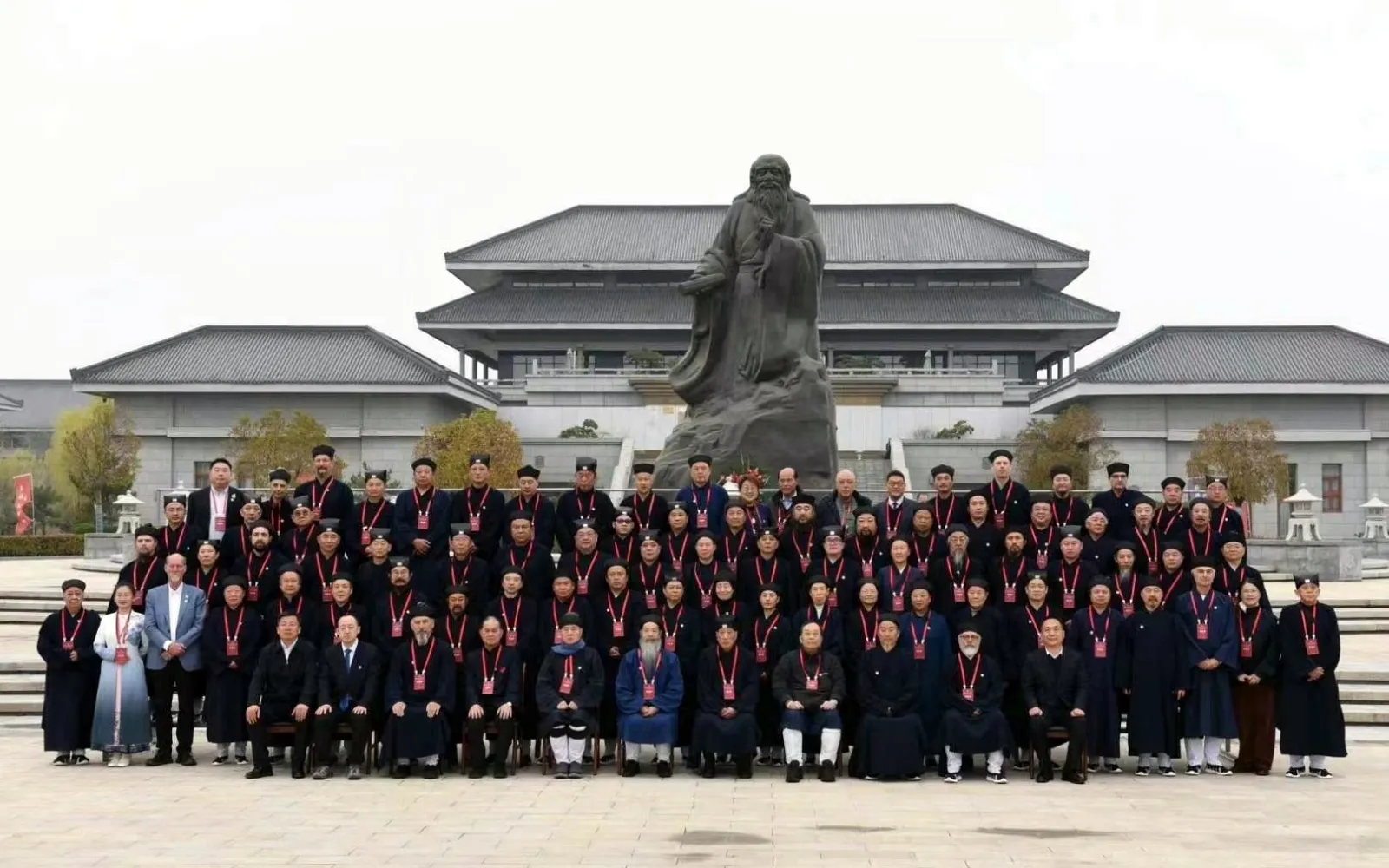
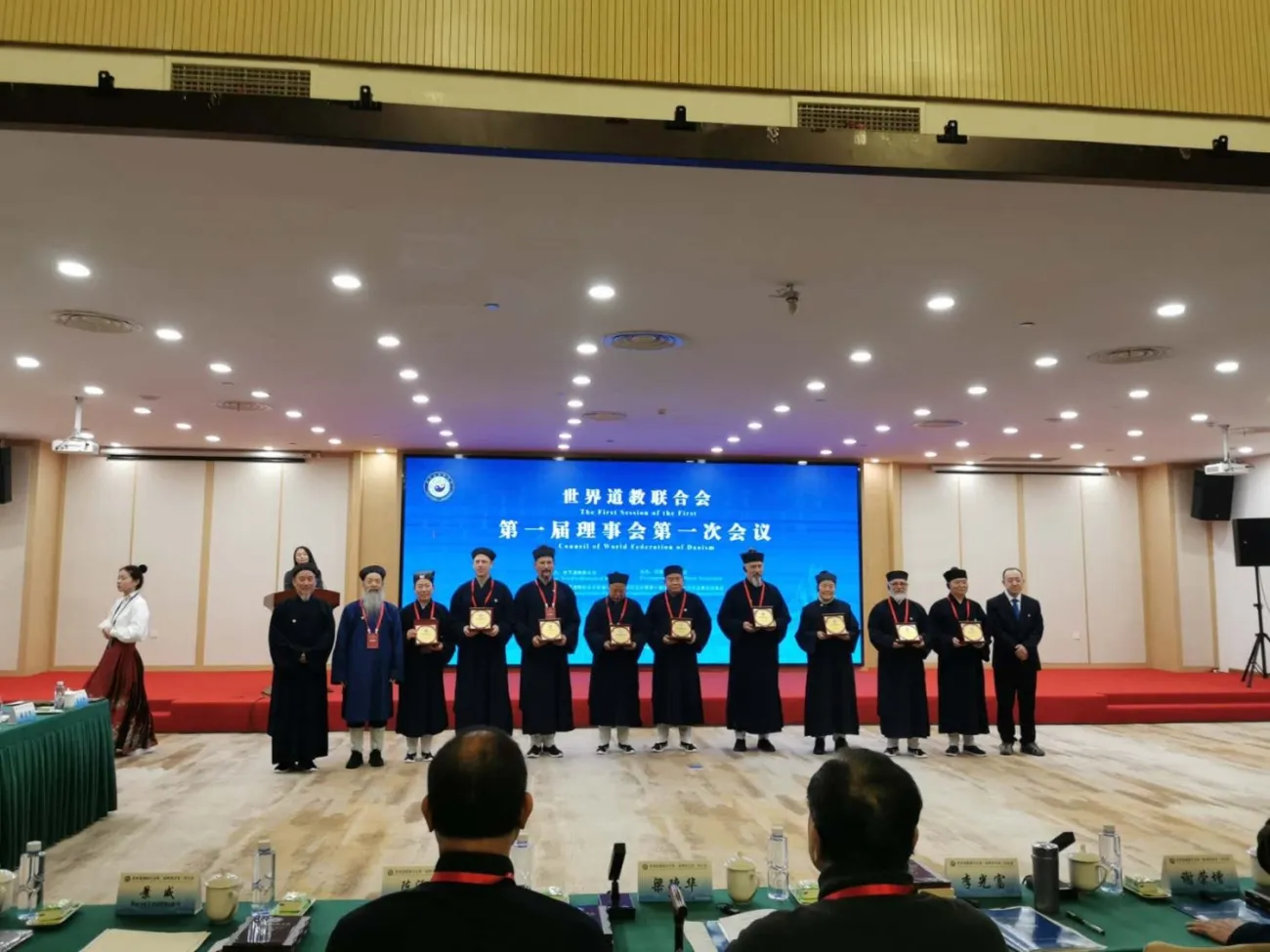
The First Session of the First Council of the World Federation of Daoism took place from March 24 to 26, 2024, in Luyi County (Zhoukou, Henan Province). It coincided with a joint ritual marking the 2,595th anniversary of Laozi’s birth. Delegates from 28 countries and regions, including Slovenian representatives, took part in the session, confirming the distinctly international character of the event.
The event carried strong symbolic and ritual significance, as it was held in a place traditionally regarded as Laozi’s birthplace and was directly connected with ritual practices honoring this central figure of the Daoist tradition.
The choice of Luyi as the venue for the first session was therefore not merely a matter of protocol, but was conceptually conceived as a form of pilgrimage to the “source” of Daoism and as a means of strengthening a shared identity and ideological cohesion among diverse Daoist communities around the world.
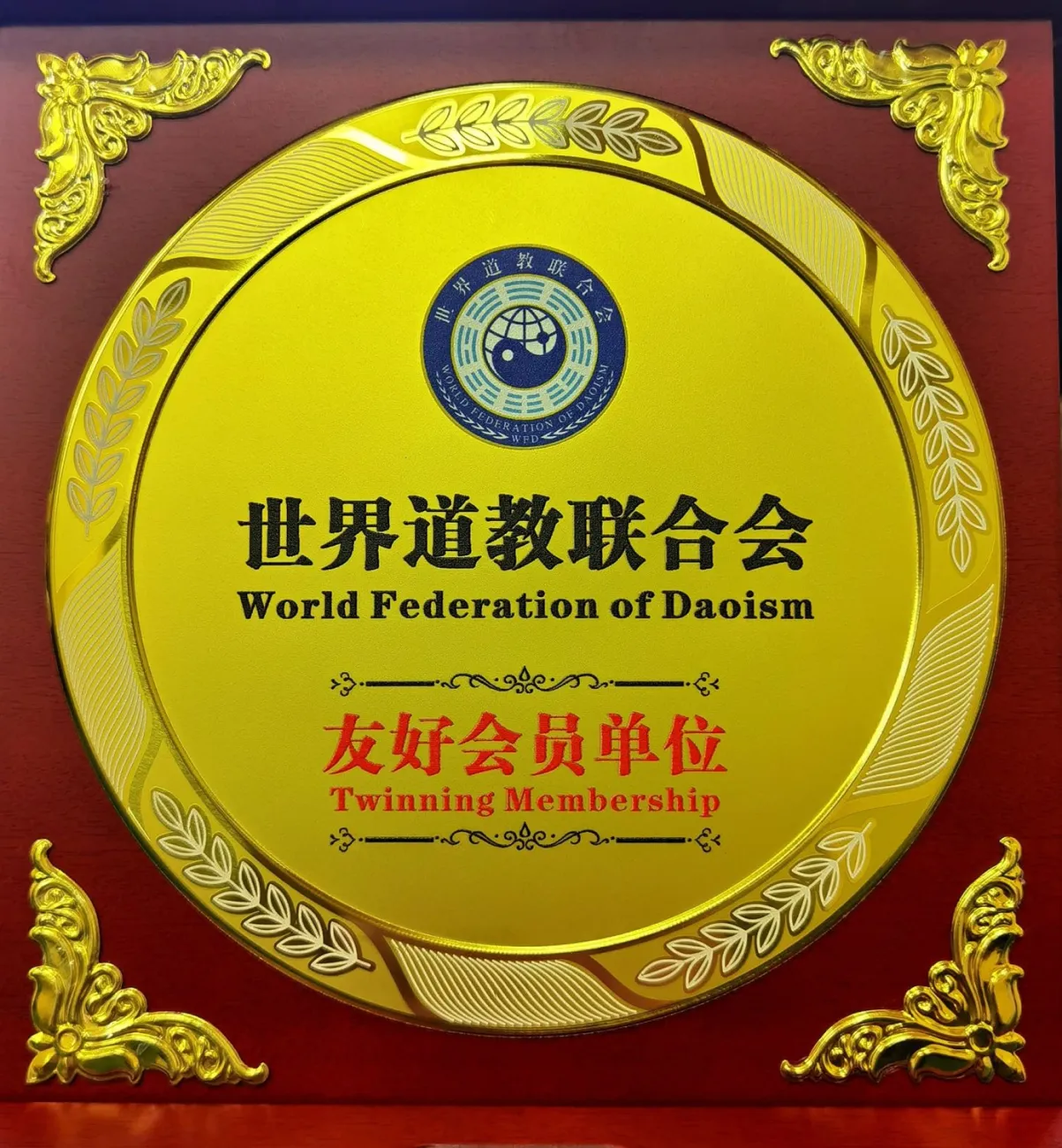
As part of the meeting, key directions for the federation’s future work were outlined, including the strengthening of institutional connections, the development of educational and research activities, and a greater presence of Daoism in global discussions, particularly in the fields of sustainable development, environmental ethics, and interreligious dialogue. An important aspect of the session was also the formalization of international cooperation through so-called sister partnerships between organizations, indicating the gradual structuring of a global Daoist network.
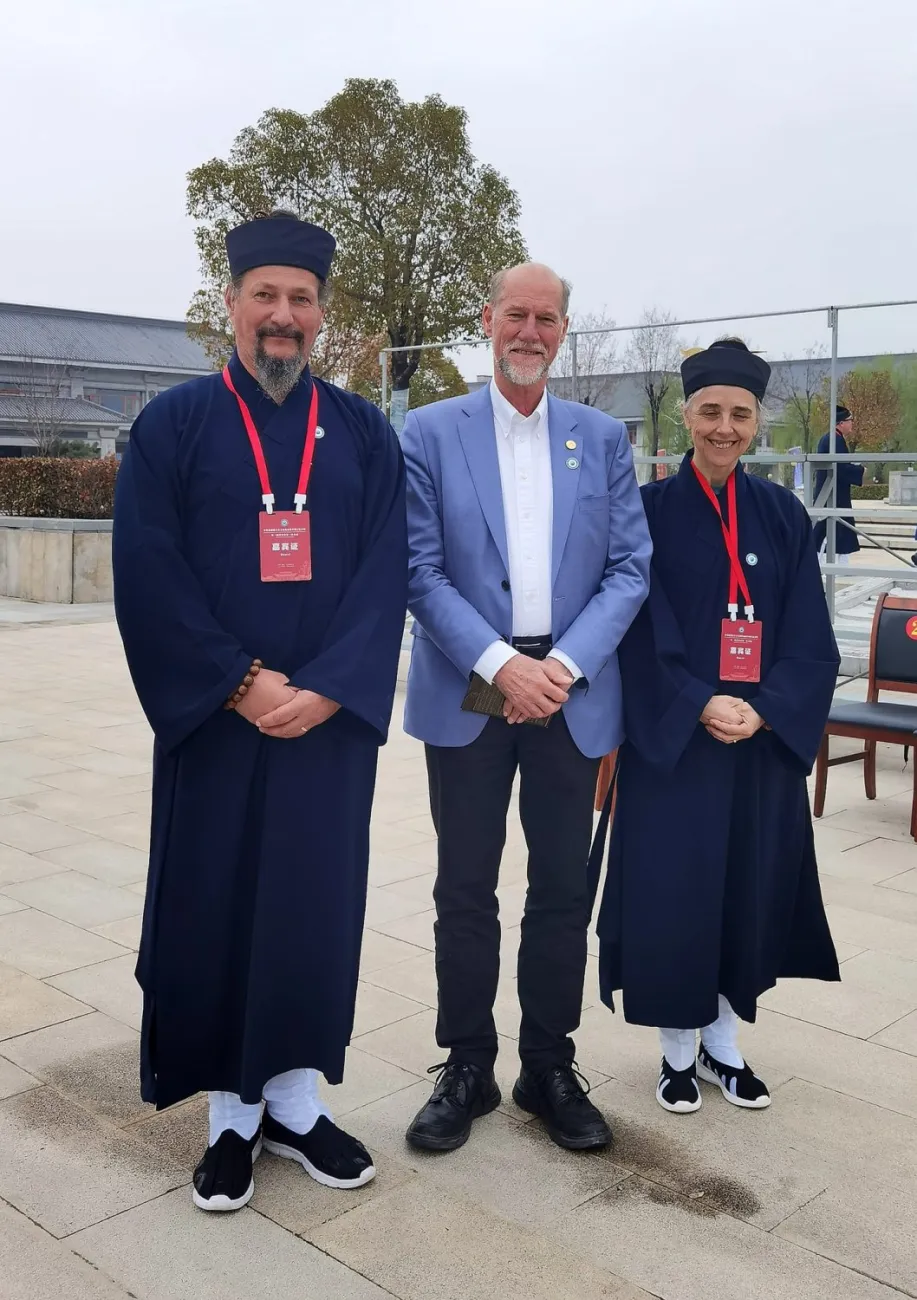
The session followed the establishment of the World Federation of Daoism at Maoshan in September 2023, one of the most important centers of the Daoist religious tradition in China, and served as the first platform for presenting concrete results and initiatives of the newly founded organization. In this context, the experience of cooperation between the Slovenian Daoist Society and Chongdao Gong was also presented by M.A. Darija Mavrič Čeh (Yuan Weixin).
A notable contribution to the session was made by Prof. Martin Palmer, who, in his speech titled The International Role of the World Federation of Daoism (世界道教联合会的国际角色), highlighted the importance of the newly established organization in the contemporary global context. In his view, never before in its history has Daoism entered into dialogue with the world in such a systematic and institutional way, nor shared its philosophical and religious insights beyond its traditional cultural sphere to such an extent.
Palmer emphasizes that the significance of this step is especially evident at a time when humanity is facing multilayered crises that call for different ethical and cosmological approaches. In this context, he also mentions the symbolism of the transition into the so-called cycle of the Li hexagram (fire) from the Yijing, which he interprets as a period of intense transformation, visibility, and potential instability. For this reason, Daoist principles of balance, non-coercive action (wu wei), and harmony with natural processes are, he suggests, especially relevant.
He also gives special emphasis to the ideal of Taiping (“great peace”), which in the Chinese religious-philosophical tradition denotes a state of cosmic and social harmony. In his view, the contemporary world, marked by environmental, social, and spiritual crises, urgently needs precisely such concepts as possible guiding models for future development.
The First Session of the First Council of the World Federation of Daoism thus represents an important turning point in the modern history of Daoism, as it indicates a transition from a religious tradition situated primarily within a national context to a more structured, transnational, and institutionally connected global community.
Who is Prof. Martin Palmer: Martin Palmer is a British theologian, writer, and one of the more prominent specialists in the relationship between religions, ecology, and Chinese spiritual tradition, especially Daoism. He was born in 1952 in the United Kingdom and is known above all for his decades of work at the intersection of religion, environmental ethics, and international cooperation. In this, he does not act as a classical academic in the narrow sense, but as a public intellectual and practitioner who connects research with direct engagement in the field.
Among his key activities, the founding and long-standing leadership of the Alliance of Religions and Conservation stand out; the organization connected faith communities in environmental projects and encouraged their active role in protecting nature. In addition, he has served as an adviser to international organizations, including the World Wide Fund for Nature, where he contributed to the inclusion of religious perspectives in strategies for environmental protection and sustainable development.