

 Daoist Studies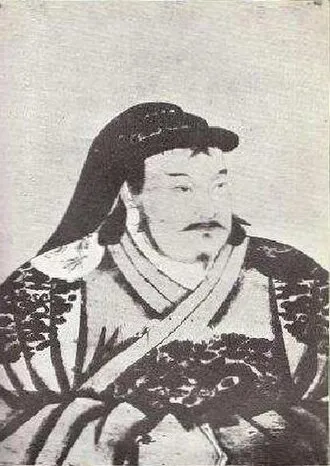
Huahu jing 化胡經 (Scripture on the Conversion of the Barbarians): The Political Fate of the Most Controversial Text in the History of Daoism
Among the more than 1,400 works preserved in the Daoist canon, the Daozang 道藏1, no text has a history that reveals the interplay of religion, politics, and imperial authority as clearly as the Huahu jing 化胡經 (Scripture on the Conversion of the Barbarians). Paradoxically, this text became controversial not because of internal Daoist debates or accusations of heresy—a concept unknown in China—but because of the polemic between Daoism and Buddhism and the political intervention of imperial authority.
According to traditional accounts, after departing through China’s western gate, Laozi continued westward and taught foreign peoples there. Some versions of the Huahu jing developed this motif to the point of claiming that Laozi was the teacher from whose teachings Buddhism later developed, or that Prince Sidharta Gotama received the teachings from Laozi. Such an interpretation allowed Daoism to present Buddhism as a later and derivative form of wisdom whose origins supposedly lay in Chinese Daoism.
The question of the text’s historical origins remains open2. It was most likely composed between the 3rd and 5th centuries, when Buddhism was rapidly gaining social influence in China and Daoist communities were seeking ways to define their relationship with the new religion. Most contemporary scholars believe that the Huahu jing did not arise as an expression of intolerance towards Buddhism, but as an apologetic response to the question of cultural precedence: if Buddhism came from the West, could it be shown that its deepest teachings nevertheless originated in Chinese wisdom?
Over the following centuries, the text circulated in various versions and gradually became the subject of increasingly fierce polemics. Buddhist scholars firmly rejected its historical credibility and described it as a late forgery intended to glorify Daoism. Daoist authors, meanwhile, often cited it as evidence of the spiritual universality of Laozi’s thought, which supposedly transcended cultural and geographical boundaries.
The dispute reached its height under the Buddhist-leaning Mongol Yuan dynasty in the 13th century3. Under imperial patronage, public debates were organised between representatives of Buddhism and Daoism, and one of their central questions was the historical and doctrinal validity of the Huahu jing4. After several debates, the imperial authorities ruled in favour of the Buddhist side. Some versions of the text were banned, and a number of manuscripts were destroyed. This was one of the few well-documented historical instances in which the Chinese imperial state directly intervened in the fate of an individual Daoist scripture.
It is important, however, to understand the nature of this intervention. The prohibition of the Huahu jing did not amount to the formation of a Daoist doctrine of heresy5. The text was not condemned by Daoist religious leaders for misinterpreting the Dao; rather, its fate was decided by imperial authorities as part of the political regulation of relations between two major religious communities. The dispute was primarily a matter of cultural legitimacy and state policy, not of internal Daoist orthodoxy.
This case reveals one of the fundamental characteristics of Daoist history. Across more than two millennia of its development, there has been no institution comparable to the Christian Inquisition or to other forms of systematic persecution based on differing interpretations of doctrine. Individual Daoist schools did compete for imperial favour, debate the authenticity of revelations and the validity of lineage transmissions, and at times accuse one another of inauthenticity. Yet historical sources provide no evidence of the development of a permanent institution that declared differing interpretations of the Dao heretical and punished them.
The fate of the Huahu jing therefore does not constitute an exception that disproves this observation; rather, it confirms it. This was a case in which a text became the subject of political arbitration between two religious traditions, not a case of internal Daoist persecution. Paradoxically, the most controversial text in the history of Daoism is thus also one of the clearest indications that the Daoist concept of orthodoxy did not develop along the lines of religions that established strict dogmatic systems.
Today, the original Huahu jing is no longer known in its entirety6. What survives consists mainly of fragments, quotations in Buddhist polemical works, Dunhuang manuscripts, and later references in Daoist literature. This fragmentation further underscores that the history of the text is more significant than its actual content. The Huahu jing therefore remains above all a historical document of dialogue, competition, and the political reshaping of the religious landscape of medieval China.
Yuan Weiqi; Rector, SDT
Bibliography
- Isabelle Robinet, Taoism: Growth of a Religion (1997).
- Livia Kohn, Daoism Handbook (2000).
- Livia Kohn (ed.), Daoist Identity: History, Lineage, and Ritual.
- Russell Kirkland, Taoism: The Enduring Tradition (2004).
- T. H. Barrett, Taoism under the T'ang.
- Stephen R. Bokenkamp, Early Daoist Scriptures (1997).
- John Lagerwey (ed.), Religion and Chinese Society.
- Erik Zürcher, The Buddhist Conquest of China (1959; several reprints), which remains a foundational work for understanding the early encounter between Buddhism and Daoism.
- Michael Puett, articles on religious policy during the Yuan period.
- Monica Esposito, research on the history of the Daozang and the canonisation of Daoist texts.
- Brian Walker, Huahujing: The Unknown Teachings of Lao Tzu
- https://ctext.org/datawiki.pl?if=en&res=475734#wp_en_Dunhuang%20manuscript
Footnotes
- 1The present Daoist Canon (Zhengtong Daozang 正統道藏), compiled during the Ming dynasty in 1445, contains approximately 1,500 texts. The Huahu jing was not included because it had already been officially banned during the Yuan dynasty.
- 2The earliest reliable historical evidence of the Huahu jing dates from the Northern and Southern Dynasties period (5th–6th century), although some layers of its content may be older. The text was probably composed gradually rather than as a single work by one author.
- 3Public debates between Buddhist and Daoist representatives took place primarily during the reign of Kublai Khan (r. 1260–1294). Following the Buddhist victory, the imperial authorities ordered the destruction of the disputed versions of the Huahu jing and several other polemical Daoist works.
- 4The debates during the Yuan dynasty were not merely theological disputes. The Mongol emperors sought to determine which religious institutions would receive tax exemptions, land, and official status at the imperial court. In this environment, the question of the historical authenticity of the Huahu jing also became a question of political legitimacy. If it could be proven that Buddhism originated with Laozi, this would significantly strengthen the position of Daoism. If, however, the text proved to be a later forgery, it would weaken Daoist claims to cultural primacy. The imperial authorities’ decision therefore represented not merely a judgment on a single text, but an intervention in the broader balance between the two largest religious traditions in China at the time.
- 5Modern historians of religion point out that the ban on the Huahu jing does not represent the development of a Daoist doctrine of heresy (heterodoxy), but rather an example of state regulation of relations between competing religious institutions.
- 6Among the most important surviving sources are the Dunhuang manuscripts from the Mogao Caves, discovered in the early 20th century. They contain several versions of individual chapters and confirm that the text did not exist in a single canonical form.


