Articles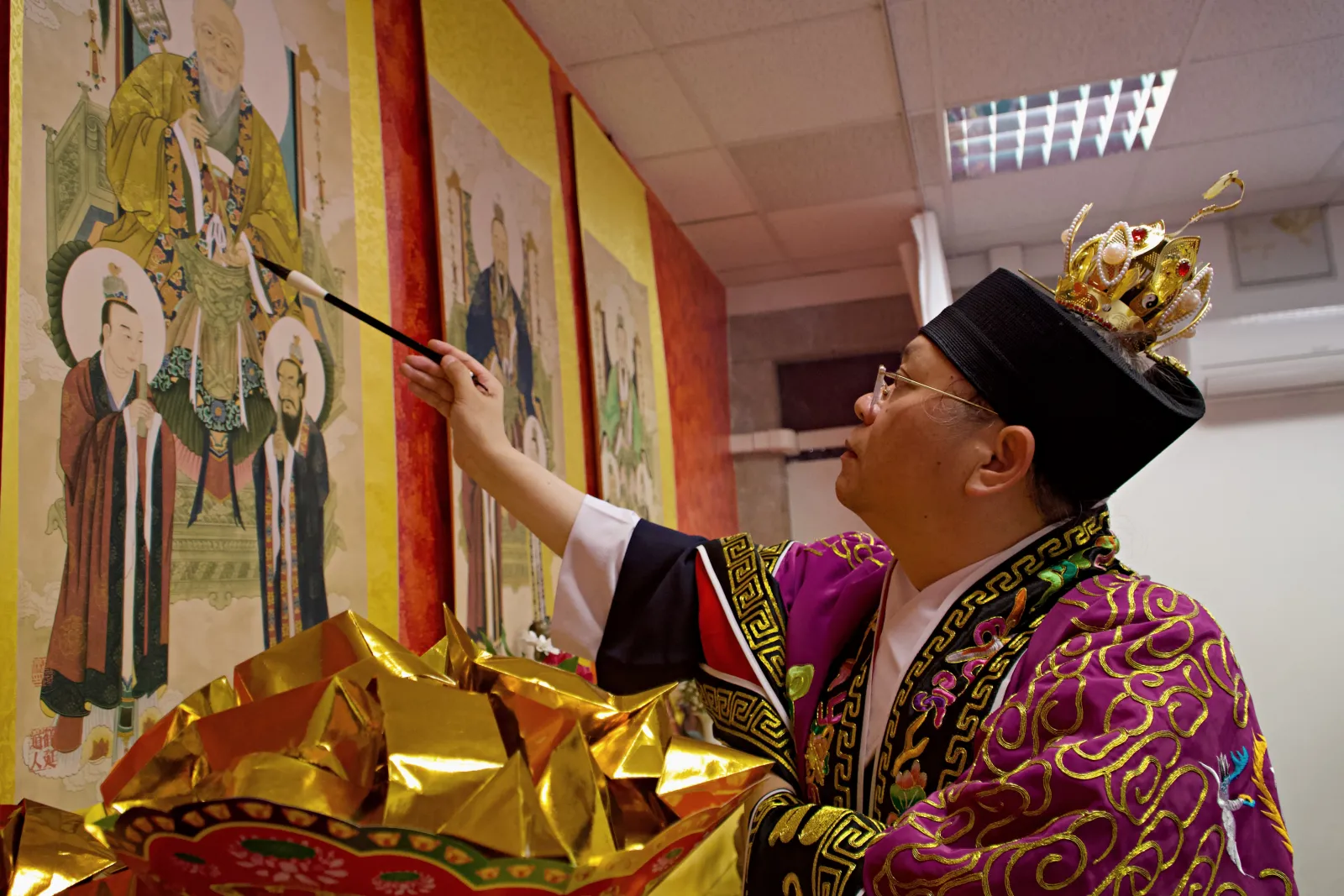
A Return Visit 300 Years Later — From Xihuashan in China to the Adriatic Sea
A Return Visit, Three Hundred Years Later
—From Xihua Mountain, China, to the Adriatic Sea
A Return Visit, Three Hundred Years Later
—From Xihua Mountain, China, to the Adriatic Sea
By [Song Chongdao (宋崇道)1
Song Chongdao
Summary:
In 1739, Augustin Ferdinand von Hallerstein (Chinese name: Liu SongLing), a Slovenian Jesuit, arrived in Beijing and worked for 35 years within China’s Imperial Board of Astronomy, where he would spend the rest of his life far from Slovenia. A central Ljubljana square now honours him, displaying a replica armillary sphere produced by the Beijing Planetarium as a Chinese state gift to Slovenia. Three hundred years on, cultural exchange flows in the opposite direction, as the Dao of China reaches Hallerstein’s home country.
Written by Song Chongdao, Daoist abbot of Chongdao Gong on Xihua Mountain (Yichun, Jiangxi), this article portrays monastic daily life at the temple and recounts the author’s exchanges with Master Jure Čeh (Yuan WeiQi), president of the Slovenian Daoist Association, at the Association’s Palace of Supreme Harmony in Koper. In 2023, the two parties signed a friendship accord at Maoshan under the World Federation of Daoism’s East‑West Programme. Ongoing cooperative activities have since taken place: reciprocal visits, Daoist‑music events, lectures on Daoist ethics and artificial intelligence, scientific symposia and joint research projects.
This paper does not seek religious proselytisation. It proposes that the Dao imposes no doctrinal threshold and demands no change of personal faith. Instead, it invites a shift in human perspectives: between humanity and nature, the individual self, and fellow human beings. The central idea is that the Dao transcends geographical boundaries; genuine human connection can bring people together across vast distances. When hearts connect, people meet.
Introduction
In 1739, a 36-year-old Slovenian was granted permission to enter Beijing (北京).
His name was Augustin Ferdinand von Hallerstein. Born in Ljubljana (卢布尔雅那) in 1703, he joined the Society of Jesus (耶稣会) at the age of 18. He went on to work at the Imperial Board of Astronomy (钦天监) in China (中国) for 35 years, until his death. For 28 of those years, he served as its director.
The Chinese gave him a name: Liu SongLing (刘松龄).
His work was to observe the heavens, calculate calendars and build instruments. He became director of the Imperial Board of Astronomy in 1746 and remained in that position until he died of illness in Beijing in 1774.
Thirty-five years. He never returned to Ljubljana.
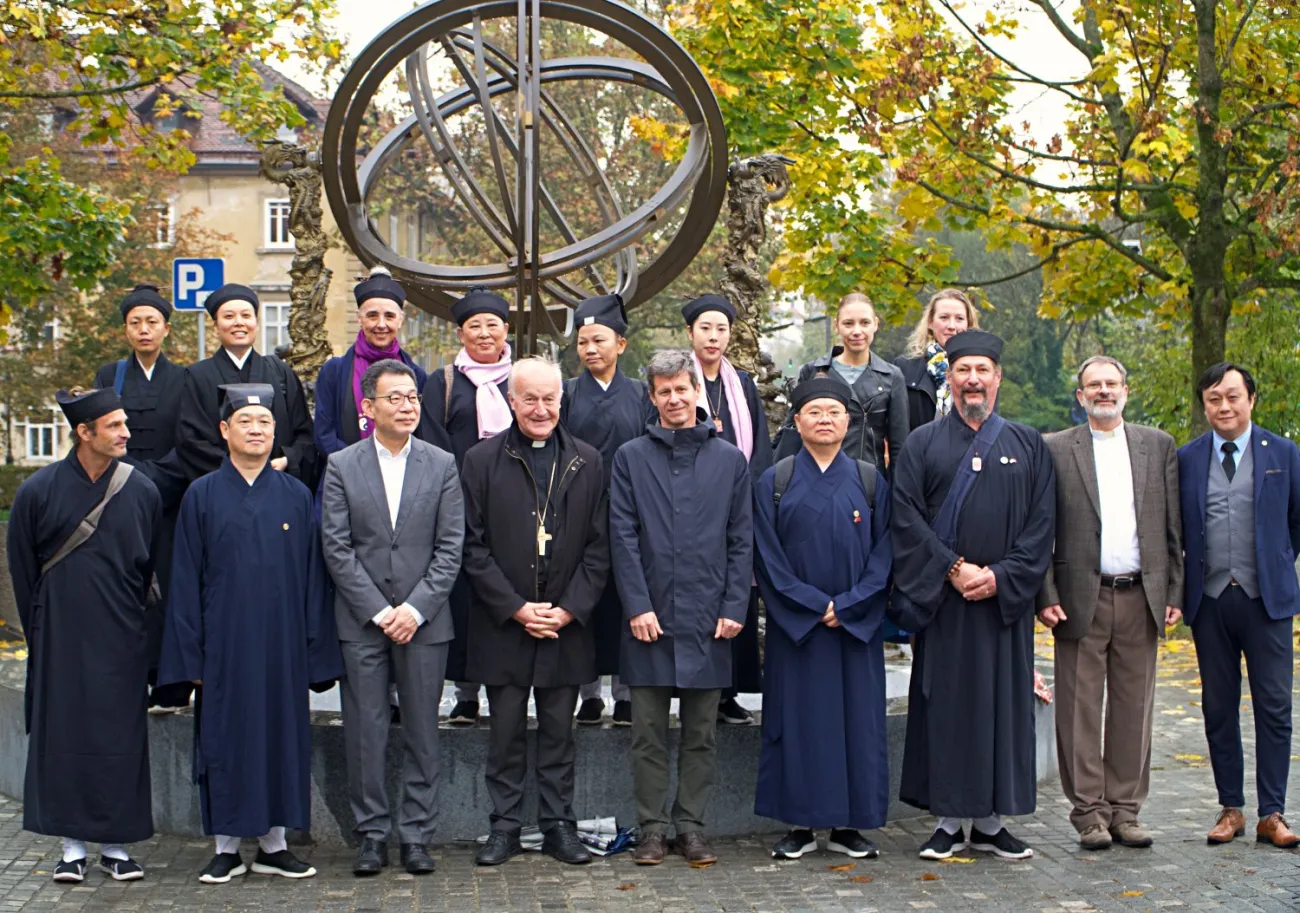
Today, Ljubljana has a Sino-Slovenian Friendship Memorial Square (中斯友谊纪念广场), in the forecourt of the Archives of the Republic of Slovenia (斯洛文尼亚共和国档案馆) at Gruber Palace (格鲁伯宫). The square is home to an equatorial armillary sphere, a full-scale replica made by the Beijing Planetarium (北京天文馆) and presented as a state gift to the people of Slovenia (斯洛文尼亚). The original is in Beijing. Used to measure celestial bodies, particularly their equatorial coordinates, it remained in use for more than 150 years, from its casting in 1754 until the early twentieth century.
A Chinese astronomical instrument stands in the square of a Slovenian city. That is a story in itself.
I visited that square in October 2024.
It was overcast that day. We stood in the square, listening as officials from Slovenia’s Ministry of Culture and Education (斯洛文尼亚文化教育部) told us about Liu SongLing. They spoke with easy familiarity, as though describing an ancestor of their own: his birthplace, the day he arrived in Beijing, his position at the Imperial Board of Astronomy. Chinese histories record these details only briefly, but they remembered them precisely.
The square is not large. Ordinary residential buildings surround it. Someone passed by pushing a pram; elderly people sat on benches in the sun. The bronze instrument stood in the middle, quietly pointing towards the sky.
I wondered what reasons a people need to remember something a person did three hundred years ago.
Liu SongLing fought no wars, left no enduring literary works and achieved no great feats in his hometown. Most of his life’s work took place eight thousand kilometres away, in the service of a country whose language he had learned only as an adult.
Yet his hometown remembered him.
As I stood there, a thought came to me.
Three hundred years ago, a young Slovenian left home and travelled eight thousand kilometres east, bringing Western astronomy and calendrical calculation into the Forbidden City (紫禁城). Three hundred years later, China’s “Dao” travelled in the opposite direction, reaching the coast of his homeland.
A person spends half a lifetime in a foreign land and is eventually buried there. What he seeks need not be anything grand. He simply follows what he believes in, wherever it may lead.
What, then, can connect people across three hundred years and eight thousand kilometres?
In what follows, I would like to try to answer that question.
I. People Who Live Above the Clouds
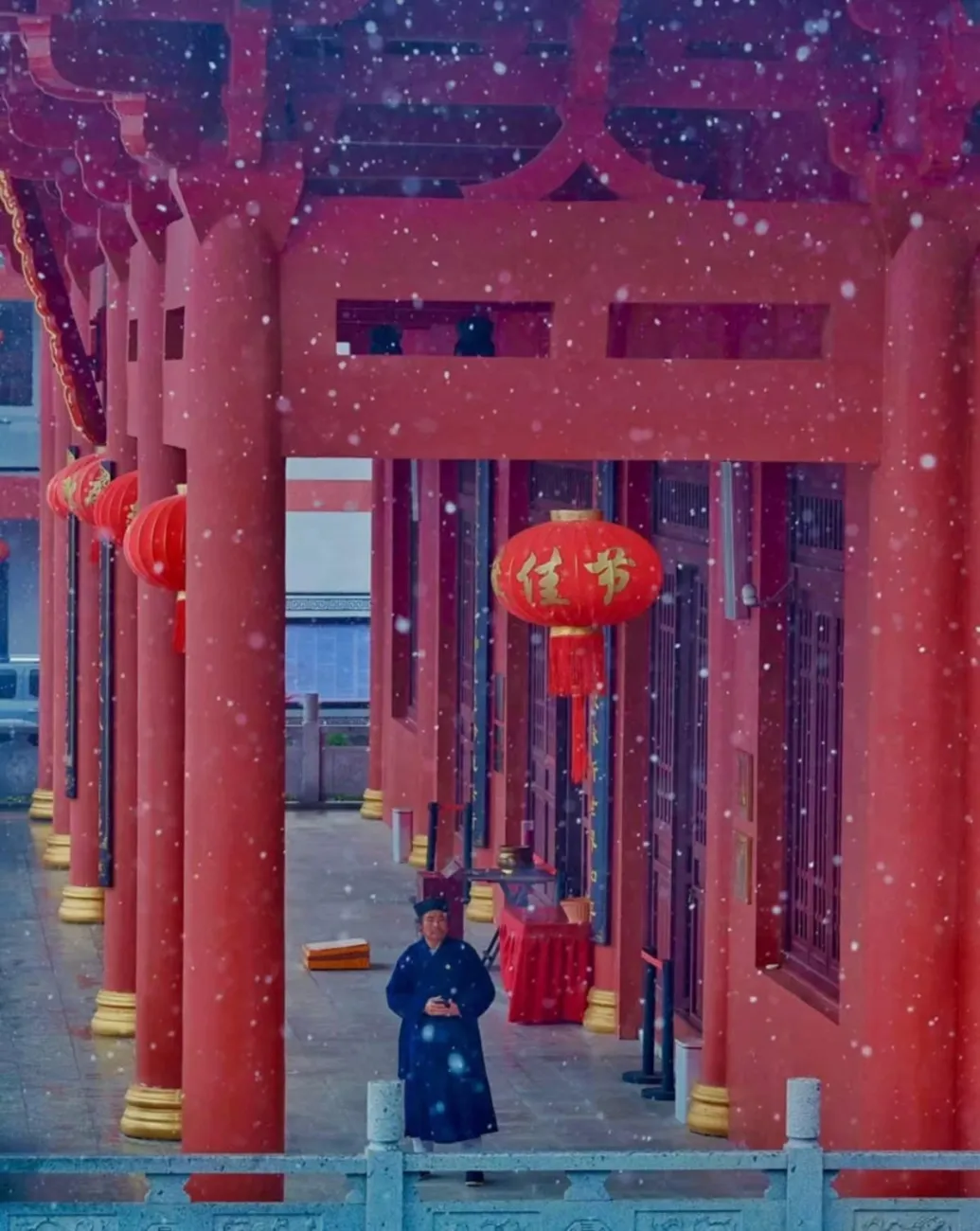
I live on a mountain south of Yichun (宜春), in Jiangxi (江西). It is not a high mountain. Its name is “Xihua Mountain (囍华山)”.
Green bamboo covers its slopes. Beneath the bamboo grows Solomon’s seal. The older generation call it the immortals’ leftover provisions, saying it is what the immortals left behind in the human world after eating their fill.
Halfway up the mountain is a spring that never runs dry. It was this spring that made it possible to build a temple on the mountain. The temple later became a Daoist monastery. Its halls follow Tang and Song architectural conventions, rising tier upon tier. Standing at the mountain gate, you have to tilt your head back to see them.
Its name is “Chongdao Gong (崇道宫)”.
Rainbows often appear in front of the mountain, frequently two at once, side by side. We Chinese like rainbows because they symbolise joy. This has given the monastery another name: “China’s Great Joy Daoist Sanctuary (中国大囍道场)”. A place full of happiness, ease and strength.
Every morning, a sea of clouds spreads beneath our feet. All of Xihua Mountain floats above it. Standing at the mountain gate feels like cultivating immortality in the heavens.
My day usually begins at around 4:30 a.m. The lights in front of the hall come on first. The fellow practitioners on hall duty get up to sweep and clean. I leave my alchemy chamber and walk along the stone steps. There are not many, but the walk is just long enough to settle the mind.
Morning service is at five. When the chanting begins, it is still dark. Occasionally a dog barks in the village below, then everything falls quiet again.
Breakfast follows the morning service: rice porridge, pickled vegetables and steamed buns. Sometimes there are noodles or rice noodles. After eating, everyone goes about their tasks. I return to my alchemy chamber to read scriptures, practise alchemy or pursue my studies.
We often have tea in the afternoon. We do not grow tea on the mountain; it is brought in from elsewhere. What we savour is the act of “sitting down”.
Life in the mountains has its markers, but they are not marked on a calendar.
At the start of spring, we dig bamboo shoots. For those few days, everyone at the monastery goes up the mountain. Early summer brings heavy rain, so roof tiles need checking and drainage channels need clearing. After autumn, we go up the mountain to dig Solomon’s seal, dry it in the sun and keep some to replant. Gathering wild bamboo shoots and digging Solomon’s seal are ordinary parts of mountain life.
Winter days are the shortest. Darkness comes early. After evening service, we sit around the stove for a while, then return to our rooms to practise alchemy.
This rhythm completes a cycle each year. After more than a decade, it cultivates a habit in you: knowing what cannot be hurried. What you plant will not sprout three days sooner because you are impatient, nor will the rain arrive ahead of its time. Little by little, the restlessness deep within you wears away.
I spent many years studying. I pursued management and psychology through to doctoral level. On 31 October 2024, Metropolitan College Skopje (斯科普里都市学院) in North Macedonia (北马其顿), a TNE partner of London Metropolitan University (伦敦都市大学), also awarded me an “Honorary Doctor of Philosophy in Educational Leadership”. On the same day, Euro College (欧洲学院) in North Macedonia appointed me an honorary professor.
I also worked in business in the secular world before moving to the mountain. People often ask me why.
I usually answer like this: “After studying for long enough, you discover that books cannot answer some questions. However much knowledge you acquire, other things remain beyond its reach. How, for example, does a person live with themselves? How do you live with something you cannot change? How do you carry on after a loss?”
Daoist teachings have been answering these questions for more than four thousand years.
I do not want to turn this into a story about “letting go”. Letting go is the result. The real reason is simple: I found something here that I could use. It is practical!
For example, the Daode jing (道德经) says, “The highest goodness is like water”. When I read those four Chinese characters in my youth, I thought they were simply beautiful words. Only after more than a decade in the mountains did I begin to read another meaning in them.
Water flows towards low ground. It does not compete for the heights, so it has no risk of falling from them. When it meets a stone, it flows around it; when it meets a hollow, it fills it; when it meets a cliff, it becomes a waterfall. It does not clash head-on with anything, yet its drops can wear through stone.
This way of living looks soft, but it is extraordinarily resilient.
The questions a Daoist practitioner faces each day are, in fact, the same as those faced by anyone living in the modern world. How do we remain still amid change? How do we leave space amid the crowding? How do we live with a sense of certainty amid uncertainty?
Daoist teachings have never offered answers. They offer a way of looking at things.
II. What Happens in the Temple
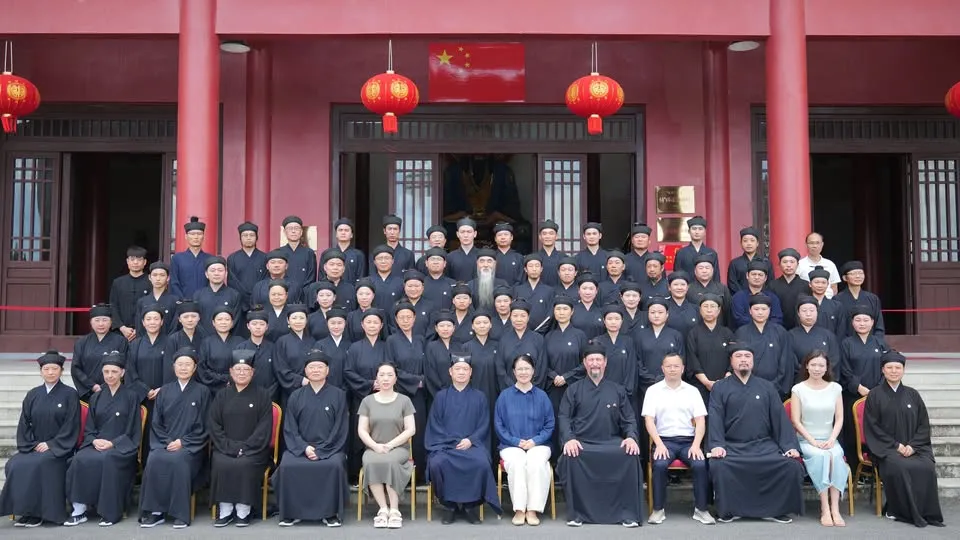
Chongdao Gong belongs to the Longmen lineage of Quanzhen Daoism.
This Daoist lineage emphasises the joint cultivation of inner nature and vital life, and diligent practice in everyday activities. Practice does not lie in remote mountain caves, but in sweeping, cooking and dealing with people.
So I do not intend to describe the monastery’s architecture. I want to talk about what is happening here.
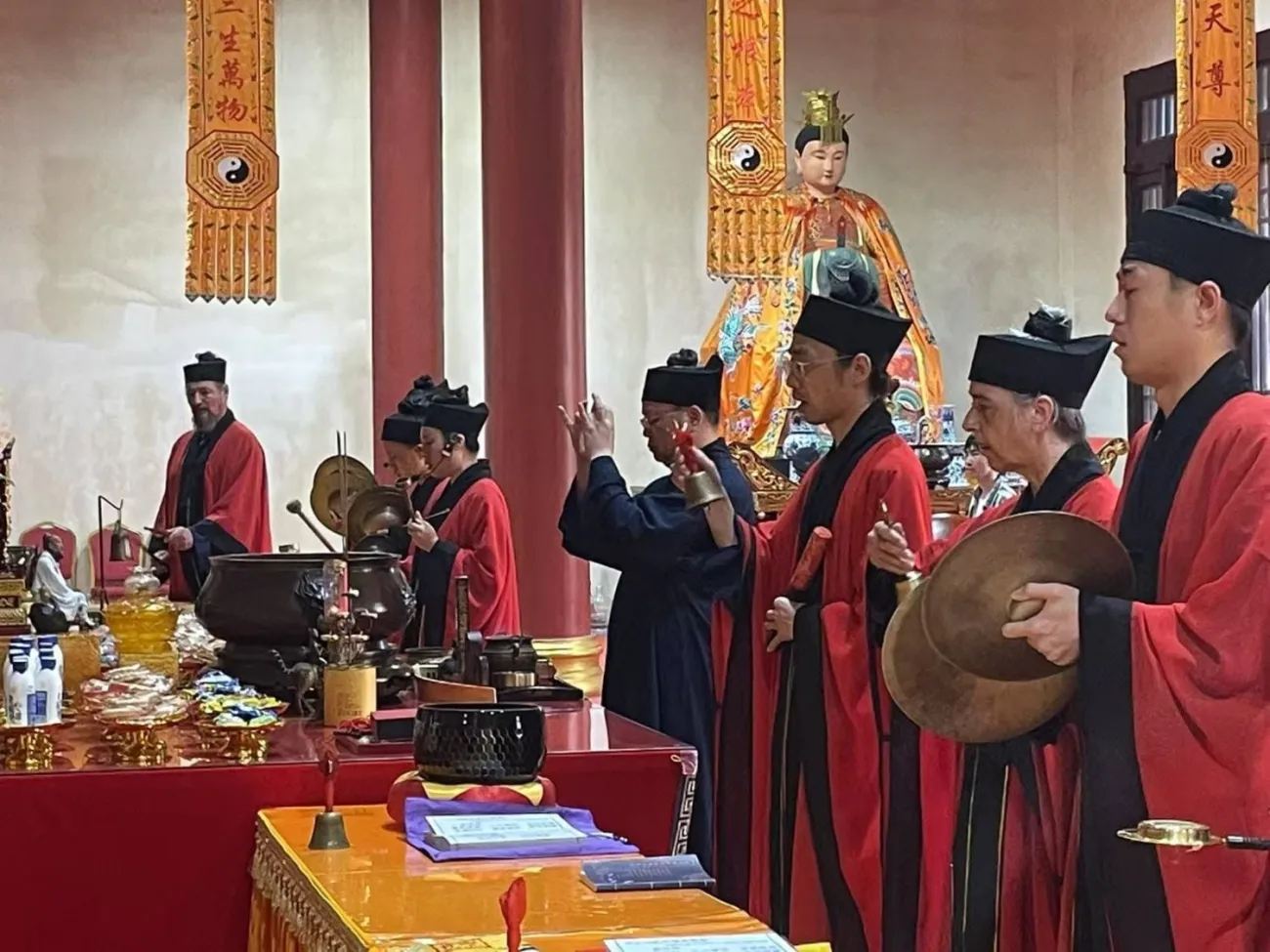
The chanting at five in the morning begins the day. Fellow practitioners recite the Zaowan gongke jing (早晚功课经), word by word, line by line, neither fast nor slow. By the time the scripture has been recited, daylight has come.
The morning is for work. The monastery’s daily life depends on the efforts of the practitioners who live here. We grow our own vegetables, cook our own meals and sweep our own courtyard. The work itself is part of our practice.
Visitors often come in the afternoon. They are all kinds of people.
There is an elderly woman who lives below the mountain and visits several times a month. She does not come to ask for anything, just to walk, sit and talk to someone. She says her house is too quiet, and she feels anxious; at the temple, the sound of people’s voices puts her at ease.
Young people also come from further away. They bring very specific problems: they cannot carry on in their jobs; their relationships are not working; they cannot sleep at night… Usually I do not answer straight away. First I invite them to have a cup of tea and sit for a while. After a quarter of an hour, the problem often seems smaller of its own accord.
Over the years, I have gradually come to understand that what a temple truly offers is a place where people are allowed to slow down. Doctrine comes much later.
What people today lack most is permission “not to hurry”. In the temple, time follows nature, entirely out of step with the world outside. When people enter, their bodies relax first, and their minds follow.
We do other things at my temple, too. At festivals and holidays, we visit elderly people living alone below the mountain. In winter, we take them padded clothing, rice and cooking oil. In summer, we keep a vat of cooling herbal tea in front of the hall. These are small things. We do them because “equal compassion for all” is written in the scriptures. Unless it is put into practice, it remains just four Chinese characters.
In 2024, the temple undertook a slow, patient task: gathering and cataloguing scattered porcelain fragments, and repairing a collection of ancient books page by page. A temple that thinks only of the present does a disservice to the thousand years and more it has stood here.
For more than a thousand years, this temple has fallen and been rebuilt, been rebuilt and fallen again. It has been rebuilt many times, yet its continuity has never been broken. I tried to find a commemorative stele here, but unfortunately there was none. Later I came to understand: those who sustain a tradition are often people who have no need to leave their names behind.
Chongdao Gong is connected to the village below the mountain. When villagers hold funerals, they ask fellow practitioners to perform the rituals; when they celebrate happy occasions, they also come to choose an auspicious date. During the summer holidays, children run up to play outside the halls. We let them, but do not allow them into the halls. We at the temple feel that they are still young, and their understanding of the world, life, values and religion has not yet matured.
A temple with no relationship to the people around it is merely a group of buildings. These exchanges make it a place.
People often think of a temple as a museum. I do not see it that way.
A museum displays things whose time has passed. In a temple, everything is still continuing. The chanting, the tea, the people coming and going: all of it happens anew each day.
It is alive!
What is alive can grow. What grows will always encounter other life.
III. The Connection Between Mountain and Sea
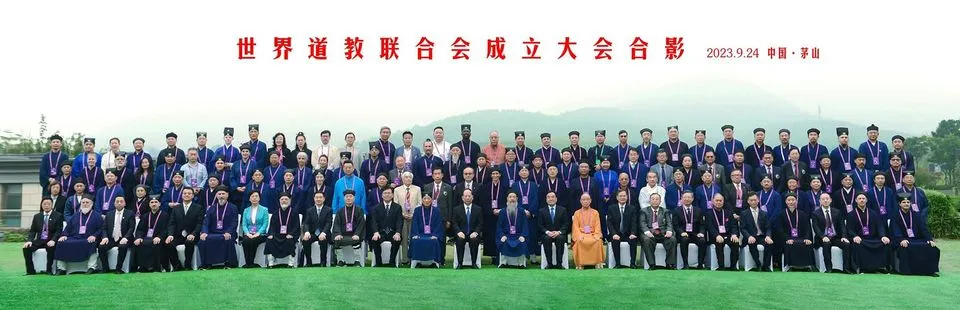
September 2023. Maoshan (茅山), Jiangsu (江苏).
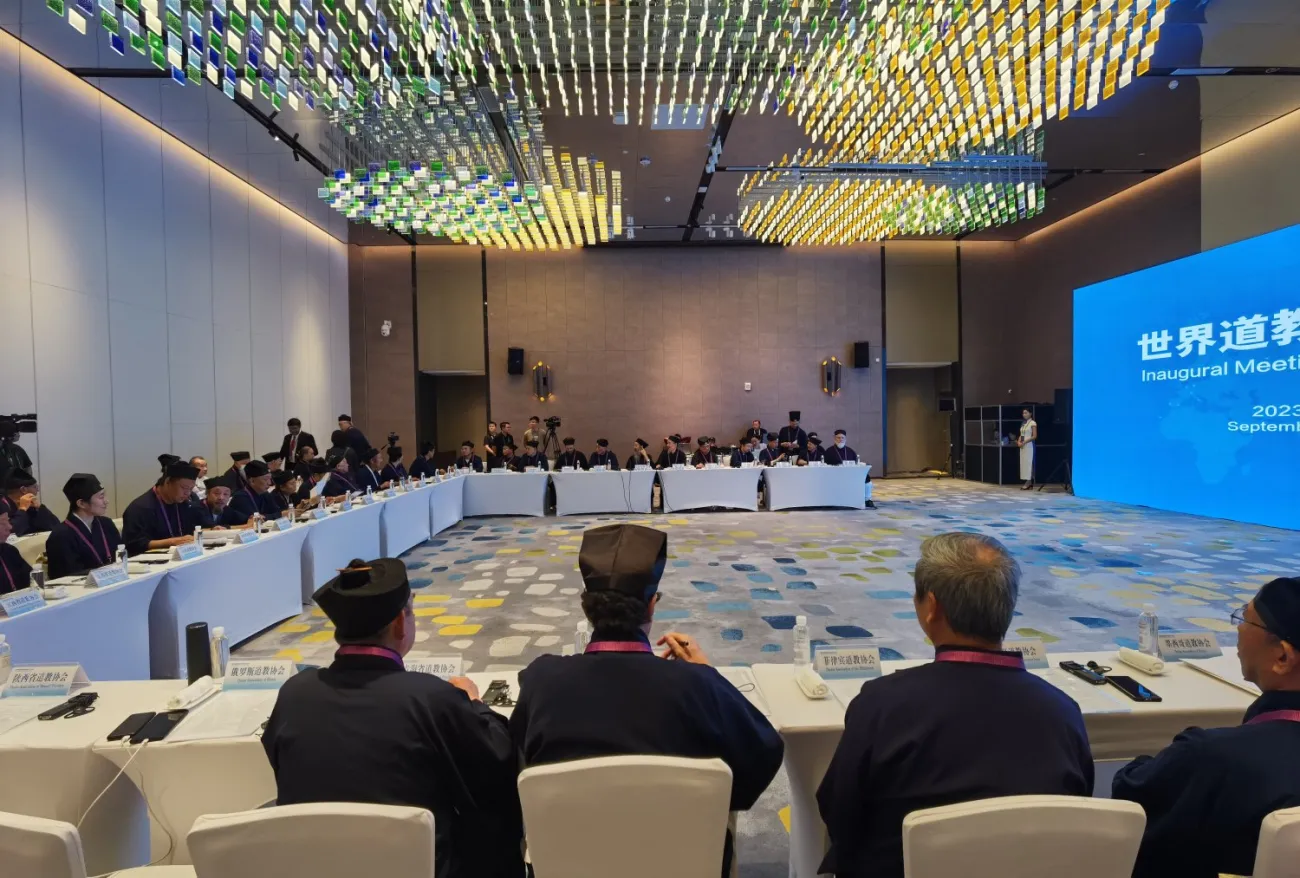
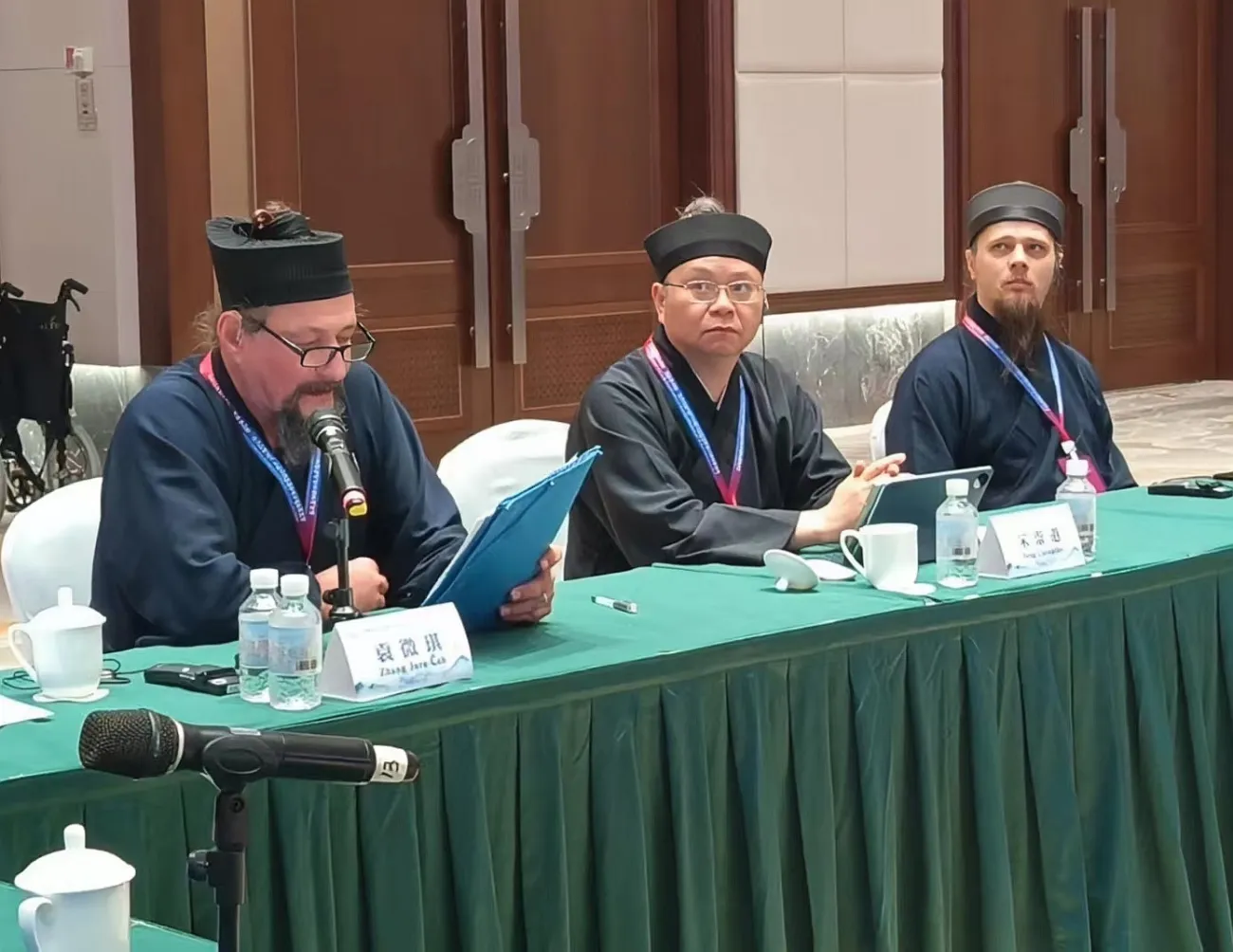
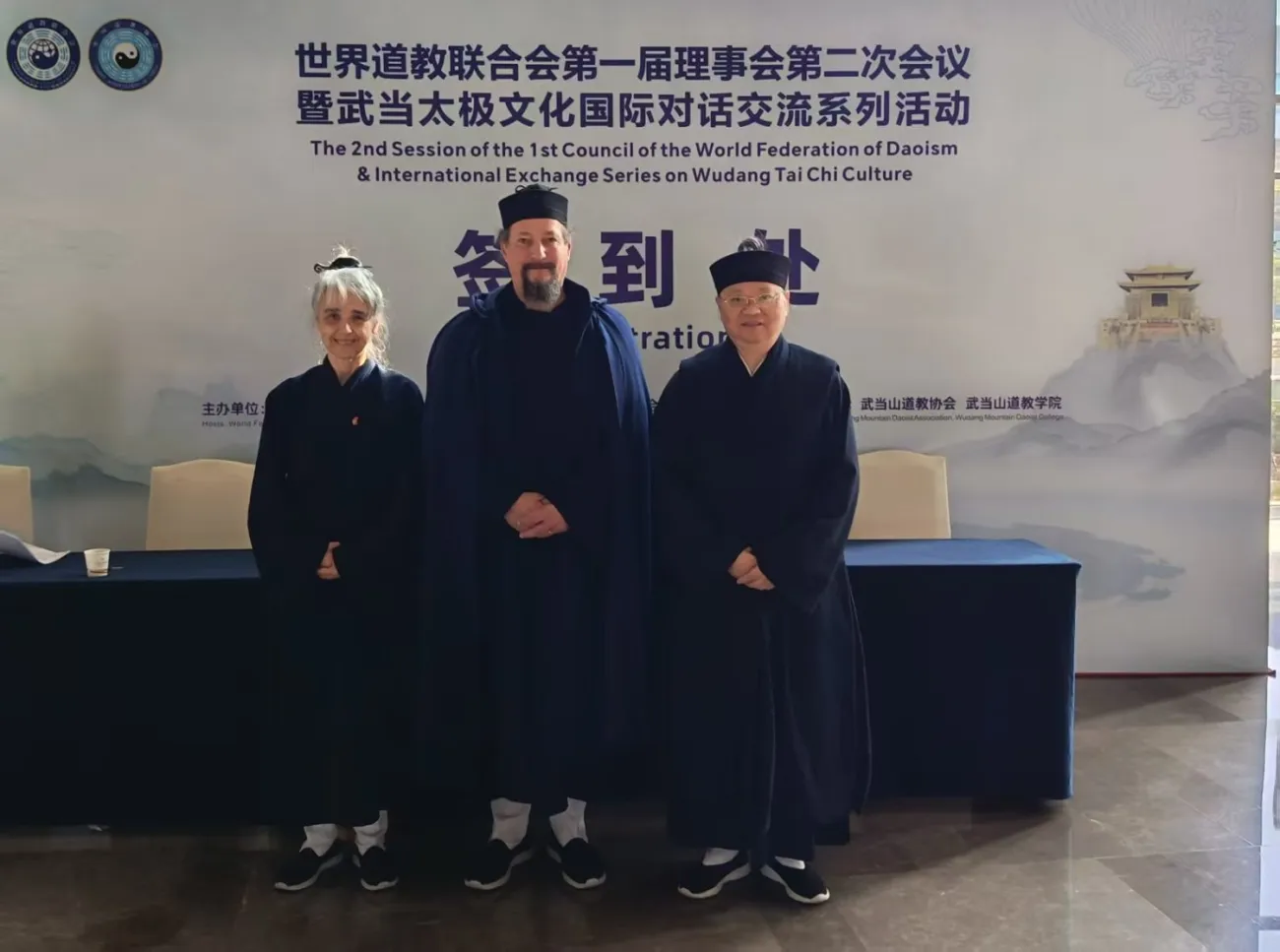
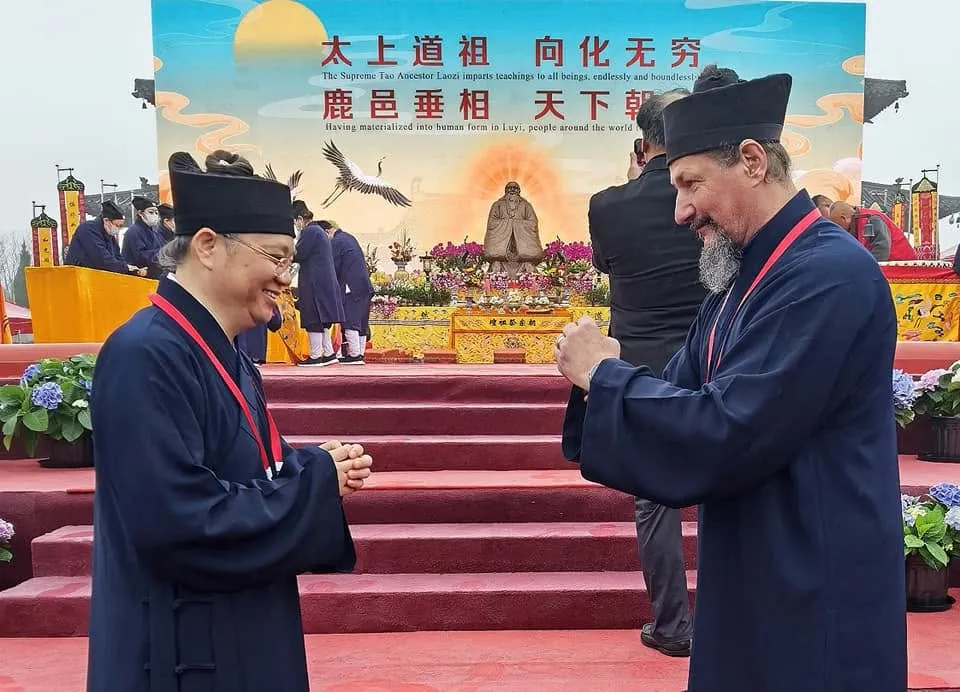
The Fifth International Daoist Forum (第五届国际道教论坛) was held there under the theme “Honouring the Dao and Upholding Virtue · Moving Forward with the World”. More than 500 representatives and scholars from 39 countries and regions gathered on that renowned Daoist mountain.
Something important happened at that forum: the World Federation of Daoism (世界道教联合会) was established. For the first time, Daoist organisations from different countries had a shared platform.
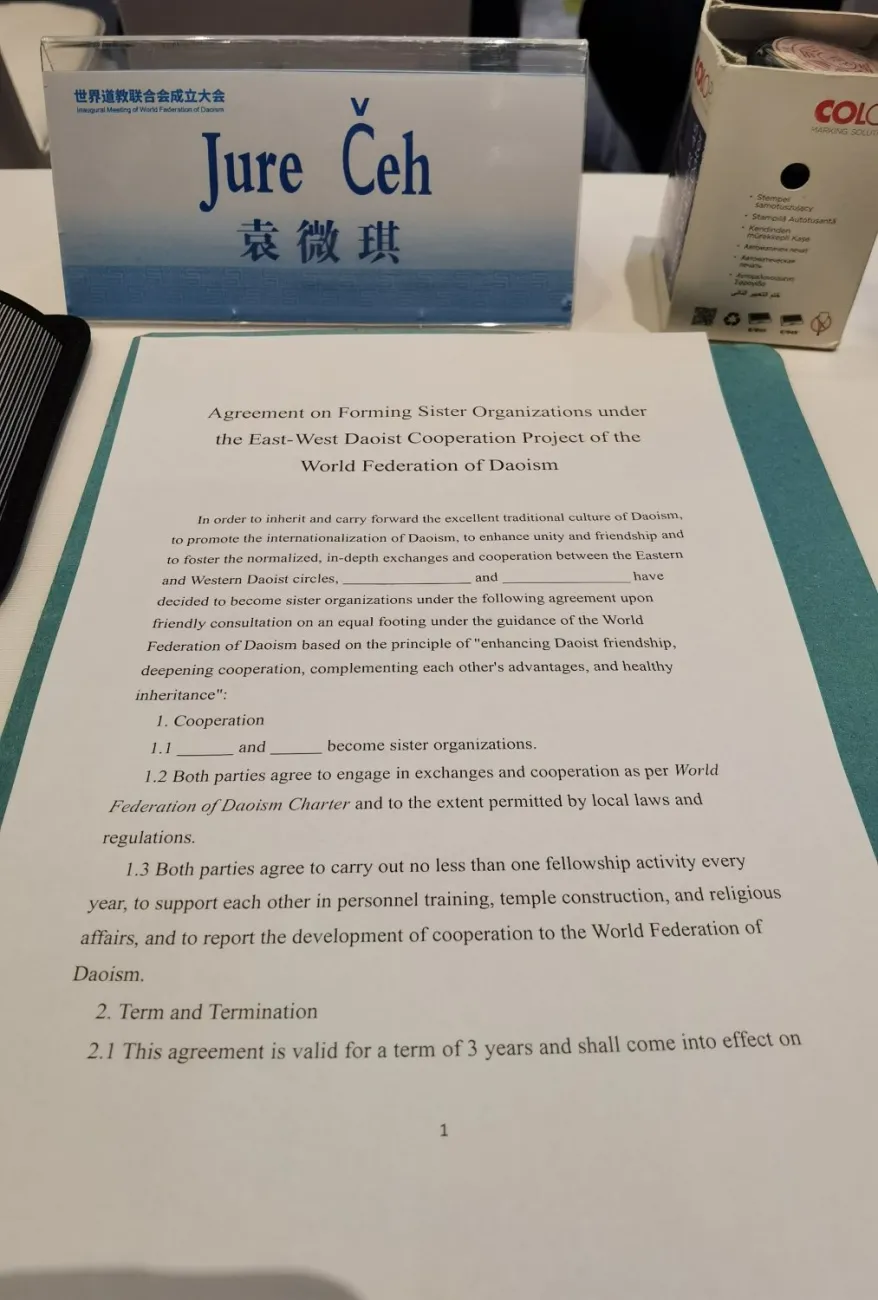
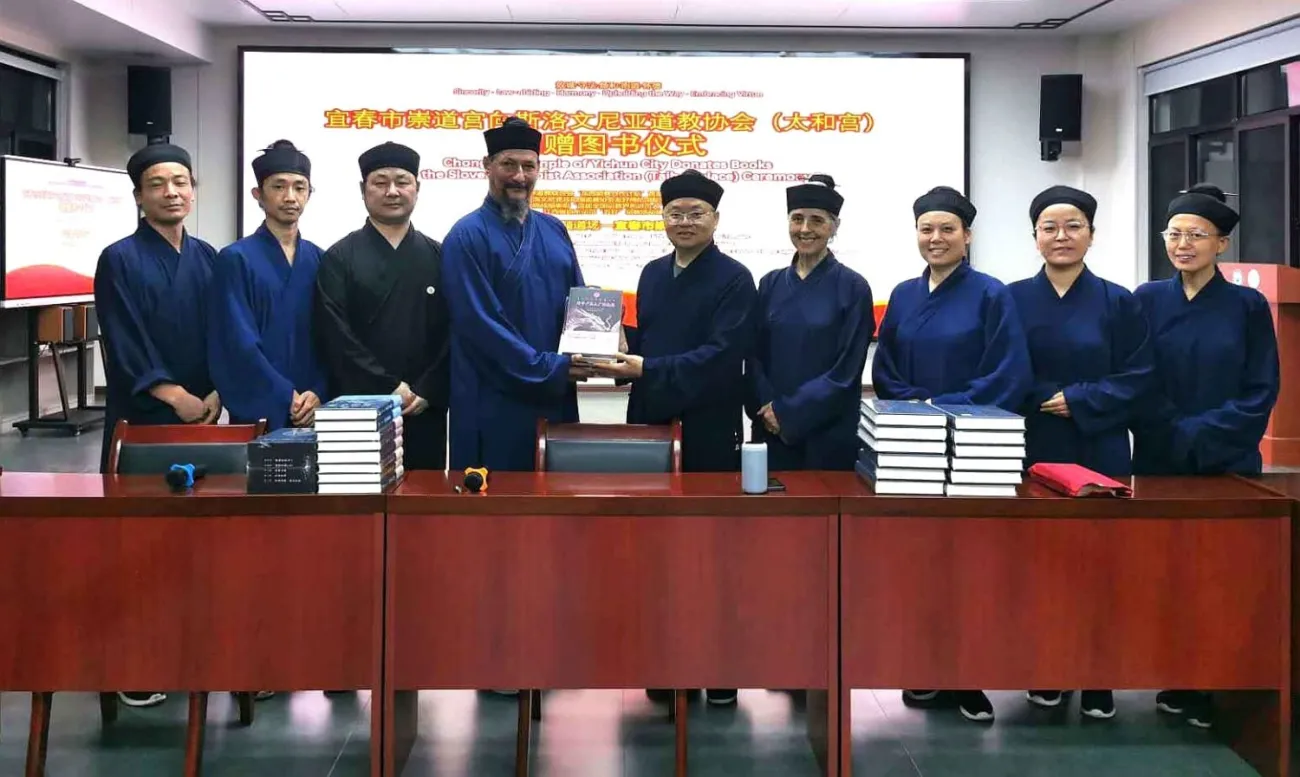
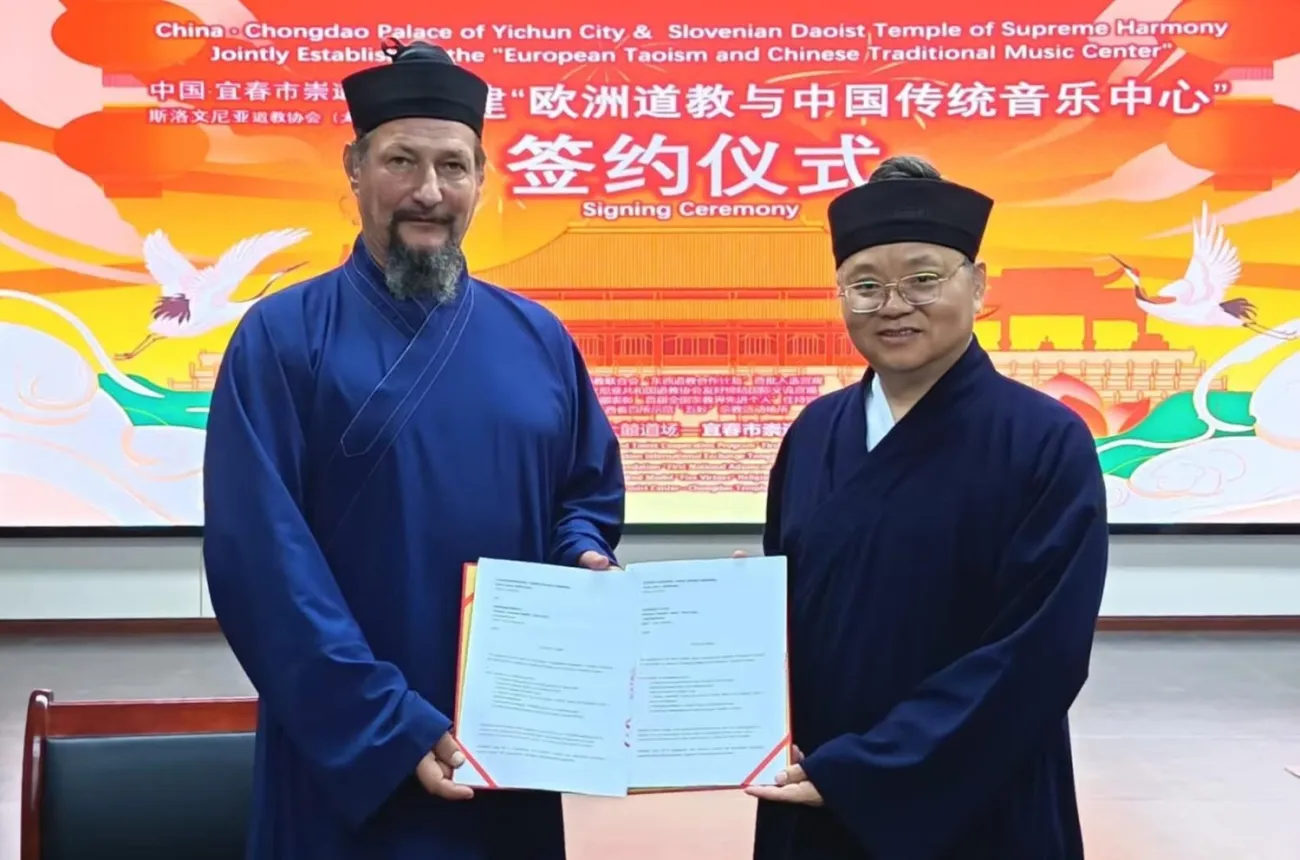
It was also at Maoshan that Chongdao Gong and the Slovenian Daoist Association (斯洛文尼亚道教协会) signed an agreement to become friendship partners under the World Federation of Daoism’s “East-West Daoist Cooperation Programme (东西道教合作计划)”.
It was a thin sheet of paper. When we signed the agreement, I had no idea what would follow.
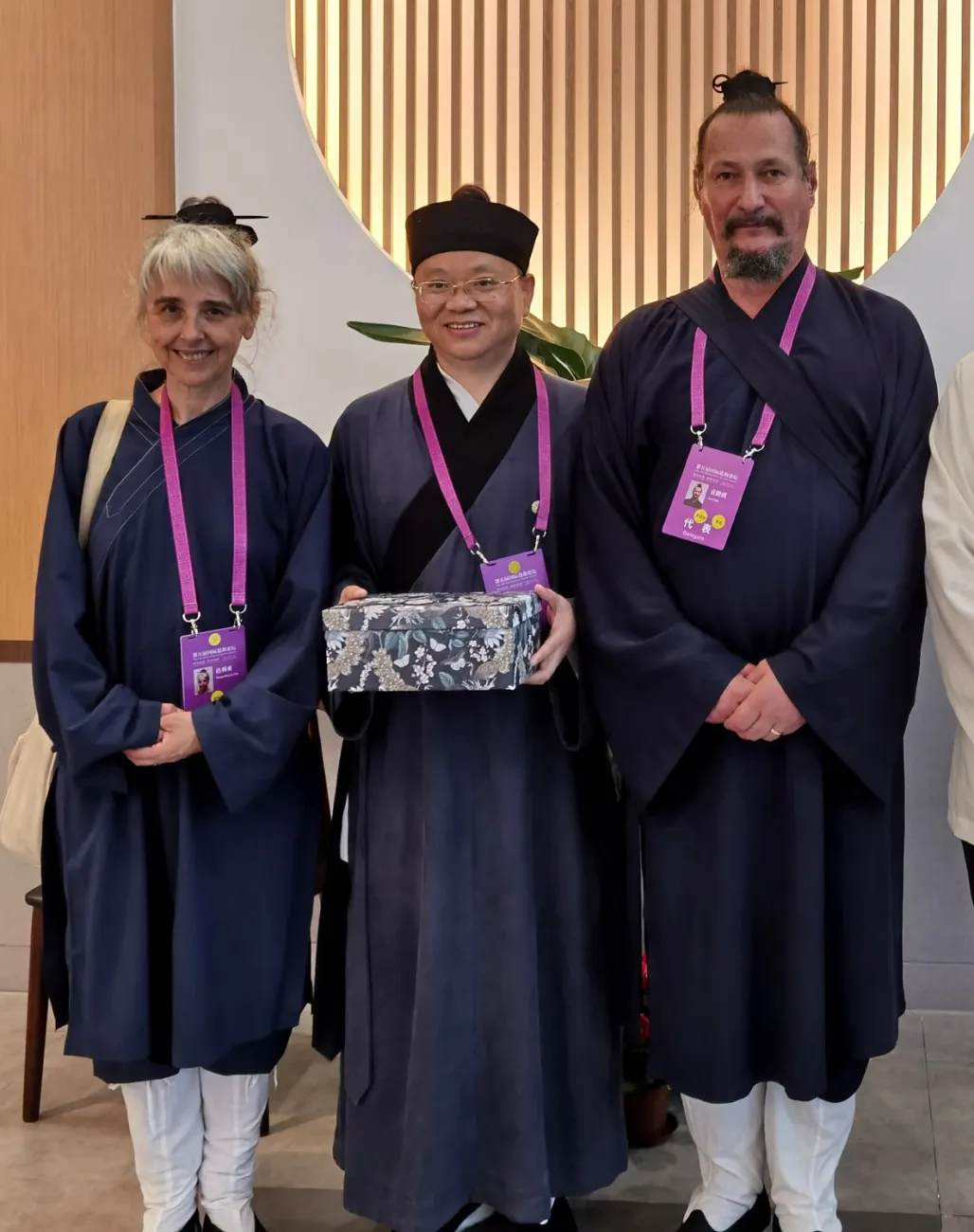
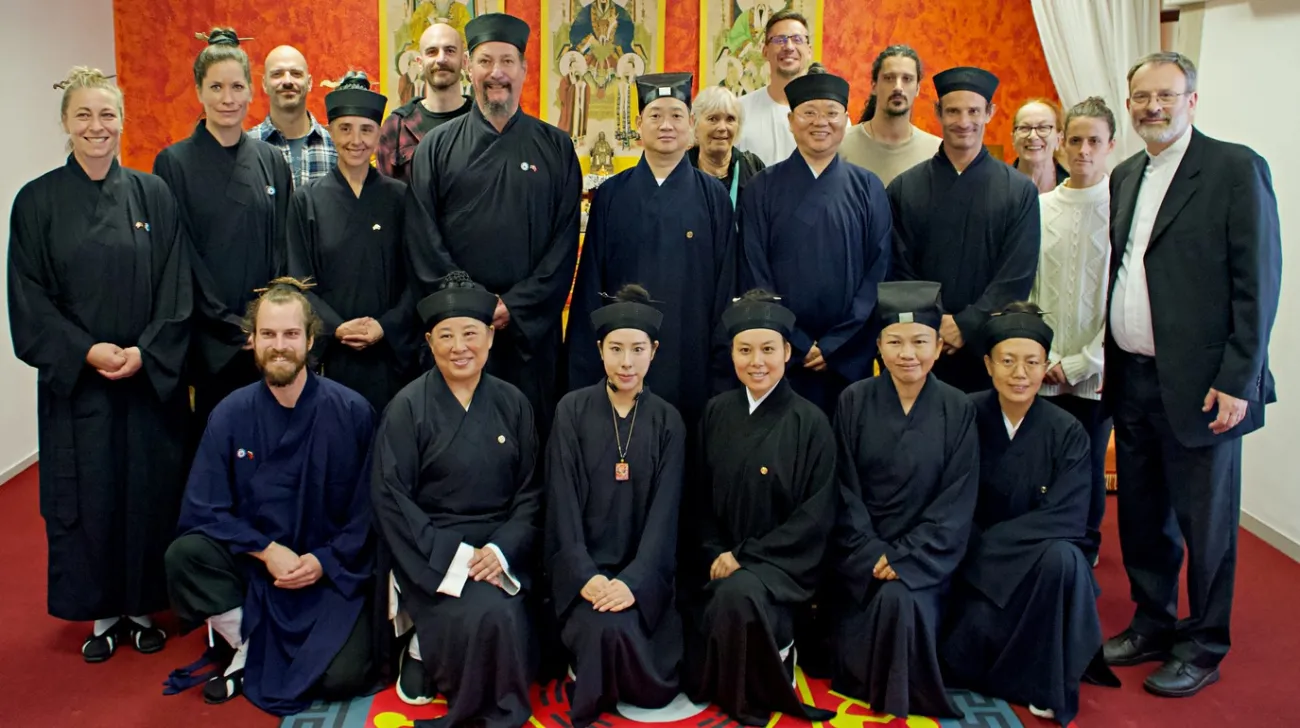
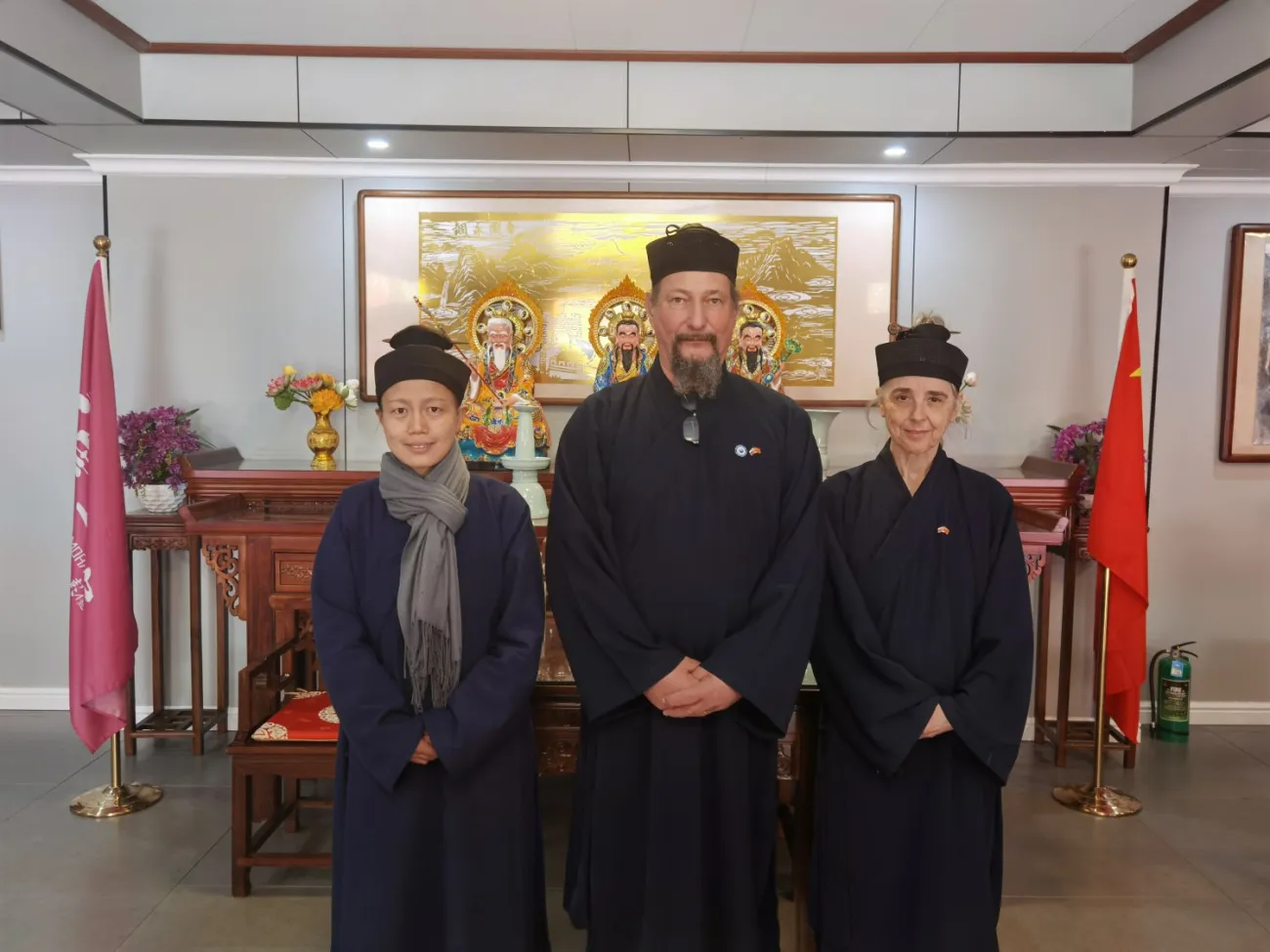
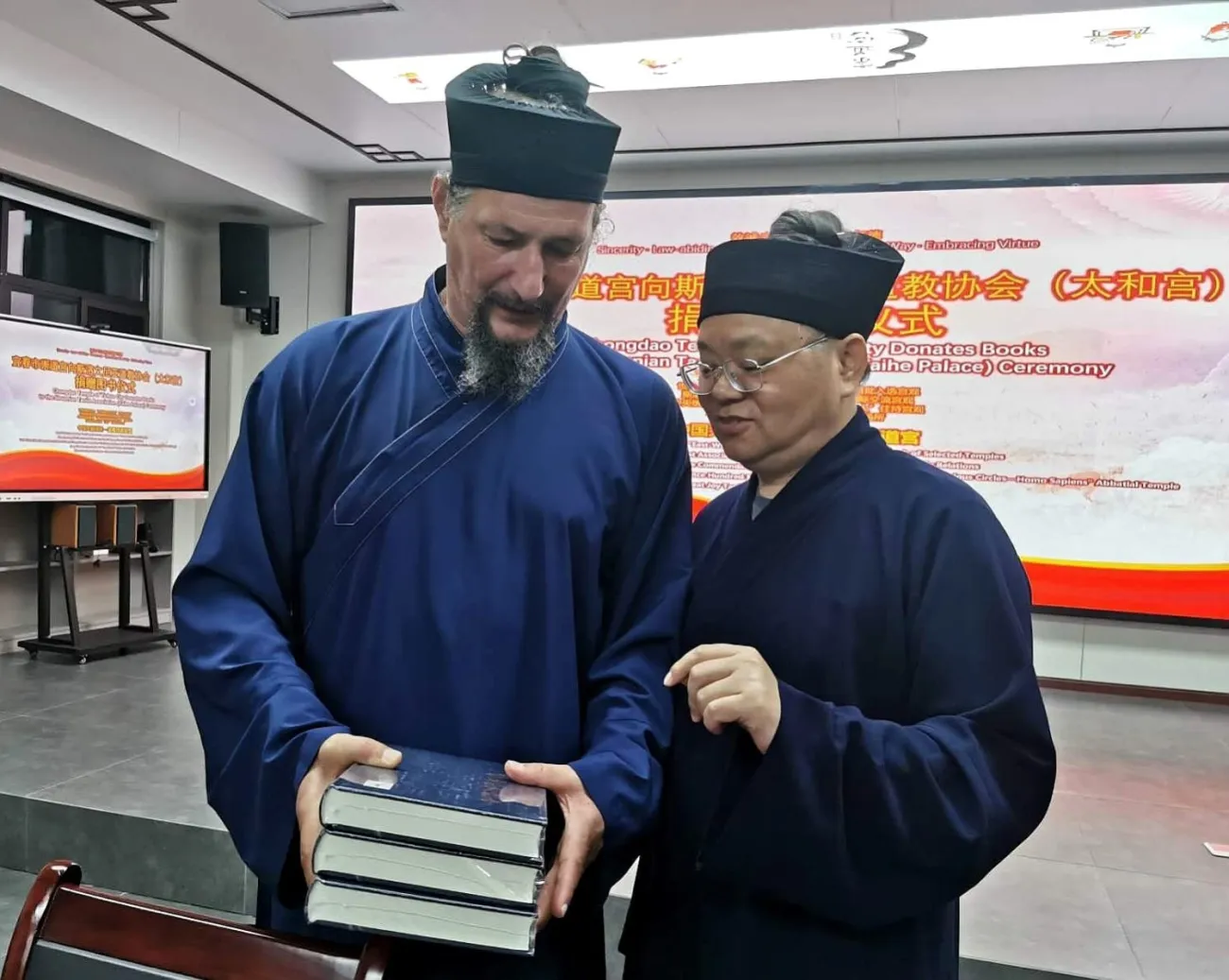
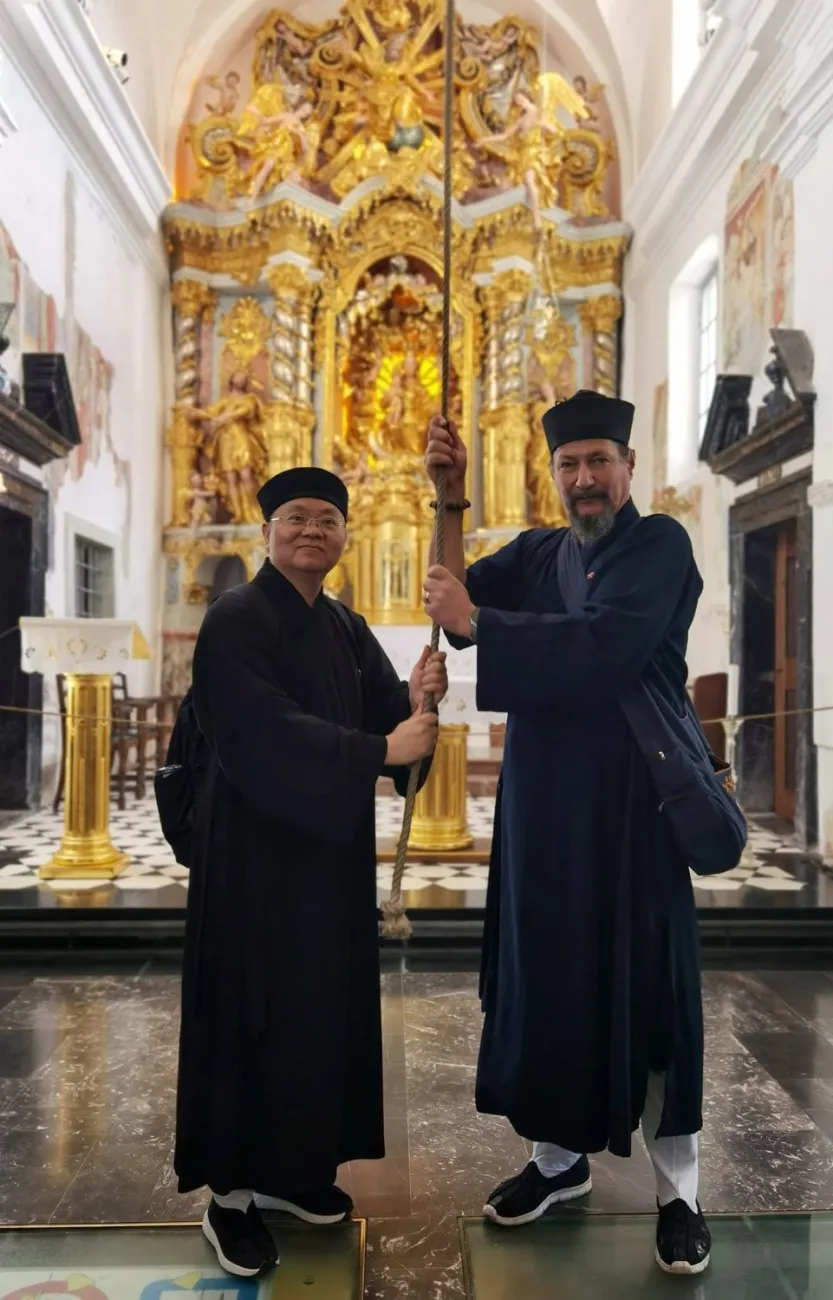
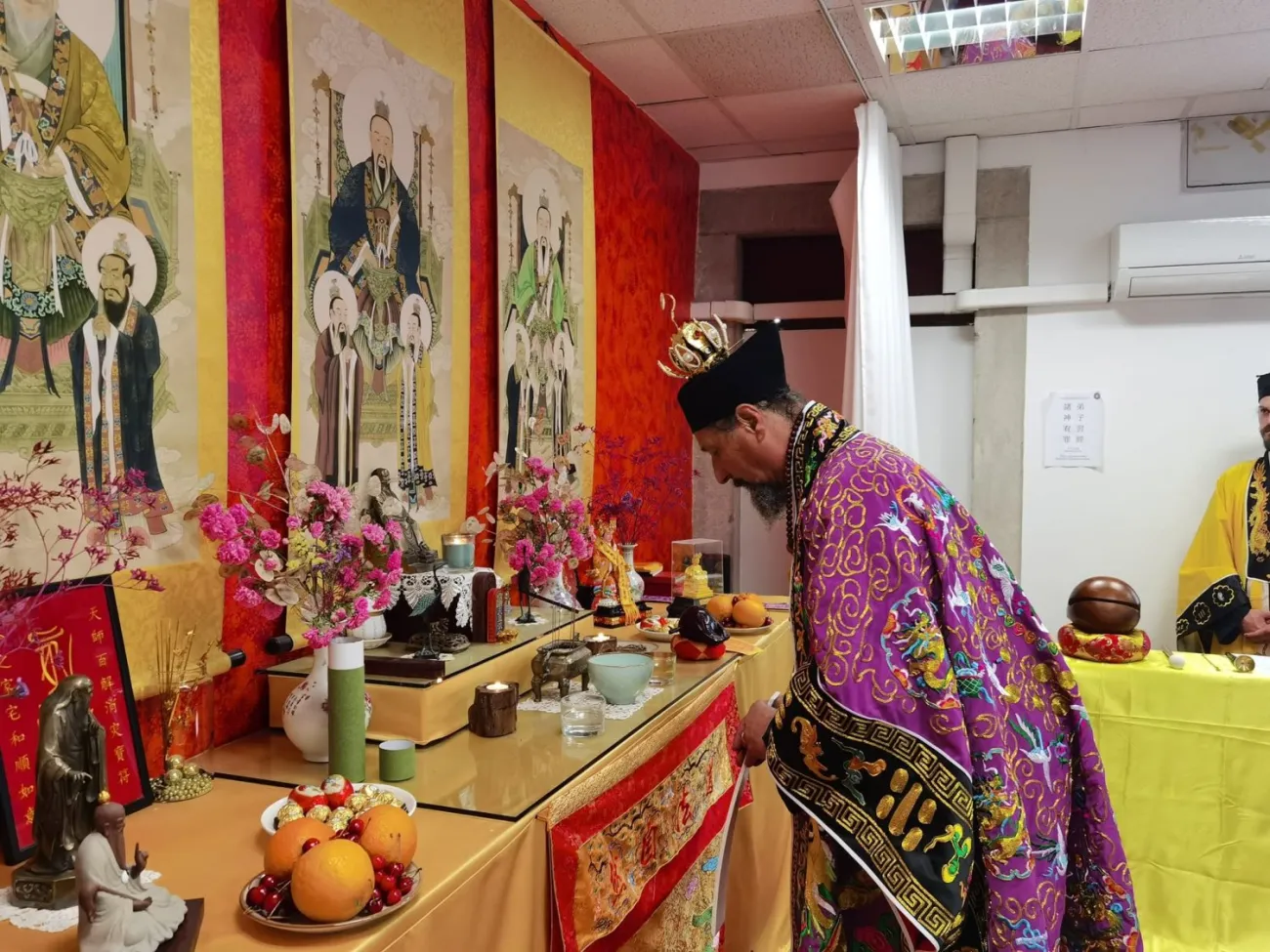
The Rector of the Slovenian Daoist Association is Daoist priest Yuan WeiQi (袁微琪), whose Slovenian name is Jure Čeh. From our first meeting, I found him interesting. He is Slovenian, yet he had already become a disciple of a master and had a Chinese Daoist name. His temple is called the “Palace of Supreme Harmony (太和宫)”, in Koper (科佩尔), a small city on the Adriatic Sea (亚得里亚海).
A Slovenian, on the Adriatic coast, looking after a building furnished in the spirit of Chinese culture. That alone is worth reflecting on.
Later, when we knew each other better, I asked how he had come to follow this path.
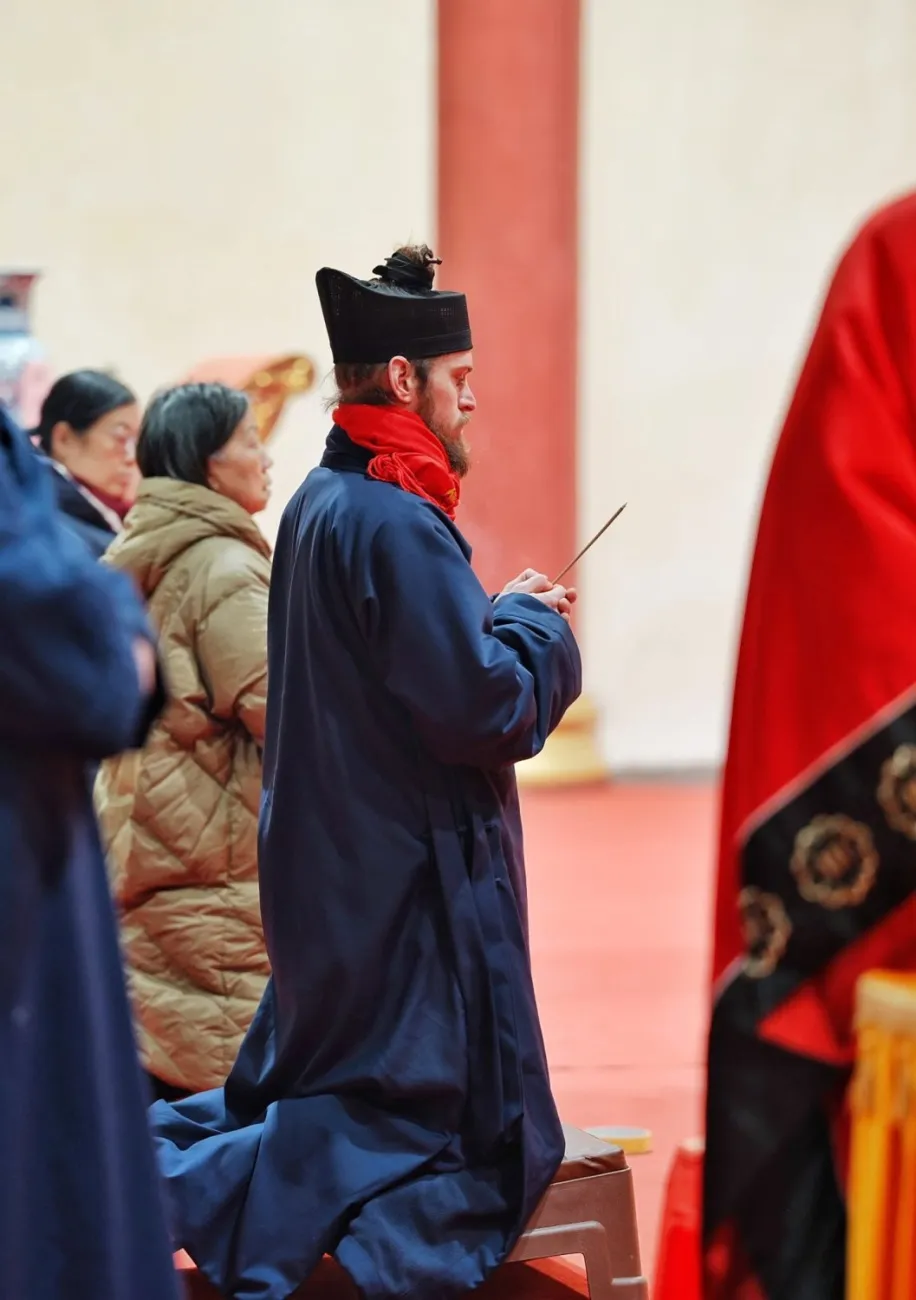
His answer was straightforward. As a young man, he had read books on Eastern philosophy and felt that they were close to his own thoughts. Later, he encountered Chinese martial arts and went to Wudangshan (武当山). He then began learning about Daoism and continued along that path, eventually establishing his own place of Daoist practice and finding fellow travellers in the Dao, including his wife.
He learned Chinese as an adult and can now read the scriptures.
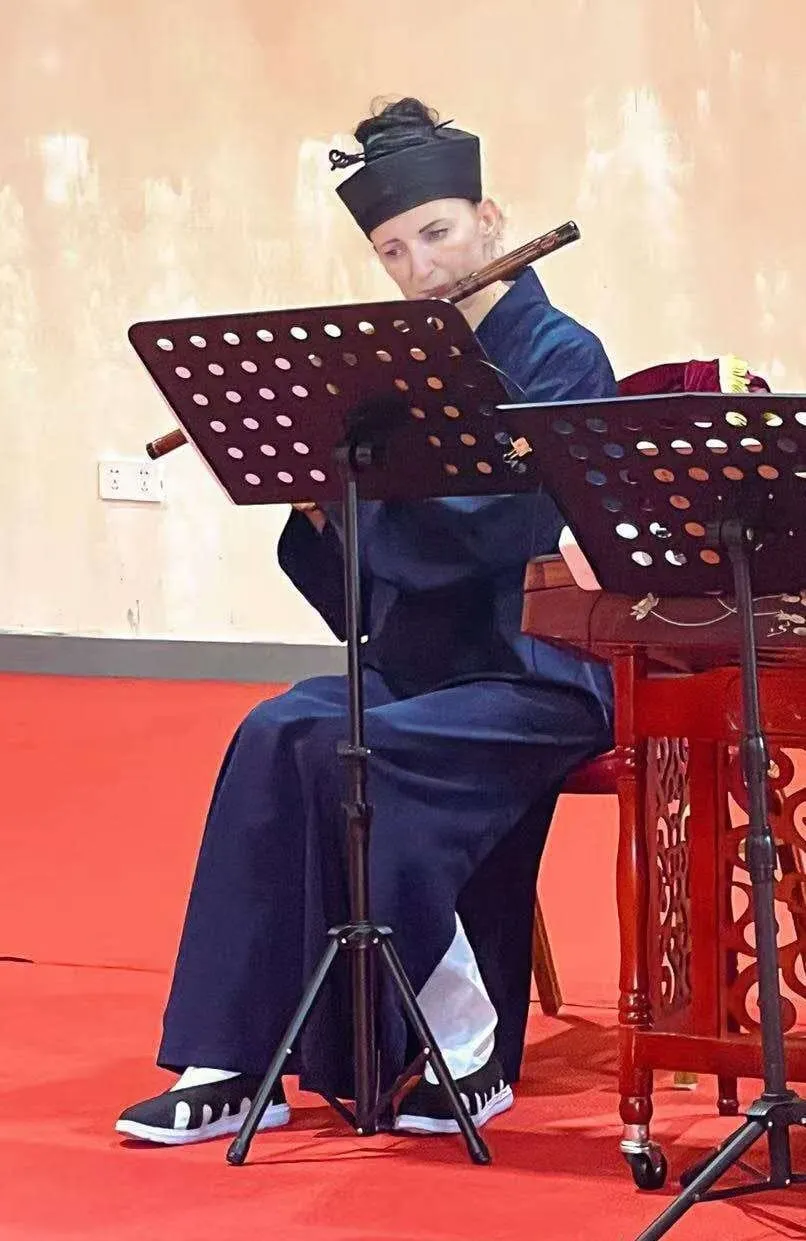
I have only seen Yuan WeiQi playing the xiao. That was in 2024, when we visited his place of practice in Slovenia.
I was astonished! Not only by his ability to learn, but also by his love of Daoist music.
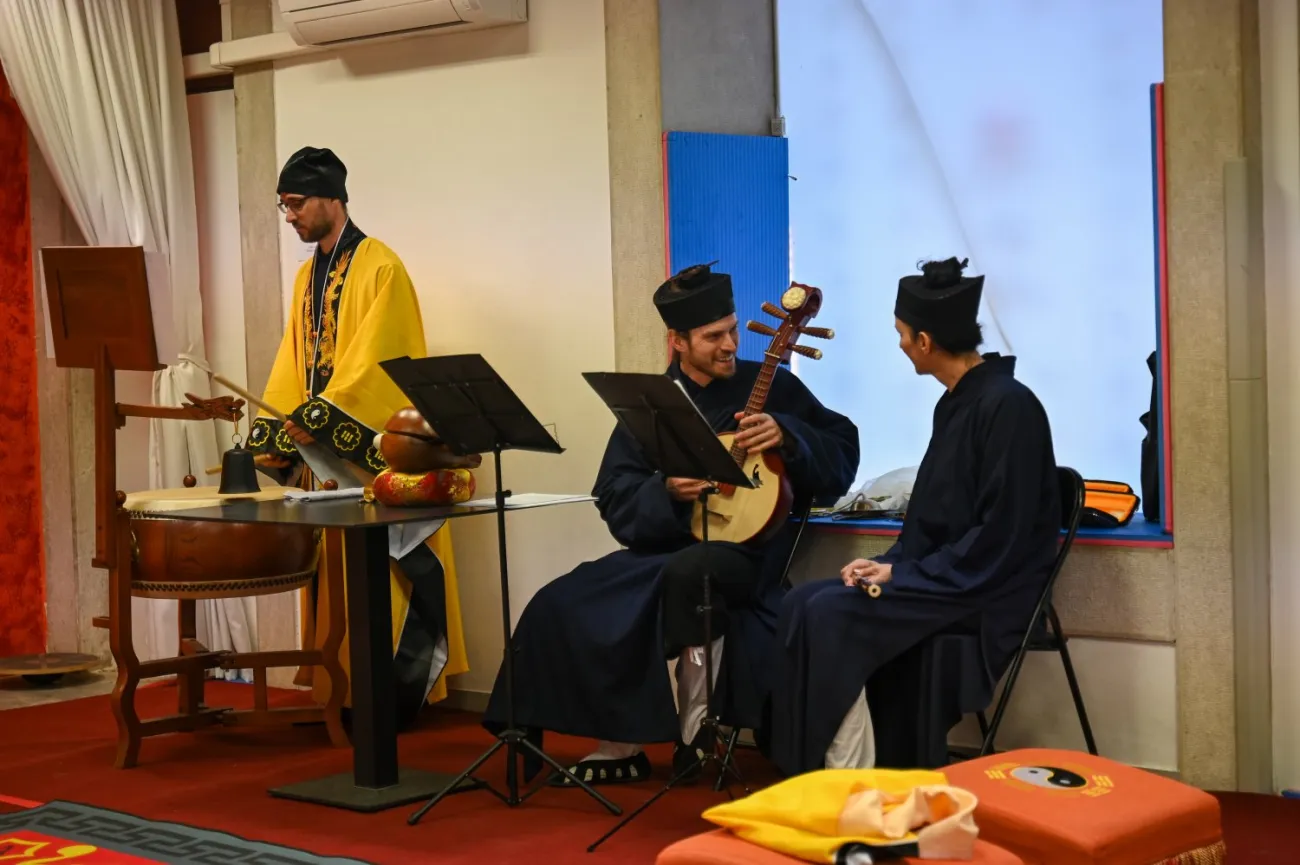
He sat very upright, holding a dongxiao flute across his hands, his eyes half closed. When the flute began to sound, the room grew quiet. The melody was called Buxu yun, and it sounded ethereal.
A Slovenian playing a Chinese flute. I listened beside him, and felt something I could not put into words. I suddenly found myself beginning to feel reassured: this tradition really could leave its native land and take root in different soil.
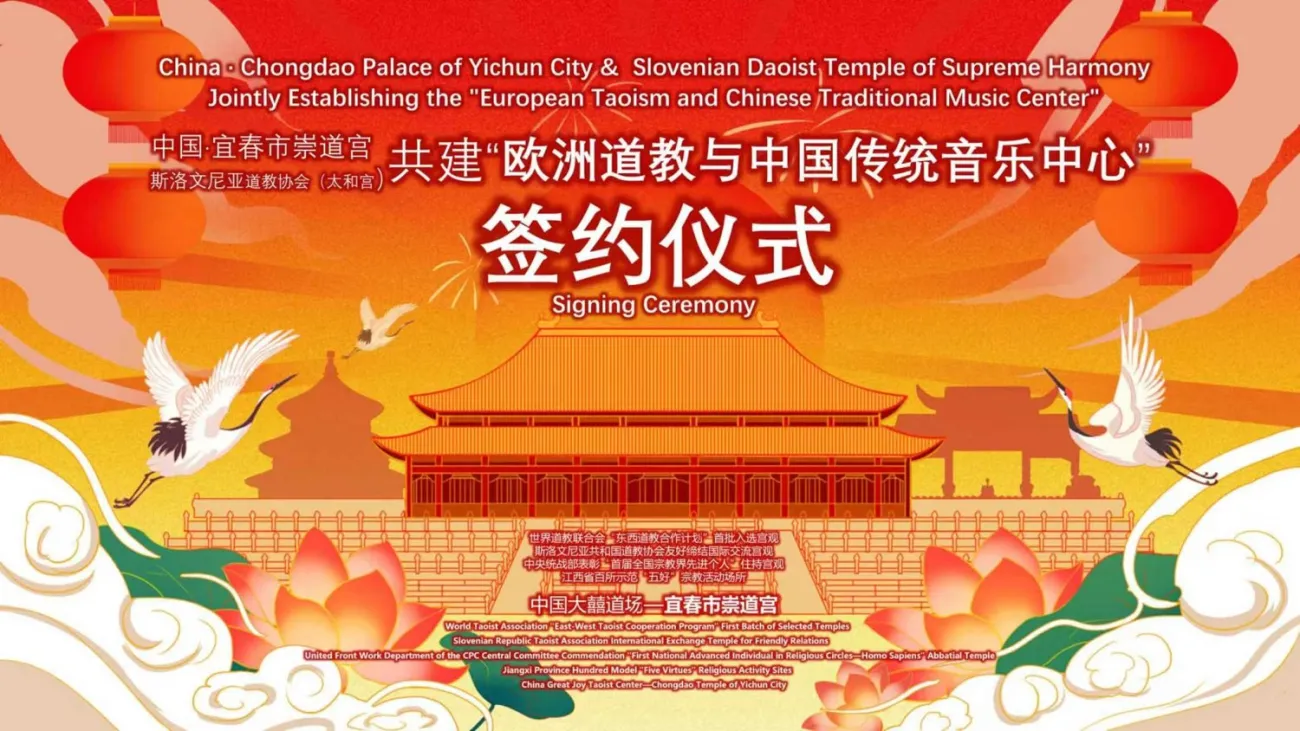
Today, I am also helping him realise another dream: establishing a European Daoist Music Centre (欧洲道教音乐中心). He plays the xiao; what we hope to do is give this thread of Daoist sound a secure home in Europe (欧洲).
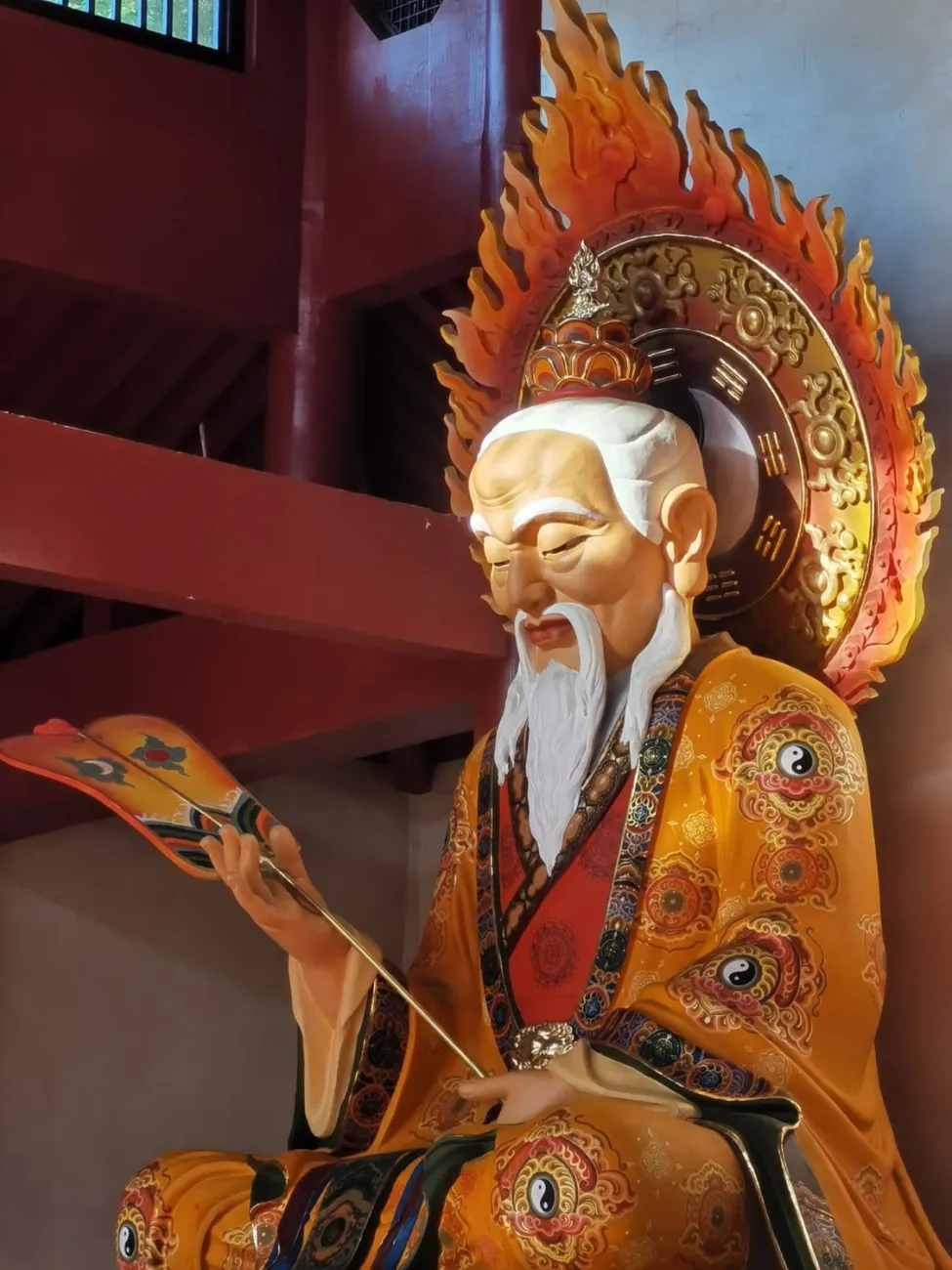
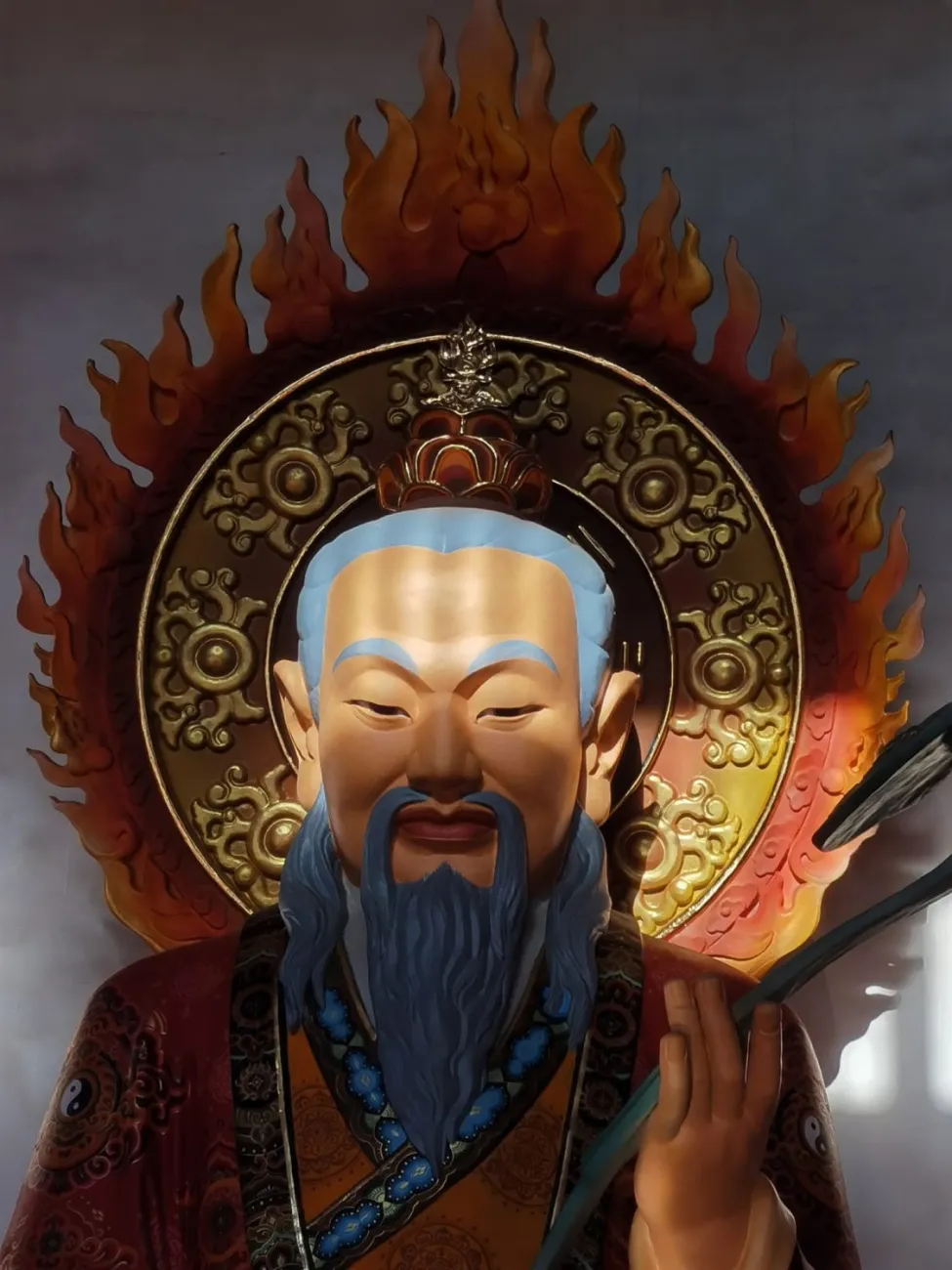
In March 2024, Daoist priest Yuan WeiQi presented me with a letter appointing me “Honorary Adviser” to the Slovenian Daoist Association. The date was well chosen: the fifteenth day of the second lunar month, which is the sacred birthday of the Daoist patriarch Taishang Laojun (太上老君).
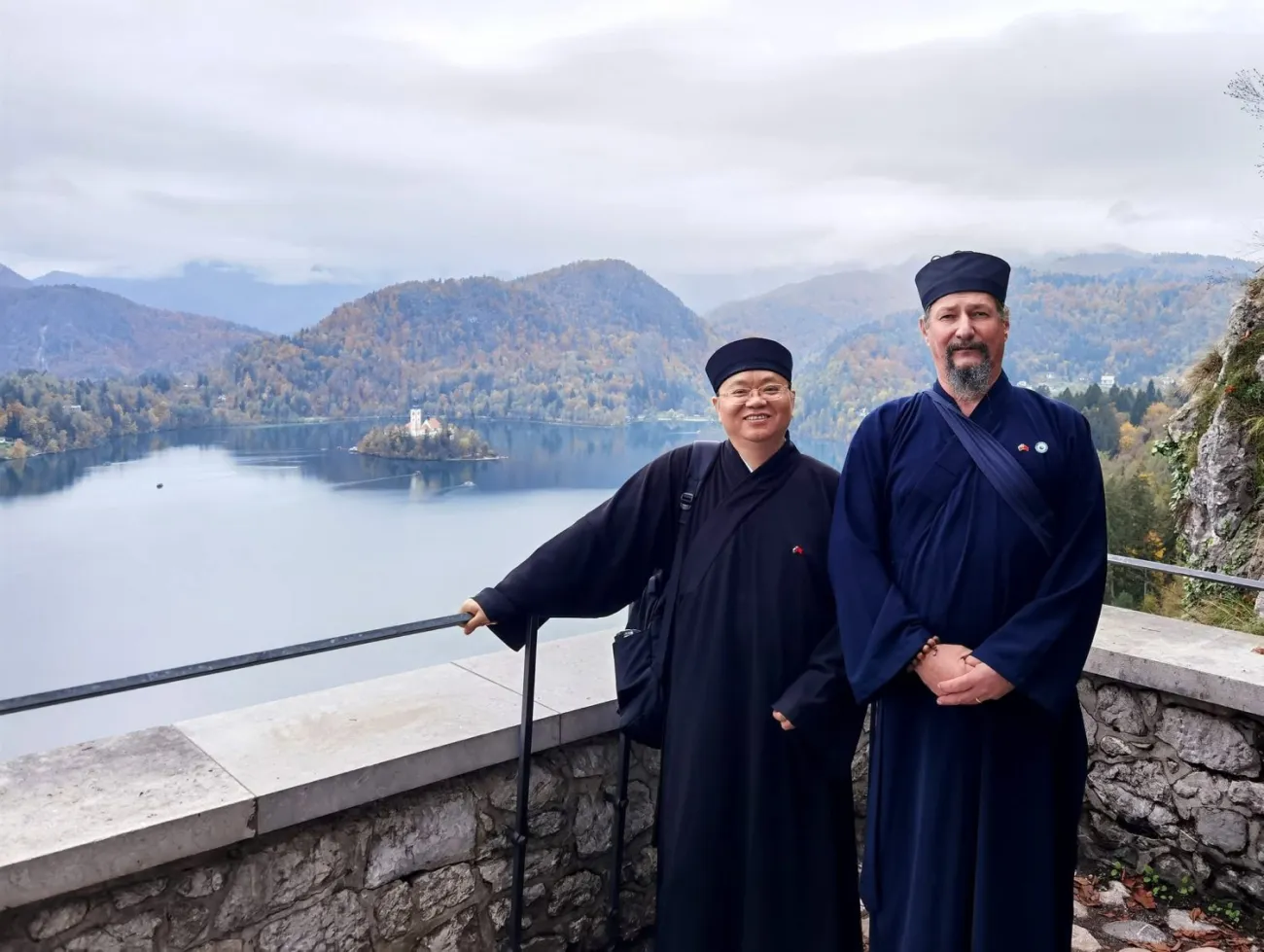
In October that year, the Jiangxi Provincial Daoist Association (江西省道教协会) organised a delegation to visit Eastern Europe (东欧), following an invitation to attend Slovenia’s “International Daoist Culture Day (国际道学文化日)”. Rector Li Shaohua (李绍华) and I led the delegation.
Koper is not a large city. Its streets are narrow, its colours natural. The sea is only a few steps away, and the breeze carries a faint scent of salt. We visited in October. Walking through the streets in the early morning, it seemed you could hear the leaves falling to the ground. At dusk, the setting sun bathed the castle in gold, bringing Andersen’s (安徒生) fairy tales to mind.
23 October. Prešeren Square (普利舍仁广场), Koper.
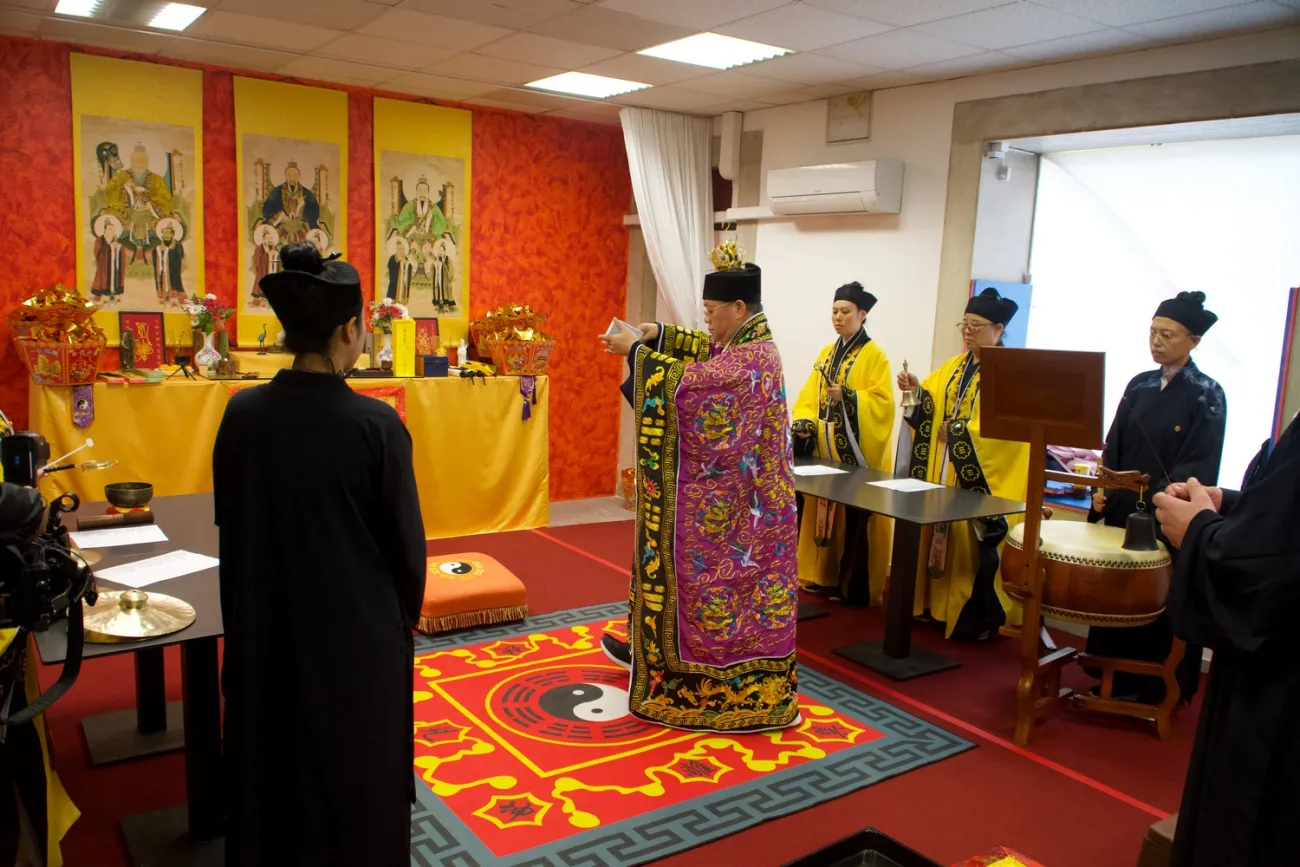
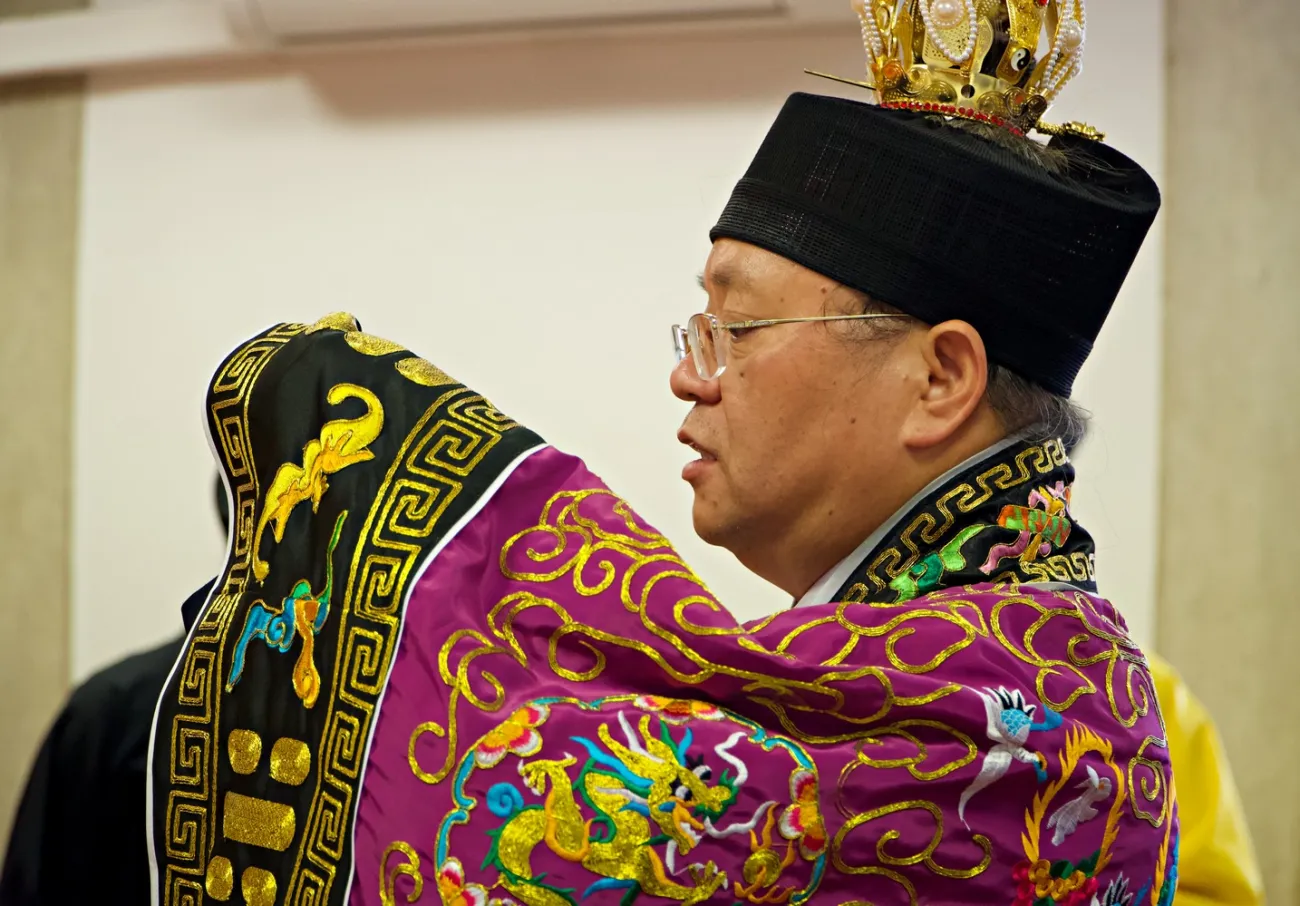
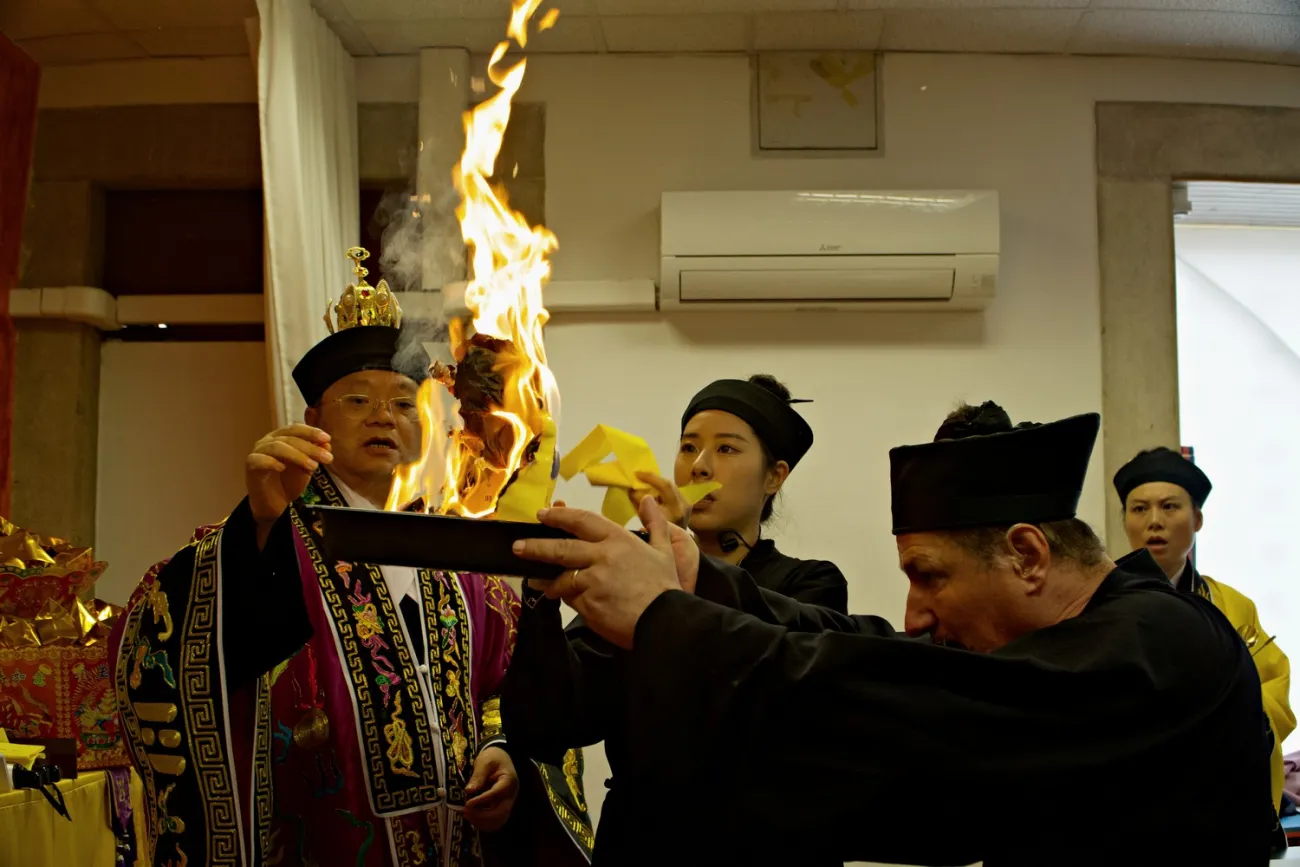
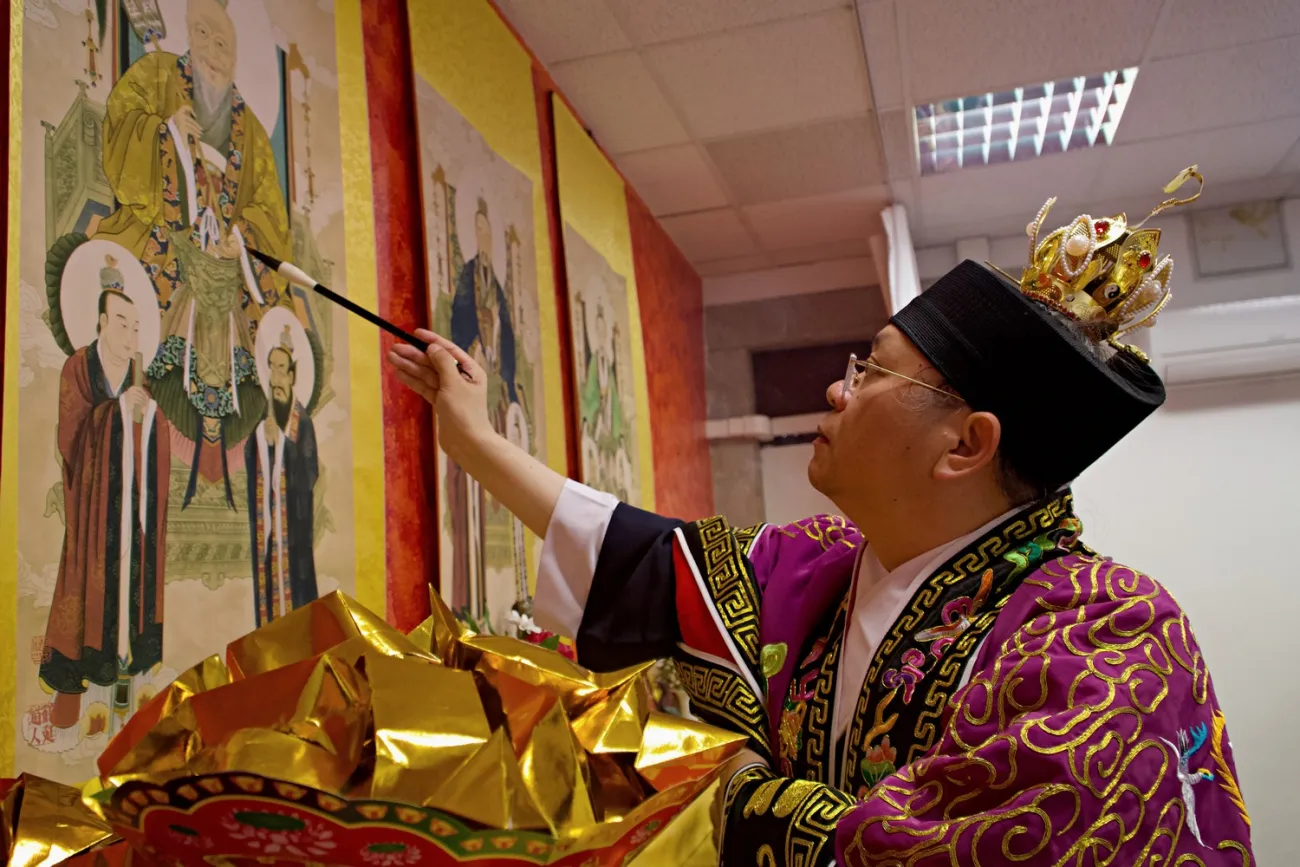
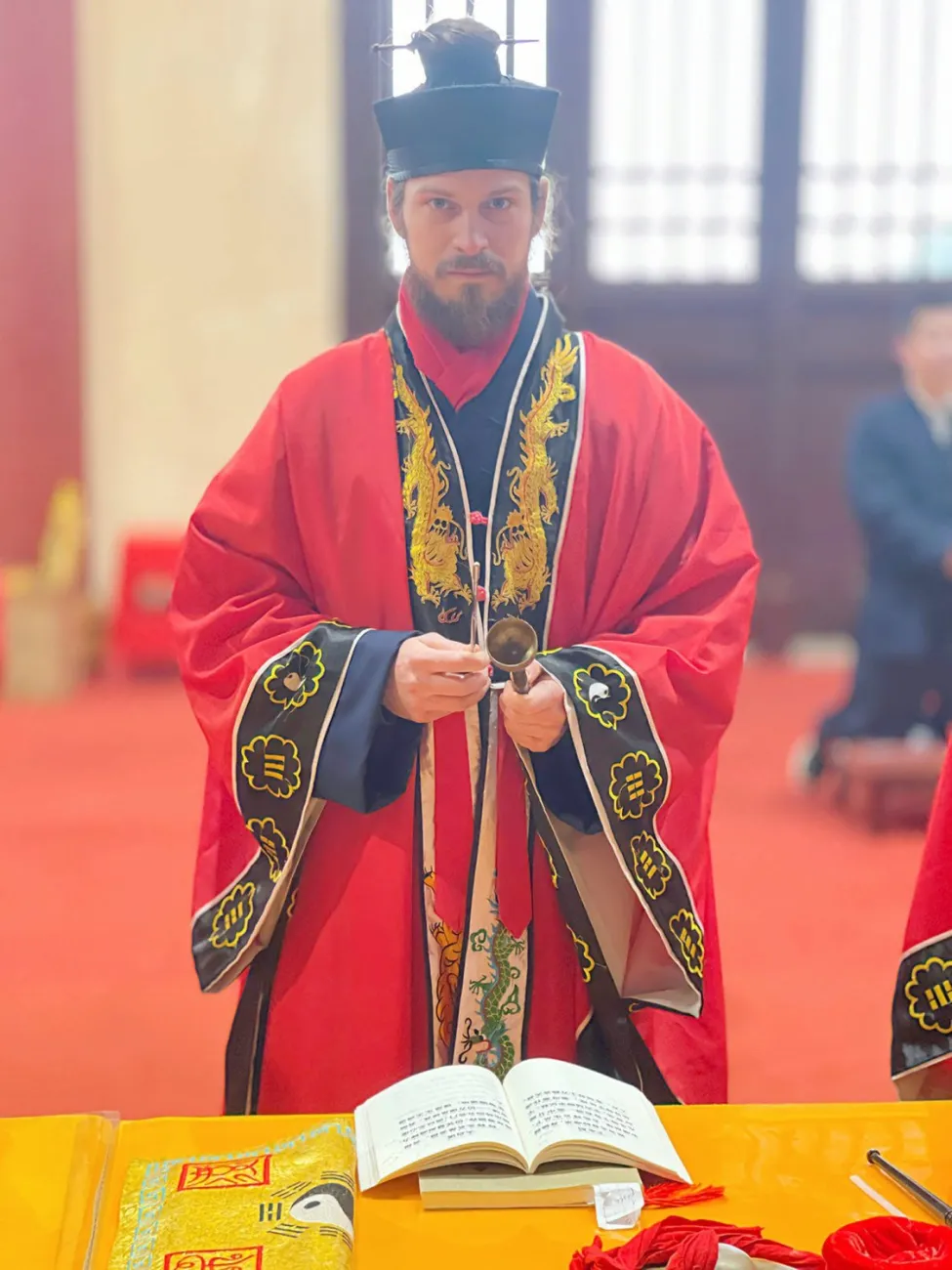
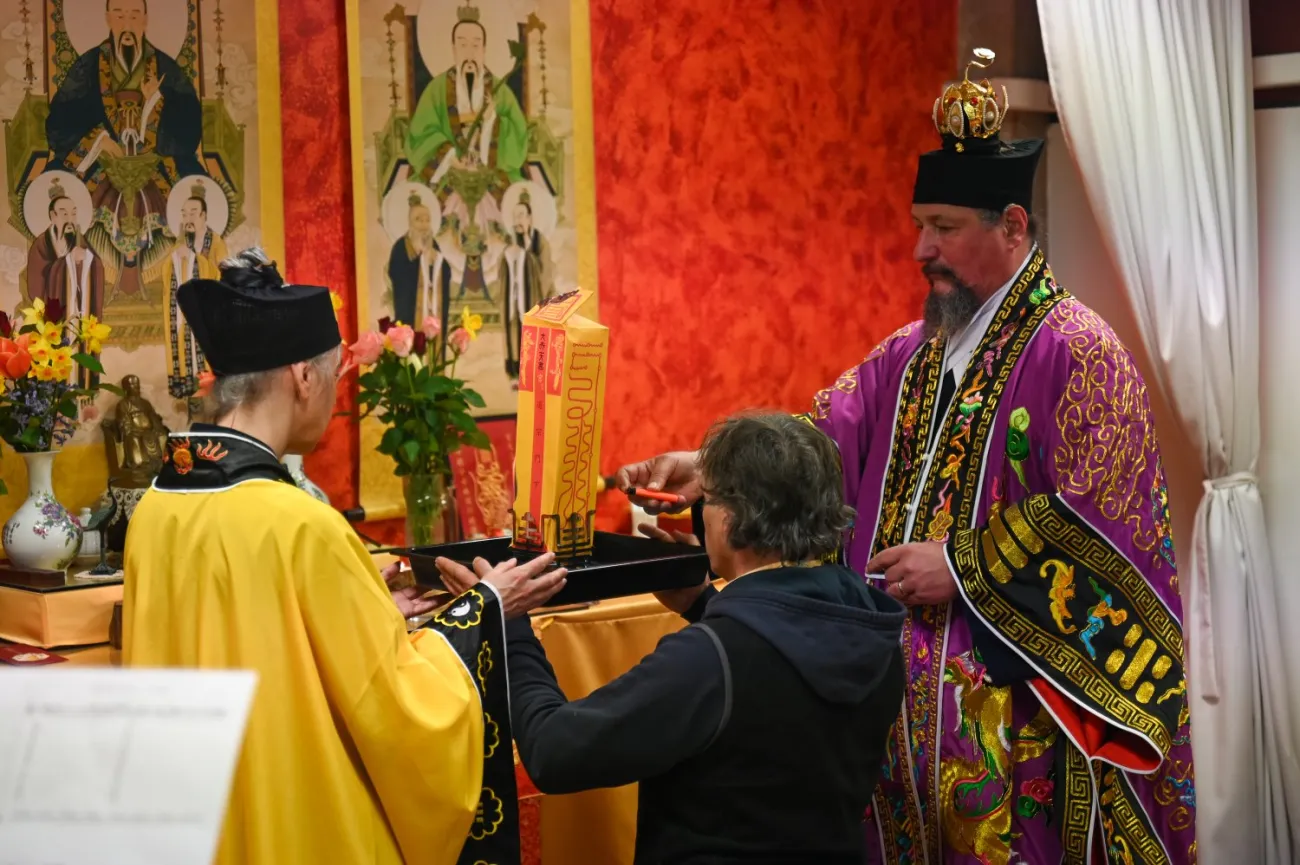
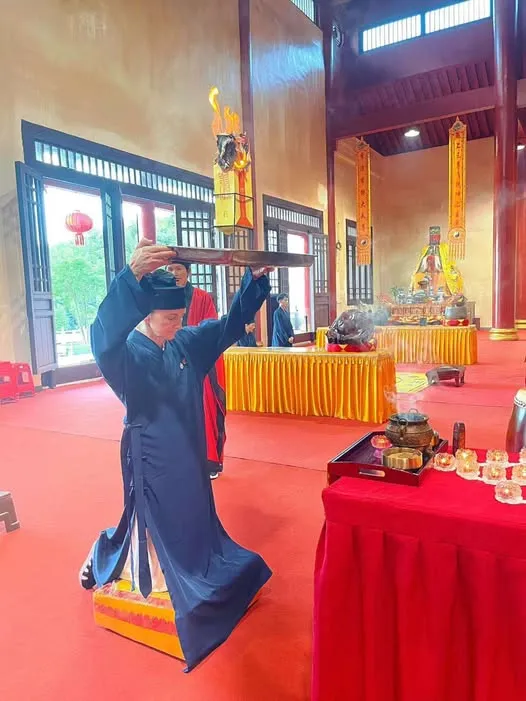
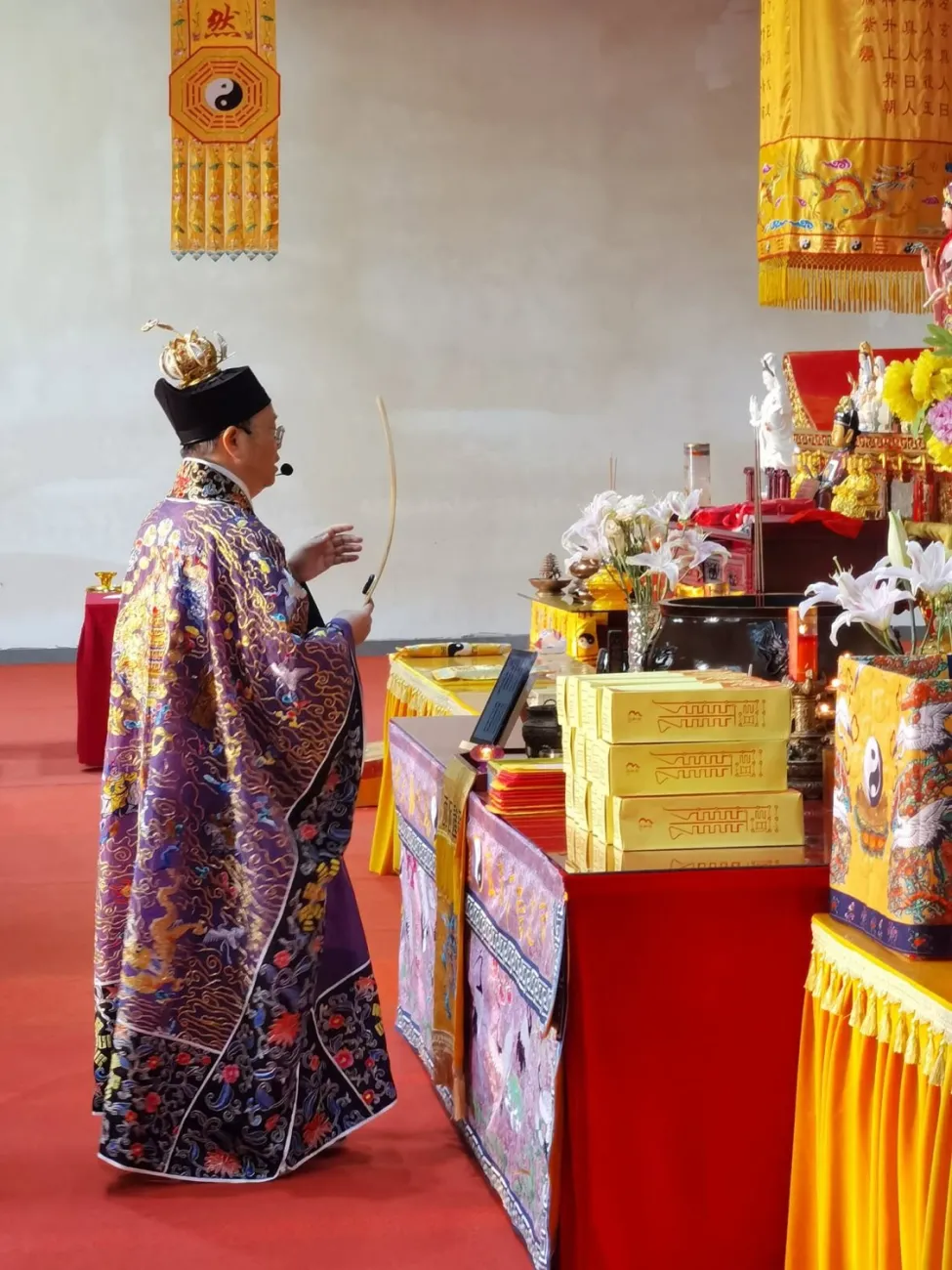
Slovenia’s Palace of Supreme Harmony set up a ritual altar and invited us to consecrate it and offer blessings. That day, the Palace of Supreme Harmony was filled with people. When the Daoist music began, I saw elderly people, young people and scholars in the crowd. Some held video cameras and still cameras; their earnest attention was moving. Most could not understand the scriptures, yet they stood and listened to the entire ceremony.
After the ceremony, a scholar from a local university came over. His words were translated as follows: “I cannot understand what you are chanting, but after listening, I feel very peaceful.”
Something stirred in me.
The language was unfamiliar, the teachings not understood, yet that peace was real. In that moment, I became certain of one thing: “The Dao can cross the barriers of language”.
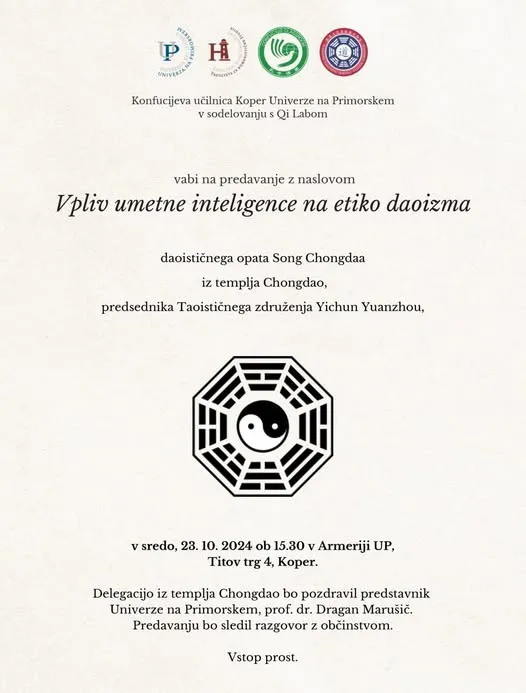
Other things happened during those days. I was invited to give a lecture at the Faculty of Humanities of the University of Primorska (普里莫尔斯卡大学人文学院). The audience consisted of teachers and students of philosophy and religious studies. I spoke about the unity of humanity and nature, about our place within the entire ecological web, and about what “nurturing without dominating” means for our time.
After the lecture, several students stayed to talk at length. Their interest was not in Daoist rituals or in its mystery. They wanted to know whether it could offer a different way of thinking about today’s world.
I believe it can.
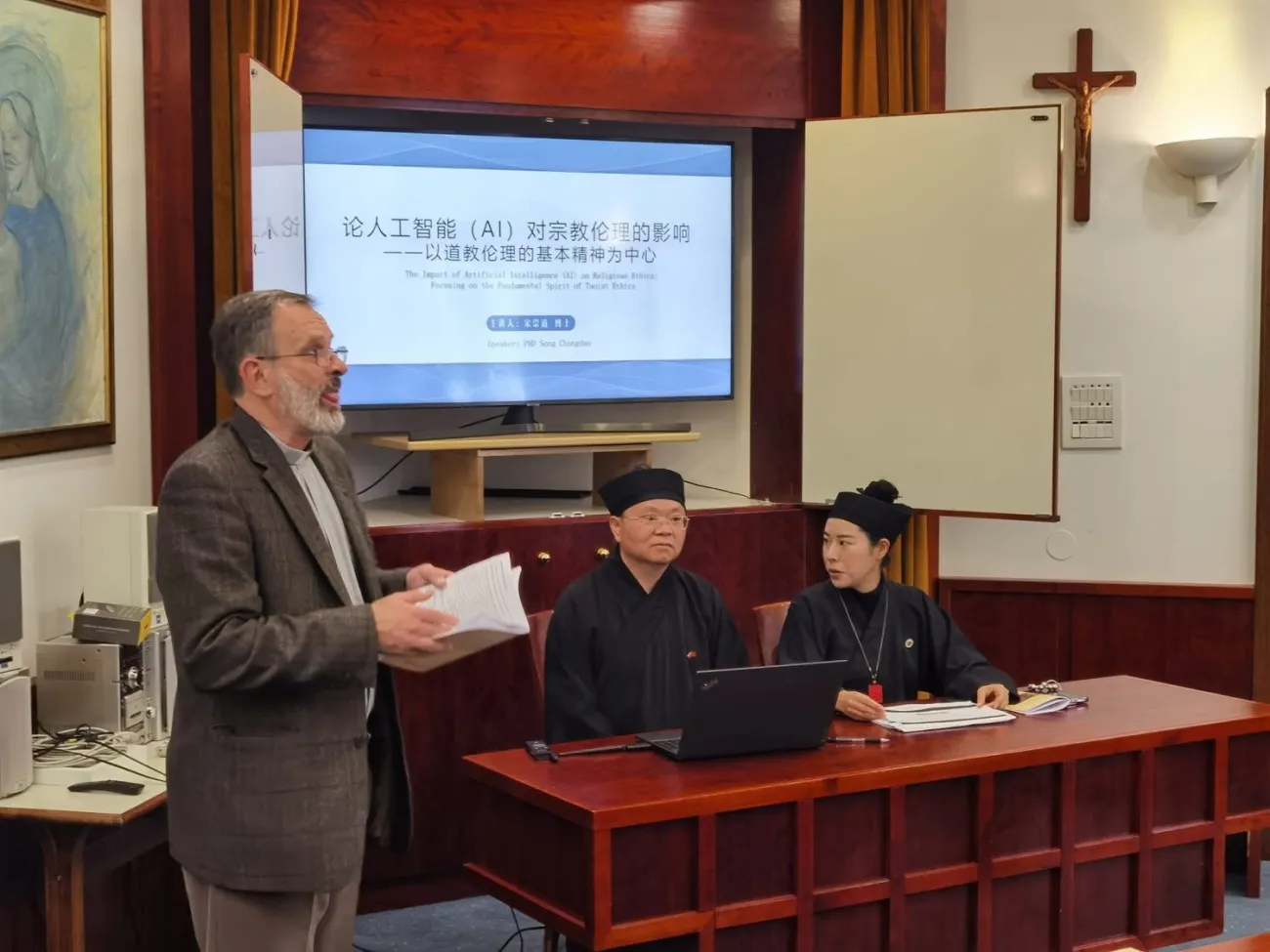
At the International Scientific Conference (国际科学大会) in Celje (采列), I was also invited to give a thematic presentation. Most of those attending were scientists. My topic was “Daoist Ethics and Artificial Intelligence”. The idea was simple: “Technology asks ‘Can we?’ Ethics asks ‘Should we?’ Daoism speaks of ‘knowing when to stop’: recognising where to draw the line. This ancient body of thought has found new relevance today.”
The question-and-answer session was lively. Some asked about ecology, others about human alienation, and others whether artificial intelligence could have a “heart-mind”. People asked these questions long ago, and people are still asking them today.
The final stop on that journey was the square in Ljubljana where the equatorial armillary sphere stands. It is a square that embodies Liu SongLing’s wisdom, and also the Sino-Slovenian Friendship Memorial Square.
Three hundred years ago, a young Slovenian set out from here and travelled east to Beijing. Three hundred years later, we came from the direction of Beijing and stood here.
The circle was complete.
I stood in the square for a long time. The replica equatorial armillary sphere stood at its centre, bronze-coloured, pointing towards the sky.
A Slovenian spent half his life observing the stars in China. A Chinese person gave a lecture about the Dao in Slovenia. Three hundred years separated these two events, and their directions were opposite, yet I felt they were the same undertaking.
Both were attempts to understand the world and humanity’s place within it.
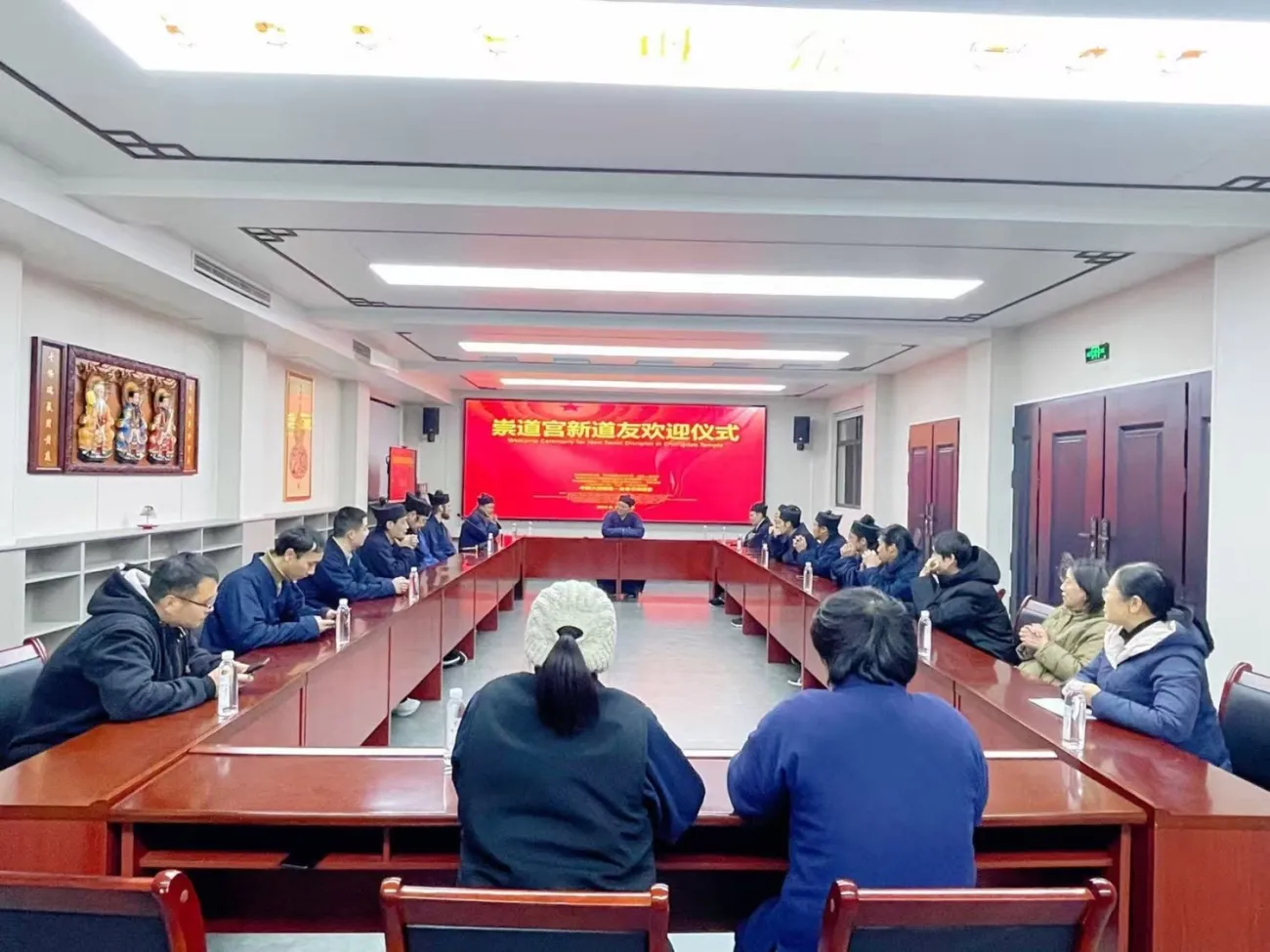
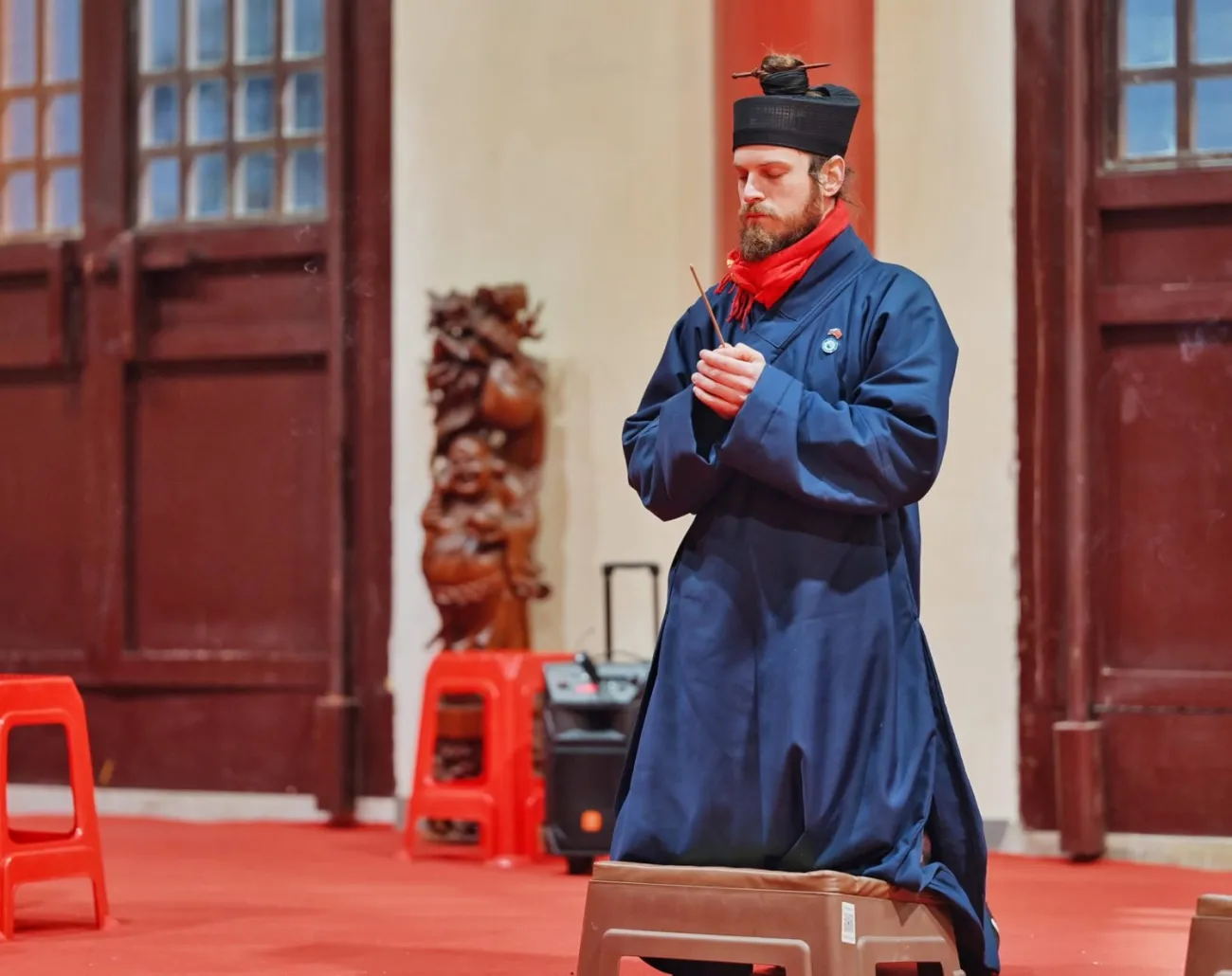
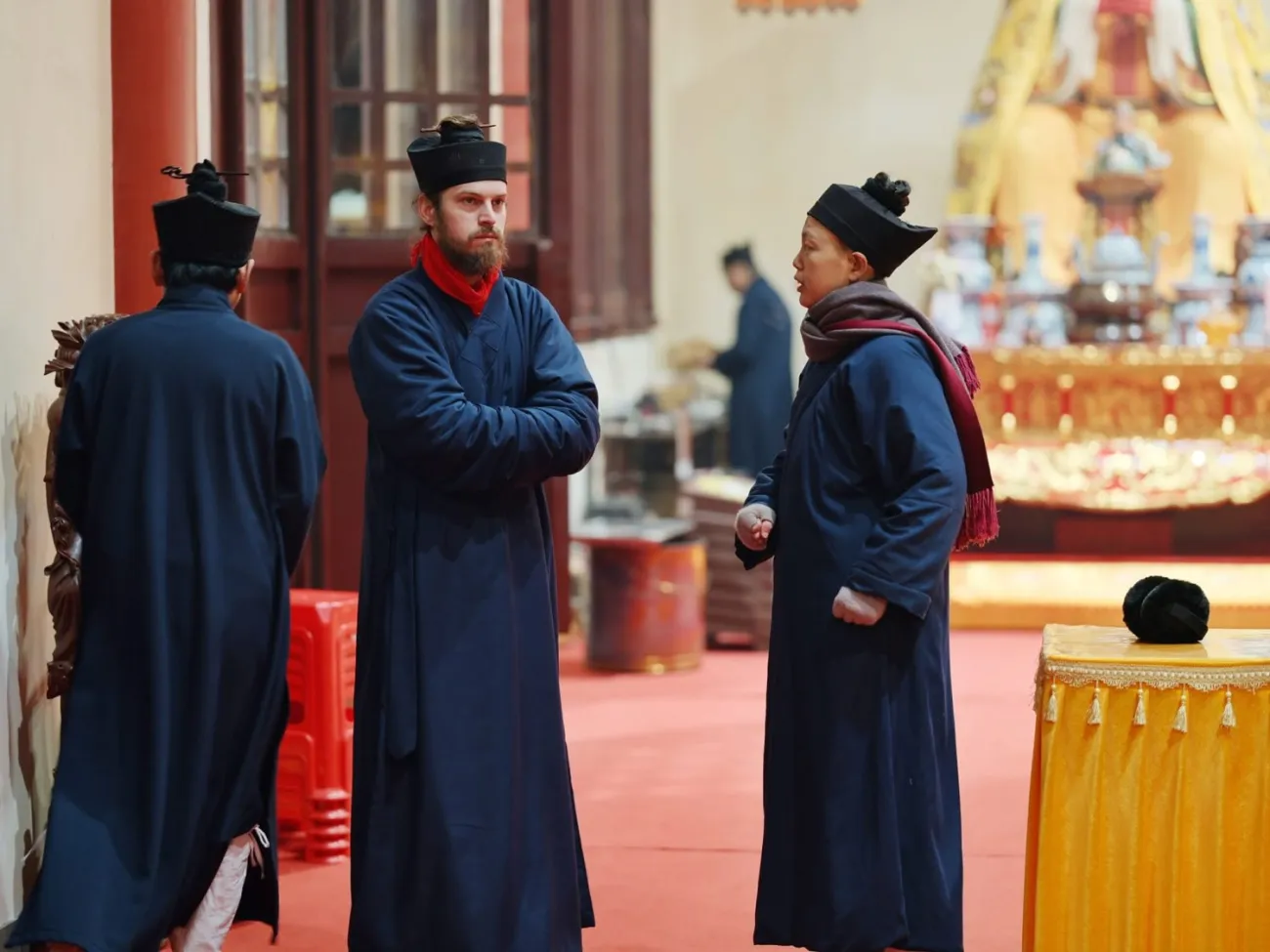
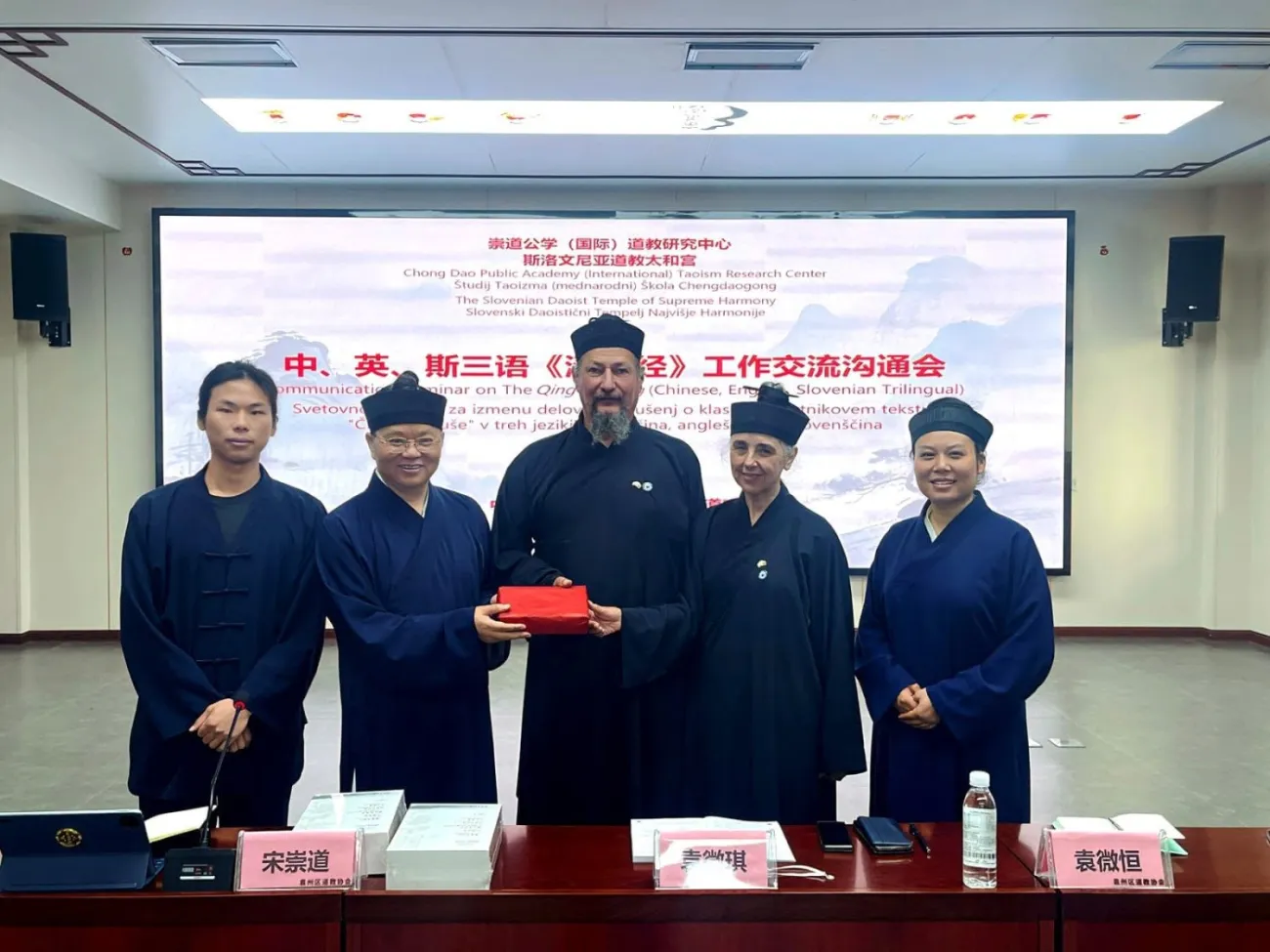
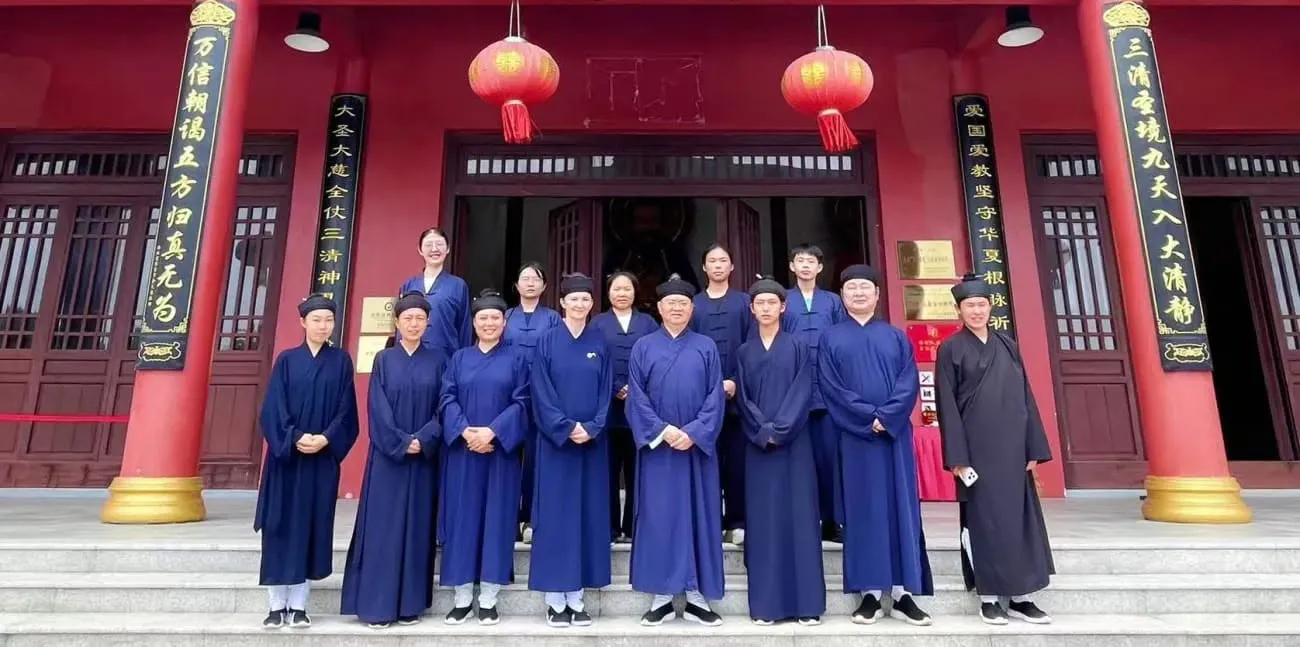
And exchange has always gone both ways. Over these years, Daoist priest Yuan WeiQi has brought his wife Yuan Weiheng (袁微恒), whose Slovenian name is Darija, and fellow practitioner Miha from the Palace of Supreme Harmony to Chongdao Gong for international training in the work of high ritual masters. He has also sent members of the Daoist music ensemble to Xihua Mountain in separate groups. Yuan Ximing (袁希明), whose Slovenian name is Maj, Alenka (阿伦卡) and others stayed on the mountain, learning scripture chanting, Daoist rituals and Daoist music. This is how the sounds of the Dao left the mountain gate and returned from the sea.
Looking back, the agreement at Maoshan did not remain merely on paper. In autumn 2024, we brought Chinese Daoist porcelain and Yuanzhou (袁州) bodiless lacquerware to Koper, together with Yuanzhou hemp crafts and a print on ramie cloth (Chang’e Flying to the Moon). In June 2025, Chongdao Gong established the Chongdao Academy (International) Daoist Research Centre (崇道公学(国际)道教研究中心). The Slovenian Daoist Association sent four researchers to work with us on organising Daoist classics. As some of the first organisations to form a partnership under the World Federation of Daoism’s “East-West Daoist Cooperation Programme”, we want to turn “friendship” into something visible, year after year.
IV. Why the Dao Can Cross Mountains and Seas
Friends often ask me: “Daoism is a Chinese religion. Why can it take root in Europe, so many thousands of kilometres away?”
My answer is: “The Dao sets no barriers to entry.”
It does not ask people to change their faith. It invites them to change their perspective.
Many spiritual traditions first require you to accept a set of premises. Daoism is different. The Daode jing begins with “The Dao that can be spoken is not the constant Dao”. It begins by erasing its own boundaries: whatever can be expressed is not the thing itself.
A teaching that begins by relinquishing the authority to define is naturally open.
Nor does it exclude others. A person can believe in the Dao while retaining their original faith and way of life. They can also enter a Daoist temple to offer incense and then go elsewhere. Daoism never claims to be “the only way”. Differences among all things are natural; there is no need to force them into uniformity.
This makes it especially approachable in a cross-cultural setting.
What, then, does the Dao actually teach? If I had to put it in the simplest terms, I would divide it into three levels:
The first level: humanity and nature.
Daoism speaks of “the Dao following what is naturally so” and of “the unity of humanity and nature”. These four Chinese characters are often quoted nowadays. The more they are repeated, the more their meaning seems to fade.
Their original meaning is simple. Humans are part of nature, not its masters. We can do many things, but we must not push everything to its limits.
There is a line in the Daode jing: “Knowing when to stop keeps one from danger”. Only by knowing where to stop can we avoid danger. Today, we are capable of doing more and more, yet willing to stop less and less. Trace ecological and climate problems to their roots, and they are all problems of refusing to stop.
The second level: the individual and the self.
Daoism speaks of “clarity and stillness”, and of “revealing simplicity and embracing the uncarved, reducing selfishness and lessening desires”.
This does not ask people to live a life of hardship. It means that if our desires always exceed our needs, even a little, we will never find peace.
I have met many people whose minds become more troubled as their possessions increase. They come to the mountain asking for nothing except to sit quietly for a while.
What practical problem can sitting in the mountains for a while solve? None at all. Yet once a problem is seen clearly, it often ceases to be a problem. When the mind grows quiet, the circumstances remain the same; the person has changed.
The third level: the individual and others.
Daoism speaks of “the highest goodness being like water” and of “equal compassion for all”.
Water benefits all things without contending. It nourishes everything, yet competes with nothing. It dwells in places that everyone disdains, and is therefore closest to the Dao.
This meaning is especially important in today’s world, so full of division.
The Maoshan Declaration, issued at the close of the 2023 Maoshan Forum, included this appeal: respect the diversity of the world’s civilisations, oppose conflict and confrontation, and promote cooperation for mutual benefit. Representatives from 39 countries and regions were present that day. The very fact that everyone signed the same document says something.
Rector Bernard Shannon (至厚) of the American Daoist Association (美国道教协会) advocates the view that the Great Dao knows no national boundaries, and that Daoist practitioners worldwide uphold one shared Dao. I strongly agree.
This view is not merely a courtesy. What the Dao points towards does not belong to any one people, just as water belongs to no single river and fire to no single piece of wood.
Having described these three levels, I would like to add one more thought.
What can the Dao offer that other traditions may find less easy to give? After much reflection, I come back to two Chinese characters: “room to breathe.”
Daoism never insists on having the final word. It says, “The Dao that can be spoken is not the constant Dao”; “Those who know do not speak”; and “Great perfection seems incomplete”. It leaves space around everything. That space is room to breathe.
People today live under strain. Their schedules are full, their relationships tense, their views opposed. No one is willing to give anyone else an inch. The little room that Daoism speaks of is precisely what our age lacks most.
What a Slovenian reads in the Daode jing beside the Adriatic Sea will be the same as what I read on Xihua Mountain in China’s Yichun.
That is why the Dao can cross mountains and seas.
Conclusion: Returning to Harmony
Let us return to 1739.
That 36-year-old Slovenian set out from Ljubljana and crossed half of Eurasia (欧亚大陆) to reach Beijing. He probably did not imagine that he would spend the second half of his life there. Nor, perhaps, did he imagine that a replica of the newly constructed equatorial armillary sphere, completed in distant China to his design and under his supervision, would one day stand in his hometown as a monument to his memory.
He simply followed what he believed in.
Three hundred years later, I set out from the mountains of Yichun, flew the same distance and arrived on the coast of his homeland. We travelled in opposite directions, but covered the same distance.
I often think about the connection between these two journeys.
After much reflection, the answer seems simple: we all want to see what the things we believe in look like elsewhere.
Liu SongLing (Augustin Ferdinand von Hallerstein) brought Western astronomy to China because he wanted Chinese people to see the sky as he understood it. We brought the Dao to Slovenia because we wanted people there to see the world as we understand it. Only when there is both giving and receiving can it be called exchange. Giving in one direction alone is export.
I prefer another word: sharing.
Sharing means placing something I consider good on the table. You are welcome to taste it if you wish, and it is fine if you do not. It does not assume that you lack anything, nor ask you to give anything in return.
Ultimately, exchange comes down to human hearts. The language may be unfamiliar and the rituals strange, but what people hold within is the same: the hope for peace and safety, the hope of being understood, the hope of having something to rely on in a changing world.
Once hearts connect, everything else becomes easier to discuss.
There is a passage in the Daode jing that I often quote: “Attend to affairs through non-forcing; practise teaching without words.”These two lines are, in essence, about sensing sincerity. Act without forcing, teach without relying on words, and let your sincerity be present. Others will naturally feel it.
There is another line in the Chinese classic Zhongyong (中庸): “The Dao is not far from people.”
The Dao never pushes people away. It is always people themselves who wander far from it.
It is present in the most ordinary places: in a cup of tea, in a meal, in sweeping and cleaning, in the moment when one person is willing to pause for another.
All we need to do is grow quiet, and then discover that it has been there all along.
When we signed that agreement at Maoshan in September 2023, I never imagined that it would lead to the breeze in Koper, Daoist music in Prešeren Square, the understanding of “the unity of humanity and nature” at Primorska, and the discussion at the International Scientific Conference in Celje about Daoist ethics and artificial intelligence.
Looking back now, that agreement was only a door. Behind it lay a path, and along that path there would be many people.
I am very glad I ventured out. And very glad that, at the other end of the path, someone was walking towards us.
From Xihua Mountain to the Adriatic Sea: eight thousand kilometres.
Three hundred years, two directions, one path.
Footnotes
- 1Author biography: Song Chongdao (宋崇道) (born 1974) is Vice-rector of the Jiangxi Provincial Daoist Association (江西省道教协会) and Rector of the Yichun Municipal Daoist Association (宜春市道教协会). He holds doctoral degrees in management and psychology and an honorary PhD in educational leadership from Metropolitan College Skopje (斯科普里都市学院) in North Macedonia (北马其顿), a TNE partner of London Metropolitan University (伦敦都市大学). He currently serves as a member of the supervisory committee for 《中华续道藏》, a key cultural project under the national 13th Five-Year Plan; editor-in-chief of the serial publication 《中华老学》; and executive editor-in-chief of 《江西道教》. He is also a council member of the Chinese Association for Religious Studies (中国宗教学会); project executive for the “East–West Daoist Cooperation Programme” (东西道教合作计划) of the World Federation of Daoism (世界道教联合会); Director and Research Fellow at the Chongdao Public School (International) Daoist Research Centre (崇道公学(国际)道教研究中心); honorary professor at Euro College (欧洲学院) in North Macedonia; visiting professor at the Institute of Religious Studies at Jiangxi Normal University (江西师范大学宗教研究所); and part-time research fellow at the Centre for Religious Culture Studies at Yichun University (宜春学院宗教文化研究中心). His published monographs include 《道非常道——道家思想之于公司文化创新范式研究》 and 《囍山崇道·学修十年——宜春市崇道宫心丹丛书》 (《道爱中国心》, 《与道有袁》, 《囍山映道华》, 《以老学之名》 and 《云上煮茶》). He has served as editor-in-chief of 《袁州文化旅游丛书》 (《游袁汇》, 《袁州乡俗》 and 《画说袁州》), among other works, and has published numerous academic papers in domestic and international journals, including 《中国宗教》, 《中国道教》, 《中华老学》 and 《Edinost in Dialog》. Contact: itccpa@163.com.