Articles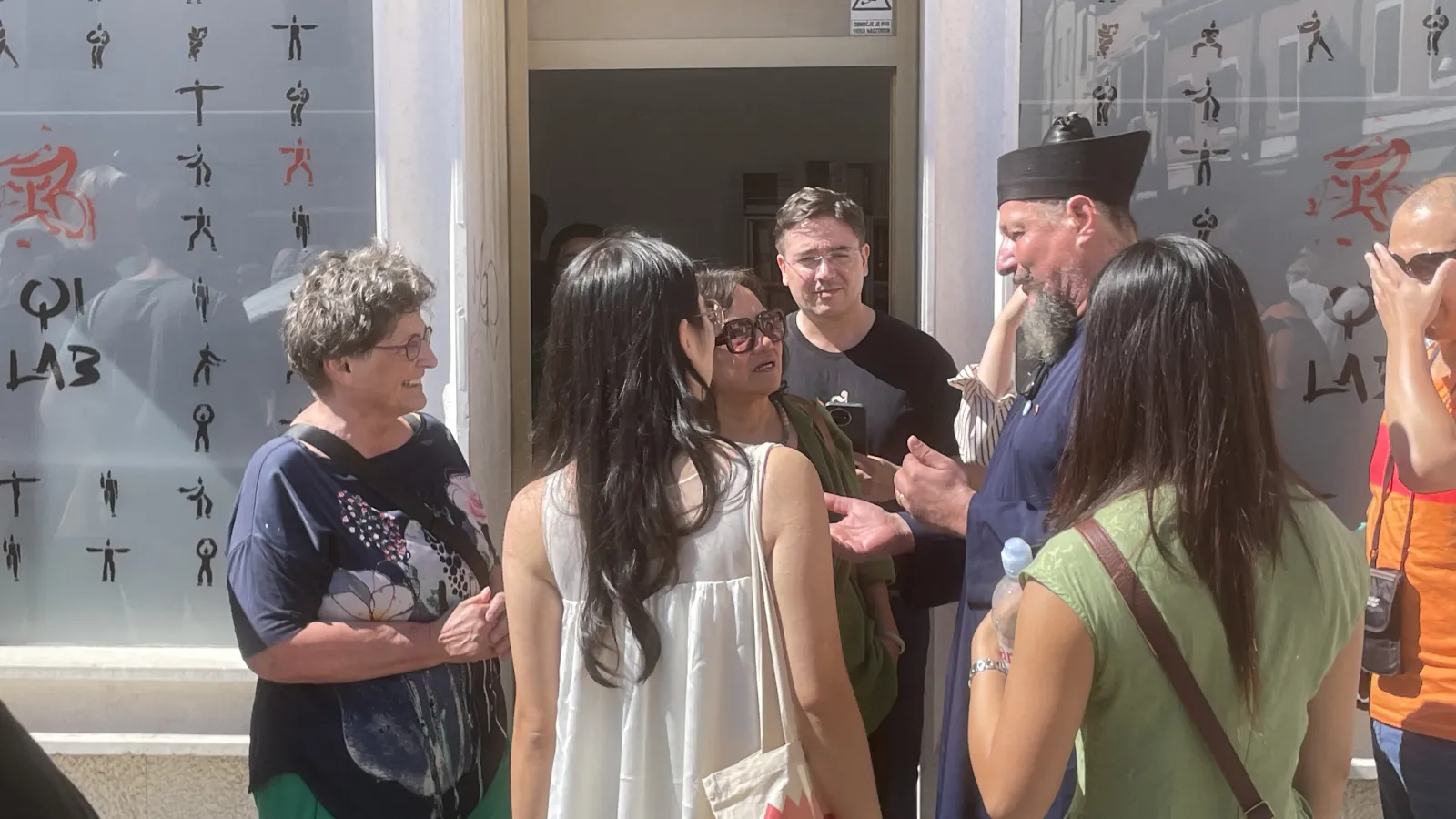
From theory to living practice: a visit by participants in the International Summer School of Philosophy
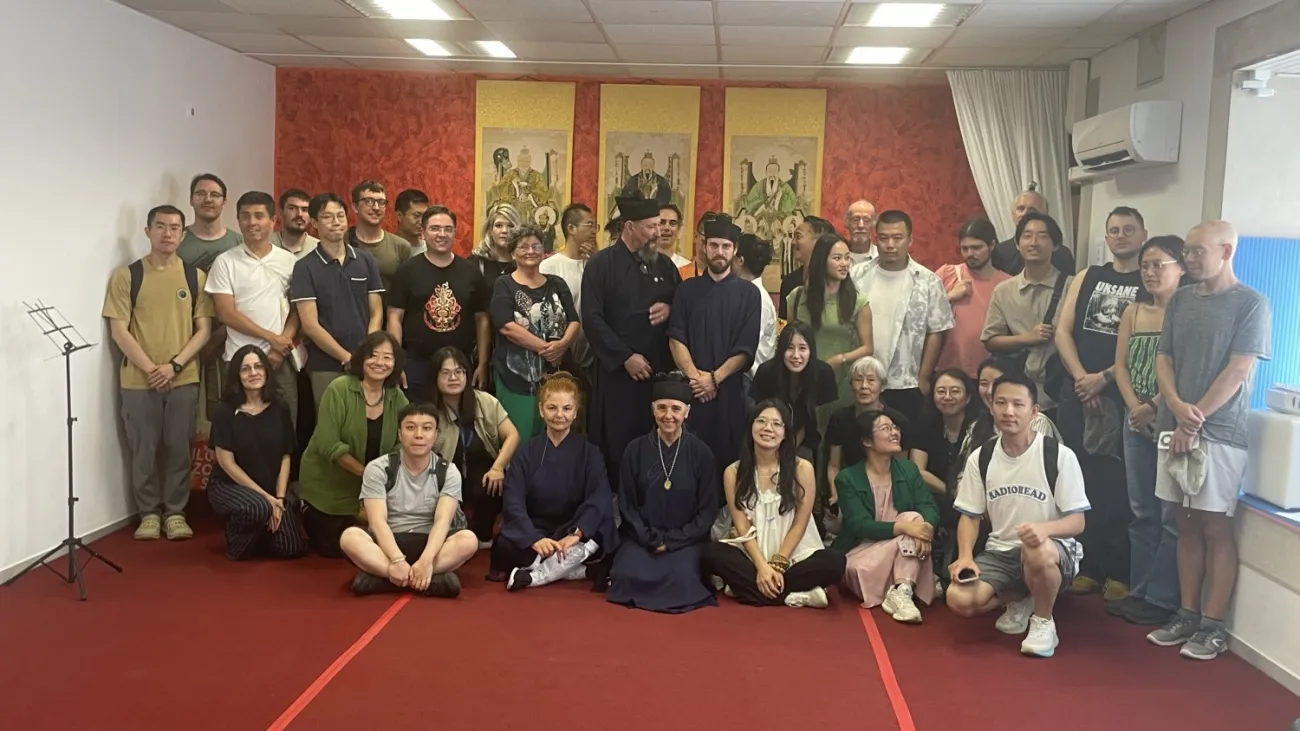
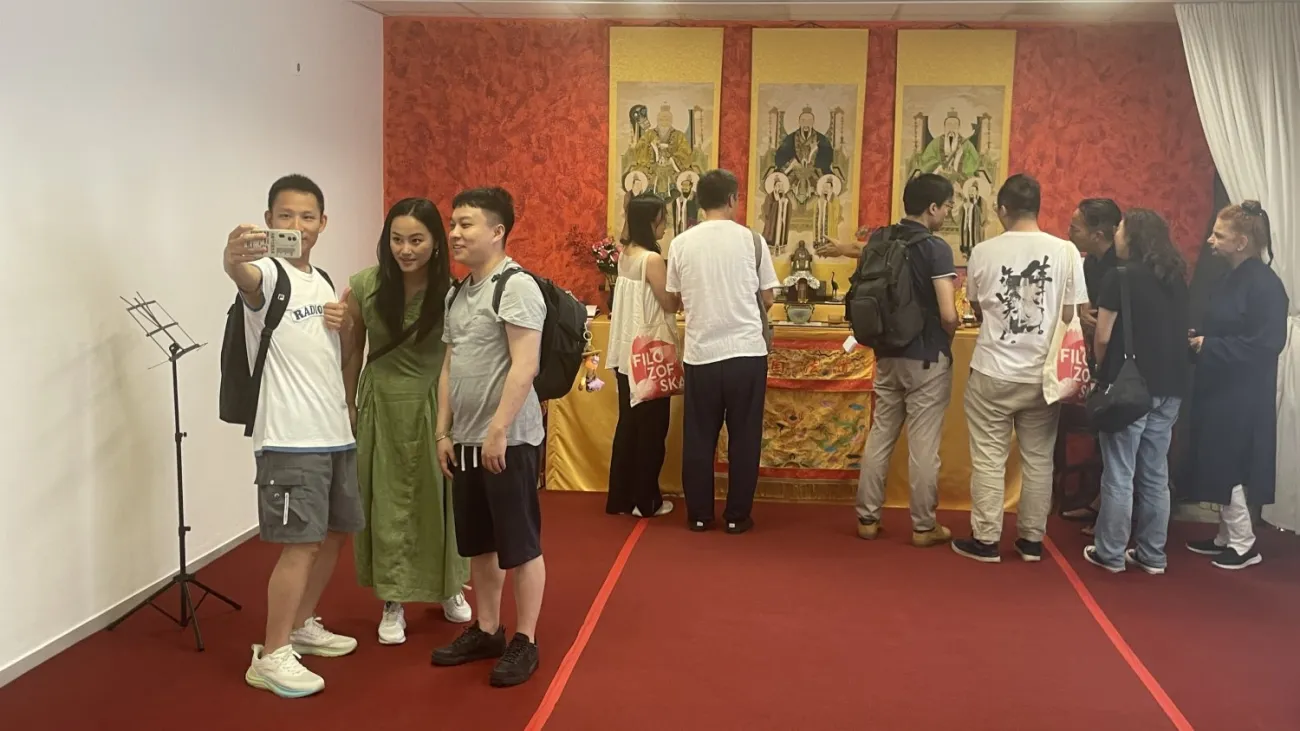
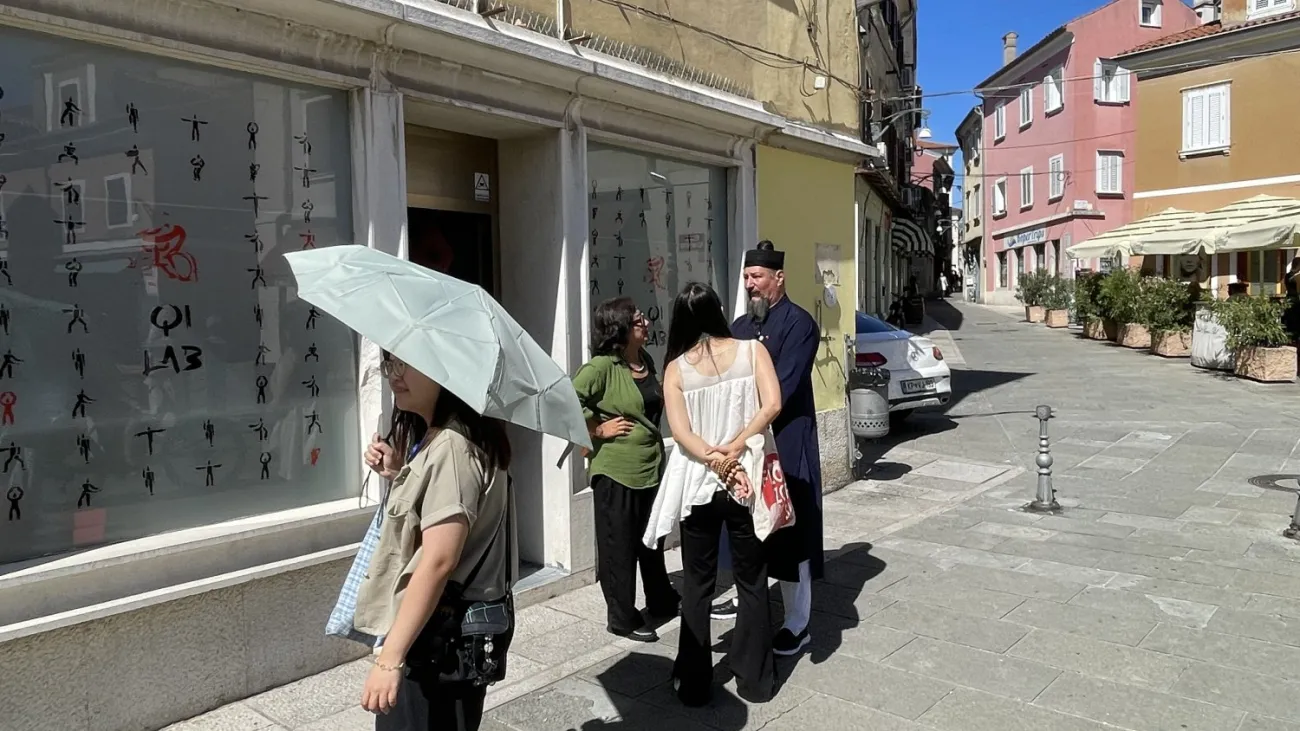
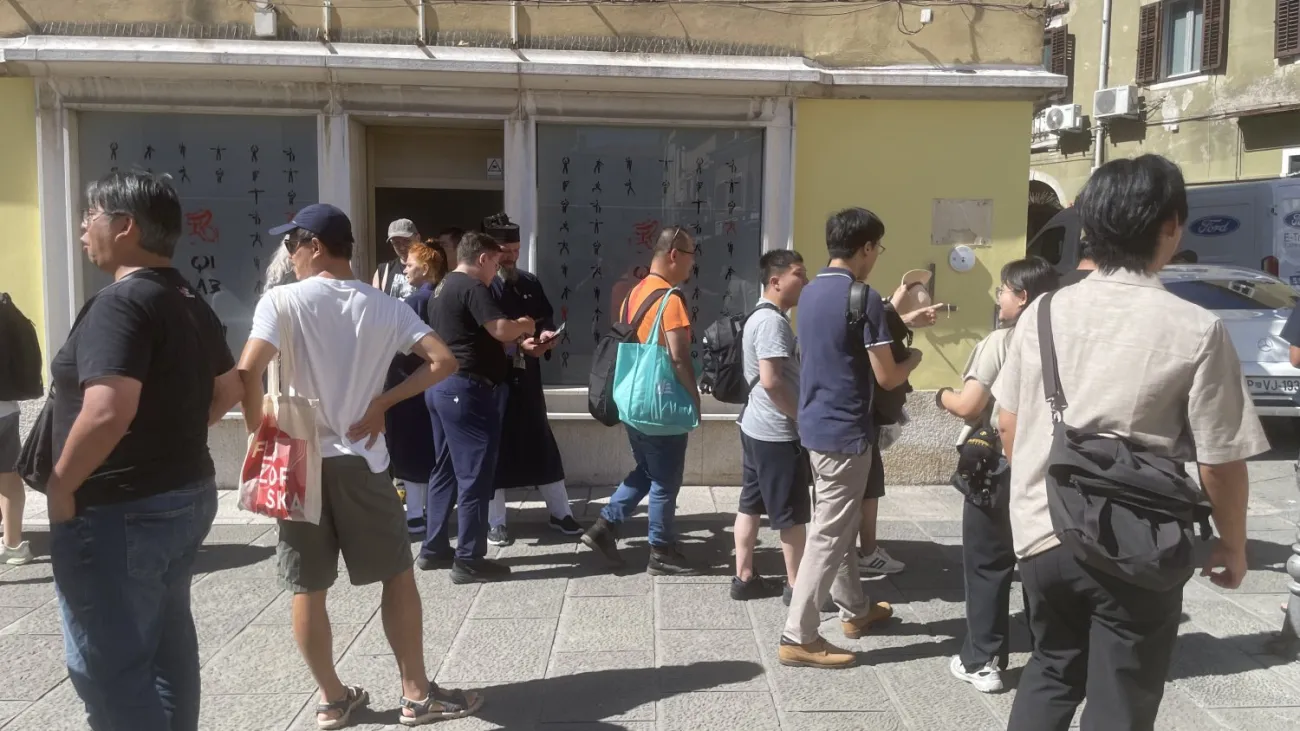
At the Slovenian Daoist Temple, we hosted internationally recognised academics, doctoral students and postdoctoral researchers who attended the International Summer School entitled Models of Dialectical Thought in Chinese and Asian Philosophy, held at the University of Ljubljana from 4 to 7 September. The Faculty of Arts organised the school to mark the 30th anniversary of the Department of Asian Studies, bringing together more than 35 participants from around the world for four days of discussion on European and Asian models of dialectical thought.
As Dr Jana S. Rošker, head of the International Summer School, explained, after completing the academic programme they rounded off their time together with an excursion to Koper, where they visited the Science and Research Centre and SDT: "This is because I feel it must be interesting for the seminar participants as part of the transmission of an important aspect of Chinese culture."
Research assistant in the Department of Asian Studies and editor of the e-book of lecture abstracts from the International Summer School, Tara Peternell, added: "The discussions often returned to East Asian religious traditions, particularly Daoism and Buddhism, and to classical texts." She said the excursion to Koper was conceived as an experiential complement to the school's theoretical work, an opportunity for participants to learn first-hand how an Asian religious tradition is put into practice in a Slovenian setting—an entirely new environment for them.
Reception at the temple: from tradition to a living community
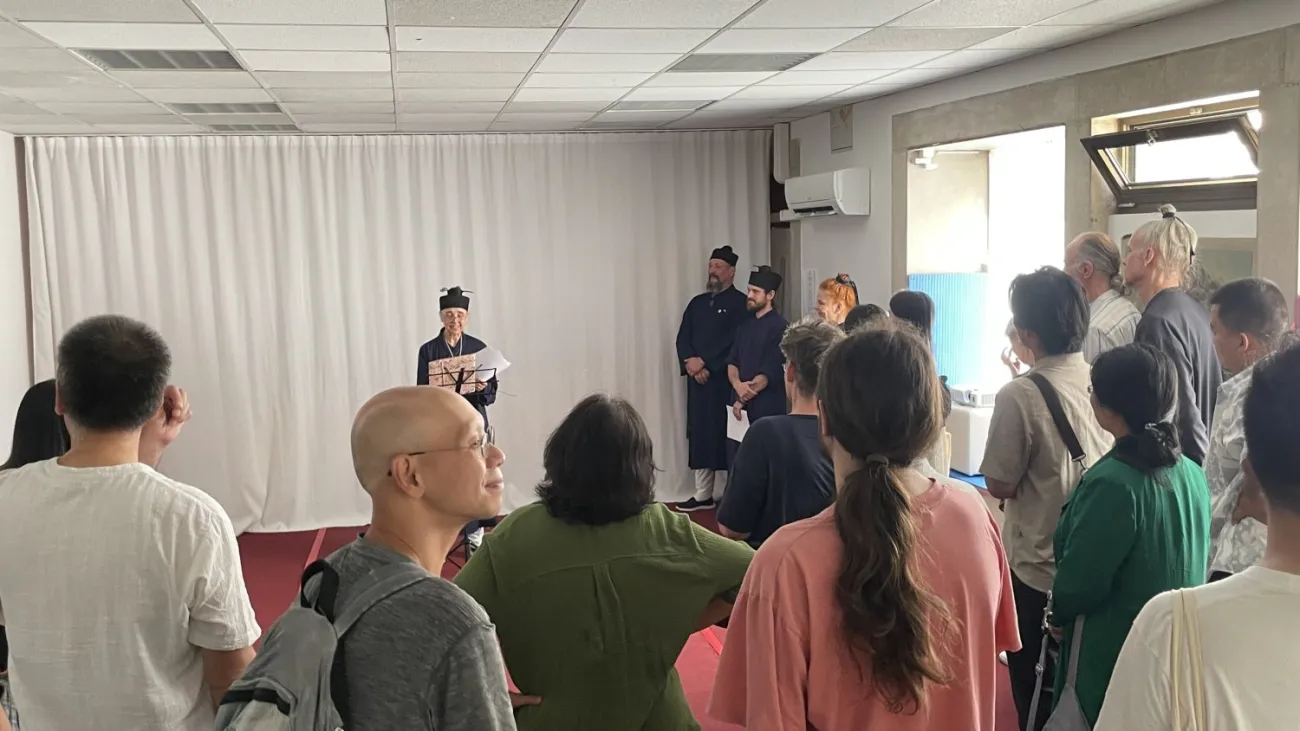
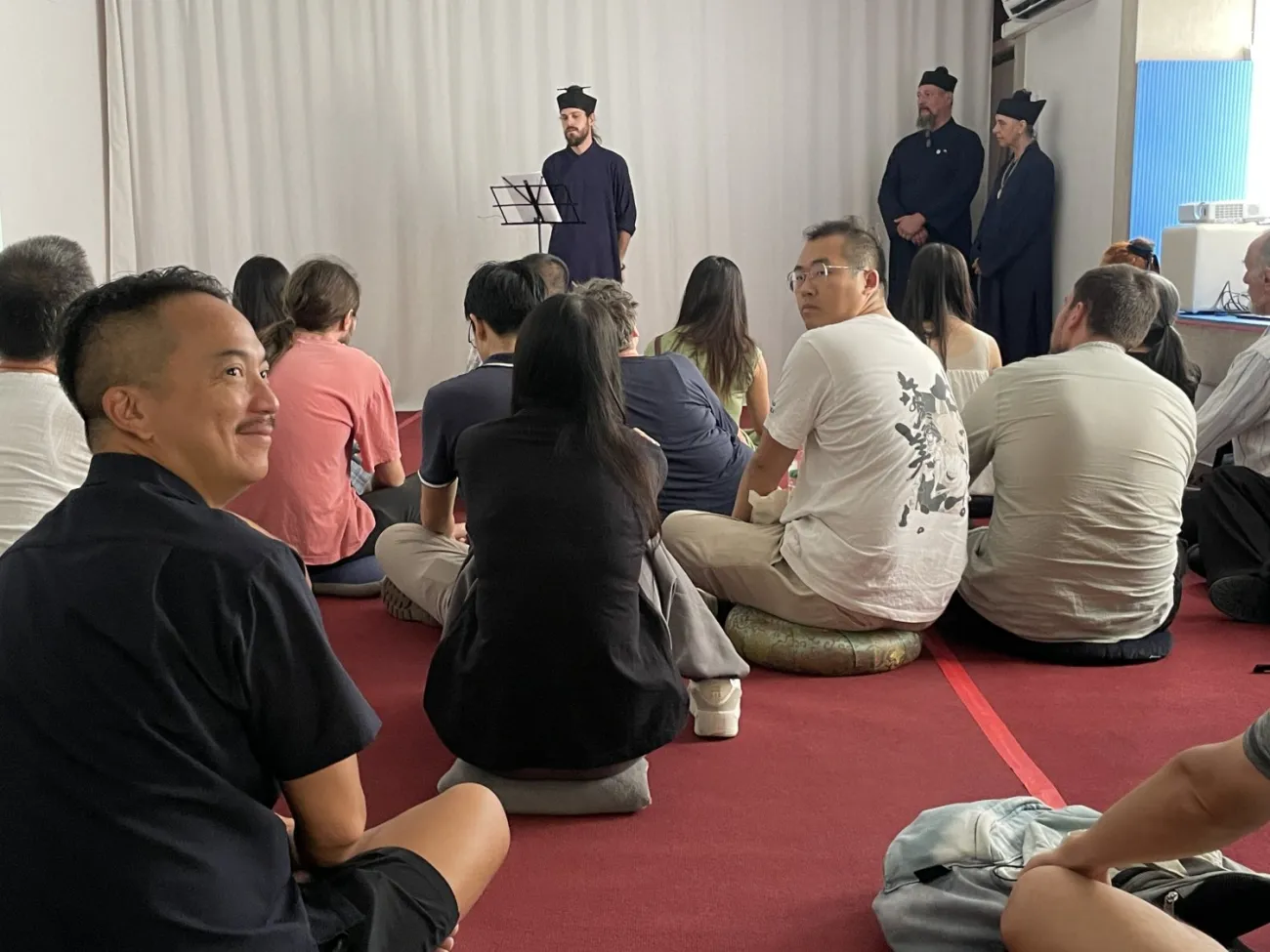
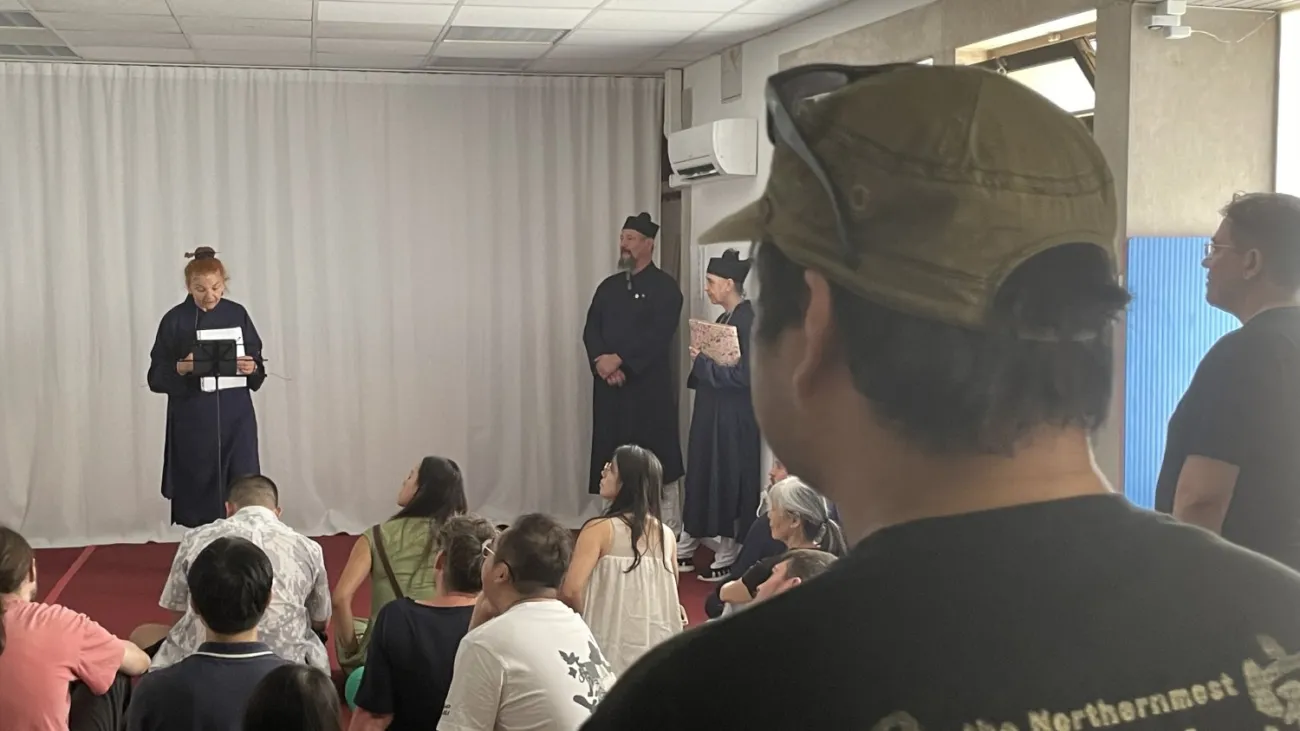
The guests were first addressed by SDT Rector Jure Čeh (Yuan Weiqi), and then by SDT Vice-rector Darija Mavrič Čeh (Weiheng). Her address began with a simple question: how does a tradition travel in the first place?
SDT has a relatively short history. It began in 2017, when Daoist master Yuan Li Min encouraged the idea of establishing a Slovenian Daoist religious community named the Slovenian Daoist Temple of Supreme Harmony (斯洛文尼亚道教太和宫). The founding meeting took place on 23 May 2018, and just under a month later the religious community was registered by Slovenia's Ministry of Culture. Institutionally, SDT is a young community, but the tradition it represents is much older. And it is here, according to the Vice-rector, that the question arises of how an old tradition can become a living tradition in a new cultural setting.
The formula "from China to Slovenia" would be misleading, she pointed out, because it suggests that something we call Daoism existed in one place and was simply transferred from there to another. In her view, SDT's experience is better captured by three concepts: tradition, transmission and transformation. A tradition can be passed on without remaining entirely unchanged, while transformation does not necessarily mean its disappearance. The question is not what must remain unchanged, but what can be translated and “what resists translation”.
At the temple, we understand Daoism not merely as a collection of classical philosophical texts, but also as a tradition of ritual, cultivation, music, community and embodied practice. SDT therefore works in several areas in parallel: from religious community life to education, culture, research, music, ritual practice and public dialogue through lectures and workshops. One principle runs through all its activities: from thought to practice.
As an illustration, the Vice-rector offered a view of SDT's history through the lens of the concept of wu wei. The temple did not emerge from a predetermined plan, but developed through relationships, encounters, opportunities and collaborations. The same applies to the idea of complementing one another, or complementarity. The SDT community does not see pairs such as China and Slovenia, tradition and modernity, theory and practice as mutually exclusive alternatives, but as coexisting dimensions. The real question, then, is not which side is right, but how the two are connected. The Vice-rector also drew attention to the temple's spatial dimension, where objects, the altar, movements and sound carry meaning, not just words. This becomes particularly evident in Daoist ritual music.
She highlighted in particular SDT's relationship with Daoist communities in China. Since a sister temple partnership agreement was signed with Chongdao Gong on Mount Maoshan in 2023, Abbot Song Chongdao has played an important role in the community's development: a living tradition is preserved not only through books, but also through relationships between people, through teaching, practice, ritual, friendship and institutional cooperation.
SDT's tradition has Chinese historical roots, while its institutional and social setting is European. Members speak Slovenian and other European languages, while the community communicates with Daoist communities in China, works with universities and researchers, and is active in Slovenia's cultural and public life. Perhaps the answer to the question of boundaries is that there is no single boundary at all. There is only a multitude of relationships, translations and negotiations. SDT is therefore particularly interested in the idea of transculturality: traditions do not simply travel from one self-contained cultural space to another, but through people, relationships, languages, practices and institutions, with each encounter changing the context in which a tradition is understood and lived.
She concluded her address with the thought that SDT's history could be summed up in four words: tradition (a long history), transmission (through people, relationships, texts and practice), transformation (change through encounters with a new cultural setting) and practice, because a tradition only comes alive when people actually live it. At the end, she invited the guests to take part in SDT's research initiative, which seeks to foster dialogue between Daoist traditions and contemporary science.
Daoist ritual music: cooperation with Chongdao Gong
SDT's Department of Daoist and Traditional Chinese Music was introduced by its director Maj Dolšak Fabris (Yuan Ximing). As he emphasised, Daoist ritual music does not stand on its own, but provides indispensable support for daily ritual, and its performance requires appropriate physical and spiritual preparation on the part of the performers. Since traditional Chinese music has not yet taken root in Europe, until recently any major ritual could only be performed with the help of musicians from the Chinese cultural sphere.
As SDT members wish to perform rituals regularly and in their original form, establishing their own music ensemble was only a matter of time and of taking cooperation with Chongdao Gong a concrete step further. Last year, an additional agreement on cooperation in music education was signed with the temple, providing for support with literature, mentoring, knowledge assessment and practical learning during visits to the temple. This marked the start of the community's exploration and study of Quanzhen Daoist ritual music.
The fruits of the partnership are already visible: in January 2026, the director himself completed training at Chongdao Gong monastery, and in the summer, SDT member Alenka Zupan completed similar training. The ensemble now has at least six regular members and holds regular music and singing rehearsals every Thursday, while the department is preparing a book containing the musical notation for the complete morning and evening Quanzhen rituals.
Among the challenges, the director highlighted the lack of reliable sources and educational institutions for traditional Chinese music in Europe, the limited availability of traditional instruments, and the need to transcribe Daoist music from numbered notation (jianpu) into Western staff notation. The ensemble's long-term goal is to establish a European Centre for Chinese and Daoist Music.
A digital bridge to the local and international community: the SDT website
As director of the SDT Media Centre, I presented our website. The project began two years ago as a sketch on a sheet of paper, and was then developed pro bono by digital engineer Dmytro Levash. The site went live in May this year. I emphasised that the site is not a promotional brochure, but a bridge to the world, a living platform that grows and changes as we seek better ways to bring quality writing on Daoist topics to readers.
The content is available in Slovenian, English, Italian (SDT is also active in areas of Istria where the Italian minority lives), Spanish and Chinese. The first draft of each translation is produced by artificial intelligence, but every text is then carefully reviewed by editors who ensure terminological and linguistic fidelity to the original. The human element—authors with their own perspectives, voices and creativity—remains irreplaceable in the writing of articles.
A dedicated subsection of the website presents the SDT Research Initiative, which connects Daoist intellectual traditions with contemporary Western thought. Among the articles, I highlighted the Rector's essay series A Garden Without an East and a piece on the work of Dr Jana S. Rošker. SDT's long-term goal is to establish a research centre and an academic publishing platform for Daoist studies in Slovenia and around the world. The articles already reach readers from the USA to China, Sweden, Ireland, Singapore, the Netherlands, Romania, Brazil, France and Hong Kong, and several distinguished professors have already announced plans to contribute or submitted their articles for publication.
Relaxed conversation over wild black tea
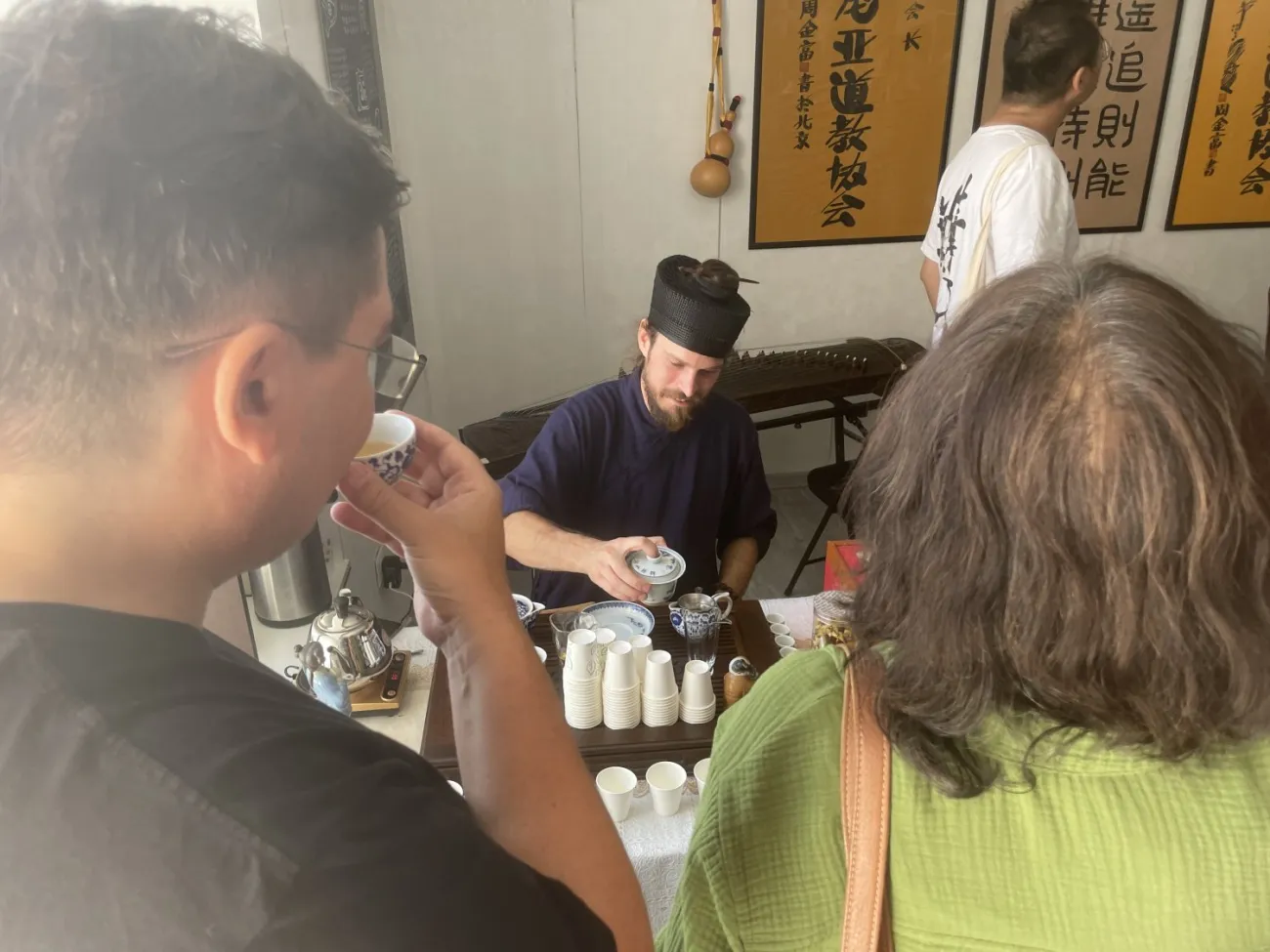
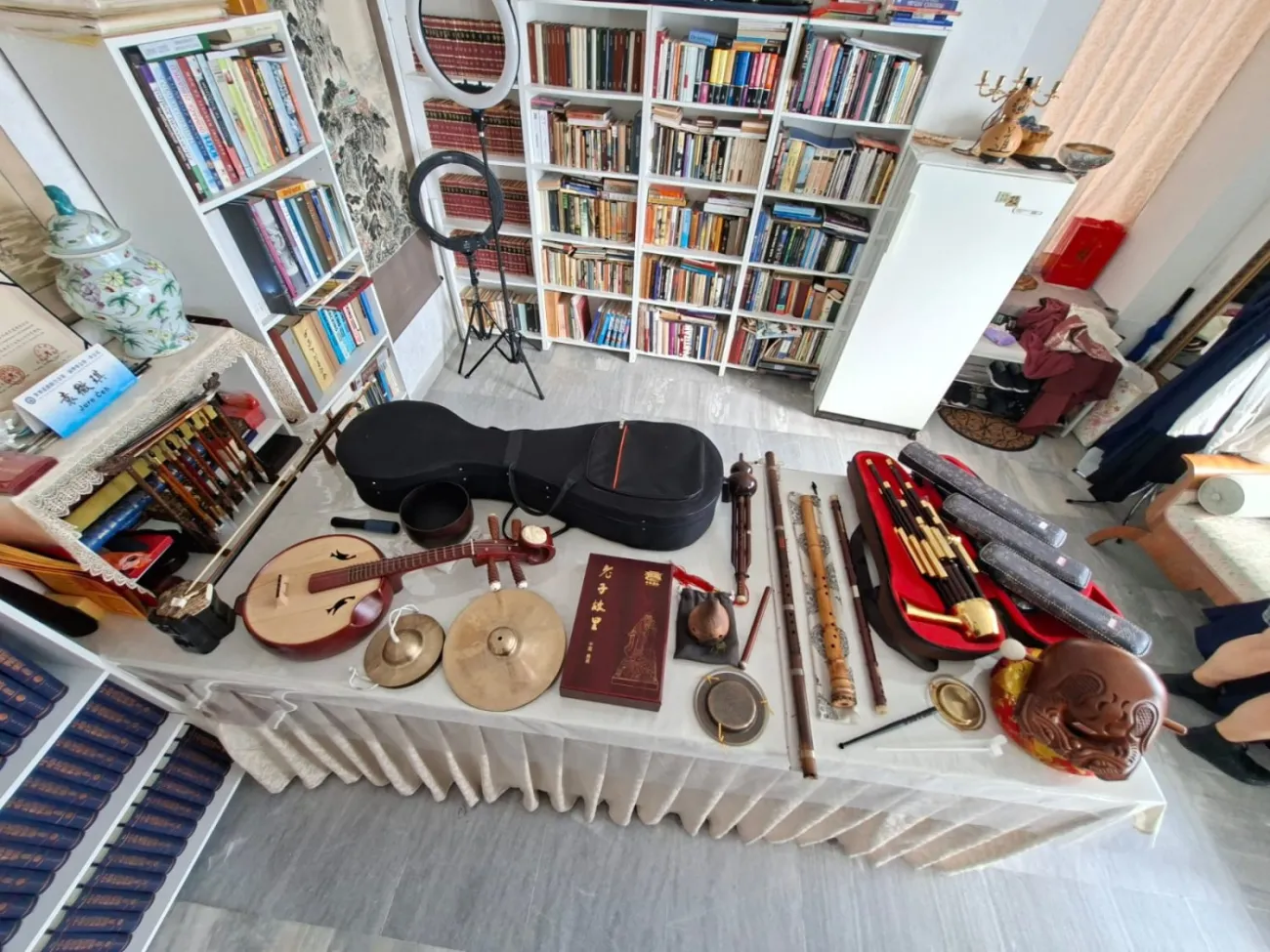
After the presentations, the guests explored our exceptionally rich library and our equally rich collection of traditional Chinese musical instruments, which we had also put on display. We rounded off the visit with a cup of wild black tea. Conversation flowed in a relaxed atmosphere, with the altar and SDT's activities attracting considerable interest. We exchanged a few contact details for future cooperation.
Among others, I spoke with Dr Wu Huilin, an assistant professor at Fu Jen Catholic University in New Taipei City, who is spending two months working on a research project at the University of Ljubljana. Her research focuses on early Chinese philosophy from the Wei–Jin period (220–420 CE) and on Ji Kang, a member of the Seven Sages of the Bamboo Grove. This was a group of poets, musicians and thinkers who practised an unconventional, natural and eccentric way of life at a time when the political chaos following the collapse of the Han dynasty gave rise to the neo-Daoist thought known as xuánxué (玄学), or mysterious learning.
Asked why her path had led her specifically to Daoism, she replied that it was a subject closely connected to her own life experiences: "Through my research, I realised that Laozi and Zhuangzi are very close to my own life, that they are not just about dry philosophy."
Of the visit to the temple, she said: "This really inspired me. I have been working in this field for almost thirty years. It is inspiring that, although this culture is not geographically your own, you genuinely love it. That moved me very deeply."
We also reiterate that the two-year partnership with Chongdao Gong and master Song remains the foundation on which SDT builds its musical and ritual practice. Such sister temple partnerships were encouraged by the World Federation of Daoism (The World Federation of Daoism) immediately upon its founding.
For participants in the International Summer School at the Faculty of Arts in Ljubljana, the visit was, as Wu Huilin put it, proof that Daoism today lives and breathes even far from its historical origins.
SDT Media Centre director Lea Širok